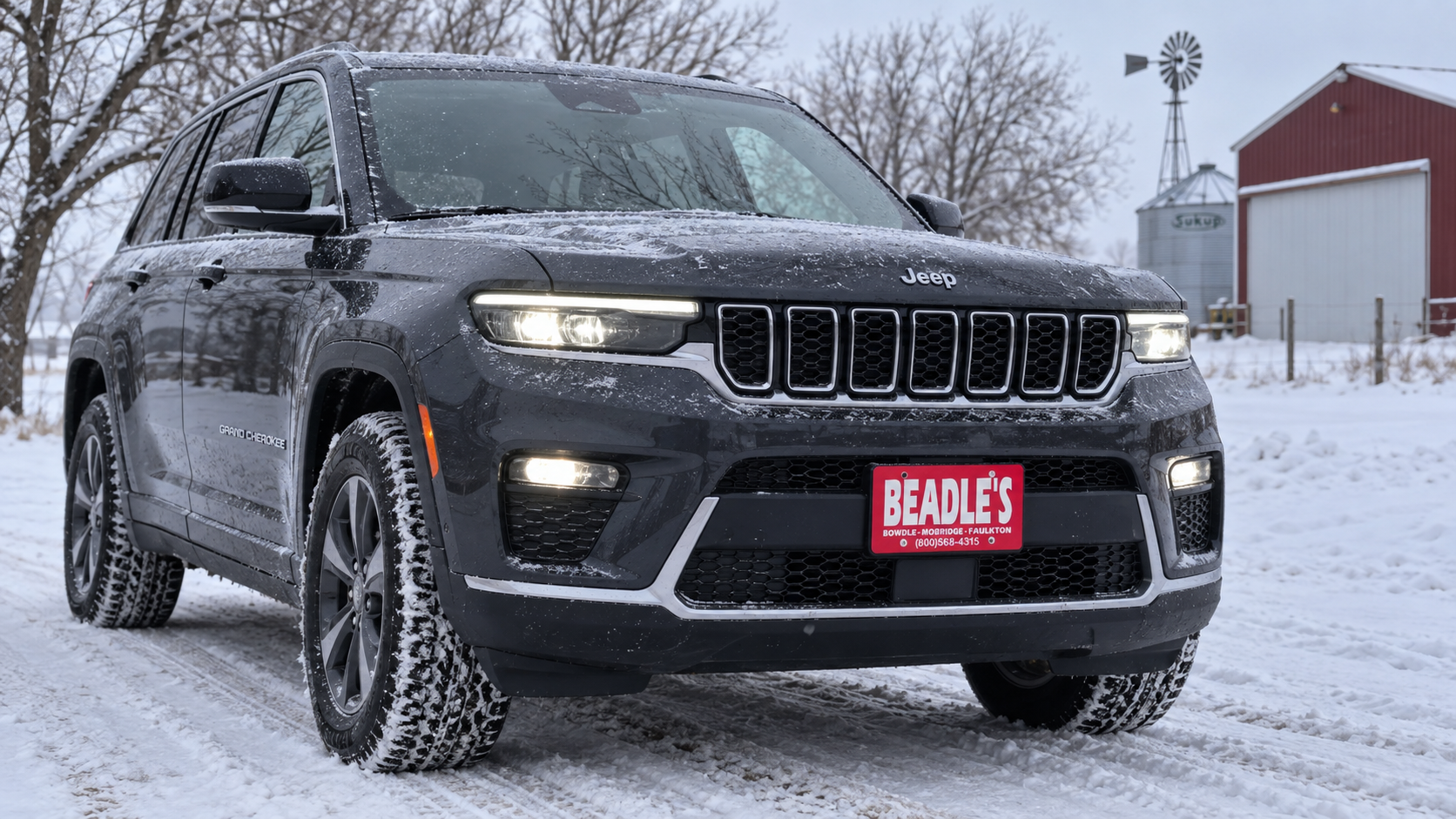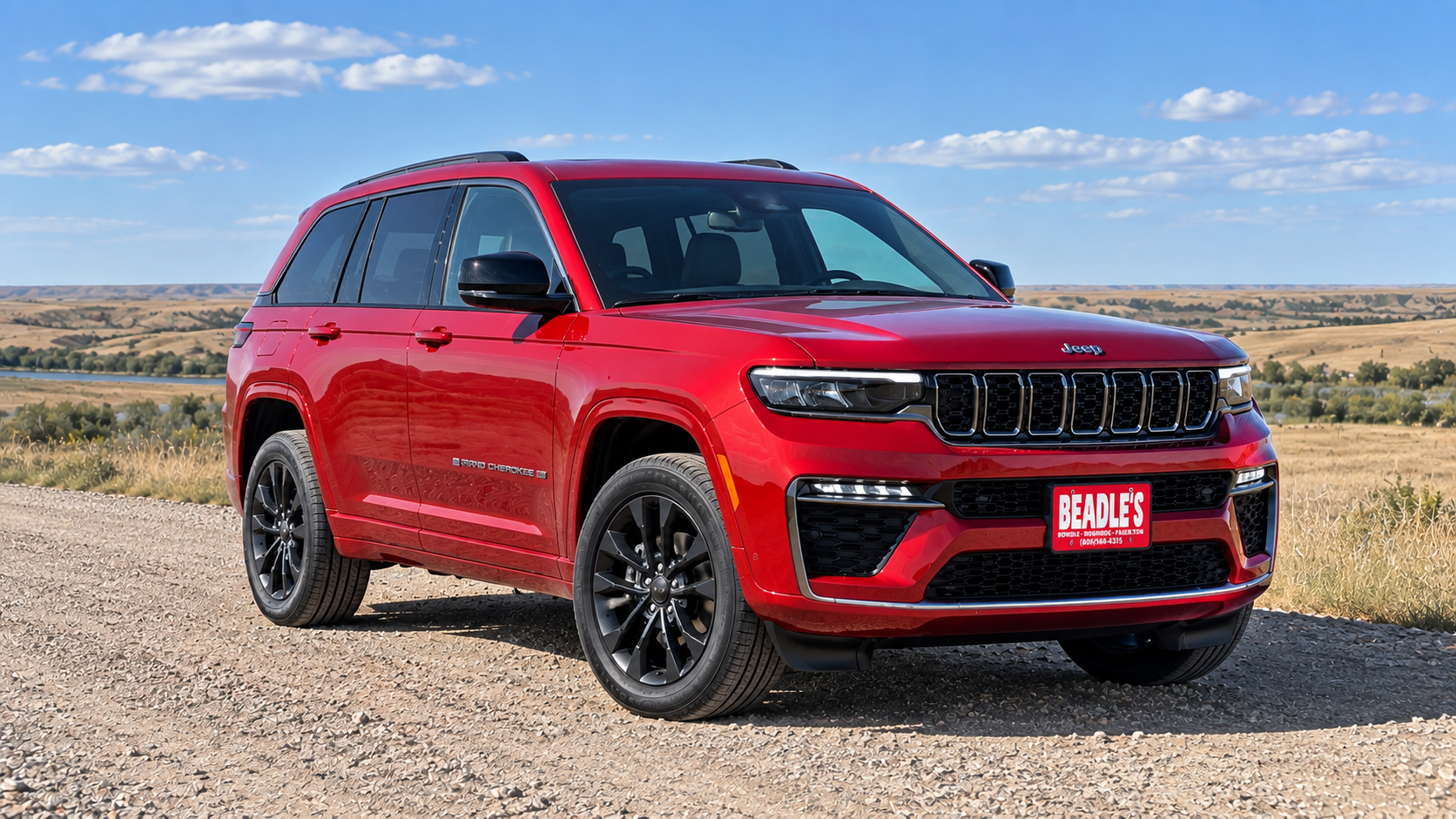





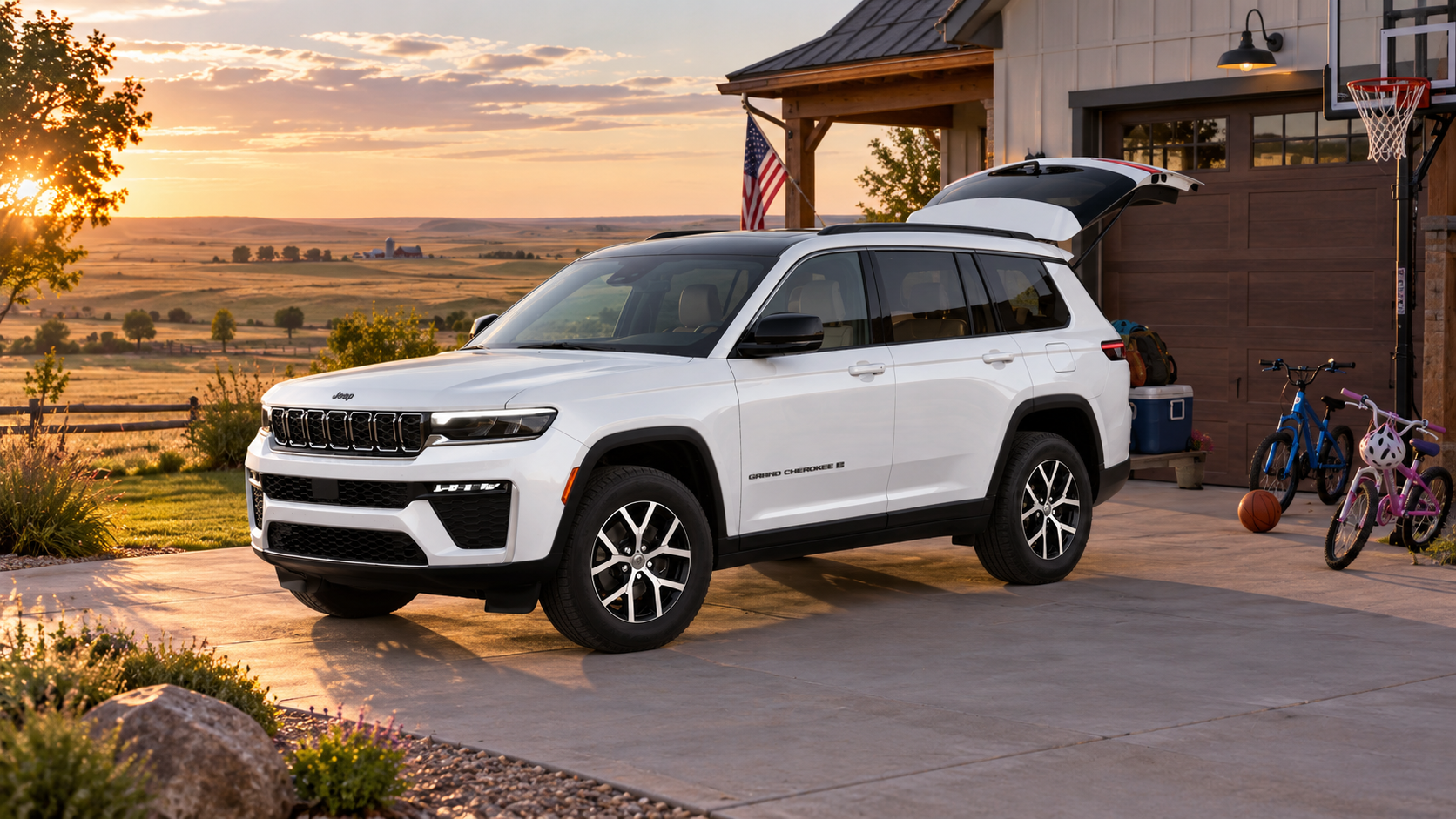
Jeep sells the Grand Cherokee in two sizes, and the names make it sound like the bigger one just wins: the two-row Grand Cherokee and the longer, three-row Grand Cherokee L. But "bigger" is not automatically "better for your family," and there is one cargo detail that flips what a lot of people assume before they ever get to the lot.
This guide lays out the real differences — seats, cargo, and length — and then gives you an honest recommendation by family type. We help families sort through exactly this decision every week in Bowdle, so this is the same straight talk you would get standing next to both of them.
What Is the Actual Difference Between Them?
The two-row Grand Cherokee seats five and is 193.5 inches long. The Grand Cherokee L is stretched to 204.9 inches to make room for a third row, and it seats six with second-row captain's chairs or seven with the no-cost second-row bench. Same familiar Grand Cherokee under the skin — same engines, same four-wheel-drive systems — just a longer body on the L.
That extra eleven and a half inches is the whole story. It buys you the third row and more total cargo room when you fold seats down, but it also makes the L a bit longer to park and maneuver. Everything else about how they drive is very close, which is why the decision really comes down to seats and cargo — and that is where it gets interesting.
The Cargo Surprise Most Families Miss
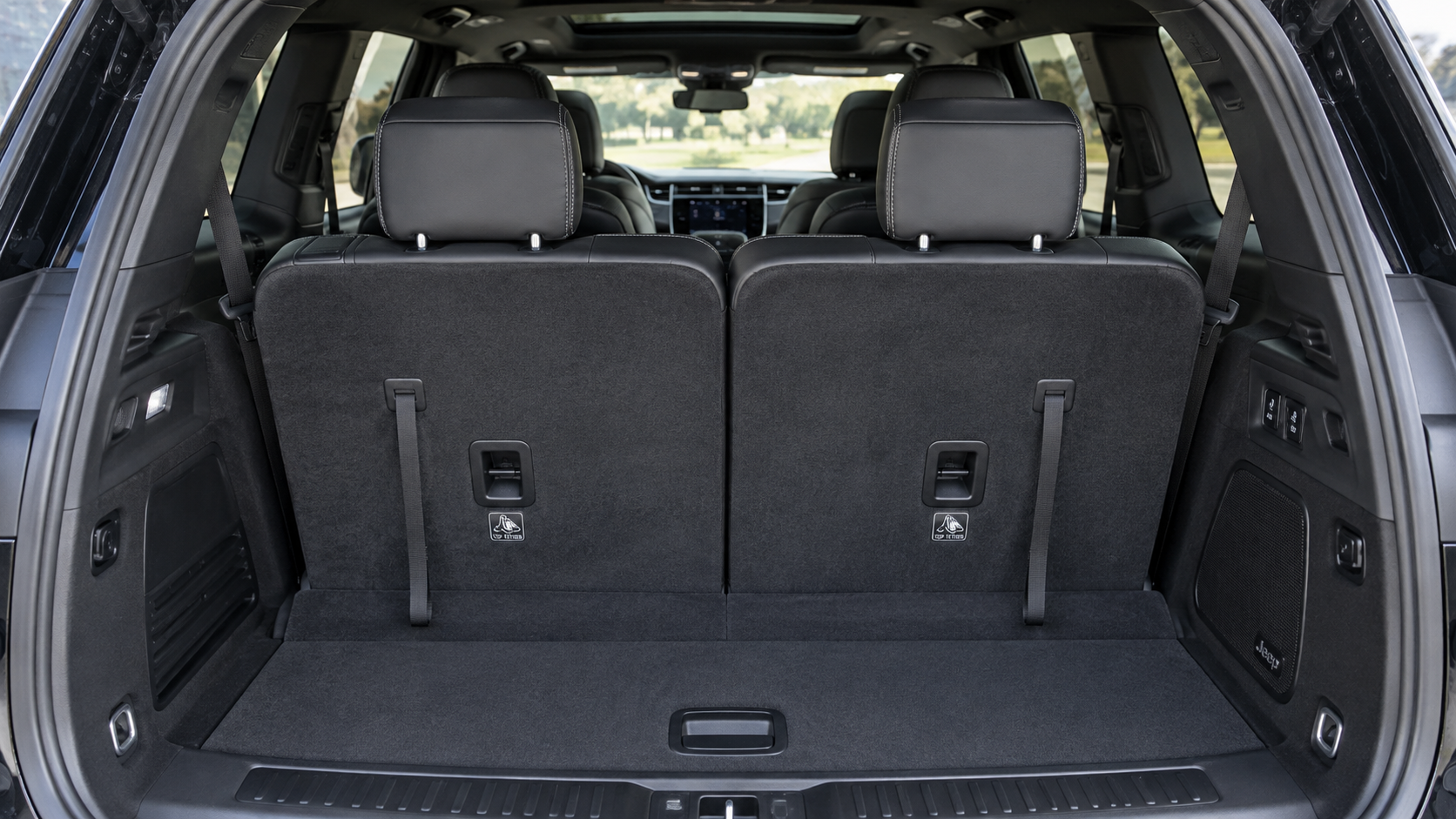
Here is the detail that changes the whole conversation: with every seat up, the two-row Grand Cherokee holds more cargo behind its last row than the L does behind its third row. The two-row gives you 37.7 cubic feet behind the second row; the L gives you just 17.2 cubic feet behind the third row.
That makes sense once you picture it — on the L, that third row is sitting where the two-row's cargo area would be. So if you rarely use a third row but always haul groceries, sports gear, and a week's worth of stuff, the two-row is actually the better cargo hauler for everyday life. The L only pulls ahead on total space once you fold that third row down.
Think about your seats-up trunk, not the brochure number
The big "maximum cargo" figure only happens with the seats folded flat and nobody in back. What matters day to day is how much fits behind the seats you actually keep up. On that measure, the two-row wins — and that catches a lot of families by surprise.
How Many People Can Each One Carry?
The two-row seats five, period. The Grand Cherokee L is where you get flexibility: choose the second-row captain's chairs for a six-seat layout with a walk-through to the back, or take the no-cost second-row bench and seat seven.
The L's third row has 30.3 inches of legroom — genuinely usable for kids and fine for adults on shorter trips, though it is a third row, not a limousine. If you have a growing family, carpool duty, or grandparents and grandkids who all pile in for the lake, that third row earns its keep. If it is just you and one or two kids, you may never unfold it. When you do fold it down, the L opens up to 46.9 cubic feet behind the second row and 84.6 cubic feet maximum, versus the two-row's 70.8 maximum.
Seating, Cargo, and Length Side by Side
Here are the numbers that actually decide it, laid out together.
| Measure | Grand Cherokee (2-row) | Grand Cherokee L |
|---|---|---|
| Seats | 5 | 6 (captain's chairs) or 7 (bench) |
| Overall length | 193.5″ | 204.9″ |
| Cargo behind last row (all seats up) | 37.7 cu ft | 17.2 cu ft (behind 3rd row) |
| Cargo behind 2nd row | 37.7 cu ft | 46.9 cu ft |
| Maximum cargo | 70.8 cu ft | 84.6 cu ft |
| Third-row legroom | None | 30.3″ |
Both share the same engines, four-wheel-drive systems, and 6,200-pound max towing when properly equipped — so capability is not the tiebreaker here. Our towing guide covers how to set either one up to pull a boat or camper.
Which One Fits Your Family?
Here is how I actually sort it out with families on the lot. If you have five or fewer people and you value everyday cargo room and easier parking, the two-row is the smarter buy — it holds more behind the seats you keep up and it is nearly a foot shorter. If you regularly carry six or seven, or you want the security of a third row for carpools and family gatherings, the L is worth the extra length.
The one group that should always look at the L is the family that hauls a lot of people and a lot of stuff on the same trips — folded flat, the L's 84.6 cubic feet is the most space in the lineup. For everyone else, do not buy a third row you will never unfold. If you want to see how the Grand Cherokee stacks up as a family SUV overall, our family SUV guide goes deeper, and the trim comparison helps you pick the right version of whichever body you choose.
How to Decide Between the Two-Row and the L
Work through it in this order and the answer usually shows up quickly.
- Count your regular passengers: if you routinely carry six or seven people, the L is the answer — stop here.
- Picture your everyday trunk: if you rarely need a third row but always haul gear, the two-row's larger seats-up cargo area wins.
- Decide how often the third row is real: occasional carpools and holiday guests favor the L; a once-a-year need does not.
- Factor in your driveway and parking: the two-row is about a foot shorter and easier to maneuver in tight spots.
- Sit in both and load your own stuff: bring a car seat or a cooler and see which layout fits your real life, not the brochure.
Is the Grand Cherokee L Worth the Extra Size?
| Consideration | Two-Row Grand Cherokee | Grand Cherokee L |
|---|---|---|
| People | Up to 5 | Up to 6 or 7 |
| Everyday cargo (seats up) | More (37.7 cu ft) | Less behind 3rd row (17.2 cu ft) |
| Maximum cargo | 70.8 cu ft | More (84.6 cu ft) |
| Parking & maneuvering | Easier (shorter) | Longer by 11.4″ |
Worth it if: you regularly seat six or seven, want a third row for carpools and guests, or need the most maximum cargo in the lineup.
Skip it if: you have five or fewer people, value everyday seats-up cargo room, and would rather park something a foot shorter.
Key Takeaways
- The two-row seats five at 193.5″; the Grand Cherokee L seats six or seven at 204.9″.
- With all seats up, the two-row holds more cargo (37.7 cu ft) than the L does behind its third row (17.2 cu ft).
- The L wins on people and on maximum cargo (84.6 vs 70.8 cu ft) once the third row is folded.
- Both drive, tow, and go through winter the same — so choose by seats and cargo, not capability.
Frequently Asked Questions
How many people does the Grand Cherokee L seat?
The Grand Cherokee L seats six with second-row captain's chairs or seven with the no-cost second-row bench. The two-row Grand Cherokee seats five.
Does the two-row Grand Cherokee really have more cargo room than the L?
Behind the last row with all seats up, yes. The two-row offers 37.7 cubic feet behind its second row, while the L offers 17.2 cubic feet behind its third row. The L only surpasses the two-row for total space once you fold the third row down, reaching 84.6 cubic feet maximum versus 70.8.
How much longer is the Grand Cherokee L?
The Grand Cherokee L is 204.9 inches long versus 193.5 inches for the two-row — about 11.4 inches longer. It is still easy to live with, but the two-row is a bit simpler to park and maneuver in tight spots.
Is the Grand Cherokee L third row big enough for adults?
The L's third row has 30.3 inches of legroom, which is genuinely usable for kids and fine for adults on shorter trips. For long hauls, adults will be most comfortable in the first two rows, with the third row best for kids or occasional passengers.
My Take on Two-Row vs the L
This is one of my favorite conversations to have on the lot, because the answer surprises people so often. Folks come in assuming they need the L because it is bigger, and then I show them that the two-row actually holds more of their everyday stuff behind the seats. For a family of four or five that hauls gear more than passengers, the two-row is usually the one that fits their real life — and it saves them money and driveway space.
Now, if you have a full house — six or seven riders, carpools, grandkids piling in for the lake — the L is absolutely the right call, and that folded-flat cargo number is the best in the family. The trick is being honest about how often that third row is really full. Once a year does not count.
If you want the full picture on trims, engines, and towing, our 2026 Grand Cherokee guide ties it all together. And if you are near Bowdle, come load your own cooler and car seats into both at Beadle's Chrysler Center — that is the fastest way to know which one is yours.
About the Author
Lexy Tabbert — Beadle's Chrysler Center, Bowdle, SD
Lexy Tabbert is the Director of Sales and Marketing at Beadle's Chrysler Center in Bowdle, South Dakota. She covers Ram, Jeep, Dodge, and Chrysler vehicles — helping families, ranchers, and ag operators across the region find the right truck and configuration for their needs. Learn more about Lexy.