





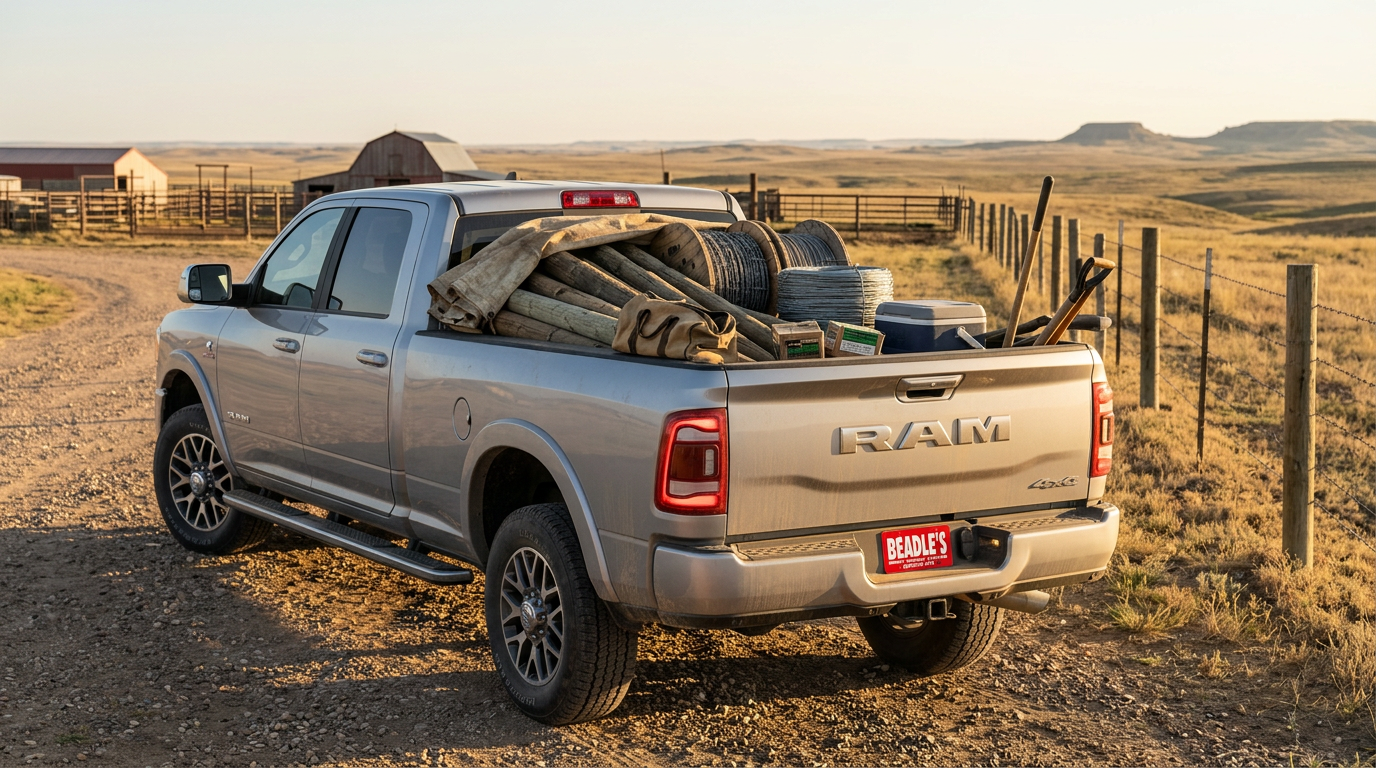
If you’re a rancher, contractor, or ag operator in South Dakota, payload capacity matters. It’s the difference between making one trip and three, between filling a truck bed with round bales and cutting your load in half. The 2026 Ram 3500 is built to haul serious weight — but the exact payload you can carry depends on your configuration, your engine choice, and how your truck is set up.
At Beadle’s Chrysler Center in Bowdle, we work with ranchers and families across South Dakota who depend on their trucks. This guide covers payload specs straight from Ram, practical hauling examples, and the honest conversation you need to have before you choose your setup. Let’s dig in.
On This Page
- What is the maximum payload capacity of the 2026 Ram 3500?
- How does payload change between SRW and DRW?
- Does the HEMI or Cummins have a higher payload on the 3500?
- How much payload does the Ram 3500 lose with the Mega Cab?
- What can I haul in a Ram 3500 bed on a South Dakota ranch?
- What is the GVWR of the 2026 Ram 3500?
What is the maximum payload capacity of the 2026 Ram 3500?
The maximum payload capacity of the 2026 Ram 3500 is 7,590 pounds with the 6.4L V8 HEMI HD engine in a Crew Cab 8-foot bed, dual rear wheel (DRW) configuration with 4×2 drive. That’s enough to load a truck bed with five round bales (~1,500 lbs each), a skid of mineral tubs, and still have room.
If you’re looking at the 6.7L Cummins turbo diesel, the payload game is different. The Cummins actually sacrifices payload capacity for towing strength. The max Cummins payload is 6,050 pounds (Reg Cab 8′, DRW, 4×4), which is 1,540 pounds less than the HEMI’s peak.
Here’s the complete HEMI payload breakdown by configuration:
| Configuration | 4×2 Payload | 4×4 Payload |
|---|---|---|
| Crew Cab 6’4″ SRW | 4,970 lbs | 4,580 lbs |
| Crew Cab 8′ SRW | 4,580 lbs | 4,250 lbs |
| Mega Cab 6’4″ SRW | — | 4,440 lbs |
| Crew Cab 8′ DRW | 7,590 lbs | 7,200 lbs |
| Mega Cab 6’4″ DRW | — | 6,640 lbs |
The sweet spot for most South Dakota operations is the Crew Cab configuration. You get a full cab for passengers, good bed length, and strong payload whether you choose SRW or DRW.
How does payload change between SRW and DRW?
Dual Rear Wheels (DRW) — also called a dually — don’t just give you more visual presence on the road. That extra set of rear wheels adds weight to the truck itself, but the payoff is significantly higher payload ratings. The difference is dramatic on the 3500.
Here’s a direct comparison using a HEMI Crew Cab 8′ in both configurations:
| Configuration | 4×2 Payload | 4×4 Payload | DRW Gain |
|---|---|---|---|
| Crew Cab 8′ SRW | 4,580 lbs | 4,250 lbs | — |
| Crew Cab 8′ DRW | 7,590 lbs | 7,200 lbs | +3,010 lbs (4×2) |
DRW gives you 3,010 more pounds of payload capacity in 4×2 and 2,950 more in 4×4. That’s substantial. But remember: a dually is heavier to steer, wider on the road, and requires more fuel to move. For South Dakota ranch work, ask yourself: do I regularly need to carry payloads above 5,000 pounds? If yes, DRW makes sense. If you’re usually in the 3,000–4,500 pound range, SRW is lighter, more agile, and easier to park.
SRW trucks also cost less upfront and offer better maneuverability on backcountry ranch roads. For a deeper dive on single vs. dual rear wheels, check out our Ram 3500 SRW vs DRW guide.
Does the HEMI or Cummins have a higher payload on the 3500?
The HEMI wins on payload. The 6.4L V8 HEMI HD’s max payload is 7,590 pounds (Crew Cab 8′ DRW 4×2), while the 6.7L Cummins turbo diesel maxes out at 6,050 pounds (Reg Cab 8′ DRW 4×4). That’s a 1,540-pound advantage for the gas engine.
The trade-off is towing. The Cummins produces 430 hp and 1,075 lb-ft of torque, giving it a max towing capacity of 36,610 lbs on a DRW. The HEMI produces 405 hp and 429 lb-ft and tops out at 18,150 lbs towing. If you’re running a livestock trailer, grain hauler, or equipment trailer regularly, diesel wins. If you’re loading your bed with rocks, grain, minerals, or construction materials, HEMI wins.
| Engine | Max Payload (DRW) | Max Towing (DRW) | Best For |
|---|---|---|---|
| HEMI 6.4L V8 | 7,590 lbs | 18,150 lbs | Bed loading, ranch supplies, construction |
| Cummins 6.7L Diesel | 6,050 lbs | 36,610 lbs | Trailer towing, equipment hauling |
The HEMI is also more affordable upfront and doesn’t require diesel particulate filter maintenance. For pure bed payload capacity, the HEMI is the answer. For a full engine comparison, see our Cummins vs HEMI guide.
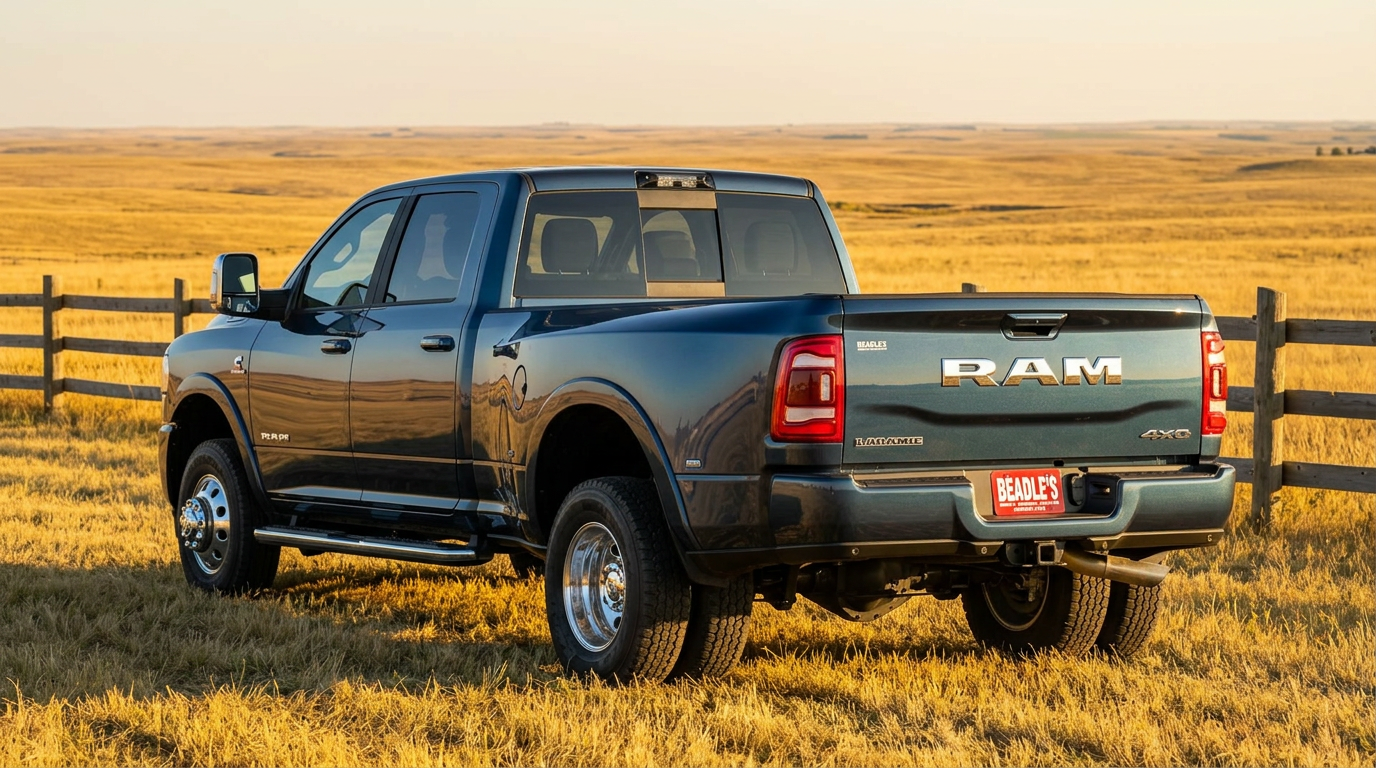
How much payload does the Ram 3500 lose with the Mega Cab?
The Mega Cab gives you extra interior space for rear passengers — but it costs you payload because of the longer wheelbase and added weight. The loss varies depending on whether you’re comparing SRW or DRW configurations.
| Configuration (4×4) | Payload | Loss vs Crew Cab |
|---|---|---|
| Crew Cab 6’4″ SRW | 4,580 lbs | — |
| Mega Cab 6’4″ SRW | 4,440 lbs | -140 lbs |
| Crew Cab 8′ DRW | 7,200 lbs | — |
| Mega Cab 6’4″ DRW | 6,640 lbs | -560 lbs |
The loss is real but not catastrophic. A Mega Cab DRW costs you 560 pounds compared to a Crew Cab 8′ DRW. If you’re regularly maxing out a 7,200-pound payload, the Mega Cab isn’t for you. But for most ranchers who haul in the 4,000–6,000-pound range and need extra passenger room for family or crew, the Mega Cab’s loss is an acceptable trade.
One important note: the Mega Cab is Cummins-only (no HEMI option), so these Mega Cab payload numbers are already reflecting the heavier diesel drivetrain. The 6’4″ bed on a Mega Cab still holds three round bales, two bags of mineral, and tools.
What can I haul in a Ram 3500 bed on a South Dakota ranch?
Real-world ranch work is where payload matters most. Here are common hauling scenarios and what each 3500 configuration can handle:
Practical Hauling Scenarios
- Round Bales (1,500 lbs each): A Crew Cab SRW with 4,500+ lbs payload hauls 3 bales comfortably. A DRW with 7,000+ lbs handles 4–5 bales with margin. Stack them right and you’re good.
- Mineral Tubs & Supplements: A 400-lb mineral tub, 2,000 lbs of mineral blocks, and 1,500 lbs of cattle feed fits in most SRW configurations. DRW gives you room for two full pallets of tubs (often 3,000+ lbs combined).
- Fence Posts & Lumber: A load of treated posts (4x4s, 6x6s) for ranch repairs easily stays under 5,000 lbs, so any Crew Cab works. A full pallet of lumber for a building project? You’re pushing 6,000+ lbs, so verify your payload before loading.
- Grain & Feed Sacks: A pallet of feed sacks (50 bags ~2,500 lbs total) plus loose grain weighs 4,000–4,500 lbs. SRW manages one pallet plus loose grain. DRW handles two pallets comfortably.
- Gravel, Rock, Sand: A full bed of crushed gravel weighs 6,000–7,000 lbs. Crew Cab SRW maxes out here. Crew Cab DRW takes it without hesitation.
- Livestock Panels & Corral Equipment: Panels, gates, T-posts, and corral brackets often weigh 3,000–4,500 lbs per load. Any SRW handles it; DRW gives you headroom for multiple repair trips in one haul.
The takeaway: if you’re hauling livestock feed, minerals, and ranch supplies on rotation, a Crew Cab SRW with 4,500 lbs payload covers 80% of your work. If you’re moving heavy construction materials, gravel, or running multiple repair jobs in one trip, go DRW. Both work in South Dakota — choose based on your actual hauling pattern, not what sounds impressive.
What is the GVWR of the 2026 Ram 3500?
GVWR (Gross Vehicle Weight Rating) is the maximum safe weight of the truck plus everything in it — passengers, cargo, fuel, and options. It’s a legal limit enforced at truck scales, and you can get fined for exceeding it. GVWR is different from payload: it’s the total weight, not just what you’re carrying.
| Configuration | GVWR |
|---|---|
| SRW Models | 11,040–12,300 lbs |
| DRW Models | 14,000 lbs |
Here’s a real example: A Crew Cab SRW might have a GVWR of 11,500 lbs. The truck itself weighs about 6,500 lbs. That leaves roughly 5,000 lbs for cargo — which lines up with the 4,500+ lbs payload spec (the difference accounts for fuel, fluids, and passengers). A DRW with a 14,000-lb GVWR has the truck around 7,000 lbs, leaving 7,000 lbs for cargo.
South Dakota scales are enforced, especially near grain elevators and livestock markets. Always check your specific truck’s door sticker for its exact GVWR and payload rating — they vary by options and bed length. Respect your GVWR. It’s there to keep you safe and road-legal.
Quick Reference: 2026 Ram 3500 Payload Overview
| Spec | Value |
|---|---|
| HEMI Max Payload | 7,590 lbs (Crew Cab 8′ DRW 4×2) |
| Cummins Max Payload | 6,050 lbs (Reg Cab 8′ DRW 4×4) |
| HEMI Payload Advantage | +1,540 lbs vs Cummins |
| Cummins Towing Advantage | +18,460 lbs vs HEMI (36,610 vs 18,150) |
| SRW Typical Range (HEMI) | 4,250–4,970 lbs |
| DRW Typical Range (HEMI) | 6,640–7,590 lbs |
| Mega Cab Payload Loss | -140 to -560 lbs vs Crew Cab |
| SRW GVWR | 11,040–12,300 lbs |
| DRW GVWR | 14,000 lbs |
Key Takeaways
- HEMI wins payload: Max 7,590 lbs vs Cummins 6,050 lbs. If you’re loading your bed, HEMI is the stronger choice.
- Cummins wins towing: 36,610 lbs vs HEMI 18,150 lbs. If you’re pulling trailers, diesel is essential.
- DRW gives you 3,000+ more payload than SRW but adds weight, cost, and complexity. Choose DRW only if you regularly haul heavy loads.
- Mega Cab costs 140–560 lbs of payload but gains interior space. The trade-off is acceptable for most ranchers who don’t max out.
- Crew Cab is the sweet spot for South Dakota ranch work: good interior space, strong payload, and good handling.
- Respect GVWR: It’s not just a spec — it’s a legal limit. SRW trucks max at 12,300 lbs; DRW at 14,000 lbs.
- Most ranch hauling is in the 3,000–5,000 lb range. A Crew Cab SRW handles it. Add DRW if you regularly exceed 5,000 lbs.
Payload FAQ
Can I tow a trailer and haul a full payload at the same time?
No. When you’re towing, payload capacity is reduced by the tongue weight of the trailer. If your trailer’s tongue weight is 500 lbs, you lose 500 lbs of available payload. Plan for one or the other. If you need both regularly, choose based on your primary use — towing favors the Cummins, bed loading favors the HEMI. For most South Dakota ranchers, towing and bed loading are separate tasks — you haul feed one day, pull a livestock trailer the next.
Does 4×4 really reduce payload compared to 4×2?
Yes. Four-wheel drive adds weight (front and rear differentials, transfer case), which reduces available payload by 300–400 lbs typically. A Crew Cab 8′ SRW HEMI drops from 4,580 lbs (4×2) to 4,250 lbs (4×4). In South Dakota, 4×4 is worth it for winter roads and muddy ranch roads — accept the payload reduction as a trade for traction.
How does a 6’4″ bed compare to an 8′ bed for payload?
The 8′ bed actually allows slightly lower payload than a 6’4″ bed, because the longer overhang shifts weight distribution. A Crew Cab 6’4″ SRW (4×2) carries 4,970 lbs; a Crew Cab 8′ SRW (4×2) carries 4,580 lbs — a 390-lb difference. However, the 8′ bed holds more volume, so you can stack more rounds (3 bales in 6’4″, up to 4 in 8′). Choose bed length based on volume needs, not payload.
What’s the difference between payload and towing capacity?
Payload is weight you put IN your truck bed (cargo). Towing is weight you pull BEHIND your truck (trailer). They’re independent ratings. The HEMI 3500 has strong payload (7,590 lbs max) but moderate towing (18,150 lbs). The Cummins has lower payload (6,050 lbs max) but tremendous towing (36,610 lbs). Choose based on your primary use, then accept the other as a secondary benefit.
Should I add a tonneau cover or bed liner to my Ram 3500? Will it reduce payload?
A tonneau cover (usually 50–100 lbs) and a bed liner (usually 100–200 lbs) do reduce available payload slightly. However, a quality bed liner protects your investment and lasts years. The payload reduction is negligible — you’re losing 150 lbs out of 4,500+, which is a 3% impact. For ranch work, the protection is worth it. Just verify your GVWR math before loading.
My Take on the Ram 3500 Payload Question
I’ve spent a lot of time researching and writing about every Ram 3500 configuration we carry at Beadle’s Chrysler Center, and there’s one thing I keep coming back to: payload isn’t just a spec sheet number — it’s how you get work done.
I’ve seen customers choose a truck based on looks or engine power, then realize mid-season they’re one load short of a full bed, or they’re bumping up against their GVWR at the grain elevator. That’s frustrating and avoidable.
The 2026 Ram 3500 is strong in payload, especially with the HEMI and DRW. But honest choice requires asking yourself: How much do I really haul? How often? A Crew Cab HEMI SRW (4,500–4,970 lbs payload) handles the vast majority of ranch work across the Northern Plains. If you’re regularly moving gravel, running multi-load operations, or hauling heavy construction materials, DRW is the upgrade. If you’re mostly moving feed, minerals, and lighter materials, SRW is lighter, more fuel-efficient, and easier to handle on ranch roads.
The Cummins is exceptional if you tow regularly. The HEMI is exceptional if you load your bed. Neither is “wrong” — they solve different problems. At Beadle’s, we help you match the truck to your real hauling needs. If you want to talk through your actual work and find the right payload configuration, reach out or stop by in Bowdle. For the complete picture on towing capacity, configurations, and what’s new for 2026, see our full 2026 Ram 3500 buying guide.
About the Author
Lexy Tabbert — Beadle’s Chrysler Center, Bowdle, SD
Lexy Tabbert is the Director of Sales and Marketing at Beadle’s Chrysler Center in Bowdle, South Dakota. She covers Ram, Jeep, Dodge, and Chrysler vehicles — helping families, ranchers, and ag operators across the region find the right truck and configuration for their needs. Learn more about Lexy.
Connect with us


