





2026 Ram 3500 vs Ram 2500: Which Heavy-Duty Ram Do You Need?
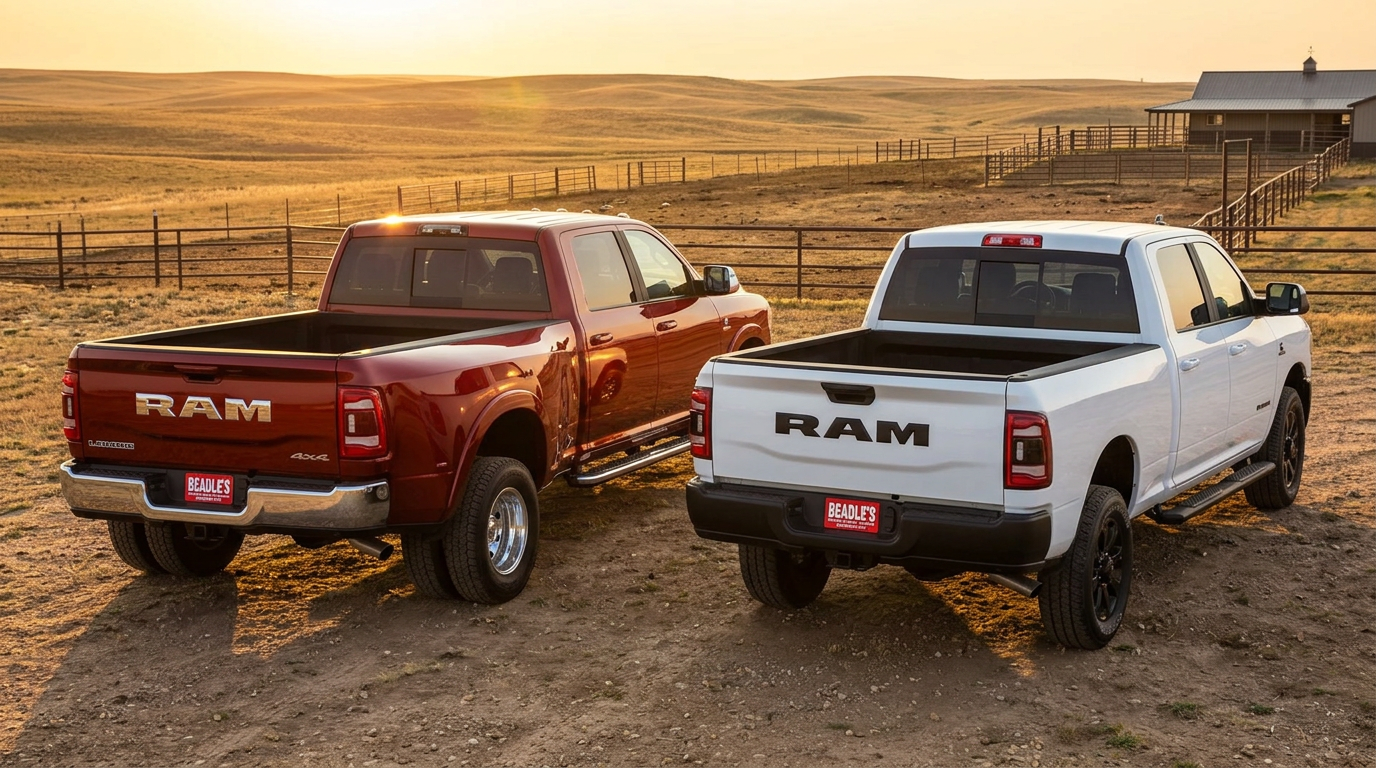
If you’re shopping for a heavy-duty Ram truck in South Dakota, you’ve probably wondered: Do I really need a 3500, or will a 2500 handle my work? Both are incredible trucks, both share the same engine options, and both are built for serious towing and payload. But they’re engineered for different missions—and choosing the right one makes a real difference in performance, capability, and total cost of ownership.
At Beadle’s Chrysler Center, we work with ranchers, contractors, ag operators, and families across Bowdle and the surrounding region. We’ve seen the 2500 tackle everything from hay hauling to livestock transport to everyday ranch work. And we’ve watched the 3500 handle the heavy stuff: gooseneck trailers, large RVs, commercial builds, and multi-ton loads. This guide breaks down the real differences so you can pick the truck that’s right for your needs.
In This Guide
What is the difference between the Ram 2500 and Ram 3500?
On the surface, the 2026 Ram 3500 and Ram 2500 look similar. They share the same cab styles, the same engines, the same infotainment system, and the same 8-speed transmission. Both can be ordered with the legendary 6.7L Cummins diesel or the 6.4L HEMI HD gas engine. So what’s different?
The 3500 is built heavier from the ground up. It has a reinforced frame, heavier-duty axles, a higher GVWR (Gross Vehicle Weight Rating) up to 14,000 lbs, and a GCWR (Gross Combined Weight Rating) that tops out at 45,000 lbs. The 3500 also comes standard with a dually option (dual rear wheels) on Crew Cab models, which spreads the load across more rubber and improves stability under extreme loads. The 2500, by contrast, is single rear wheel (SRW) only.
The 2500, meanwhile, has a class-exclusive coil-link rear suspension that delivers a smoother ride on pavement. It’s more refined, lighter on its feet, and doesn’t require as much bracing for everyday driving. The 2500 also gets exclusive variants like the Power Wagon (with electronic locking front diff and front sway bar disconnect) and the Rebel off-roader—neither available on the 3500.
| Feature | Ram 2500 | Ram 3500 |
|---|---|---|
| Rear Wheels | Single Rear Wheel (SRW) only | Dually (DRW) on Crew Cab; standard leaf spring |
| Frame & Axles | Standard duty | Heavy-duty reinforced frame & axles |
| GVWR | Up to ~12,500 lbs | Up to 14,000 lbs (DRW) |
| GCWR | Up to ~35,000 lbs | Up to 45,000 lbs |
| Rear Suspension | Coil-link (smoother, class-exclusive) | Leaf spring (standard) |
| Exclusive Variants | Power Wagon, Rebel | Mega Cab (Cummins only) |
| Available Auto-Level Air Suspension | Yes | Yes |
In short: The 3500 is the load-hauler. The 2500 is the refined, versatile choice.
Should I buy a Ram 2500 or Ram 3500?
This is the question we hear most often, and the answer depends on what you’re planning to do with the truck.
Buy the Ram 2500 if:
- You haul hay, livestock, grain, or equipment on a standard trailer
- Your max towing is under 20,000 lbs
- You want the smoothest possible ride on pavement and don’t need dually wheels
- You like the idea of Power Wagon or Rebel capabilities
- You value versatility: work truck on weekdays, capable daily driver on weekends
- You want to minimize complexity and keep upkeep straightforward
Buy the Ram 3500 if:
- You regularly tow over 20,000 lbs or work with gooseneck trailers
- You need the dually option for maximum stability and load distribution
- You haul large RVs, construction equipment, or multi-ton implements
- You operate a small fleet or commercial hauling business
- You need the Mega Cab (Cummins) for extra crew space with diesel power
- Your work demands 45,000-lb GCWR and maximum structural reinforcement
Bottom line: For most South Dakota ranchers and farm operators, the 2500 does the job exceptionally well. The 3500 is for the folks who’ve outgrown the 2500 or need commercial-grade durability.
How much more can the Ram 3500 tow than the 2500?
When it comes to towing capacity, the numbers tell a dramatic story. Here are the 2026 specs:
| Engine & Config | Ram 2500 Max Tow | Ram 3500 Max Tow |
|---|---|---|
| 6.4L HEMI HD | ~16,780 lbs | 18,150 lbs (HEMI DRW) |
| 6.7L Cummins HO | 20,000 lbs | 36,610 lbs (Cummins DRW) |
Those numbers are staggering. A 2500 with Cummins maxes out at 20,000 lbs. A 3500 with the same Cummins diesel can handle 36,610 lbs—that’s an extra 16,610 lbs of capacity. Nearly doubled.
Why the jump? The 3500’s reinforced frame, heavy-duty axles, dually wheels, and higher GCWR all work together. The dually wheels alone spread the load across six wheels instead of four, dramatically improving stability and weight distribution on the road.
Even the gas engines show a meaningful difference: the 3500 HEMI DRW edges out the 2500 HEMI by 1,370 lbs, which doesn’t sound like much until you’re at the trailer lot and that extra capacity means the difference between “yes, we can” and “we need a bigger truck.”
For gooseneck or 5th-wheel trailers: Both trucks require you to use these hitch types for loads over their stated tongue-weight limits. The 2500 has a 2,000-lb max tongue weight (Class V), while the 3500 goes up to 2,300 lbs. For anything bigger, you’re in gooseneck or 5th-wheel territory—and that’s where the 3500’s real advantage shows up.
Does the Ram 3500 ride rougher than the 2500?
Perception vs. reality: the 3500 can feel a bit rougher empty, especially compared to the 2500’s class-exclusive coil-link rear suspension. The 3500’s standard leaf-spring rear is engineered for load capacity, not luxury—it’s firmer to support heavy trailers without sagging.
However, Ram offers the Auto-Level Rear Air Suspension option on both trucks. If you go that route, the 3500 ride quality smooths out dramatically on pavement. The air suspension automatically adjusts to maintain a level ride whether you’re empty or loaded, which is why so many owners spec it as a must-have option.
Real talk: when you load a 3500 up (which is the whole point of owning one), the stiffer suspension actually feels better. You’re not bouncing around; the truck is planted and controlled. Empty, a 2500 with its softer suspension will feel more “car-like.” But put 10,000 lbs on each, and they feel very different—the 3500 is in its element.
For daily driving, especially if you’re running light loads most days, the 2500 with its coil-link suspension is the more refined choice. For work, the 3500 (especially with air suspension) is optimized for what it’s designed to do.
Is the Ram 3500 overkill for my needs?
Maybe. And that’s not a marketing pitch—that’s honest advice.
The 3500 is more truck. More frame. More axles. More capability. That also means:
- Tighter turning radius (dually wheels)
- Heavier steering (more frame mass)
- More fuel consumption (additional structural weight)
- Potential overpayment if you don’t use the extra capacity
If your actual towing needs top out at 15,000 lbs, and you’re unlikely to ever go higher, a 2500 with Cummins will handle that beautifully and with better everyday manners. You’ll also have access to Power Wagon and Rebel variants, which the 3500 doesn’t offer.
The honest question to ask yourself: Will I ever tow more than 20,000 lbs? Will I ever use gooseneck? Will my business grow in a way that demands more capacity? If the answers are “no,” the 2500 is probably the smarter buy. If the answers are “yes, maybe, or we’re growing,” the 3500 is the long-term play.
For most South Dakota ranches, the sweet spot is the 2500 Cummins. It’s not overkill. It’s right-sized.
Which Ram heavy-duty truck is better for ranching in South Dakota?
We work with ranchers every single day, and we know the work. Hay hauling, livestock transport, feeding operations, equipment towing, and gravel roads—that’s the South Dakota ranch reality. So here’s what we see:
The Ram 2500 is the ranch standard. Most successful ag operations in our region run 2500s, and they handle the job with room to spare. The coil-link suspension soaks up rough roads better than the 3500’s leaf springs, which matters when you’re driving gravel five days a week. It’s comfortable, versatile, and proven.
The Ram 3500 is for the ranches that have grown big. If you’re running multiple trailers, hauling equipment to auction, or operating a commercial hay-hauling side business, the 3500’s extra capacity and dually configuration make sense. It’s also the choice for ranches that regularly work with large gooseneck trailers or pull livestock trailers in rough terrain—the dually wheels provide stability and traction on muddy roads and steep grades.
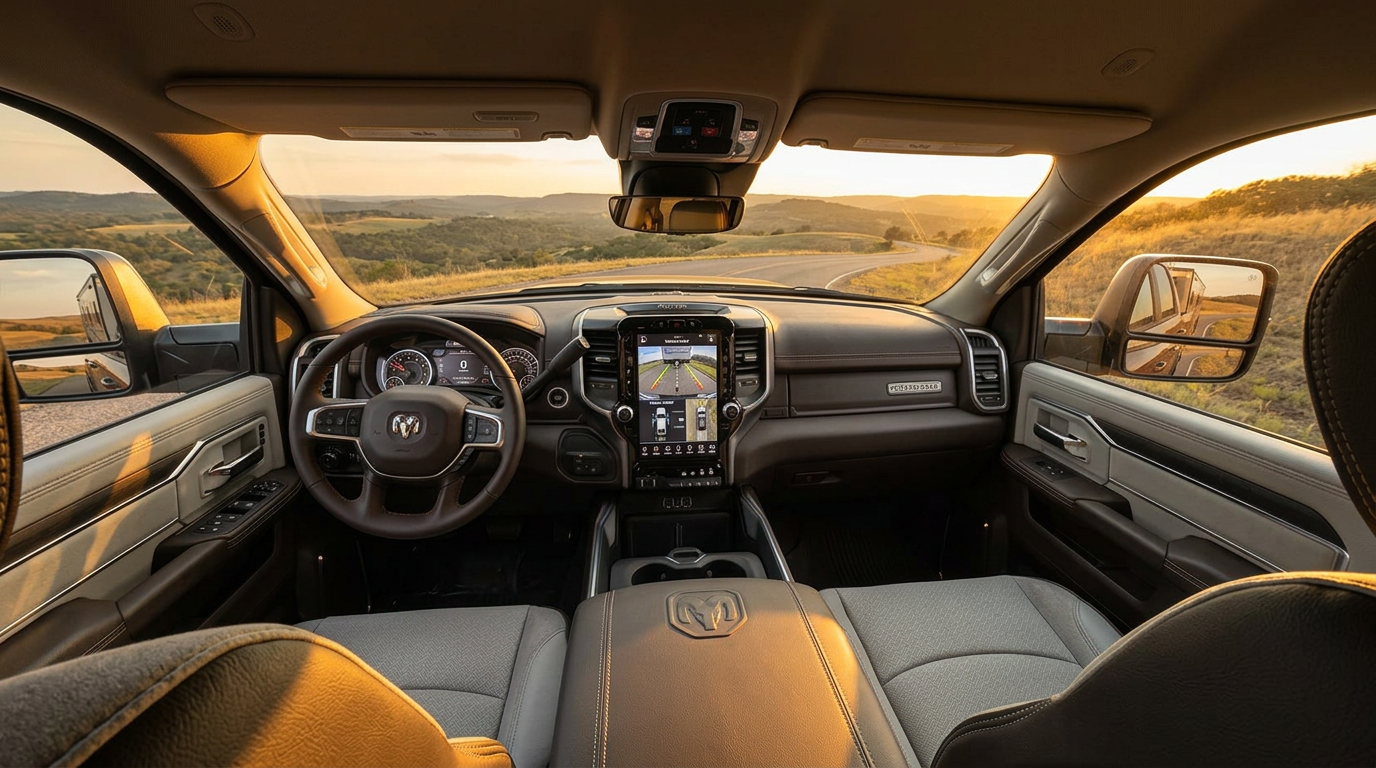
Both trucks are available with Cummins diesel in South Dakota, which is huge. The same 6.7L HO diesel with 1,075 lb-ft of torque is available in both. Snow Plow Prep is standard on 2026 models of each, so winter is covered. Both get the large 14.5″ touchscreen with integrated towing displays—really helpful when you’re managing trailers and cameras.
Our recommendation: Start with a 2500 Cummins if you’re unsure. You can always upgrade to a 3500 next cycle if your needs grow. But if you already know you need the gooseneck, the commercial use, or the 3500’s certified 36,000+ lb towing capacity, don’t compromise. We have both on the lot, and we’ll help you right-size the truck to your operation.
Quick Overview: Ram 3500 vs Ram 2500
| Spec | Ram 2500 | Ram 3500 |
|---|---|---|
| Max Tow (Cummins) | 20,000 lbs | 36,610 lbs |
| Max Tow (HEMI) | ~16,780 lbs | 18,150 lbs (DRW) |
| Max Payload (HEMI) | ~4,580 lbs | 7,590 lbs (DRW) |
| Max Payload (Cummins) | Up to ~4,500 lbs | 6,050 lbs (DRW) |
| GVWR | Up to ~12,500 lbs | Up to 14,000 lbs (DRW) |
| GCWR | Up to ~35,000 lbs | Up to 45,000 lbs |
| Rear Config | SRW only | DRW (dually) on Crew Cab |
| Engines | 6.4L HEMI or 6.7L Cummins | 6.4L HEMI or 6.7L Cummins |
| Diesel Torque | 1,075 lb-ft (best-in-class) | 1,075 lb-ft (best-in-class) |
| Transmission | 8-speed | 8-speed |
| Rear Suspension Type | Coil-link (class-exclusive, smooth) | Leaf spring (load-rated) |
| Auto-Level Air Suspension | Available | Available |
| Infotainment | 14.5″ touchscreen option | 14.5″ touchscreen option |
| Cummins Upcharge | $12,995 | $12,995 |
| Exclusive Variants | Power Wagon, Rebel | Mega Cab (Cummins) |
| 5th-Wheel/Gooseneck Min | Required over 20,000 lbs | Required over 23,000 lbs |
| Snow Plow Prep | Standard (2026) | Standard (2026) |
How to Decide: The Right Ram for Your Work
Step 1: Know Your Max Towing Load
Add up the weight of the heaviest trailer or load you anticipate hauling in the next five years. Don’t guess. Weigh it or look it up. If it’s under 15,000 lbs, the 2500 is plenty. If it’s 15,000–20,000 lbs, the 2500 with Cummins is your answer. If it’s over 20,000 lbs or you’re planning gooseneck work, the 3500 becomes the clear choice.
Step 2: Consider Your Hitch Type
Will you use bumper pull, weight-distribution, 5th-wheel, or gooseneck? The 2500 can handle bumper/WD pulls up to 20,000 lbs. Beyond that or with gooseneck, the 3500’s reinforced structure and higher GCWR make it the safer, smarter choice.
Step 3: Evaluate Dually Needs
Do you need dually wheels for extra stability, traction in mud, or to meet industry standards for livestock hauling? The 3500 offers it. The 2500 doesn’t. If you’re operating in rough terrain or pulling heavy loads, dually wheels are a game-changer for control and safety.
Step 4: Think Long-Term
Is your business or operation growing? Buying a truck that you’ll outgrow in three years is expensive. If there’s a reasonable chance you’ll need more capacity, the 3500 is the investment that lasts longer.
Step 5: Test Drive Both
Feel how each truck handles under load (we can simulate with weight in the bed or trailer). The 2500’s smoother ride is noticeable, but so is the 3500’s planted stability when it’s pulling hard. What feels right to you matters.
Step 6: Choose Your Engine
Both trucks offer 6.4L HEMI and 6.7L Cummins. The Cummins is a $12,995 upcharge but delivers 1,075 lb-ft of best-in-class torque. If towing is your primary mission, Cummins is worth every penny. If you’re doing mostly light work, HEMI saves money and still delivers solid performance.
Key Takeaways
- The 2500 is the versatile ranch workhorse: 20,000-lb Cummins towing, class-exclusive coil-link suspension for a smooth ride, access to Power Wagon and Rebel, and proven performance on South Dakota ag operations.
- The 3500 is the heavy commercial hauler: Up to 36,610 lbs of Cummins towing, dually option for load distribution and stability, reinforced frame and axles, 45,000-lb GCWR, and built for gooseneck and 5th-wheel work.
- Both share the same engines, transmissions, and infotainment, so the decision is about frame strength, rear config, and capability ceiling, not basic reliability.
- For most South Dakota ranches, the 2500 is right-sized. For operations that have grown or need commercial-grade towing, the 3500 is worth it.
- Test drive both. Feel the difference in suspension, steering, and overall presence. The right truck is the one that fits your work and feels solid in your hands.
Frequently Asked Questions
If you need the extra capacity and durability, absolutely. You’re not paying for hype—you’re paying for a reinforced frame, heavy-duty axles, dually wheels, and the structural engineering to safely handle 36,000+ lbs of towing. That’s a fundamentally different truck. But if your actual towing tops out at 12,000 lbs, the extra cost is a waste. Be honest about your needs.
It depends on the RV weight. Most modern travel trailers in the 8,000–15,000-lb range are within the 2500’s capability, especially with Cummins. But large fifth-wheels or Class A motorhomes often exceed 20,000 lbs, which is where the 3500 becomes the safer choice. Check your RV’s dry weight and add water, propane, and cargo—that’s your real towing weight.
The 3500’s extra weight and dually configuration will slightly reduce fuel economy compared to a 2500, especially when running empty. Expect 15–17 mpg highway on the 2500 gas, 18–20 mpg on the 2500 diesel. The 3500 typically runs 1–2 mpg lower in real-world use. Under load, the difference shrinks because both trucks are optimized for their intended duty cycle.
If you’re towing regularly over 15,000 lbs or working in muddy/rough terrain, dually wheels provide real benefits: load distribution, traction, and stability. The trade-off is a slightly tighter turning radius and reduced maneuverability in tight spaces. For ranch work, commercial hauling, and heavy towing, dually is worth it. For light work, SRW is fine.
You can’t retrofit a 2500 into a 3500. But you can sell or trade the 2500 in a few years and move up to a 3500 if your needs change. Many operators do exactly this: start with a 2500, find out they’ve outgrown it, and upgrade. It’s a reasonable strategy if you’re uncertain.
My Take on the Ram 3500 vs. Ram 2500
I’ve stood on the lot here at Beadle’s Chrysler Center for years, watching ranchers and contractors pick between these two trucks. The conversation almost always comes down to the same thing: will you actually use the extra capacity?
If the answer is yes, buy the 3500. Don’t compromise. The dually wheels, the reinforced structure, and the ability to legally and safely tow 36,000+ lbs without worry—that’s worth the investment. We have families and operations in the area that would never go back to a 2500 because they’ve seen what the 3500 can do under load.
If the answer is no, buy the 2500. A good 2500 Cummins will out-work most operations in South Dakota. It rides better, turns easier, and costs less. It’s a truck built to last and sized right for real work—not theoretical capacity.
Both trucks are in our Bowdle showroom right now. We can show you the difference in person, put you behind the wheel, and help you make the right call. Because the best truck is the one that matches your needs, not someone else’s. For the full breakdown on the 3500’s specs, trims, and towing configurations, see our complete 2026 Ram 3500 buying guide.
About the Author
Lexy Tabbert — Beadle’s Chrysler Center, Bowdle, SD
Lexy Tabbert is the Director of Sales and Marketing at Beadle’s Chrysler Center in Bowdle, South Dakota. She covers Ram, Jeep, Dodge, and Chrysler vehicles — helping families, ranchers, and ag operators across the region find the right truck and configuration for their needs. Learn more about Lexy.
Connect with us


