




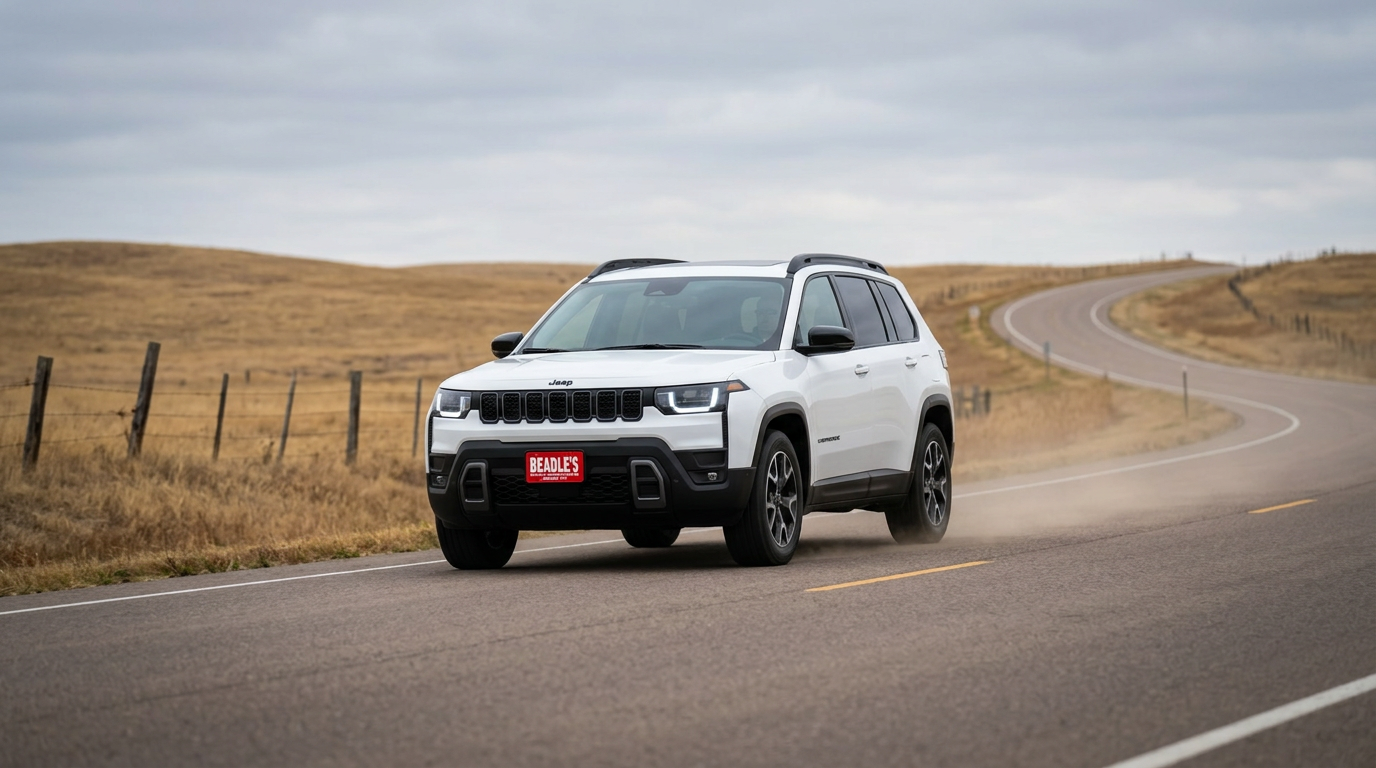
When South Dakota buyers hear the word “hybrid,” the first question is almost always the same: “Does that mean I have to plug it in?” It’s a fair concern. Charging infrastructure across much of rural South Dakota is limited, and the last thing you want is a vehicle that depends on facilities that may not be reliably available between Bowdle, Pierre, Fort Yates, or Bismarck.
The short answer: no — the 2026 Jeep Cherokee’s hybrid system charges itself. This guide explains exactly how that works, what it means for fuel efficiency on long regional drives, how it compares to plug-in hybrids and conventional gas SUVs, and why the Cherokee’s approach makes practical sense for buyers across the plains.
On This Page
- What Does “Self-Charging Hybrid” Actually Mean?
- How Is the Cherokee Different from a Plug-In Hybrid or EV?
- What Does an Estimated 37 MPG Mean for South Dakota Driving?
- Does the Cherokee Hybrid Require Any Special Maintenance?
- How Does the Hybrid Perform in a South Dakota Winter?
- How to Get the Most from the Cherokee’s Hybrid System
- Self-Charging Hybrid vs. Plug-In vs. Conventional Gas
What Does “Self-Charging Hybrid” Actually Mean?
A self-charging hybrid captures energy that would otherwise be lost and stores it in a battery — without any external charging required. The 2026 Cherokee pairs a 1.6L turbocharged four-cylinder engine with two electric drive motors and a hybrid transmission. Every time you brake, slow down, or coast, the system recovers kinetic energy and converts it to electricity through a process called regenerative braking.
That stored electricity helps power the vehicle — reducing how hard the gas engine has to work, particularly at lower speeds and during acceleration. The result is better fuel efficiency without changing anything about how you drive or refuel. Every stop sign, every slow for a curve, every time you lift off the throttle on the highway — the system is quietly recovering energy and putting it back to work.
Under the Hood
The Cherokee uses a 1.6L I4 EP Turbo Hybrid engine paired with two electric drive motors. Combined output is 210 horsepower and 230 lb-ft of torque — enough for confident highway passing and towing capability up to 3,500 lbs — sufficient for farm trailers, stock trailers, and the utility loads most South Dakota buyers are pulling.
Common Mistake
Buyers sometimes assume “hybrid” means electric — or at least partly electric in a way that requires charging. The Cherokee’s system is entirely self-contained. There is no battery to plug in, no charging cable in the box, and no charging station on your route planning. If you can find a gas pump, you can refuel it.
How Is the Cherokee Different from a Plug-In Hybrid or EV?
A plug-in hybrid (PHEV) uses a larger battery that you charge from a wall outlet or charging station — similar to an EV, just with a gas engine as backup. An EV runs entirely on electricity and requires regular charging. The Cherokee is neither. It is a self-charging hybrid, which means the battery charges itself and you never need to find a charging station or plug the vehicle in.
For most South Dakota drivers, that distinction matters enormously. Charging stations in rural South Dakota are sparse, and planning around charging schedules is not realistic when you are making regular runs between Bowdle, Pierre, Fort Yates, or Bismarck. The Cherokee’s system works anywhere you can get gasoline — which, out here, means everywhere.
Important Clarification
The 2026 Jeep Cherokee is not a plug-in hybrid and not an electric vehicle. You will never need to locate a charging station. The hybrid system is entirely self-contained — fill it up at any gas station, exactly as you would any conventional vehicle.
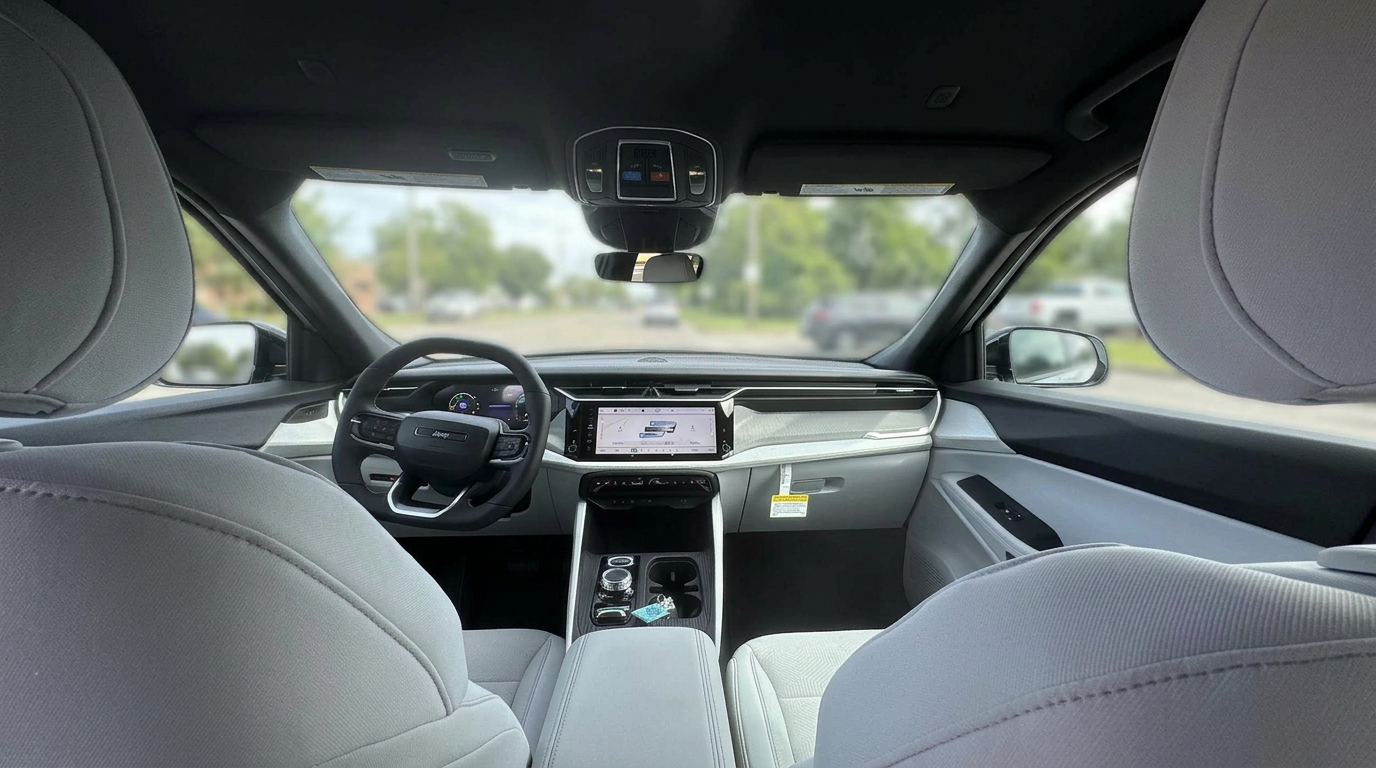
What Does an Estimated 37 MPG Mean for South Dakota Driving?
Jeep estimates the 2026 Cherokee at 37 mpg combined, delivering over 500 miles of range per tank. For a mid-size 4×4 SUV, that is a significant number — most comparable crossovers with standard all-wheel drive land in the mid-to-upper 20s for combined fuel economy.
| Route | Approx. Distance | Fraction of Tank (est.) |
|---|---|---|
| Bowdle to Pierre (one way) | ~175 miles | Less than half a tank |
| Bowdle to Bismarck (one way) | ~130 miles | Roughly one-quarter tank |
| Bowdle to Bismarck (round trip) | ~260 miles | Just over half a tank |
| Bowdle to Fort Yates (one way) | ~100 miles | Less than one-quarter tank |
For anyone putting serious miles on a vehicle across the region, the fuel savings add up quickly. A 20,000-mile year at 37 mpg combined versus 26 mpg combined represents a meaningful difference at the pump — and the Cherokee achieves it without requiring any changes to how you refuel or maintain the vehicle.
Source
Fuel economy estimate based on Jeep manufacturer data for the 2026 Cherokee. Actual mpg varies with driving conditions, speed, temperature, and load. Distance estimates based on general regional routing.
Does the Cherokee Hybrid Require Any Special Maintenance?
No. One of the most common concerns buyers raise about hybrid vehicles is whether a more complex powertrain means more maintenance costs or hard-to-find specialized service. For the Cherokee’s self-charging system, the answer is straightforward: it follows the same maintenance schedule as a conventional gas vehicle.
There are no charging components to service, no charging port to maintain, and no specialized hybrid technician requirement for routine work. Oil changes, tire rotations, brake inspections — same intervals, same service. In fact, regenerative braking reduces wear on the physical brake pads over time, since the system handles much of the deceleration work before the friction brakes engage. That is a long-term cost-of-ownership benefit, not a drawback. For buyers who already bring their vehicle to Beadle’s Chrysler Center for service, nothing about the Cherokee’s maintenance routine changes.
How Does the Hybrid Perform in a South Dakota Winter?
Cold weather is worth addressing honestly, because it does affect some hybrid and EV systems. EVs and plug-in hybrids with large battery packs can lose meaningful range in extreme cold — a well-documented limitation. The Cherokee uses a smaller self-charging battery pack that is less susceptible to severe cold-weather performance loss, and the gasoline engine remains fully operational in all temperatures.
What matters most for January driving in South Dakota is the Cherokee’s standard 4×4 with Selec-Terrain, which includes a dedicated Snow mode on every trim level — adjusting throttle response, braking distribution, and torque delivery for ice and snow-packed roads. Laredo and above add heated front seats and heated exterior mirrors. The Limited, 85th Anniversary Edition, and Overland trims add a heated steering wheel. Remote start is standard on Laredo and above, which means you can warm the cabin from inside before you head out on a cold morning. The hybrid system works through all of it exactly as expected.
How to Get the Most from the Cherokee’s Hybrid System
The Cherokee’s hybrid manages itself — you do not need to think about it during normal driving. A few habits, though, help the system operate at its best and deliver the fuel efficiency it is designed for.
- Brake smoothly and early: Gradual, predictable braking gives the regenerative system more time to recover energy. Sudden hard stops reduce recovery efficiency — the friction brakes take over before the system can capture as much.
- Maintain steady highway speeds: On long two-lane stretches across the region, consistent throttle keeps the hybrid in its most efficient operating range. Frequent acceleration and hard braking costs more fuel than steady cruising.
- Use remote start in extreme cold: On Laredo and above, remote start allows the engine and hybrid system to reach optimal operating temperature before you drive. A warmed-up hybrid is a more efficient hybrid, particularly in January and February.
- Let the system do the work: There is no Eco button to press, no manual mode to engage. The hybrid transmission and electric motors manage the power split automatically. Trust the system — it is designed specifically for this kind of mixed rural and highway driving.
Self-Charging Hybrid vs. Plug-In vs. Conventional Gas: Which Is Right for You?
| Factor | Cherokee Self-Charging Hybrid | Plug-In Hybrid (PHEV) | Conventional Gas SUV |
|---|---|---|---|
| Needs to be plugged in? | No | Yes | No |
| Charging infrastructure required? | None — gas only | Yes, for full benefit | None — gas only |
| Fuel economy (est. combined) | 37 mpg (est.) | Varies widely | Mid-to-upper 20s (typical) |
| Range per tank | 500+ miles (est.) | Varies | 300–400 miles (typical) |
| Brake wear reduction? | Yes (regenerative) | Yes (regenerative) | No |
| Special maintenance? | Standard intervals | Moderate added complexity | Standard intervals |
| 4×4 standard on all trims? | Yes — Active Drive I | Varies by model | Varies by model |
Worth it if: You want meaningfully better fuel economy without changing how you refuel, and charging infrastructure in your area is limited or nonexistent.
Consider a PHEV instead if: You have consistent home charging access and want the option of short electric-only commutes. The Cherokee is not designed for that use case.
Key Takeaways
- The Cherokee’s hybrid is entirely self-charging — no plug, no charging stations, no new habits. Fill it up at any gas station exactly as you always have.
- The system recovers energy automatically every time you brake or slow down — regenerative braking requires nothing from the driver.
- Estimated 37 mpg combined means 500+ miles per tank — that’s a round trip from Bowdle to Bismarck without stopping for gas.
- No special maintenance schedule — the Cherokee follows standard service intervals, and regenerative braking can reduce brake pad wear over time.
Frequently Asked Questions
Do I need to plug in the 2026 Jeep Cherokee?
No. The 2026 Jeep Cherokee uses a self-charging hybrid system, not a plug-in. The battery charges automatically through regenerative braking — every time you slow down or brake, the system recovers energy and stores it. You will never need to find a charging station or plug the vehicle in. It runs on gasoline, refueled at any gas station.
What happens if the hybrid battery in the Cherokee runs low?
The Cherokee is designed so the hybrid battery never fully depletes during normal driving — the regenerative system and engine continuously maintain the battery’s charge level. If the battery reaches a low state for any reason, the gas engine takes over completely and the vehicle continues to operate normally. You will not be stranded or left without power.
Is the Cherokee hybrid harder to start in extreme cold?
No. The Cherokee’s hybrid system does not depend on battery charge alone to start and drive in cold weather — the gasoline engine starts and operates independently under all temperature conditions. Cold weather reduces battery efficiency marginally in any hybrid vehicle, but the Cherokee starts, drives, and performs normally in South Dakota winters. Laredo and above include remote start, which helps bring the engine and cabin to operating temperature before you get in.
Does the Cherokee hybrid cost more to maintain than a regular gas SUV?
Routine maintenance costs are comparable to a conventional SUV. The Cherokee follows standard service intervals — oil, tires, brakes — without requiring specialized hybrid-only service steps for most routine work. Regenerative braking also extends the life of the physical brake pads by handling a portion of the deceleration load before friction brakes engage, which can reduce brake replacement frequency compared to a non-hybrid vehicle.
My Take on the Cherokee’s Hybrid System
When I talk to buyers here at Beadle’s Chrysler Center, the hybrid conversation almost always starts the same way: “I’m not interested in anything electric.” And honestly, I understand that completely. We’re in Bowdle, South Dakota — not Portland or Minneapolis. Charging infrastructure out here is not convenient, and a vehicle that depends on it is not a practical choice for most people driving these roads. But that same hesitation sometimes causes buyers to pass on the Cherokee without fully understanding what it is.
The Cherokee’s hybrid is genuinely different from anything that plugs in. You drive it exactly like any other gas vehicle — fill it up at any station, same service schedule, no charging stops, no new habits. What changes is how often you’re stopping for fuel. For customers who are putting 20,000 or 25,000 miles a year on a vehicle running back and forth across the region, that difference is real money over the life of ownership. The 4×4 and Selec-Terrain work the same as they always have. The hybrid just makes the engine more efficient while doing it.
If you want the full breakdown — trims, specs, pricing, and what each level includes — check out our complete 2026 Jeep Cherokee guide. And if you’re in or around Bowdle and want to see it in person, stop by Beadle’s Chrysler Center. We’re happy to walk you through how the system works on the lot — no pressure, just the information you need to make the right call.
About the Author
Lexy Tabbert — Beadle’s Chrysler Center, Bowdle, SD
Lexy Tabbert is the Director of Sales and Marketing at Beadle’s Chrysler Center in Bowdle, South Dakota. She covers Ram, Jeep, Dodge, and Chrysler vehicles — helping families, ranchers, and ag operators across the region find the right truck and configuration for their needs. Learn more about Lexy.
Connect with us


