





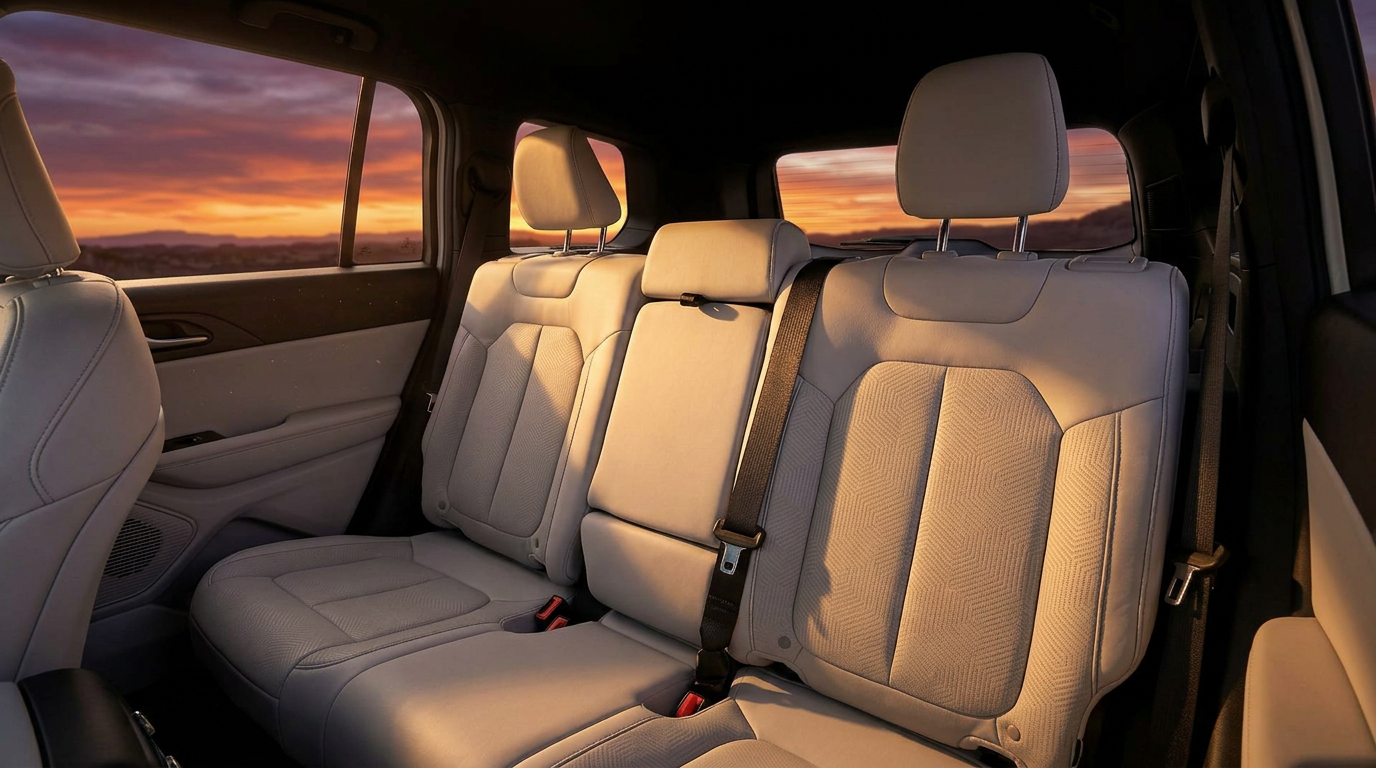
The 2026 Jeep Cherokee carries 33.6 cubic feet of cargo behind the second row and 68.3 cubic feet with the rear seat folded — 30 percent more than the previous Cherokee generation. For a compact SUV that looks from the outside like a normal-sized crossover, that number surprises a lot of buyers when they actually open the hatch.
This guide covers the real-world meaning of those numbers, how the 2026 Cherokee interior compares to competing compact SUVs, what changed in the redesign, how the seating and cargo configurations work, and which trim levels add meaningfully to interior quality and comfort.
On This Page
- What are the 2026 Cherokee’s cargo numbers?
- How does Cherokee cargo compare to competing SUVs?
- What changed in the 2026 Cherokee interior redesign?
- How does the rear seat fold and how usable is the flat floor?
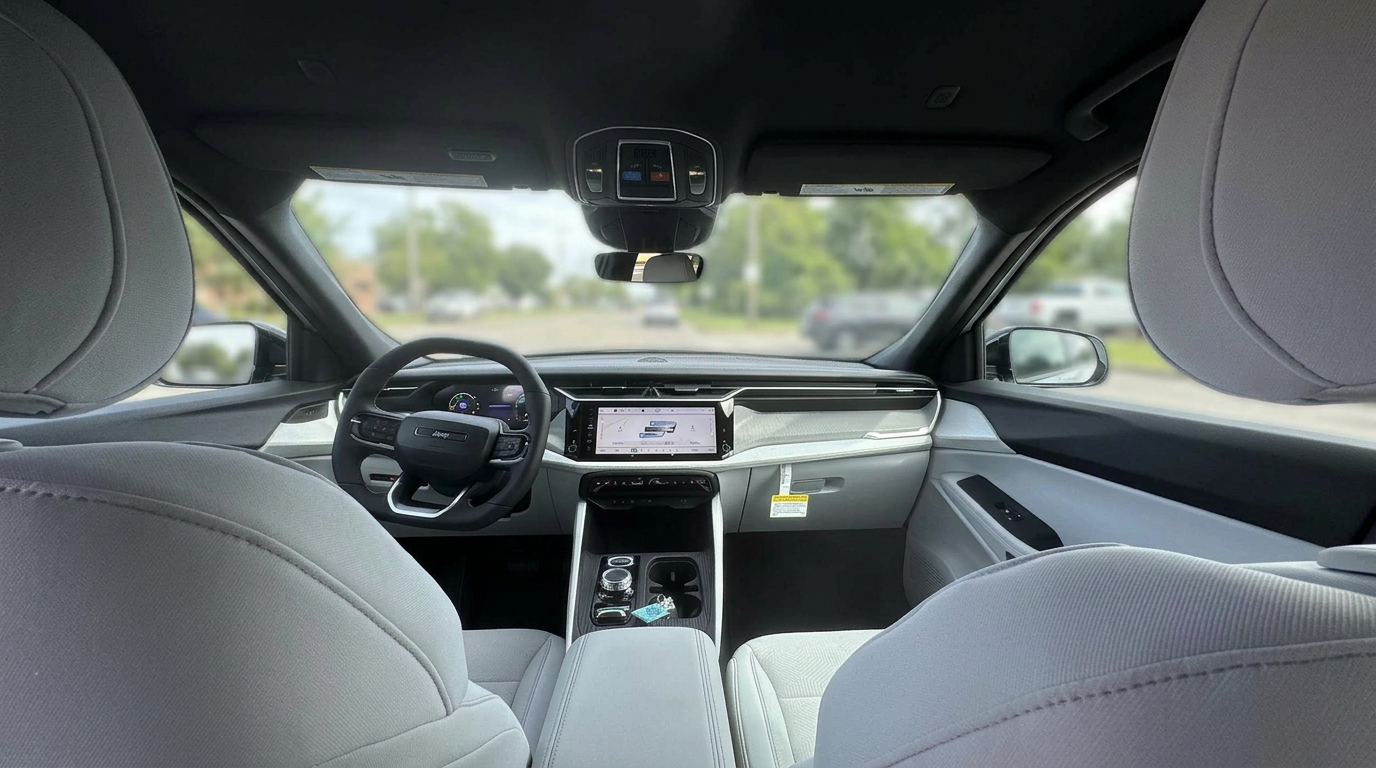
- What interior upgrades does each trim level add?
- How to configure Cherokee cargo for different hauling needs
What are the 2026 Cherokee’s cargo numbers?
The 2026 Jeep Cherokee provides 33.6 cubic feet of cargo space behind the second row and 68.3 cubic feet with the rear seat folded flat. These are the two measurements that matter for daily use: behind-seat for normal cargo-while-carrying-passengers, and maximum load for full hauling configuration.
To put 33.6 cubic feet in practical terms: that’s enough for a week’s worth of groceries for a family of four, two full-size suitcases standing upright, or a couple of large coolers for a hunting or fishing trip. The floor width and the flat, low load height make it easier to use that space than vehicles with similar volume numbers but awkward hatch openings or high load floors.
The 68.3 cubic feet behind the first row — with rear seats fully folded — handles building materials, livestock feed bags, equipment loads, or anything requiring flat, uninterrupted floor space. That’s a meaningful jump in usability for buyers who need the SUV to work as a hauler on a weekly basis.
How does Cherokee cargo compare to competing compact SUVs?
The compact SUV segment is competitive on cargo numbers, but the 2026 Cherokee’s 68.3 cubic feet of maximum cargo puts it toward the top of the class. The prior Cherokee generation offered significantly less — the 30 percent increase in the 2026 redesign was one of the most substantial changes Jeep made to the platform.
What differentiates cargo capacity in this class isn’t just raw numbers but usable volume — the height of the opening, the width of the load floor, and whether the folded seatbacks create a level or angled surface. The 2026 Cherokee provides a relatively flat floor when the rear seats fold, which matters more in practice than marginal volume differences between competing models.
Common Mistake
Buyers comparing cargo numbers between vehicles often miss that “behind first row” and “behind second row” measurements vary by which manufacturer uses them as marketing figures. Always compare the same measurement. The Cherokee’s 33.6 cu ft (behind row 2) and 68.3 cu ft (behind row 1) are the meaningful comparisons to make — don’t compare the Cherokee’s max number to another brand’s second-row number and draw conclusions from that.
What changed in the 2026 Cherokee interior redesign?
The 2026 Cherokee represents a full-generation redesign — not a refresh. The interior changes go well beyond trim updates. The cargo volume increase of 30 percent came from structural changes to the rear compartment and a revised rear seat design, not from squeezing passenger space.
The instrument panel is new, with a larger central display and more driver-focused layout. Cabin noise reduction was addressed in the redesign — the 2026 Cherokee is substantially quieter on highway and at gravel road speeds than the previous generation. The N95+ Bio HVAC Cabin Filter is standard across all trims, which matters for buyers in agricultural areas where dust, pollen, and seasonal particulate matter are common concerns.
Rear passenger space also improved in the redesign — rear headroom and legroom are more generous than the prior generation, addressing one of the most consistent criticisms of the previous Cherokee platform. For families where rear seat comfort matters — and in South Dakota, where long-distance drives are routine — this is a practical improvement.
How does the rear seat fold and how usable is the flat floor?
The 2026 Cherokee rear seat folds in a 60/40 split configuration — both halves or one at a time. This gives you three options: full rear passenger use, half cargo/half passenger (useful for hauling one long item while keeping one rear passenger seat), or full flat cargo mode with both halves down.
When both halves are folded, the resulting floor surface is reasonably flat with minimal step or angle between the folded seatbacks and the cargo floor. This is the design improvement that makes the 68.3 cubic feet number genuinely useful — a high step or severe angle in the fold-flat position wastes usable cargo length even when the volume number is large.
For long cargo — lumber runs, antenna poles, fishing rods, kayak paddles — the length from the closed hatch to the back of the folded front seats is sufficient for most items under 8 feet. Buyers regularly transporting longer items will still need a truck or a dedicated cargo vehicle; the Cherokee handles the typical weekend hauling load without issue.
Power Liftgate — Available Laredo and Above
The power liftgate is standard on Laredo, Limited, 85th Anniversary, and Overland trims — not available on the base Cherokee 4×4. If hands-free or power hatch access is important (common for grocery runs, loading feed bags, or any scenario where both hands are occupied), that’s a Laredo-and-up feature. The Overland adds a hands-free variant that opens when you stand behind the hatch with the key fob in your pocket.
What interior upgrades does each trim level add?
Interior quality and comfort features step up meaningfully across the Cherokee lineup. Here’s what changes from trim to trim:
| Feature | Base 4×4 | Laredo | Limited | Overland |
|---|---|---|---|---|
| Seat material | Soul Cloth | Cloth (Labyrinth) | Capri Leatherette | Unique Leatherette |
| Heated front seats | — | ✓ | ✓ | ✓ |
| Heated steering wheel | — | — | ✓ | ✓ |
| Power liftgate | — | ✓ | ✓ | ✓ |
| Panoramic sunroof | — | Pkg only ($1,595) | — | Standard |
| Wireless charging | — | — | — | Standard |
| Memory seat / mirrors | — | — | — | Standard |
| Ventilated front seats | — | — | — | Adv. Protech Grp |
Heated steering wheel starts at Limited. Wireless charging and memory seat are Overland standard. 85th Anniversary shares the Limited’s interior features plus sport seats and upgraded audio.
How to configure Cherokee cargo for different hauling needs
The Cherokee’s 60/40 split rear seat and flat fold-down floor give you four practical configurations depending on what you’re hauling:
- Normal passenger + cargo (all seats up — 33.6 cu ft): Full five-passenger seating with 33.6 cubic feet behind the second row. Handles groceries, gear bags, hunting day packs, and typical weekly hauling without touching the seat configuration. This is the default for most South Dakota buyers on most days.
- One long item + rear passenger (40% side folded): Fold the smaller 40 percent section of the rear seat to open a longer cargo channel on one side while keeping one rear seating position. Works for lumber boards, toolboxes, or any single long item that doesn’t fit standing in the cargo area.
- Max cargo — no passengers (both sides folded — 68.3 cu ft): Fold both rear halves for the full flat floor. This is the configuration for feed bags, a dog kennel, ATV gear, camping loads, or any scenario where you’re hauling and not carrying passengers. At 68.3 cubic feet the floor is long and wide enough for most compact truck-style loads.
- Covered protection for valuables (hatch closed, cargo cover up): The cargo area sits below the beltline when the rear seats are up, keeping contents out of sightline from outside. For buyers who leave gear or tools in the vehicle, keeping items in the rear cargo zone rather than visible through side windows reduces theft opportunity on a daily basis.
- Cold-weather prep — pre-loaded before trips: Load coolers, gear bags, and supplies the evening before a hunting or fishing trip. The Cherokee’s 4×4 system and heated interior mean you’re not doing a morning cold-load. With remote start (Laredo and above), the cabin is warm and the cargo is already packed — you’re out the door on schedule on a January morning.
Key Takeaways
- The 2026 Cherokee carries 33.6 cubic feet behind the second row and 68.3 cubic feet maximum — 30 percent more than the previous generation. The 30 percent jump came from structural redesign, not from reducing passenger space.
- The rear seat folds 60/40 and creates a reasonably flat floor, making the 68.3 cubic feet usable rather than just a marketing number. Width and load height are buyer-relevant — the Cherokee loads easily without a high lift-over.
- Power liftgate is standard on Laredo, Limited, 85th Anniversary, and Overland — not on the base Cherokee 4×4. Buyers who load and unload frequently should factor this in when comparing trims.
- Heated seats start at Laredo, heated steering wheel at Limited, wireless charging and memory seat at Overland. Interior comfort features step up meaningfully at each trim boundary.
- The N95+ Bio HVAC Cabin Filter is standard on all trims — relevant for agricultural and dust-heavy environments throughout the region.
Frequently Asked Questions
How much bigger is the 2026 Cherokee cargo space compared to the old Cherokee?
The 2026 Cherokee offers 30 percent more cargo space than the previous generation — a result of the full platform redesign. The new model provides 33.6 cubic feet behind the second row and 68.3 cubic feet with the rear seat folded flat. The increase came from structural changes to the rear compartment and a revised seat fold design, not from reducing rear passenger room.
Does the 2026 Cherokee have a flat cargo floor when the rear seats fold?
Yes — the 2026 Cherokee rear seats fold to create a relatively flat floor with minimal step between the folded seatbacks and the cargo floor surface. The 60/40 split allows one or both halves to fold independently, giving you the option to keep one rear passenger seat in use while opening cargo space on the other side.
Does the Cherokee have a power liftgate?
Yes — power liftgate is standard on Laredo, Limited, 85th Anniversary, and Overland trims. The base Cherokee 4×4 does not include a power liftgate. The Overland adds a hands-free version that opens when you stand behind the vehicle with the key fob. If power liftgate access is important for your daily use, the Laredo is the entry point for that feature.
Is the 2026 Cherokee interior quiet enough for highway driving?
Cabin noise reduction was a focus area in the 2026 redesign. The 2026 Cherokee is substantially quieter on highway and at gravel road speeds than the previous generation — which was one of the more consistent criticisms of the prior platform. For buyers who do long-distance highway driving or regular gravel road travel, the noise improvement is noticeable compared to both the old Cherokee and many competing compact crossovers.
My Take on the Cherokee’s Interior and Cargo Space
The 30 percent cargo increase in the 2026 generation is one of those things that buyers notice immediately in person but would never guess from looking at the vehicle from the outside. The 2026 Cherokee doesn’t look dramatically bigger than the old one — the interior packaging improvement happened inside the same footprint, which is the harder engineering problem to solve. When you open the hatch and see how the load floor drops down and how far back it extends, it lands differently than a spec sheet number.
The N95+ cabin filter is a detail I find myself mentioning more often than I expected when talking to buyers in this area. During spring field work season, during combine harvest, during the dry August weeks when the county roads throw dust up all day — having a cabin filter that actually blocks particulate matter rather than just catching the biggest pieces is a real quality-of-life difference for people in ag country. It’s standard equipment on a $35,000 vehicle. That would have been a luxury feature on any vehicle five years ago.
For the full trim-by-trim breakdown including interior seating materials, package options, and pricing, our 2026 Cherokee pillar page has everything in one place. Stop by Beadle’s in Bowdle and we can walk you through the actual cargo floor — it’s one of those things that reads better in person than on paper.
About the Author
Lexy Tabbert — Beadle’s Chrysler Center, Bowdle, SD
Lexy Tabbert is the Director of Sales and Marketing at Beadle’s Chrysler Center in Bowdle, South Dakota. She covers Ram, Jeep, Dodge, and Chrysler vehicles — helping families, ranchers, and ag operators across the region find the right truck and configuration for their needs. Learn more about Lexy.
Connect with us


