




If you are cross-shopping a midsize family SUV, the Jeep Grand Cherokee usually ends up on the same list as the Ford Explorer, Chevy Traverse, and Toyota Highlander. They are all good vehicles, and they will all get your family to school and back. But out here, "good in the city" and "good in a plains winter" are not the same test — and that is where these SUVs start to separate.
This is a fair, honest look at how the Grand Cherokee compares through the lens that matters in central South Dakota: winter, gravel, and real four-wheel drive. I am not going to run down anyone else's vehicle with made-up numbers — I will tell you where the Grand Cherokee's design gives it an edge, and where a rival might suit you better.
Real 4x4 vs Car-Based All-Wheel Drive
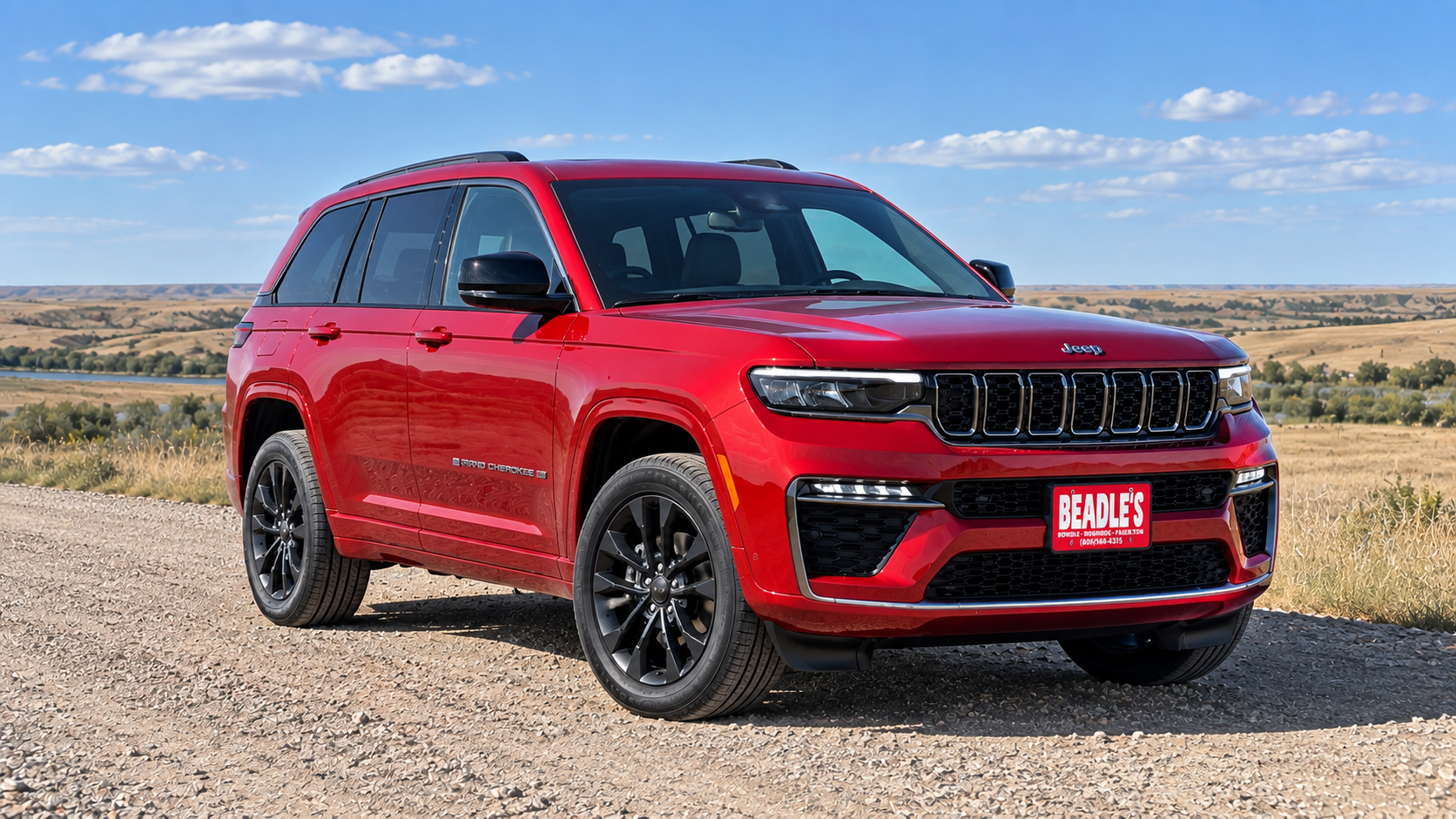
This is the biggest difference, and it is a design difference, not a marketing one. The Grand Cherokee is built as a true four-wheel-drive SUV, and its higher trims add a genuine low range for the worst conditions. The Explorer, Traverse, and Highlander are car-based crossovers that offer all-wheel-drive systems designed mainly for pavement and light snow.
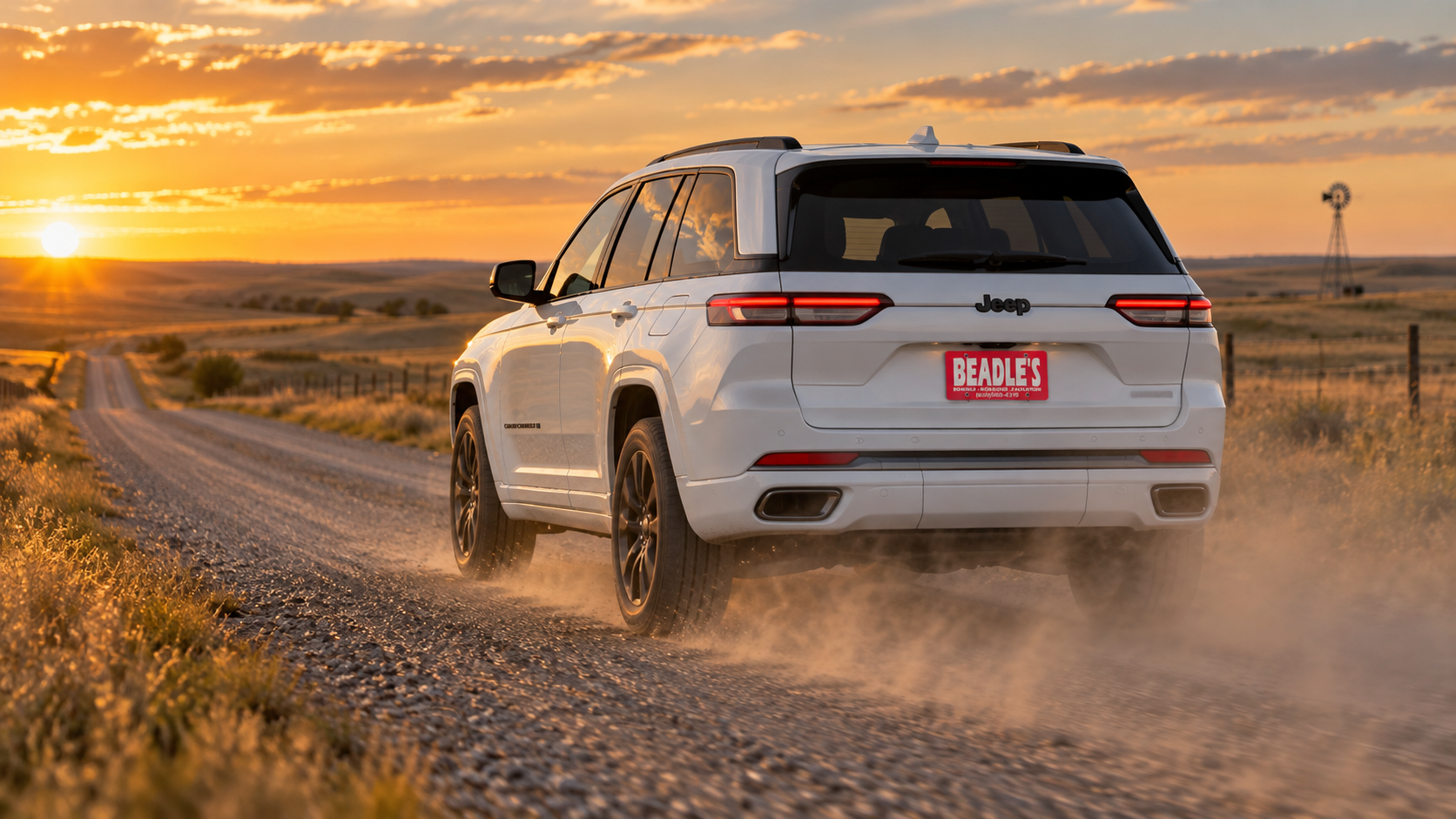
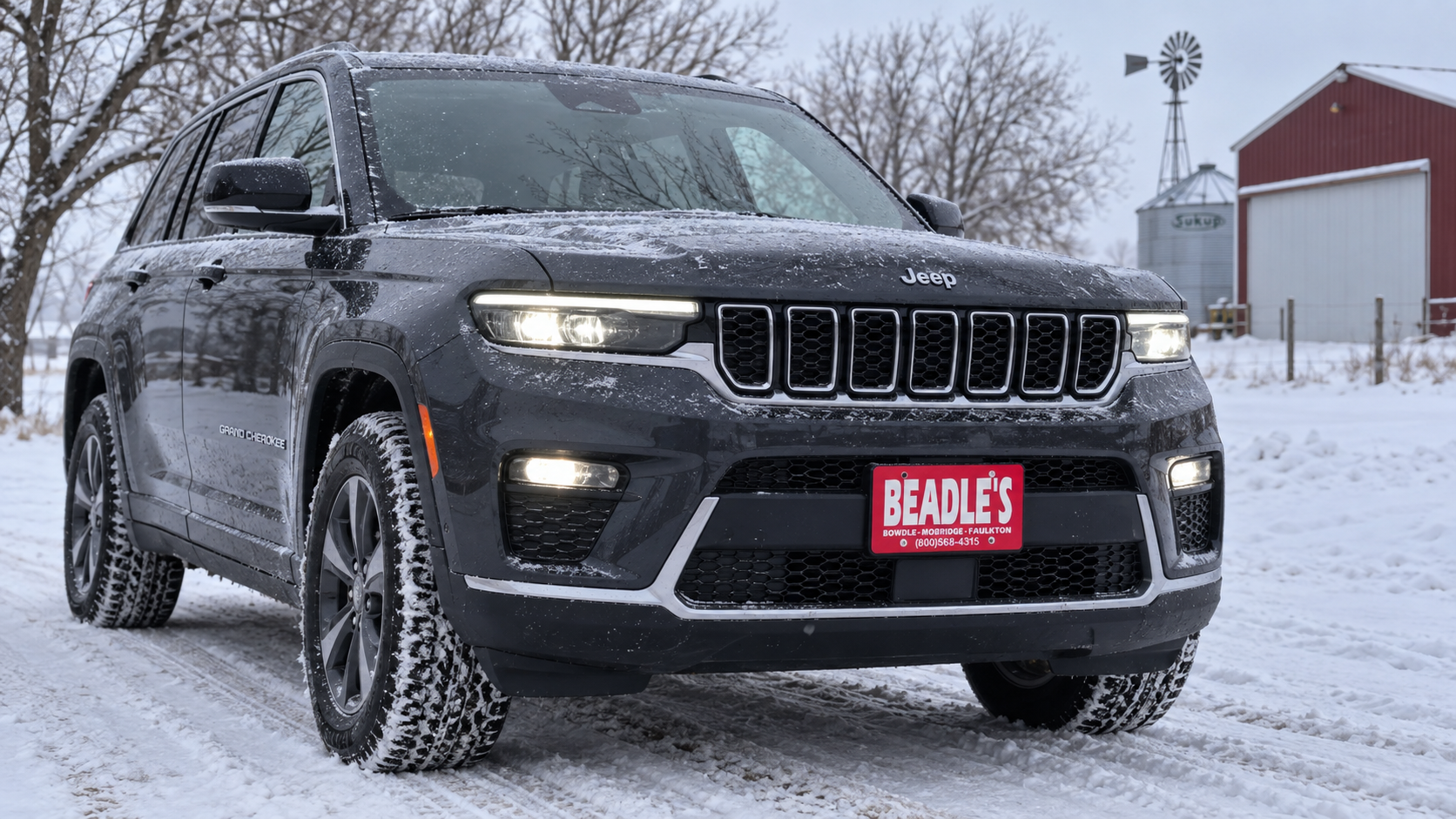
For a family that spends winters on plowed streets, a good crossover AWD system is genuinely fine. But when the road has not been plowed, when you are on drifted gravel, or when you want a low range to crawl through something deep, the Grand Cherokee's hardware is built for it in a way most car-based systems are not. It is the difference between a system meant to keep you moving on a snowy highway and one meant to get you down an unbroken section line.
A fair word on the rivals
The Explorer, Traverse, and Highlander are well-built, popular family SUVs, and their AWD systems handle typical winter driving just fine. This is not about one being junk — it is about matching the vehicle to how rough your roads actually get. If yours get rough, that is where the Grand Cherokee's design pulls ahead.
Ground Clearance and Towing on Bad Roads
Two numbers matter a lot out here, and the Grand Cherokee is strong on both. It offers up to 10.9 inches of ground clearance with the available Quadra-Lift air suspension, and it tows up to 6,200 pounds when properly equipped with the Trailer Tow Package.
That clearance is what keeps you from high-centering on the packed ridge in an unplowed road, and it gives you more room over ruts and washboard gravel. Car-based crossovers typically ride lower, though exact clearance varies by model and trim. On towing, the Grand Cherokee's 6,200-pound rating is competitive for the class and enough for a typical boat, small camper, or utility trailer — check the specific trim and configuration, since capability varies across every SUV in this comparison.
Where the Rivals Might Suit You Better
Being honest cuts both ways. The main trade-off with the two-row Grand Cherokee is that it seats five, while some car-based rivals are built around three rows and may offer more standard third-row and passenger room for the money. If a roomy third row is your top priority, that is a real point in the crossovers' favor.
If you want a third row from a Grand Cherokee, that is exactly what the longer Grand Cherokee L is for — but a family whose number-one need is maximum people space at a lower price may find a car-based three-row fits that specific goal well. The honest way to think about it: the crossovers optimize for interior space and on-road comfort, while the Grand Cherokee optimizes for genuine capability. Decide which one your life actually leans on more.
What to Weigh Side by Side
Rather than throw around competitor numbers that change by trim and model year, here is an honest framework. The Grand Cherokee figures below are verified; the rivals are described in general terms because their specifics vary by trim — always confirm the exact model you are considering.
| What to Weigh | 2026 Grand Cherokee | Explorer / Traverse / Highlander |
|---|---|---|
| Drivetrain type | True 4x4; low range on higher trims | Car-based AWD; varies by model |
| Max ground clearance | Up to 10.9″ (air suspension) | Typically lower; varies by trim |
| Max towing (properly equipped) | 6,200 lbs | Varies by model and setup |
| Third row | Grand Cherokee L only | Often standard; room varies |
| Best at | Winter, gravel, real capability | Interior space, on-road comfort |
For the deeper story on how the Grand Cherokee actually behaves when the roads go bad, our South Dakota winter guide walks through the 4x4 systems in plain terms.
So Which One Should a South Dakota Family Buy?
If your winters are spent mostly on plowed roads and highways and your top priority is the roomiest third row for the money, a car-based crossover can be a smart, comfortable pick — there is no shame in that. But if you drive unplowed gravel, break your own trail, tow, or just want the peace of mind of a true four-wheel-drive SUV, the Grand Cherokee is built for exactly that.
And if you love the Grand Cherokee's capability but need more seats, the Grand Cherokee L gives you a third row without giving up the real 4x4. Our two-row-versus-L comparison helps you size that up, and our reliability and value guide covers the long-term ownership side of the decision.
How to Compare These SUVs Honestly
Cut through the marketing and compare them on your own terms with a few deliberate steps.
- Name your worst-road day: picture the toughest drive you actually make in a year and judge each SUV against that, not an average Tuesday.
- Separate wants from needs: decide whether real capability or maximum interior room is the priority you cannot compromise on.
- Check the drivetrain, not just the badge: confirm whether a model offers a true low range or a pavement-focused AWD system.
- Verify the exact trim's numbers: ground clearance and towing shift by trim and configuration, so confirm the specific vehicle you would buy.
- Test drive on a road you know: take each one down gravel or a rough stretch near home, not just the smooth route by the dealership.
Is the Grand Cherokee the Right Pick Over a Crossover?
| Consideration | Grand Cherokee | Car-Based Rival |
|---|---|---|
| Unplowed roads & gravel | Built for it | Fine on plowed roads |
| Standard third-row room | L body only | Often a strength |
| Capability ceiling | Higher (low range, clearance) | Lower; on-road focus |
Worth it if: you drive unplowed gravel, break your own trail, tow, or want genuine four-wheel-drive capability with a family SUV.
Skip it if: you stick to plowed roads and highways and your top priority is the largest, roomiest third row for the money.
Key Takeaways
- The Grand Cherokee is a true 4x4 with a low range on higher trims; the Explorer, Traverse, and Highlander use car-based AWD built mainly for pavement.
- Up to 10.9 inches of ground clearance and 6,200 pounds of towing give the Grand Cherokee an edge on bad roads and with a trailer.
- Car-based rivals may offer more standard third-row and passenger room — a fair point if space is your top priority.
- Choose capability (Grand Cherokee) or maximum interior room (crossovers) based on how rough your real roads get.
Frequently Asked Questions
Is the Grand Cherokee better in snow than an Explorer, Traverse, or Highlander?
For deep snow, drifts, and unplowed gravel, the Grand Cherokee's true four-wheel-drive design — with a low range on higher trims and up to 10.9 inches of ground clearance — is built for tougher conditions than the car-based all-wheel-drive systems in most crossovers. On plowed roads and highways, all of them handle winter well.
How much can the Grand Cherokee tow compared to these rivals?
Properly equipped with the Trailer Tow Package, the Grand Cherokee tows up to 6,200 pounds — competitive for the class and plenty for a typical boat, small camper, or utility trailer. Towing capacity on the Explorer, Traverse, and Highlander varies by model and configuration, so compare the exact trims you are considering.
Do the competitors have a third row when the Grand Cherokee does not?
The two-row Grand Cherokee seats five, and some car-based rivals are built around three rows that may offer more standard passenger room for the price. If you want a third row from a Grand Cherokee, the longer Grand Cherokee L provides one while keeping the true four-wheel-drive capability.
Which family SUV is the right choice for central South Dakota?
If you drive unplowed gravel, break your own trail, or tow, the Grand Cherokee's genuine capability is hard to beat. If you stick to plowed roads and want the roomiest third row for the money, a car-based crossover can be the better fit. Match the vehicle to how rough your roads actually get.
My Take on the Cross-Shop
I will never tell someone the Explorer, Traverse, or Highlander is a bad vehicle, because it is not — they are popular for good reasons, and plenty of families around here are happy in them. What I do is ask about the roads people actually drive. When someone tells me they head out before the plow, run gravel every day, or tow a boat to the lake, that is when I know the Grand Cherokee's real four-wheel drive is going to earn its place in their driveway.
The honest trade-off is third-row space, and I say so up front. If maximum seating for the money is the whole game, a crossover might be your answer — or step up to the Grand Cherokee L and get the seats without giving up the capability. There is a right answer for every family; it just depends on which test your roads put you through.
If you want the full breakdown on trims, engines, and towing, our 2026 Grand Cherokee guide lays it out. And if you are near Bowdle, bring your cross-shop list to Beadle's Chrysler Center — I am happy to talk through all of them straight, no pressure.
About the Author
Lexy Tabbert — Beadle's Chrysler Center, Bowdle, SD
Lexy Tabbert is the Director of Sales and Marketing at Beadle's Chrysler Center in Bowdle, South Dakota. She covers Ram, Jeep, Dodge, and Chrysler vehicles — helping families, ranchers, and ag operators across the region find the right truck and configuration for their needs. Learn more about Lexy.