




2026 Ram 2500 Interior and Comfort Guide | Beadle’s Chrysler Center
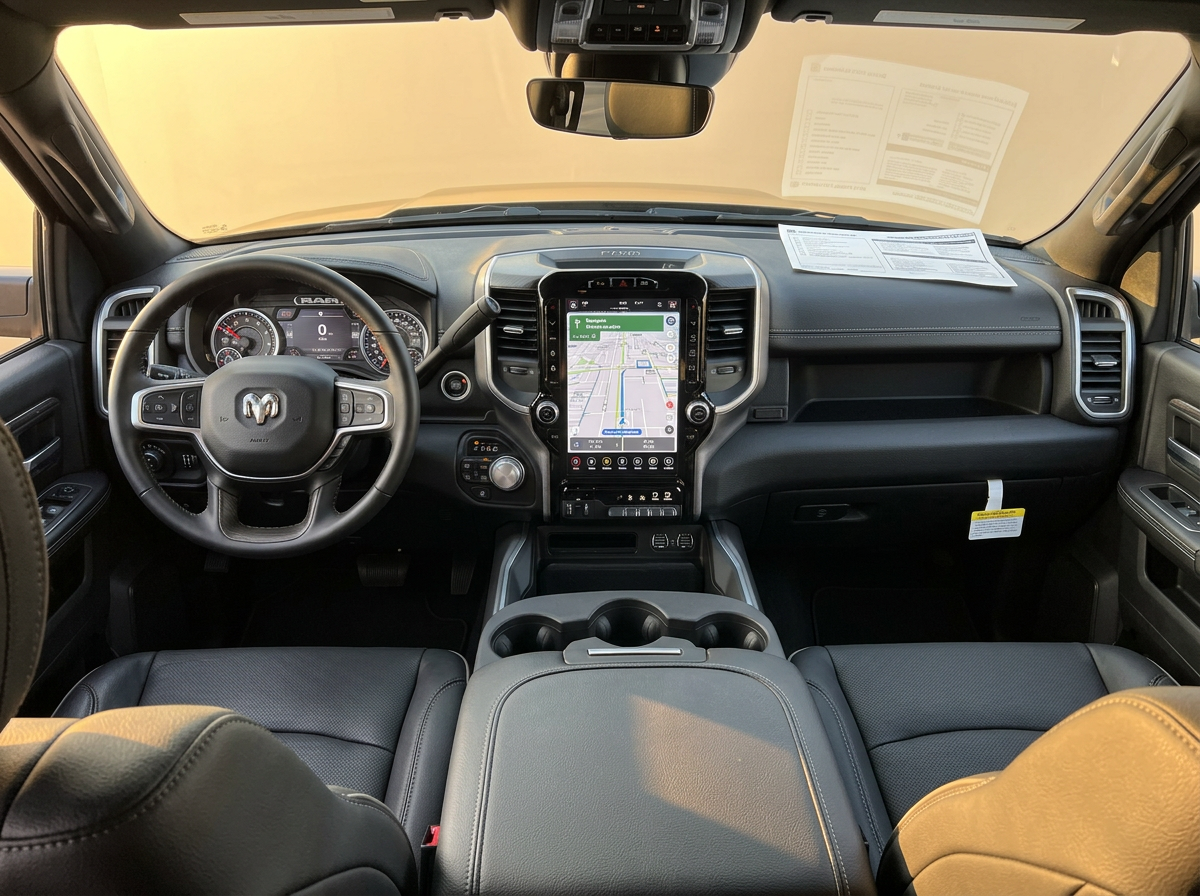
2026 Ram 2500 Interior Dashboard

2026 Ram 2500 Interior and Comfort Guide

The 2026 Ram 2500 sets the standard for pickup truck interiors, delivering a blend of comfort, functionality, and premium materials that rival luxury vehicles. Whether you’re hauling cargo across South Dakota or enjoying a comfortable daily commute, the Ram 2500’s thoughtfully designed cabin prioritizes driver and passenger well-being. With multiple cab configurations, advanced seating technologies, and class-exclusive comfort features, Ram ensures that every journey feels like first-class travel.

At Beadle’s Chrysler Center in Bowdle, SD, we understand that interior comfort is just as important as towing capacity and off-road capability. This guide explores everything you need to know about the 2026 Ram 2500’s interior features, seating options, storage solutions, and comfort technologies that make this truck a pleasure to drive and ride in.

How many cab options does the 2026 Ram 2500 offer?

The 2026 Ram 2500 offers three distinct cab configurations, each designed to meet different needs and preferences. Understanding these options is essential for choosing the right truck for your lifestyle and work requirements.

Regular Cab

The Regular Cab provides a traditional truck experience with a seating capacity of three passengers. This configuration features an 8-foot cargo bed and is available with Tradesman and Big Horn trims. It offers a 140-inch wheelbase, making it the most maneuverable option. The Regular Cab is ideal for commercial users and contractors who prioritize cargo space over passenger comfort.

Crew Cab

The Crew Cab seats five to six passengers comfortably and is the most versatile configuration, available across all six trim levels. This cabin features full rear doors and a spacious rear seating area, perfect for families and teams. The Crew Cab comes with either a 6-foot-4-inch or 8-foot cargo bed, with wheelbase options of 149 inches or 169 inches depending on bed selection. The generous rear legroom and modern amenities make the Crew Cab the most popular choice for personal and professional use.

Mega Cab

The Mega Cab represents Ram’s most spacious cabin option, seating five to six passengers with an expansive interior and 6-foot-4-inch cargo bed. Available exclusively with Laramie and Limited trims in 4×4 configuration, the Mega Cab features a 160-inch wheelbase and is engineered for maximum comfort on extended drives. The Mega Cab includes unique features like a fold-flat rear seat for additional storage versatility, making it the premium choice for those who refuse to compromise on interior space.

What is the difference between Crew Cab and Mega Cab?

While both the Crew Cab and Mega Cab prioritize passenger comfort with five to six-seat configurations, several key differences distinguish these two offerings.

Feature Crew Cab Mega Cab
Available Trims All 6 trims Laramie & Limited only
Wheelbase 149" or 169" 160"
Bed Length 6'4" or 8' 6'4" only
Drive Type 2WD or 4WD 4WD only
Interior Space Generous Maximum
Fold-Flat Rear Seat No Yes

The Mega Cab’s exclusive fold-flat rear seat transforms the cabin into a flexible cargo space, a feature that Crew Cab models don’t offer. The Mega Cab’s larger interior dimensions provide approximately six additional inches of rear legroom compared to the Crew Cab, resulting in a genuinely luxurious riding experience for back-seat passengers. Additionally, the Mega Cab’s 160-inch wheelbase creates a perfectly balanced platform between ride quality and maneuverability.

For buyers considering a family truck or extended-use vehicle, the Mega Cab’s premium status (Laramie and Limited trims) typically includes leather seating, heated and ventilated seats, and advanced climate control, creating a lounge-like environment for all occupants. The Crew Cab, however, offers greater flexibility in trim selection and drivetrain options, making it accessible to a broader range of buyers.

Does the Ram 2500 have leather seats?

Leather seating is a hallmark of premium Ram 2500 comfort and is progressively introduced across the trim lineup, reflecting both luxury and durability for demanding work environments.

Seating by Trim Level

Tradesman: The entry-level Tradesman trim features heavy-duty vinyl upholstery in a 40/20/40 bench seat configuration. Vinyl is engineered for easy cleaning and durability, making it ideal for work trucks exposed to mud, dust, and daily wear.

Big Horn: The Big Horn offers premium cloth seating in a 40/20/40 bench configuration as standard, with available premium cloth bucket seats for those seeking a more modern look without the leather investment.

Laramie: The Laramie introduces leather-trimmed bucket seats, blending leather accents with durable materials. This trim includes heated and ventilated front seats, along with a heated steering wheel, creating a sophisticated driving environment.

Limited: The Limited features premium filigree leather-trimmed bucket seats with more extensive leather coverage than the Laramie. The Limited includes heated and ventilated front and rear seats, plus a heated steering wheel, delivering maximum comfort for all passengers.

Rebel: The Rebel trim offers a choice between leather-trimmed or cloth bucket seats, allowing personalization based on lifestyle preference.

Power Wagon: The rugged Power Wagon provides cloth or available leather bucket seats, prioritizing durability and off-road functionality while offering premium comfort when desired.

For buyers seeking authentic leather luxury, the Laramie, Limited, Rebel, and Power Wagon trims deliver genuine leather-trimmed seating. The leather used in Ram 2500 trucks is engineered to resist cracking and fading, crucial qualities for vehicles operating in South Dakota’s variable climate conditions.

Which trims have heated and ventilated seats?

Heated and ventilated seats are signature comfort features in the Ram 2500 lineup, designed specifically for the challenging climate conditions experienced by our South Dakota customers.

Key Takeaway:

Heated and ventilated seats are exclusive to Laramie, Limited, Rebel, and Power Wagon trims, with rear-seat ventilation reserved for the premium Limited trim.

Front Seat Comfort (Laramie and Above)

The Laramie trim and all higher-tier trims feature heated and ventilated front seats. During South Dakota’s harsh winters, heated seats provide immediate warmth, reducing reliance on engine heat and improving fuel efficiency. The ventilation function activates during summer months, circulating cool air through the seat cushion and backrest to prevent that uncomfortable sticky feeling during hot drives.

Rear Seat Comfort (Limited Exclusive)

The Limited trim uniquely offers heated and ventilated rear seats, ensuring passenger comfort matches front-seat occupants. This feature is particularly valuable for families taking long road trips or professional drivers transporting clients across the region.

Heated Steering Wheel

All trims featuring heated seats (Laramie, Limited, Rebel, and Power Wagon) also include a heated steering wheel. This element significantly enhances cold-weather driving comfort, eliminating that painful shock of gripping a freezing wheel during winter mornings in Bowdle.

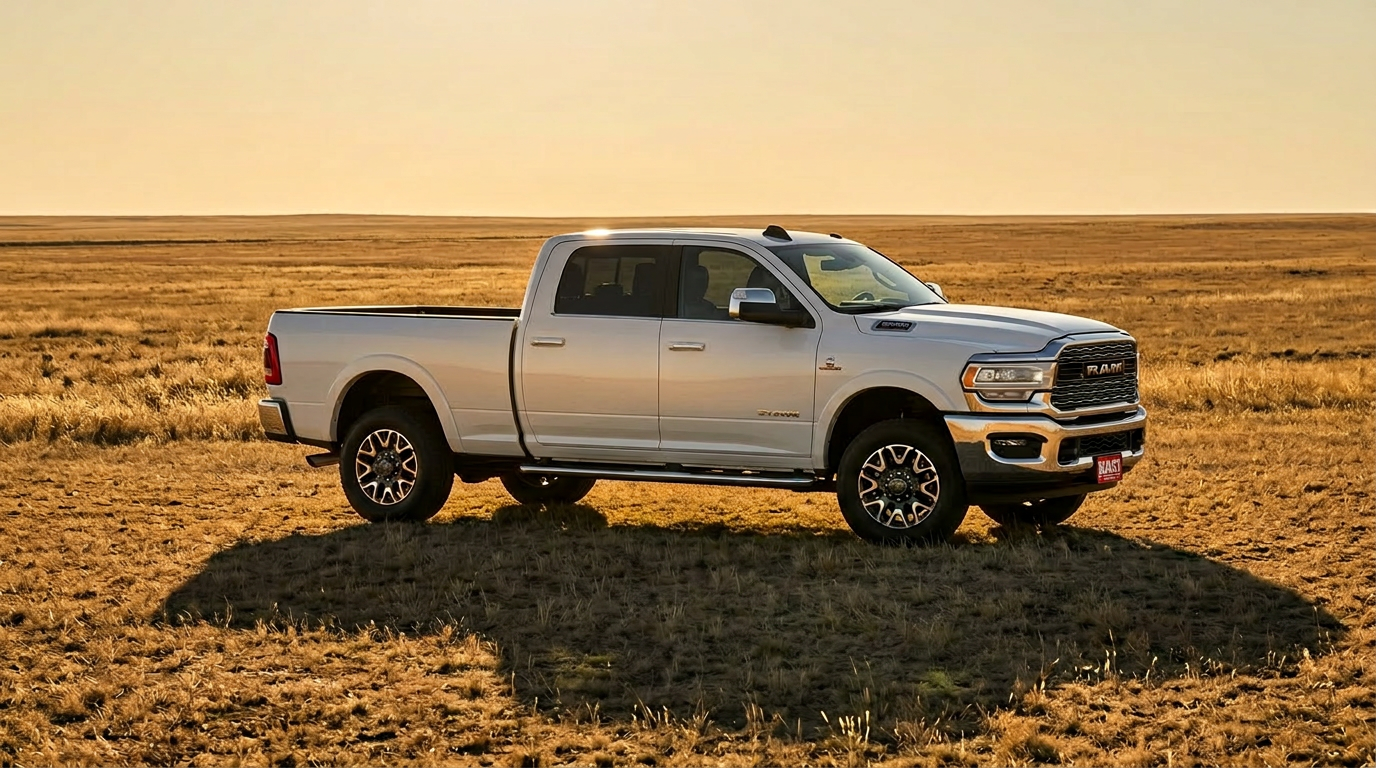
2026 Ram 2500 Crew Cab Side Profile

Is the Ram 2500 comfortable for long highway drives?

The 2026 Ram 2500 is engineered from the ground up for long-distance comfort, incorporating multiple technologies and design features that transform highway driving from a chore into a pleasure.

Suspension Engineering for Comfort

Ram’s class-exclusive coil link rear suspension provides superior ride quality compared to traditional leaf-spring setups. This suspension geometry absorbs bumps and road imperfections more effectively, resulting in a smoother, more refined driving experience even when the truck is fully loaded. The available Auto-Level Rear Air Suspension automatically adjusts rear ride height based on load, maintaining a consistent ride quality whether you’re driving empty or pulling a trailer.

Spacious Cabin Environment

The Crew Cab and Mega Cab configurations provide expansive cabin space that prevents the feeling of confinement during multi-hour drives. Generous legroom and headroom reduce fatigue, while the flexible interior layout allows drivers and passengers to find comfortable positions for their body type.

Climate Control Technology

Upper-trim Ram 2500 models feature advanced climate control systems with ambient lighting that creates a relaxing driving environment. Heated and ventilated seats maintain optimal body temperature regardless of outside conditions, reducing the need for cabin temperature adjustments that can distract from driving.

Ergonomic Design

The power adjustable pedals (available on select trims) allow drivers to customize the driving position for their unique physiology, reducing back strain and fatigue. The high-quality seat padding and support structures are engineered to maintain comfort even during twelve-hour-plus driving sessions.

Whether you’re commuting to Sioux Falls weekly or hauling equipment across multiple states, the Ram 2500’s thoughtful interior design philosophy prioritizes driver and passenger well-being on every journey.

What interior storage options does the Ram 2500 have?

The 2026 Ram 2500 addresses the modern need for organized interior storage with innovative solutions that keep your cabin organized and functional.

RamBox Cargo Management System

The available RamBox system is a game-changer for organized transport. These integrated storage boxes built into the truck bed (separate from cabin storage) provide weatherproof, lockable compartments perfect for securing tools, sports equipment, or valuables. The RamBox system keeps cargo organized and easily accessible without cluttering your driving space.

Rear In-Floor Storage (Crew Cab)

Crew Cab Ram 2500 models feature available rear in-floor storage compartments, maximizing usable space without consuming interior room. These compartments are perfect for storing emergency kits, jumper cables, tire repair supplies, or personal items while keeping the cabin clean and uncluttered.

Dual Wireless Charging Pads

Available on upper trims, dual wireless charging pads eliminate cable clutter and keep your devices powered during long drives. This modern convenience feature addresses the reality that smartphones and smartwatches are essential tools for contemporary drivers, ensuring they stay charged without creating a tangled mess of cables.

Fold-Flat Rear Seat (Mega Cab)

The Mega Cab’s exclusive fold-flat rear seat transforms the cabin into additional cargo space when rear passengers aren’t needed. This feature provides flexibility for contractors and professionals who alternate between passenger and cargo transport within the same trip.

Key Takeaways: 2026 Ram 2500 Interior and Comfort

  • Three cab options: Regular Cab (3 seats), Crew Cab (5-6 seats, all trims), and Mega Cab (5-6 seats, Laramie/Limited, 4×4 only)
  • Leather seating: Available on Laramie, Limited, Rebel, and Power Wagon trims for premium comfort and durability
  • Heated and ventilated seats: Standard on Laramie and above, with rear-seat heating and ventilation exclusive to the Limited trim
  • Highway comfort excellence: Class-exclusive coil link suspension, spacious cabins, and ergonomic design make the Ram 2500 ideal for long-distance driving
  • Smart storage solutions: RamBox system, rear in-floor storage, wireless charging, and fold-flat rear seat maximize functionality
  • Premium options available: Power adjustable pedals, ambient lighting, and Auto-Level Rear Air Suspension enhance comfort on all trims

Frequently Asked Questions About Ram 2500 Interior and Comfort

Can I fit three passengers comfortably in a Regular Cab Ram 2500?

Yes, the Regular Cab’s bench seat is designed for three occupants, though the middle passenger will experience less legroom and armrest space compared to outer seats. The Regular Cab is optimized for commercial use and shorter trips rather than extended passenger transport. For long-distance travel with three or more passengers, the Crew Cab is the better choice.

Are heated seats really necessary in South Dakota winters?

Absolutely. South Dakota winters regularly reach subzero temperatures, and heated seats provide immediate warmth without waiting for engine heat to warm the cabin. They’re more efficient than cabin heaters and reduce fatigue during winter commutes. Drivers who experience our climate consistently report that heated seats are a must-have feature, not a luxury.

What’s the difference between leather-trimmed and full leather seats?

Leather-trimmed seats feature genuine leather on high-contact areas (seating surface and backrest) with durable material on lower-impact areas. Full leather seats use leather throughout the entire seat structure. Ram’s leather-trimmed approach on the Laramie and Limited trims balances luxury aesthetics with practical durability for work trucks. The filigree design on Limited leather adds visual appeal without compromising function.

Does the Mega Cab provide significantly more rear legroom than the Crew Cab?

Yes. The Mega Cab provides approximately six additional inches of rear legroom compared to the Crew Cab, along with a more spacious interior overall. For passengers over 6 feet tall or those taking frequent long trips with rear passengers, this difference is noticeable and appreciated. The Mega Cab’s larger wheelbase (160 inches) also contributes to a more refined ride quality.

Is the RamBox system worth the investment?

For contractors, craftspeople, and anyone regularly transporting valuable tools or equipment, the RamBox is an excellent investment. The integrated, weatherproof, lockable storage keeps your possessions secure and organized without taking interior cabin space. For personal-use truck owners, the value depends on your storage needs. Test-driving a Ram 2500 with the RamBox system helps determine if this feature aligns with your lifestyle.

Can I upgrade seating and comfort features if I buy a lower-trim Ram 2500?

Some comfort features like leather seats and heated steering wheels are trim-specific and typically not retrofittable. However, aftermarket options exist for items like wireless charging pads and additional storage solutions. For maximum flexibility with comfort upgrades, starting with a Laramie or Limited trim ensures you receive factory-integrated heated and ventilated seating along with premium materials. Learn more about all available trim configurations and options by visiting our comprehensive trim and packages guide.

Conclusion: Choose Your Perfect Ram 2500 Interior

The 2026 Ram 2500’s interior represents a thoughtful balance of work-ready durability and premium comfort that sets this truck apart from competitors. Whether you prioritize maximum hauling capacity in a Regular Cab, family-friendly versatility in a Crew Cab, or luxury and space in a Mega Cab, Ram delivers an interior environment that enhances every journey.

From the heated and ventilated seats of the Laramie trim to the expansive Mega Cab’s fold-flat rear seat and premium leather, the 2026 Ram 2500 accommodates every lifestyle. The available technologies like wireless charging pads, power adjustable pedals, and Auto-Level Rear Air Suspension demonstrate Ram’s commitment to modern comfort standards while maintaining the durability demands of work trucks.

At Beadle’s Chrysler Center in Bowdle, SD, we’re proud to offer the complete 2026 Ram 2500 lineup with all available interior and comfort configurations. Our team understands the unique needs of South Dakota drivers and can help you select the perfect cab style, trim level, and options combination for your specific requirements.

Learn more about all available trims and pricing by exploring our complete 2026 Ram 2500 guide.

Lexy Tabbert
Beadle’s Chrysler Center
Bowdle, South Dakota

About the Author

Lexy Tabbert — Beadle’s Chrysler Center, Bowdle, SD

Lexy Tabbert is the Director of Sales and Marketing at Beadle’s Chrysler Center in Bowdle, South Dakota. She covers Ram, Jeep, Dodge, and Chrysler vehicles — helping buyers across the region find the right truck and configuration for their needs. Learn more about Lexy.

2026 Ram 2500 Technology and Safety Features | Beadle’s Chrysler Center
2026 Ram 2500 Technology and Safety Features

The 2026 Ram 2500 represents a significant leap forward in truck technology and safety. Whether you’re hauling heavy loads across South Dakota highways or navigating city streets, this powerful pickup comes equipped with innovative features designed to keep you connected, comfortable, and protected. From cutting-edge Uconnect infotainment systems to advanced driver-assist technologies, the Ram 2500 delivers class-leading capability with modern convenience.

At Beadle’s Chrysler Center in Bowdle, SD, we’re excited to showcase how the 2026 Ram 2500 combines heavy-duty performance with sophisticated technology. Let’s explore the features that make this truck a standout choice for discerning drivers.

What technology features come standard on the 2026 Ram 2500?

Every 2026 Ram 2500 comes equipped with a range of standard technology features designed to enhance your driving experience. All models include a Uconnect touchscreen infotainment system, though the size varies by trim level. The system provides easy access to your vehicle’s controls, entertainment options, and smartphone integration capabilities.

Standard connectivity features include 4G LTE Wi-Fi hotspot capability, allowing you and your passengers to stay connected on the road. This feature is particularly valuable for those long hauls across the plains or for professionals who need reliable connectivity while working from their truck. The infotainment system supports both Apple CarPlay and Android Auto integration for seamless smartphone connectivity.

All 2026 Ram 2500 models also feature Adaptive Cruise Control as a standard safety feature across every trim. This advanced technology automatically adjusts your speed to maintain a safe following distance from vehicles ahead, reducing driver fatigue on long drives and enhancing safety in varying traffic conditions.

Does the Ram 2500 have adaptive cruise control?

Yes, the 2026 Ram 2500 features Adaptive Cruise Control as a standard feature on all trims, making it one of the advantages of choosing this class-leading pickup truck. This sophisticated system uses radar technology to detect vehicles ahead and automatically adjusts your truck’s speed to maintain a preset following distance.

Adaptive Cruise Control is particularly beneficial for Ram 2500 owners who frequently navigate highway driving. Whether you’re towing a trailer to a construction site or heading on a weekend adventure, this feature reduces driver fatigue and helps maintain consistent speeds in stop-and-go traffic. The system works seamlessly with the truck’s transmission to provide smooth acceleration and deceleration.

For enhanced safety and capability, the Ram 2500 also offers additional driver-assist features available on higher trims, including Lane Keep Assist with Adaptive Steering. These technologies work together to create a comprehensive safety net for modern truck drivers.

What size touchscreen does the Ram 2500 have?

The 2026 Ram 2500 offers different Uconnect touchscreen sizes depending on the trim level you select. This tiered approach allows buyers to choose the technology package that fits their needs and budget. Let’s break down the available options:

Trim Level Touchscreen Size Features
Tradesman 8.4″ Uconnect Apple CarPlay, Android Auto, voice commands
Big Horn 12.0″ Uconnect Enhanced interface, improved visibility
Laramie 12.0″ Uconnect 5 Nav Navigation, premium features
Limited 14.4″ Uconnect 5 Nav Best-in-Class, premium navigation

The flagship 14.4-inch Uconnect 5 Nav system on the Limited trim is the largest in its class, offering an expansive display that makes navigation, music streaming, and vehicle controls intuitive and easy to access. For detailed information about how trim levels differ and what each one offers, check out our comprehensive trims and packages guide.

What driver-assist features are included on the Ram 2500?

The 2026 Ram 2500 comes equipped with an impressive suite of standard safety features on every trim. These include Forward Collision Warning Plus with automatic emergency braking, which can help prevent or mitigate collisions by automatically applying the brakes if a threat is detected. The system also includes Pedestrian and Cyclist Emergency Braking for enhanced safety in urban environments.

Additional standard safety technologies include Electronic Stability Control, which helps maintain traction in challenging driving conditions, and Electronic Roll Mitigation, critical for a vehicle as capable as the Ram 2500. All models feature Trailer Brake Control for safe towing and a ParkView rear backup camera as standard equipment.

For those seeking enhanced driver-assist capabilities, the Ram 2500 offers available features including Blind Spot Monitoring with trailer coverage—a valuable addition for anyone regularly towing. ParkSense front and rear park assist systems help navigate tight spaces, while Lane Keep Assist with Adaptive Steering helps maintain proper lane positioning on highways. A 360-degree surround view camera system and Digital Rearview Mirror 3.0 provide comprehensive visibility around your truck.

Towing enthusiasts will appreciate the available Trailer Reverse Steering Control, which simplifies backing up with a trailer attached—a game-changer for complex maneuvering in tight spaces.

Does the Ram 2500 have a trailer camera system?

The 2026 Ram 2500 comes standard with a ParkView rear backup camera, which displays footage on your Uconnect touchscreen to help with reversing. This is an excellent baseline feature for any truck owner.

For more advanced trailer monitoring, Ram offers available 360-degree surround view camera systems. This premium option provides multiple camera angles that can be incredibly useful when maneuvering with a trailer, showing you the full perimeter of your vehicle and trailer for maximum visibility. When combined with the available Trailer Reverse Steering Control feature, these systems make towing significantly more manageable and safer.

Whether you’re pulling a utility trailer to a job site or a boat to South Dakota’s pristine lakes, these camera systems help you navigate with confidence. The integration with your Uconnect touchscreen means you’re viewing live footage on a display sized up to 14.4 inches on the Limited trim, giving you clear visibility of what’s happening behind your truck.

What is the front passenger display in the Ram 2500?

The 2026 Ram 2500 Limited trim features an available 10.25-inch front passenger interactive display—a class-exclusive innovation. This secondary touchscreen allows your passenger to interact with vehicle functions, entertainment options, and navigation independently, enhancing the experience for everyone in the cab.

This front passenger display can be controlled to show navigation, entertainment, or vehicle information, making long drives more enjoyable for your co-pilot. It’s particularly useful for work environments where a passenger might need to monitor different systems or manage route planning separately from the driver’s main Uconnect display.

Combined with the available dual wireless charging pads in the Limited trim, this feature package transforms the Ram 2500 into a mobile command center. It’s a testament to Ram’s commitment to blending luxury and functionality in a heavy-duty truck that’s designed for both work and comfort.
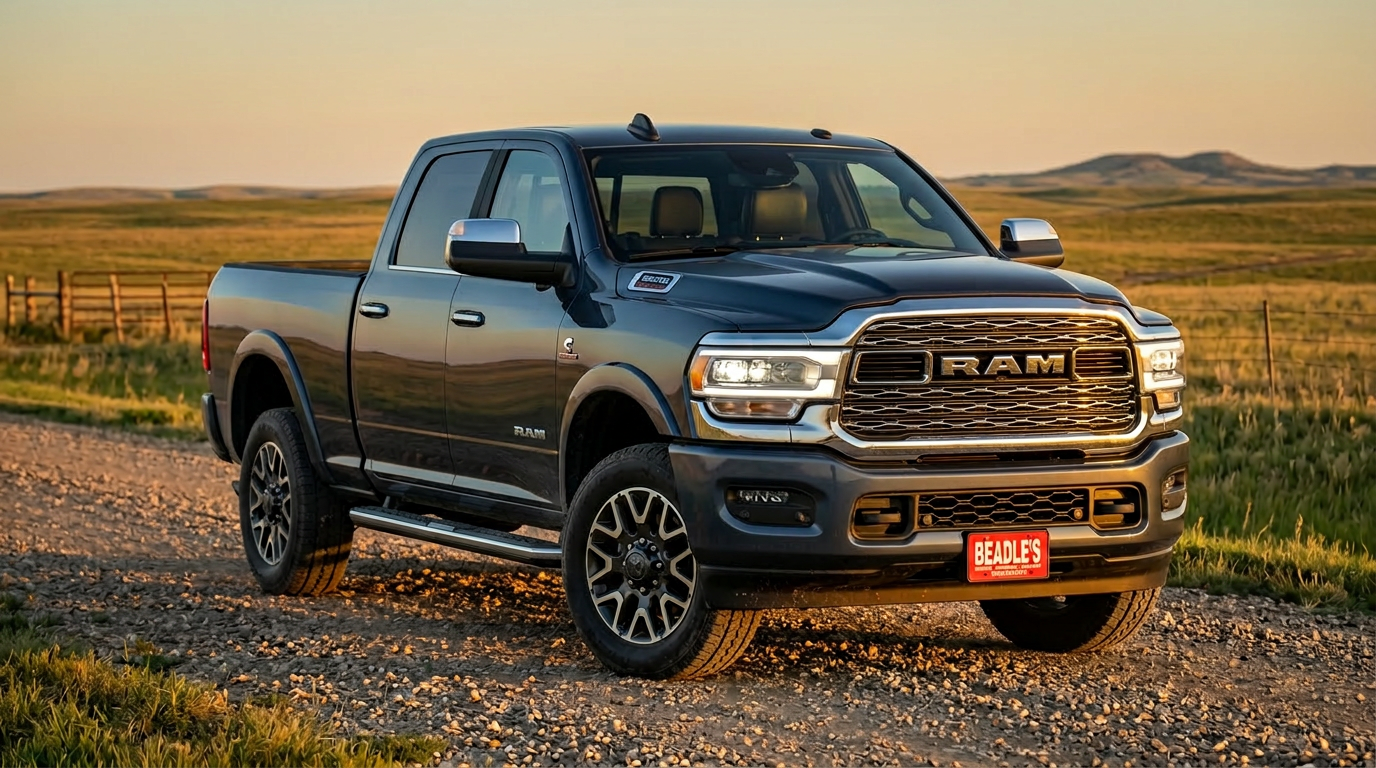
2026 Ram 2500 Front Three Quarter View
The 2026 Ram 2500 combines rugged capability with modern technology

Key Takeaways

  • Every 2026 Ram 2500 comes standard with Adaptive Cruise Control and a ParkView rear backup camera
  • Touchscreen sizes range from 8.4″ on the Tradesman to a best-in-class 14.4″ on the Limited trim
  • Advanced safety features include Forward Collision Warning Plus with automatic emergency braking and Electronic Stability Control on all models
  • The Limited trim’s 10.25″ front passenger interactive display is a class-exclusive feature not found in competing trucks
  • Available towing-focused features like Trailer Reverse Steering Control and 360-degree camera systems make hauling easier and safer
  • 4G LTE Wi-Fi hotspot and smartphone integration (Apple CarPlay, Android Auto) keep you connected on the road

Frequently Asked Questions

Can I add technology features to a basic Ram 2500 trim?

Yes! Ram offers various technology packages that can be added to lower trims. You can upgrade the Uconnect system, add available driver-assist features, and install premium audio systems like the 17-speaker Harman Kardon. We recommend speaking with our sales team at Beadle’s Chrysler Center to explore the options available for your specific budget and needs. Contact us today to discuss customization options.

Is Apple CarPlay and Android Auto included on all Ram 2500 models?

Yes, smartphone integration is included as a standard feature on all 2026 Ram 2500 models. Whether you opt for the entry-level Tradesman’s 8.4″ touchscreen or the Limited’s 14.4″ Uconnect 5 Nav system, you’ll have access to Apple CarPlay and Android Auto, allowing you to seamlessly integrate your phone with your truck’s infotainment system.

How does the 360-degree camera system improve towing safety?

The available 360-degree surround view camera system provides a complete overhead view of your truck, trailer, and surrounding area. This eliminates blind spots and helps you understand the space around your vehicle before maneuvering. When combined with Trailer Reverse Steering Control, backing up with a trailer becomes significantly easier and safer, reducing the risk of accidents in tight spaces.

What makes the front passenger display unique to the Ram 2500?

The available 10.25″ front passenger interactive display is class-exclusive to the 2026 Ram 2500 Limited. This feature allows your passenger to control navigation, entertainment, and vehicle information independently, making long drives more productive and enjoyable. It’s particularly valuable for work trucks where team members need to manage different tasks during transit.

The Future of Truck Technology is Here

The 2026 Ram 2500 represents a quantum leap in how modern trucks combine capability with technology and safety. From the moment you settle into the cab and interact with the Uconnect touchscreen—whether it’s the 8.4″ display on the Tradesman or the impressive 14.4″ system on the Limited—you’ll appreciate how Ram has prioritized driver experience alongside performance.

What truly sets the 2026 Ram 2500 apart is the comprehensive approach to safety. Standard features like Adaptive Cruise Control, Forward Collision Warning Plus with automatic emergency braking, and Electronic Stability Control work together to create a protective ecosystem around you and your truck. When you add available features like Blind Spot Monitoring with trailer coverage and Trailer Reverse Steering Control, you’re getting technology that makes towing safer and more manageable than ever before.

At Beadle’s Chrysler Center in Bowdle, SD, our team understands what matters to truck buyers in our region. We know you need reliability, capability, and value. The 2026 Ram 2500 delivers all three, wrapped in technology that makes your work easier and your life safer. Whether you’re comparing trims or considering available packages, we’re here to help you find the perfect configuration.

Interested in exploring the full range of 2026 Ram 2500 options? Check out our comprehensive 2026 Ram 2500 guide for complete specifications, performance details, and more. Ready to take one for a test drive? Browse our current Ram 2500 inventory and find your match today.

About the Author

Lexy Tabbert — Beadle’s Chrysler Center, Bowdle, SD

Lexy Tabbert is the Director of Sales and Marketing at Beadle’s Chrysler Center in Bowdle, South Dakota. She covers Ram, Jeep, Dodge, and Chrysler vehicles — helping buyers across the region find the right truck and configuration for their needs. Learn more about Lexy.
2026 Ram 2500 Power Wagon and Rebel Off-Road Guide | Beadle’s Chrysler Center
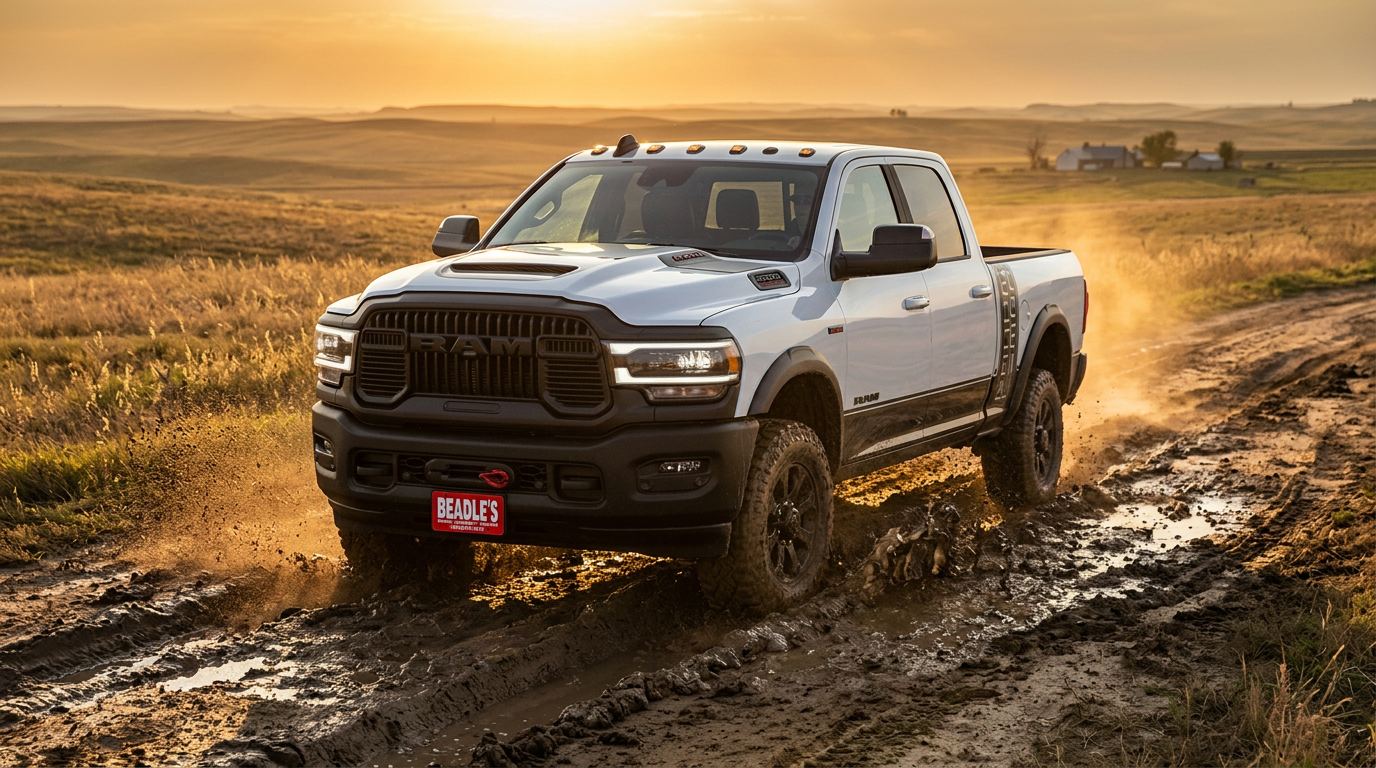
2026 Ram 2500 Power Wagon off-road

If you’re serious about off-road capability in South Dakota, the 2026 Ram 2500 Power Wagon and Rebel represent two of the most formidable trucks available. Both deliver class-leading towing, aggressive suspension tuning, and rock-solid performance on gravel roads, rocky terrain, and extreme weather conditions. But which one is right for your needs?

This comprehensive guide breaks down the key differences between the Power Wagon and Rebel, compares their off-road features, engine options, and real-world capabilities for Bowdle and the broader Black Hills region. Whether you’re hauling equipment, exploring backcountry trails, or navigating seasonal challenges, you’ll understand exactly what each truck offers.

What is the difference between the Ram 2500 Power Wagon and Rebel?

The Power Wagon and Rebel are distinct platforms built for different off-road philosophies. The Power Wagon is Ram’s flagship rock-crawler: it’s engineered purely for extreme terrain with class-exclusive locking front differentials, disconnecting sway bars, and aggressive skid plating. It’s a purpose-built machine for serious trail enthusiasts.

The Rebel, by contrast, is the lifestyle off-road choice. It delivers sport-tuned suspension and tactical styling without the extreme hardware. Both trucks share the same starting price of $69,755, but the Power Wagon is exclusively HEMI-powered (6.4L V8, 405 hp / 429 lb-ft), while the Rebel offers both HEMI and Cummins diesel options.

For South Dakota operators, the Power Wagon excels at rocky terrain and water crossings, while the Rebel handles daily duties and light trails with greater fuel economy potential (Cummins option) and refinement.

Does the Power Wagon come with a Cummins diesel option?

No. The 2026 Ram 2500 Power Wagon is exclusively powered by the legendary 6.4L HEMI V8 engine. This is a defining specification—the Power Wagon’s robust architecture, locking differentials, and extreme-duty components are engineered around HEMI performance and torque characteristics.

The HEMI delivers 405 horsepower and 429 lb-ft of torque, with a towing capacity of 10,530 lbs and a payload rating of 1,570 lbs. If diesel efficiency and extended range are priorities, the Rebel with Cummins 6.7L (available in 2026) is the better choice. But for raw off-road capability and power, the HEMI-only Power Wagon is uncompromising.

What off-road features does the Power Wagon include?

The Power Wagon comes loaded with class-exclusive, rock-crawling hardware:

  • Electronic locking front differential — Class exclusive. Provides maximum traction in extreme terrain.
  • Electronic front sway bar disconnect — Class exclusive. Increases wheel articulation for rock crawling and uneven surfaces.
  • 4.10 rear axle ratio — Optimized for towing and low-speed off-road control.
  • Transfer case skid plate — Protects critical components during aggressive driving.
  • Goodyear Wrangler Duratrac all-terrain tires — Purpose-built for rocky, muddy, and mixed terrain.
  • Sport performance hood — Aggressive styling and improved visibility.
  • Crew Cab 6’4″ bed exclusively — Standard Power Wagon configuration (no short bed, no single cab).

These features work together to create a truck that can handle water crossings, boulder-strewn trails, and extreme articulation. For Black Hills exploration and rugged South Dakota terrain, the Power Wagon is purpose-built.

Can you use a Power Wagon as a daily driver?

Yes, absolutely. While the Power Wagon is engineered for extreme off-road work, it’s a fully-equipped, luxurious Crew Cab truck. You’ll get modern infotainment, comfortable seating, climate control, and all the conveniences of a premium Ram 2500. The truck operates seamlessly on highway and gravel road alike.

However, expect fuel economy around 13–15 mpg combined due to the HEMI engine and the truck’s weight and rock-crawling setup. If you’re doing extreme off-road work on weekends and commuting to Bowdle or Aberdeen during the week, the Power Wagon is genuinely capable as a daily driver. Many owners use them exactly this way.

The Rebel, by comparison, may offer slightly better efficiency (especially with Cummins) and a more fuel-conscious feel for pure daily driving. But the Power Wagon will never feel out of place in a parking lot or on a trip to the hardware store.

Is the Rebel a good choice for South Dakota gravel roads?

Absolutely. The 2026 Ram 2500 Rebel is specifically tuned for gravel road and light off-road duty. With its sport-suspension tuning, all-terrain capability, and available Cummins 6.7L diesel, the Rebel is an excellent fit for Bowdle-area driving, rural South Dakota ranch work, and seasonal weather challenges.

The Rebel includes:

  • Off-road tuned suspension (coil springs, reinforced frame)
  • Sport performance hood
  • 17″ black wheels
  • Premium interior and infotainment
  • Available Cummins diesel for better fuel economy on long hauls

For typical South Dakota gravel roads, ranch access, and seasonal snow/ice conditions, the Rebel delivers 95% of the toughness with better daily usability and potentially lower operating costs. The Rebel shines when you want legitimate off-road capability without committing to the extreme hardcore setup of the Power Wagon.

What suspension does the Power Wagon use vs the Rebel?

Suspension tuning is where the Power Wagon’s extreme nature becomes clear. The Power Wagon features:

  • Rock-crawl tuned coil springs — Designed for maximum articulation and wheel droop on uneven terrain.
  • Disconnecting front stabilizer bar — Allows each wheel to move independently, critical for rock climbing.
  • Heavy-duty shock absorbers — Purpose-built for extreme vertical movement.
  • Reinforced frame and underbody — Engineered to withstand rock strikes and water crossings.

The Rebel uses:

  • Sport-tuned coil springs — Stiffer than standard Ram 2500, but still maintains ride comfort.
  • Standard front stabilizer bar — Not disconnecting; balances off-road capability with on-road handling.
  • Premium shock absorbers — Good for light trail work and gravel road impacts.
  • Reinforced frame — Robust but not extreme-duty skid plating.

In practical terms: the Power Wagon is tuned for rock articulation; the Rebel is tuned for gravel resilience. For South Dakota ranch roads and Black Hills trails, both will perform admirably. For crawling over boulders and fording deep water, the Power Wagon’s disconnecting sway bar is transformative.

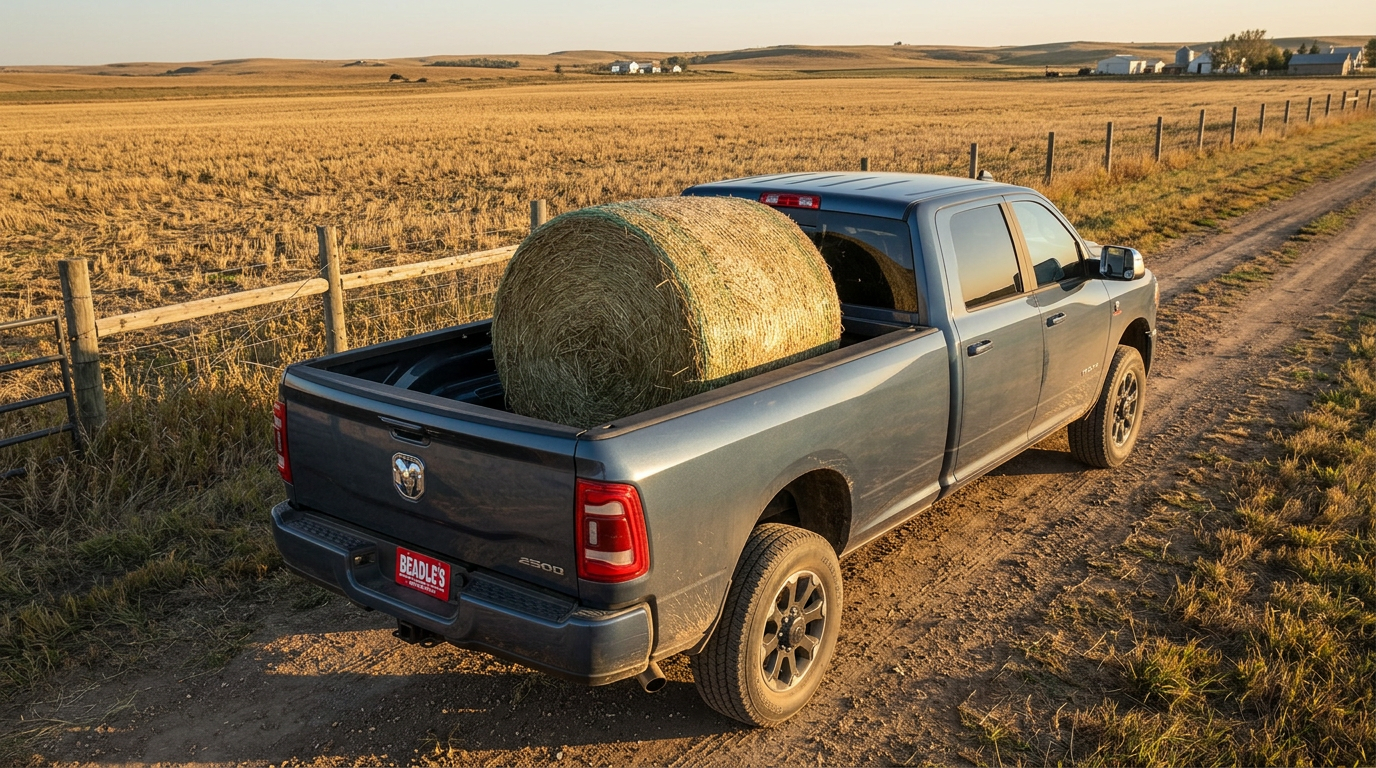
Ram 2500 hauling hay in South Dakota

Key Takeaways

  • Power Wagon: Class-exclusive locking front differential, disconnecting sway bar, HEMI only, $69,755 MSRP, 405 hp, 10,530 lbs towing.
  • Rebel: Sport-tuned suspension, HEMI or Cummins options, $69,755 MSRP, better fuel economy with diesel, ideal for daily driving and light trails.
  • For extreme rock crawling: Power Wagon is the only choice in its class.
  • For South Dakota gravel roads: Rebel offers exceptional value and capability without overkill.
  • Both are daily-drivable luxury Crew Cabs with full creature comforts.
  • Power Wagon payload: 1,570 lbs; towing is where it shines at 10,530 lbs.

Frequently Asked Questions

What is the Power Wagon’s ground clearance?

The 2026 Power Wagon offers approximately 10.8 inches of ground clearance with its rock-crawl suspension. This is paired with maximum approach, departure, and break-over angles designed for obstacle navigation. Goodyear Wrangler Duratrac all-terrain tires enhance the grip on rocks and loose surfaces.

Can I add aftermarket modifications to either truck?

Yes. Both Power Wagon and Rebel are popular platforms for lift kits, upgraded lighting, and winch installations. The Power Wagon’s frame is already beefed up, making it ideal for major modifications. The Rebel also accepts upgrades well, though you’ll want to maintain balance between modifications and the truck’s factory off-road tuning. Visit Beadle’s Chrysler Center to discuss options with our service team.

Which truck handles winter conditions better in South Dakota?

Both excel in snow and ice. The Power Wagon’s electronic locking front differential and heavier curb weight provide extreme traction, while the Rebel’s balanced setup and available Cummins diesel (better cold-start performance) are equally winter-capable. See our Ram 2500 Winter & Work Guide for detailed seasonal insights.

What’s the warranty on Power Wagon and Rebel models?

Ram offers a 3-year/36,000-mile basic warranty and 5-year/60,000-mile powertrain warranty on all 2026 models. Off-road components like the Power Wagon’s locking differentials and sway bar disconnect are covered under the powertrain warranty. Beadle’s Chrysler Center can walk you through all coverage details when you visit.

Over my years working with Ram trucks here in Bowdle, I’ve watched both the Power Wagon and Rebel earn serious respect from Black Hills ranchers, contractors, and weekend explorers alike. The Power Wagon is the truck you choose when you’re committed to extreme off-road performance—those locking differentials and disconnecting sway bars aren’t gimmicks; they’re transformative when you’re navigating technical terrain.

The Rebel, though, is the truck that answers the needs of 90% of South Dakota truck owners. It’s tough, capable, refined, and comes at the same starting price. If you’re looking to maximize your investment and still get legitimate off-road chops, the Rebel is a smart play.

Either way, both trucks are built for our landscape—seasonal snow, gravel roads, rocky passes, and the kind of work that demands real capability. For more details on the full Ram 2500 lineup, head to our 2026 Ram 2500 Buyer’s Guide.

—Lexy Tabbert
Beadle’s Chrysler Center, Bowdle, SD

About the Author

Lexy Tabbert — Beadle’s Chrysler Center, Bowdle, SD

Lexy Tabbert is the Director of Sales and Marketing at Beadle’s Chrysler Center in Bowdle, South Dakota. She covers Ram, Jeep, Dodge, and Chrysler vehicles — helping buyers across the region find the right truck and configuration for their needs. Learn more about Lexy.
2026 Ram 2500 front three-quarter view

The 2026 Ram 2500 lineup offers something for every buyer—whether you’re hauling a heavy load for work or seeking premium comfort for weekend adventures. With six distinct trims ranging from the no-nonsense Tradesman to the luxurious Limited, plus specialty off-road variants like the Rebel and Power Wagon, understanding the differences between these options is crucial to finding your perfect fit. This breakdown walks you through each trim’s standout features, equipment packages, and which configurations deliver the best value.

Whether you prioritize work capability, towing power, or cabin refinement, the 2026 Ram 2500 delivers class-leading technology and engineering. In this guide, we’ll compare every trim level, highlight exclusive packages, and help you navigate the decision-making process—so you can confidently choose a truck that matches your needs and budget.

What trims does the 2026 Ram 2500 come in?

The 2026 Ram 2500 is available in six distinctive trim levels, each engineered to serve different customer priorities. Understanding the full lineup helps you identify which trim aligns with your mission—whether that’s maximizing payload, enjoying luxury amenities, or tackling extreme terrain.

Tradesman represents the value entry point, starting at $50,475 with a HD vinyl bench seat, 8.4″ Uconnect touchscreen, and snow plow prep package as standard equipment. It’s built for contractors and fleet buyers who need capability without premium frills. For 2026, Ram introduced the Black Express package exclusively on Tradesman—a blacked-out styling option that appeals to buyers wanting a modern aesthetic at the work-truck price point.

Big Horn ($54,225) adds comfort with seating upgrades (cloth bench or premium cloth buckets), a larger 12″ Uconnect display, and enhanced chrome exterior details. This trim bridges the gap between value and comfort, making it popular with owner-operators who spend hours in the cab.

Laramie ($62,310) elevates to full leather buckets, heated and ventilated front seats, a heated steering wheel, and the premium Uconnect 5 Navigation system with 12″ screen. Laramie buyers prioritize all-day comfort and integrated technology for both work and lifestyle use.

Limited ($74,610) sits at the luxury tier with premium filigree leather, a dominant 14.4″ Uconnect 5 touchscreen paired with a 10.25″ passenger information display, and a renowned 17-speaker Harman Kardon premium audio system. Dual wireless charging for mobile devices adds daily convenience. Limited is the choice for buyers who view their truck as a personal luxury vehicle.

Rebel ($69,755) and Power Wagon ($69,755) are specialized off-road variants available exclusively in 4×4 configuration. The Rebel features an aggressive suspension tune, sport performance hood, and 17″ black wheels—ideal for weekend adventurers. The Power Wagon adds electronic locking front differential, electronic sway bar disconnect, a 4.10 axle ratio, and Goodyear all-terrain tires, making it the most capable off-road platform in the class. Power Wagon is HEMI-only; Rebel offers optional Cummins diesel.

All trims are available in both 4×2 and 4×4 drivetrains (except Rebel and Power Wagon, which are 4×4 only), with 6’4″ or 8′ bed options on standard Crew Cab models. The HEMI V8 is standard across all trims; the Cummins 6.7L diesel is available for +$12,995 on Tradesman, Big Horn, Laramie, Limited, and Rebel (not on Power Wagon).

What is the difference between Big Horn and Laramie?

The gap between Big Horn and Laramie represents a meaningful step in creature comfort and technology. While both are mid-tier options, Laramie targets buyers who view their truck as a primary vehicle rather than purely a work tool.

Interior appointments: Big Horn offers cloth seating with a choice of bench or premium cloth buckets. Laramie upgrades to genuine leather bucket seats with heated and ventilated functions—critical for all-day comfort in cold South Dakota winters and hot summers. Laramie also includes a heated steering wheel, which Big Horn lacks.

Technology: Both feature Uconnect infotainment, but Big Horn uses a 12″ basic touchscreen, while Laramie jumps to the premium Uconnect 5 Navigation system with integrated GPS, Apple CarPlay/Android Auto integration, and enhanced voice control. This is a noticeable difference if you rely on navigation or hands-free communication during work days.

Exterior styling: Big Horn features chrome grille surround and mid-level trim rings. Laramie adds more sophisticated chrome accents and a more upscale visual identity that shows well in professional or personal settings.

Price difference: At $8,085 separating these trims, you’re essentially paying for the leather, heated seats, heated wheel, and navigation upgrade. For buyers who spend 8+ hours daily in the cab and value integrated navigation, Laramie’s premium is justified. For contractors who primarily haul and occasionally need seating comfort, Big Horn delivers solid value.

If you want to explore how interior features differ across all trims, be sure to check our detailed guide on 2026 Ram 2500 Interior Features by Trim.

What does the Tradesman Level 2 Equipment Group include?

The Tradesman Level 2 Equipment Group (factory code A7B) is designed for buyers who want to add comfort and convenience features to the base Tradesman without stepping up to Big Horn. This mid-level package bridges the value and comfort gap economically.

Level 2 typically includes:

  • Upgraded vinyl seat material with improved durability
  • Power windows and locks (vs. manual on base Tradesman)
  • Cruise control
  • Enhanced front floor mats
  • Improved door panel trim
  • Additional storage compartments

While Level 2 doesn’t provide leather or cloth seating like higher trims, it addresses the most common contractor complaints about the base model—lack of power conveniences and limited storage. This package represents excellent value for work-truck buyers who want modern convenience without the premium cabin upgrades.

For the latest availability and exact pricing on Level 2 equipment groups, contact Beadle’s Chrysler Center to confirm current offerings.

Is the Limited worth the upgrade over Laramie?

The Limited trim commands a $12,300 premium over Laramie, making this one of the steepest mid-tier jumps in the lineup. Whether that investment delivers proportional value depends on your priorities and how you use the truck.

What Limited adds:

  • Display upgrade: A massive 14.4″ Uconnect 5 primary screen paired with a 10.25″ passenger-side information display—the most advanced infotainment in the Ram truck lineup
  • Premium audio: A stunning 17-speaker Harman Kardon audio system vs. standard speakers on Laramie
  • Leather quality: Premium filigree leather (hand-crafted details) vs. Laramie’s standard leather
  • Charging convenience: Dual wireless charging pads for smartphones—a feature absent on all lower trims
  • Visual prestige: Exclusive badging and more refined interior trim surrounds

Is it worth it? The answer hinges on whether you view your truck as a luxury lifestyle vehicle or a premium work tool. If you spend significant time in the cab, value premium audio quality, and want the latest infotainment innovation, Limited’s $12,300 premium may feel justified over a 5+ year ownership cycle. If you’re primarily focused on capability and already have Laramie’s comfort baseline, the upgrade may feel incremental.

For many professional buyers, Laramie hits the sweet spot—excellent comfort, reliable technology, and full leather seating without venturing into luxury territory. Limited is best suited to owner-operators who view their truck as an extension of their personal brand or buyers seeking a genuine luxury truck experience.

2026 Ram 2500 Crew Cab side profile

What packages are available on the 2026 Ram 2500?

Beyond trim levels, Ram offers factory packages that add specialized capabilities and styling without committing to a full trim upgrade. These packages are highly popular with buyers who want to customize their truck to specific missions.

Black Express Package (NEW for 2026): Available exclusively on Tradesman, this blacked-out styling package includes a black grille, black trim rings, and darkened badging. It’s perfect for contractors or buyers who want a modern, aggressive aesthetic without stepping up to Big Horn. This package delivers contemporary design at the work-truck price point.

Chrome Appearance Package (A7D): For buyers who want maximum shine and presence, the Chrome Appearance Package adds polished exterior trim, prominent chrome accents, and premium badging. This appeals to owner-operators who use their truck as a rolling business card or buyers who simply love a bold aesthetic.

Snow Plow Prep Package: Standard on Tradesman and available on all trims, this package includes integrated plow wiring, reinforced frame components, and suspension tuning designed for heavy front-end loading. It’s essential for Midwest contractors and municipalities managing winter operations.

Diesel Engine Option: While technically not a “package,” the Cummins 6.7L turbo diesel represents a transformative upgrade—adding $12,995 to your MSRP but delivering exceptional low-end torque (645 lb-ft), improved fuel economy, and legendary reliability. Available on all trims except Power Wagon, diesel is especially popular among serious haulers and long-distance drivers.

Specialty Off-Road Packages: Rebel and Power Wagon come with integrated off-road packages built into their trim definitions—electronic locking differentials, sway bar disconnect, and all-terrain tires on Power Wagon cannot be separated from those trims. These are complete off-road solutions, not à la carte options.

For a complete list of current package availability and pricing, visit Beadle’s Chrysler Center or browse our Ram 2500 inventory to see exactly how our in-stock units are equipped.

Which trim is the best value for a work truck?

When it comes to work-truck value, the answer depends on your specific mission and budget. Let’s evaluate each option through a contractor’s lens.

Best Overall Value: Tradesman with Level 2 Equipment Group

At $50,475 base MSRP (plus $2,595 destination), Tradesman delivers legendary Ram capability at the lowest entry point. The Level 2 Equipment Group adds essential conveniences—power windows, locks, and cruise control—without inflating the price. Standard snow plow prep makes it ready for regional contractors. For fleet buyers or owners running multiple trucks, this is the obvious choice. You get payload, towing capacity, and the famous Ram transmission with zero unnecessary luxury trim.

Best Daily Usability: Big Horn

At $54,225, Big Horn adds seating comfort and modern infotainment that make all-day work significantly more pleasant. If you spend 8+ hours daily in the cab, the cloth seat upgrade and 12″ Uconnect display are worth the $3,750 premium over Tradesman. Owner-operators who use their trucks for client meetings or longer drives should seriously consider Big Horn as the minimum threshold.

Best Long-Term Investment: Laramie with Cummins Diesel

While Laramie starts at $62,310, adding the Cummins diesel (+$12,995) brings you to approximately $75,305—above Limited MSRP. However, if you’re hauling seriously or planning 200,000+ mile ownership, the diesel’s torque (645 lb-ft), fuel economy, and legendary durability justify the investment. Laramie’s leather seats, heated functions, and navigation become genuine assets during long-haul workdays. This configuration is ideal for professional haulers, excavation companies, and contractors with high annual miles.

Specialist Choice: Power Wagon

At $69,755, Power Wagon is purpose-built for work that demands extreme terrain capability—forestry, mining, rural construction on unimproved land. The electronic locking front diff, sway bar disconnect, 4.10 axle, and all-terrain tires solve problems other trims cannot address. If your work requires off-road terrain, Power Wagon’s specialized equipment is a direct business cost that prevents productivity loss. For typical road-based contracting, it’s overkill.

The bottom line: Tradesman is unbeatable for budget-conscious fleet operators. Big Horn delivers exceptional comfort-to-price for full-time professionals. Laramie with diesel is best for heavy-duty haulers planning long ownership. Choose based on your daily workload, not aspirational use.

Key Takeaways

  • The 2026 Ram 2500 offers six trims: Tradesman ($50,475), Big Horn ($54,225), Laramie ($62,310), Limited ($74,610), Rebel ($69,755), and Power Wagon ($69,755)—with work, comfort, luxury, and off-road options for every buyer.
  • Tradesman and Big Horn are best for contractors prioritizing value and daily usability; Laramie bridges work and luxury; Limited targets buyers seeking a premium lifestyle truck.
  • Rebel and Power Wagon are specialized 4×4-only variants—Rebel for adventure, Power Wagon for extreme terrain work with electronic locking diffs and dedicated off-road suspension.
  • The Cummins 6.7L diesel (+$12,995) delivers 645 lb-ft torque and superior fuel economy—essential for serious haulers but optional for light-duty work.
  • The 2026 Black Express package exclusively on Tradesman offers modern blacked-out styling at the work-truck price point—new for this model year.
  • Laramie ($62,310) with heated leather, navigation, and all-day comfort represents the best overall value for professional owner-operators.

Frequently Asked Questions About 2026 Ram 2500 Trims

Can I get a 2026 Ram 2500 Limited with a diesel engine?

Yes, the Cummins 6.7L turbo diesel is available on Limited (and all trims except Power Wagon) for +$12,995. A Limited with diesel will cost approximately $87,305 before destination and options, placing it among the most capable premium trucks available.

Is the Power Wagon available as a 4×2 (two-wheel drive)?

No. The Power Wagon is exclusively 4×4 because its electronic locking front differential, electronic sway bar disconnect, and specialized suspension are engineered for 4×4 operation. If you want a work truck in 4×2, Tradesman through Limited are all available with 4×2 drivetrain.

What is the difference between Rebel and Power Wagon?

Both are 4×4-only off-road specialists at $69,755, but they target different missions. The Rebel features an aggressive suspension tune, sport hood, and 17″ black wheels—ideal for adventure enthusiasts. Power Wagon adds electronic locking front differential, electronic sway bar disconnect, 4.10 axle, and all-terrain tires—built for serious off-road work. Choose Rebel for weekend adventure; Power Wagon for professional off-road operations.

Can I get a Mega Cab with a Tradesman or Big Horn trim?

No. The Mega Cab (160″ wheelbase with shorter bed) is available exclusively in Laramie and Limited trims. It provides maximum interior legroom for a smaller cargo area. Standard and Crew Cab configurations are available across all trims, with Regular Cab (140″ WB, 8′ box) limited to Tradesman and Big Horn.

What’s included in the Black Express package for 2026?

The new Black Express package (exclusive to Tradesman) includes a black grille, black trim rings, and darkened badging—delivering a modern, aggressive aesthetic. It’s perfect for contractors or buyers wanting contemporary styling at the work-truck price point without stepping up to Big Horn.

A Final Word

After spending countless hours with Ram 2500 owners at Beadle’s Chrysler Center, I’ve learned that the “right” trim isn’t about the fanciest features—it’s about matching your truck’s capability and comfort to how you actually work and live. I’ve seen contractors transform their operations with the right configuration, and I’ve watched families fall in love with the daily refinement that mid-tier trims provide.

If you’re building a new Ram 2500, start by answering these honest questions: How many hours daily am I in the cab? What’s my annual payload—light hauling or serious towing? Do I need diesel capability or is HEMI sufficient? Will I use off-road terrain regularly? Your answers will naturally guide you toward Tradesman (value), Big Horn (daily comfort), Laramie (professional premium), or one of the specialists. The complete 2026 Ram 2500 guide has deeper dives into performance, technology, and towing metrics that will help round out your decision.

Ready to find your perfect 2026 Ram 2500? Our team at Beadle’s Chrysler Center is here to walk through every option, answer your questions, and help you navigate the decision with confidence. Contact us today to schedule a consultation or test drive.

About the Author

Lexy Tabbert — Beadle’s Chrysler Center, Bowdle, SD

Lexy Tabbert is the Director of Sales and Marketing at Beadle’s Chrysler Center in Bowdle, South Dakota. She covers Ram, Jeep, Dodge, and Chrysler vehicles — helping buyers across the region find the right truck and configuration for their needs. Learn more about Lexy.
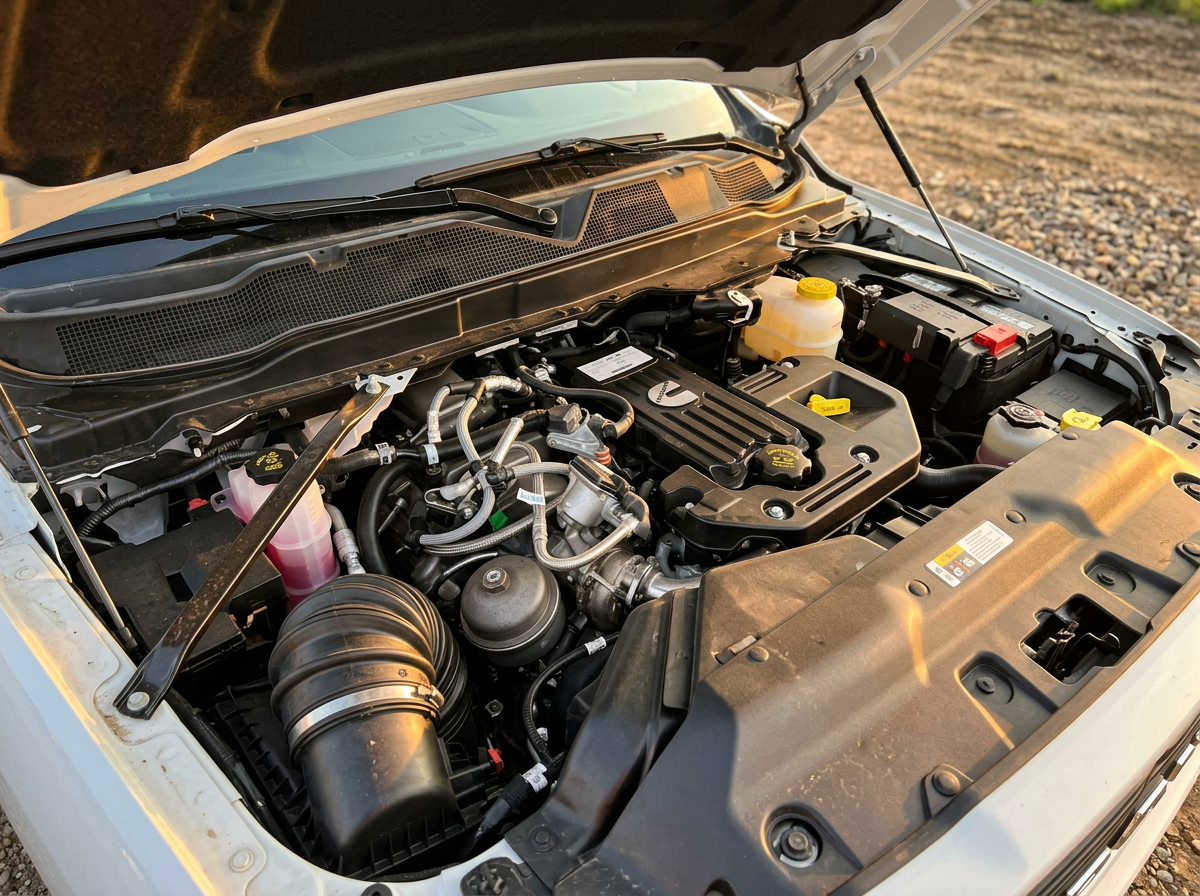
2026 Ram 2500 engine bay showing Cummins and HEMI options

The 2026 Ram 2500 gives you a choice between two powerhouse engines: the gasoline 6.4L HEMI V8 and the diesel 6.7L Cummins turbo. Both deliver impressive performance, but they excel in different ways. The HEMI offers straightforward power and lower upfront cost, while the Cummins unleashes massive torque for serious towing and hauling. Understanding the differences helps you choose the engine that matches your truck priorities.

At Beadle’s Chrysler Center in Bowdle, SD, we help Ram customers make this decision every day. Whether you’re a contractor hauling daily loads, a weekend adventurer with a fifth wheel, or someone who values fuel efficiency, there’s an engine built for your needs. Let’s break down the specs, costs, and real-world performance differences so you can drive home in the Ram 2500 that’s right for you.

Should I get the Cummins diesel or the HEMI in my Ram 2500?

The answer depends on how you’ll use your Ram 2500. Both engines are available on Rebel models and deliver serious capability—but they’re engineered for different priorities.

The 6.4L HEMI V8 is the standard gasoline engine, featuring 405 horsepower and 429 lb-ft of torque. It comes at no additional cost and pairs with an 8-speed automatic transmission. The HEMI feels responsive for everyday driving, offers familiar gasoline refueling infrastructure, and handles towing up to 17,740 lbs. It’s the choice for owners who want proven technology, simpler maintenance, and no premium fuel upcharge.

The 6.7L Cummins High-Output turbo diesel delivers 430 horsepower but 1,075 lb-ft of torque—an extraordinary 646 lb-ft advantage over the HEMI. This engine is engineered for towing heavy loads, with a maximum capacity of 20,000 lbs. The trade-off is a $12,995 premium, diesel fuel costs (often higher per gallon than gasoline), and diesel-specific maintenance. If you’re regularly pulling fifth wheels, trailers, or carrying maximum payload, the Cummins torque becomes invaluable.

How much more does the Cummins cost than the HEMI?

The Cummins 6.7L turbo diesel carries a $12,995 upfront premium compared to the standard 6.4L HEMI V8 on 2026 Ram 2500 models. This is the manufacturer’s suggested engine upgrade cost and is consistent across Rebel and other Cummins-compatible trims.

However, the true cost of ownership extends beyond the sticker. Diesel fuel typically costs 10-50 cents more per gallon than regular gasoline, depending on your region and current market conditions. The Cummins delivers better fuel economy in highway and towing scenarios, which can offset some of the purchase premium over time. Routine maintenance (oil changes, DEF fluid) is also more involved with diesel engines.

For heavy-duty users, the Cummins premium often pays for itself through higher resale value, improved towing efficiency, and reduced strain on the engine during demanding work. For light-to-moderate users, the HEMI’s lower entry price and simpler ownership may represent better value.

What is the torque difference between the Cummins and the HEMI?

This is where the engineering philosophies of these two engines truly diverge. The torque gap is massive.

Engine Horsepower Torque (lb-ft) Towing Capacity Payload
6.4L HEMI V8 405 hp 429 lb-ft 17,740 lbs 4,580 lbs
6.7L Cummins HO Turbo Diesel 430 hp 1,075 lb-ft 20,000 lbs 3,600 lbs

The Cummins produces 646 lb-ft more torque than the HEMI—that’s a 150% increase. To put this in perspective, the Cummins torque output exceeds many pickup truck engines entirely. This immense torque is why diesel-powered Ram 2500 trucks feel planted and controlled when towing heavy loads. The engine doesn’t strain; it simply delivers steady, relentless pulling power.

The HEMI’s 429 lb-ft is still respectable and sufficient for recreational towing, but it doesn’t match the Cummins in load management. If you’re regularly towing trailers exceeding 15,000 lbs or frequently operating at max payload capacity, the Cummins torque advantage becomes a meaningful comfort and safety factor.

Is the Cummins worth the $12,995 upgrade?

Whether the Cummins upgrade justifies its cost depends on three key factors: your towing frequency, your annual miles, and your ownership timeline.

The Cummins makes financial sense if: You tow regularly (more than once per month), pull trailers heavier than 12,000 lbs, haul near-maximum payload, or operate in mountainous terrain where diesel efficiency shines. Diesel engines retain resale value better than gasoline counterparts in the truck market, sometimes recovering $4,000-$6,000 of the upgrade cost at trade-in. Over a 5+ year ownership period with heavy towing, fuel economy gains and reduced transmission/engine strain can offset the $12,995 premium.

The HEMI remains the smarter choice if: You tow occasionally (a few times per year), primarily use the truck for daily commuting or light hauling, or plan to keep the truck for fewer than 5 years. The HEMI’s lower purchase price, cheaper fuel infrastructure, and simpler maintenance make it the economical option for moderate-use owners. You’ll never feel like you’re missing capability for typical truck duties.

At Beadle’s Chrysler Center, we recommend talking through your actual towing plans in detail. Many owners overestimate their towing frequency and underestimate the diesel fuel cost. A honest assessment of how you’ll use the truck reveals whether the Cummins premium is an investment or an unnecessary expense.

Which engine is better for daily driving vs heavy towing?

Daily driving and towing place different demands on a pickup engine, and each power plant has distinct characteristics for each scenario.

Daily Driving: HEMI Advantage The 6.4L HEMI feels more responsive in everyday traffic. It accelerates briskly from stops, merges smoothly, and delivers that familiar gasoline engine responsiveness. The HEMI doesn’t require cold-start warmup time (unlike some diesel engines in winter), and refueling takes seconds at virtually any gas station. Noise and vibration are minimal compared to diesel engines. For owners who spend 80%+ of their time commuting or running errands, the HEMI provides the most pleasant driving experience. It’s simpler to own, easier to service, and requires no special diesel fuel management.

Heavy Towing: Cummins Dominance When a loaded trailer is in tow, the Cummins transforms the truck into a specialized towing machine. That 1,075 lb-ft of torque means the engine stays cool and relaxed even at gross combination weight. You don’t feel the strain of climbing hills or merging onto highways with 15,000+ lbs behind you. The Cummins holds lower RPMs during towing, reducing engine wear, noise, and heat stress. Transmission longevity improves because the torque converter doesn’t work as hard. For serious towing, the Cummins isn’t just better—it’s in a different category.

The reality for most 2026 Ram 2500 owners: if you tow a fifth wheel 3-4 times per year, the HEMI covers those trips adequately. If you tow weekly or regularly max out capacity, the Cummins becomes essential. See our complete towing guide for detailed capacity charts and real-world examples.

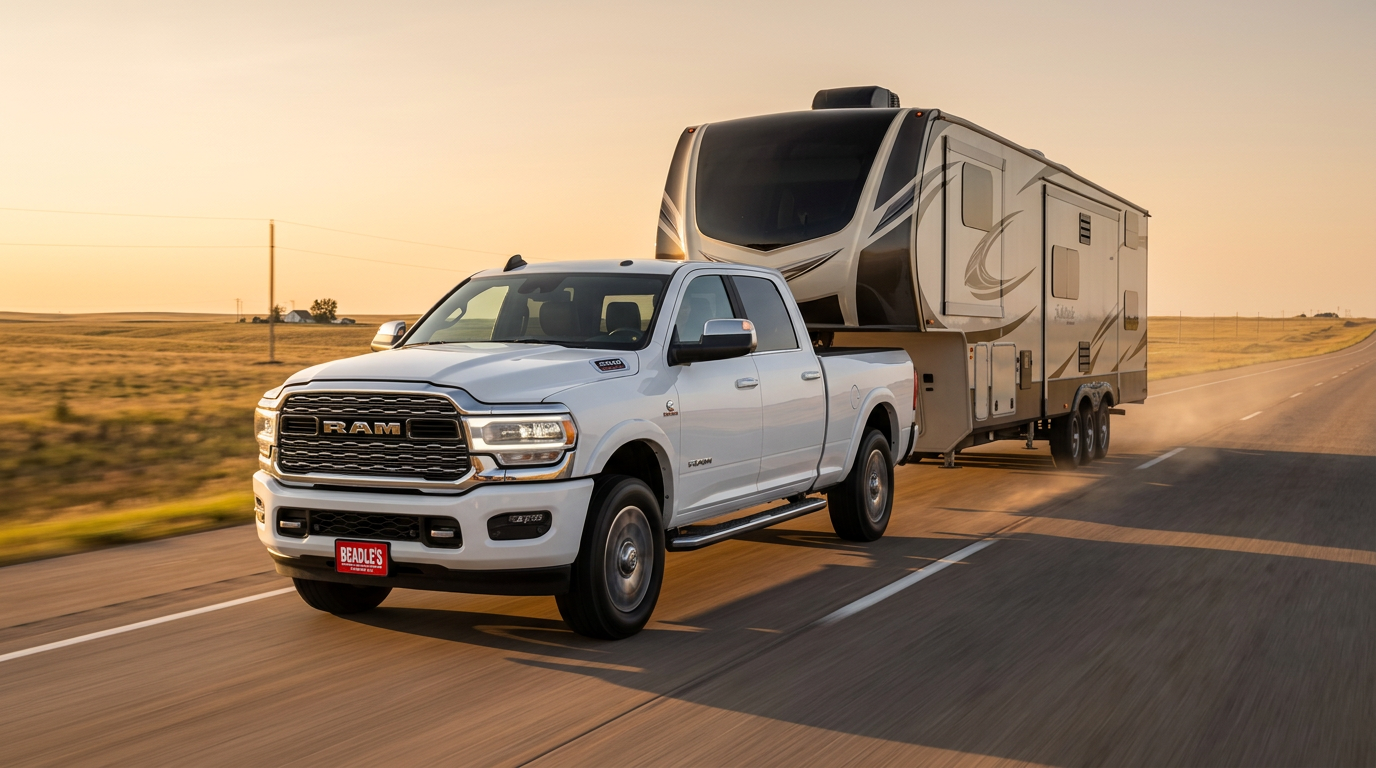
2026 Ram 2500 Cummins diesel towing a fifth wheel trailer

How does fuel economy compare between the two engines?

Fuel economy is where diesel engineering delivers measurable, long-term savings—but the math depends on how you drive.

Highway and Towing (Cummins Wins) The 2026 Ram 2500 6.7L Cummins achieves approximately 20-23 MPG on the highway under ideal conditions, and importantly, maintains relatively consistent efficiency even when towing. The gasoline HEMI typically returns 14-17 MPG on the highway and drops significantly under towing loads. For owners who log high annual mileage or tow frequently, diesel fuel economy can cut fuel costs by 25-35% over gasoline. If you tow 5,000 miles per year, that advantage compounds into meaningful savings.

City and Local Driving (More Balanced) In stop-and-go city driving, the efficiency gap narrows. The HEMI achieves 13-15 MPG city, while the Cummins drops to around 16-18 MPG in urban conditions. Neither engine excels in short-trip, low-speed driving, so daily commuting doesn’t yield as dramatic a fuel savings advantage for diesel.

The Diesel Fuel Cost Variable Diesel typically costs $0.20-$0.50 more per gallon than regular gasoline, depending on your market and current oil prices. In some regions and seasons, diesel and gasoline prices converge. This variable makes the “fuel savings” calculation uncertain. A Cummins owner who logs 20,000 miles annually on the highway will see clear fuel-cost advantage. A Cummins owner who drives mostly in the city and rarely tows may not recover the $12,995 premium through fuel savings alone.

Key Takeaways

  • The 6.4L HEMI offers 405 hp / 429 lb-ft at no cost and delivers responsive daily driving with towing up to 17,740 lbs.
  • The 6.7L Cummins HO diesel produces 430 hp / 1,075 lb-ft of torque with a 20,000 lb towing capacity for a $12,995 premium.
  • The Cummins torque advantage (646 lb-ft more) makes heavy towing and maximum payload operations significantly easier and safer.
  • HEMI is the choice for occasional towing, daily commuting, and owners prioritizing lower purchase cost and simpler ownership.
  • Cummins justifies its cost for regular heavy towing, high annual mileage, and 5+ year ownership with highway-heavy driving.
  • Diesel fuel economy advantage (20-23 highway MPG vs 14-17) only materializes on highway miles and towing—city driving economies are similar.
  • Resale value typically favors diesel trucks, potentially recovering $4,000-$6,000 of the upgrade premium at trade-in.

Frequently Asked Questions

Can I get a Cummins on a Ram 2500 Power Wagon?

No. The Power Wagon trim is exclusively equipped with the 6.4L HEMI V8. Ram engineered the Power Wagon’s suspension, electronic locking differentials, and disconnecting sway bar specifically around gasoline-engine packaging and weight distribution. The Cummins diesel option is available only on Power Wagon’s sibling trims like the Rebel.

Is there a standard-output Cummins option for the 2026 Ram 2500?

No. The 6.7L Cummins is available only in High-Output form, delivering 430 hp and 1,075 lb-ft. This is the engine’s standard specification across all Ram 2500 models that offer the Cummins option. Ram discontinued the lower-output diesel variant after the 2024 model year.

Which engine requires DEF fluid?

The 6.7L Cummins diesel. Diesel exhaust fluid (DEF) is required for emission control and is stored in a separate tank. Owners must refill DEF every 10,000-15,000 miles depending on driving conditions. The HEMI gasoline engine requires no special fluids beyond conventional motor oil and coolant.

What’s the warranty on the Cummins engine?

Both engines carry Ram’s 3-year/36,000-mile basic warranty and 5-year/60,000-mile powertrain warranty. The Cummins diesel engine specifically carries Cummins’ own warranty coverage for select internal components, protecting you against manufacturing defects. Extended warranty options are available from Beadle’s to cover additional years and mileage.

My Recommendation as Lexy Tabbert from Beadle’s Chrysler Center: I’ve helped hundreds of customers in Bowdle, South Dakota choose between these two powerplants, and here’s what I’ve learned: the right choice isn’t always the one with the most torque or the lowest price. It’s the one that matches how you actually live.

If you’re honest about towing infrequently, the HEMI’s 17,740 lb capacity handles recreational trailers just fine, and you’ll save $12,995 plus the cost of premium diesel fuel over ownership. You’ll get a truck that feels lively every single day and requires no special maintenance knowledge.

But if you’re towing regularly—whether it’s a contractor managing job sites or an adventurer with a fifth wheel—the Cummins isn’t an upgrade; it’s the correct tool. That 1,075 lb-ft transforms the experience from “this works” to “this was designed for this.” The engine feels unstressed, your transmission lasts longer, and your towing becomes safer and more enjoyable.

Both engines are built on decades of Ram reliability. The difference is that one prioritizes flexibility and value, while the other specializes in serious hauling. Visit our dealership in Bowdle, and we’ll test drive both. Talk through your real towing plans, and we’ll help you understand which 2026 Ram 2500 engine delivers the best value for your needs. Learn more about the full Ram 2500 lineup on our 2026 Ram 2500 overview.

About the Author

Lexy Tabbert — Beadle’s Chrysler Center, Bowdle, SD

Lexy Tabbert is the Director of Sales and Marketing at Beadle’s Chrysler Center in Bowdle, South Dakota. She covers Ram, Jeep, Dodge, and Chrysler vehicles — helping buyers across the region find the right truck and configuration for their needs. Learn more about Lexy.
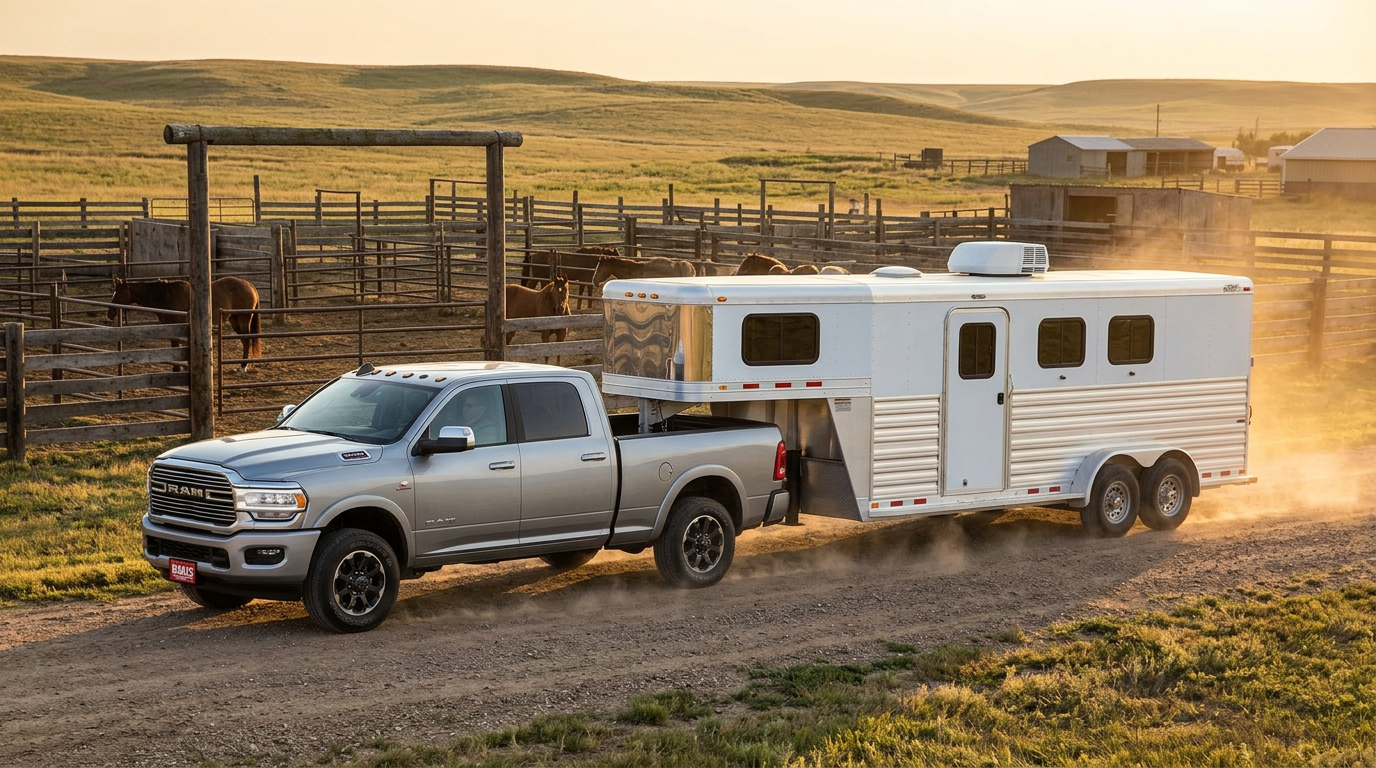
2026 Ram 2500 towing a fifth-wheel trailer

The 2026 Ram 2500 is built for serious work in South Dakota. Whether you’re pulling livestock trailers to the fairgrounds, hauling gooseneck equipment across the plains, or towing a fifth-wheel RV to your favorite camping spot, this heavy-duty truck delivers class-leading towing and payload capacity. The question isn’t whether the Ram 2500 can handle your load—it’s which engine and configuration best matches your specific needs.

In this guide, we’ll break down exact towing capacities for both the standard 6.4L HEMI V8 and the available 6.7L Cummins diesel, explain payload limits, compare fifth-wheel versus gooseneck towing, and help you understand which setup works for your operation. If you’re shopping for a 2500 in Bowdle or anywhere in South Dakota, this is your roadmap to choosing the right truck.

How much can the 2026 Ram 2500 tow?

The 2026 Ram 2500 with the standard 6.4L HEMI V8 can tow up to 17,740 lbs in its maximum configuration, while the available 6.7L Cummins diesel pushes that to 20,000 lbs. Towing capacity varies significantly based on cab style, bed length, drivetrain, rear axle ratio, and GVWR rating.

All 2026 Ram 2500 towing figures are SAE J2807 certified—the industry standard that assumes 300 lbs of passenger weight and accounts for all trailer equipment. This means the numbers you see are realistic, tested results, not optimistic marketing claims.

Configuration HEMI V8 (lbs) Cummins Diesel (lbs)
Reg Cab 8′ 4×2 17,740 20,000
Crew Cab 6’4″ 4×4 (9,900 GVWR) 17,120 19,900
Crew Cab 6’4″ 4×4 (10,000 GVWR) 17,440 19,900
Crew Cab 6’4″ 4×4 (11,040 GVWR) 19,930
Crew Cab 8′ 4×4 16,930 19,770
Power Wagon 10,530 N/A

Notice that regular cab configurations deliver higher towing capacity than crew cabs, primarily because fewer people in the cab means lower curb weight and more capacity headroom. If maximum towing is your priority and you don’t need the crew cab, the regular cab 4×2 gives you the most capability on the HEMI.

What is the 2026 Ram 2500 payload capacity?

Payload capacity—what you can load into the truck bed—tops out at 4,580 lbs for the HEMI and 3,600 lbs for the Cummins diesel, but like towing, this varies dramatically based on configuration. A crew cab 4×4 will carry considerably less payload than a reg cab.

The difference between HEMI and Cummins payload is worth noting: the diesel’s superior weight distribution and suspension tuning prioritize towing over payload capacity. If you’re hauling heavy loads in the bed frequently, the HEMI may be the better choice for your operation.

Configuration HEMI V8 (lbs) Cummins Diesel (lbs)
Reg Cab 8′ 4×4 4,580
Crew Cab 6’4″ 4×4 (10,000 GVWR) 3,320
Crew Cab 6’4″ 4×4 (11,040 GVWR) 4,010 3,300
Crew Cab 6’4″ 4×2 (11,040 GVWR) 3,600
Power Wagon 1,570 N/A

Remember: towing and payload both consume your truck’s weight budget (GVWR). You can’t max out both simultaneously. If you’re towing near capacity, you’ll have limited bed loading room, and vice versa. This is why understanding your specific use case is critical when specifying a 2500.

Does the Cummins diesel tow more than the HEMI?

Yes, the 6.7L Cummins turbo diesel outweighs the standard 6.4L HEMI V8 by approximately 2,200–2,300 lbs in towing capacity across most configurations. The Cummins delivers 1,075 lb-ft of torque versus the HEMI’s 429 lb-ft, and that massive diesel pulling power translates directly to higher ratings for gooseneck and fifth-wheel trailers.

However, raw towing numbers tell only part of the story. The 6.4L HEMI is cheaper (standard equipment with no upcharge), delivers more payload capacity, and still tows 17,740 lbs—more than enough for most South Dakota operators. The Cummins costs $12,995 more but excels if you’re regularly pulling above 18,000 lbs or need the superior towing comfort and stability of diesel torque. For a deeper comparison of both engines, see our 2026 Ram 2500 Cummins vs. HEMI guide.

Engine Specs at a Glance:

  • 6.4L HEMI V8: 405 hp / 429 lb-ft, 8-speed auto, standard on all 2500 models
  • 6.7L Cummins HO Turbo Diesel: 430 hp / 1,075 lb-ft, TorqueFlite HD 8-speed auto, +$12,995

Can the Ram 2500 pull a 5th wheel or gooseneck trailer?

Absolutely. The Ram 2500 is built for fifth-wheel and gooseneck towing—these hitches place the load much closer to the truck’s rear axle, which is why the 2500 can tow up to 20,000 lbs with them. Standard Class III and IV receivers max out around 12,500–17,740 lbs for bumper-pull trailers, but fifth-wheel and gooseneck hitches unlock the full towing potential of the truck.

To fifth-wheel or gooseneck tow on a Ram 2500, you’ll need the optional Towing Prep Group—a $745 add-on that includes 5th-wheel/gooseneck hitch mounting provisions, integrated trailer brake controller, and reinforced frame points. If you plan to tow anything over 15,000 lbs or pull a fifth-wheel RV, specify this option when ordering.

Class V receivers (bumper-pull with a ball hitch) are limited to 2,000 lbs maximum tongue weight on the Ram 2500, which is still substantial for trailers up to roughly 14,000–16,000 lbs depending on weight distribution. For anything heavier, a fifth-wheel or gooseneck hitch is required by SAE standards.

What tow rating do I need for a livestock trailer in South Dakota?

A typical double-axle livestock trailer for cattle or horses weighs 4,000–6,500 lbs empty and holds 8,000–12,000 lbs of animal weight when loaded. You’ll need a minimum towing capacity of 13,000–17,000 lbs depending on trailer size and live weight. The 2026 Ram 2500 with either engine easily handles this across all configurations.

For a gooseneck livestock trailer—common for larger operations or multiple-pen setups—you’re looking at 6,000–8,000 lbs dry weight and up to 15,000–18,000 lbs loaded. Here, the Cummins diesel becomes more attractive, offering the extra 2,200-lb towing advantage and smoother torque curve for loaded uphill pulls on South Dakota highways. Both engines will do the job, but the diesel makes it effortless.

2026 Ram 2500 pulling a gooseneck livestock trailer

Most South Dakota ranchers and livestock operators opt for Crew Cab 4×4 configurations for comfort on long hauls and better handling in winter conditions. With an 11,040 GVWR Crew Cab 4×4, both engines deliver ample towing headroom: HEMI at 17,440 lbs, Cummins at 19,930 lbs. Pair either with the optional Towing Prep Group for integrated trailer brake control, and you have a professional livestock hauler ready for fairgrounds, sales yards, or custom work.

What towing packages are available on the 2026 Ram 2500?

Ram offers a focused towing package strategy on the 2500. The main option is the Towing Prep Group ($745), which is essential if you plan any serious pulling. This group bundles fifth-wheel/gooseneck mounting provisions, an integrated trailer brake controller, reinforced rear frame, and factory-ready hitch attachment points.

All 2026 Ram 2500 models come standard with an integrated trailer sway control system, integrated trailer brake controller wiring, and towing mirrors. These systems are automatic—no add-on needed. The main decision is whether you want the prep hardware for fifth-wheel/gooseneck (the $745 Towing Prep Group) or if a standard Class III receiver is sufficient for your bumper-pull needs.

Key Takeaways

  • 2026 Ram 2500 HEMI maxes at 17,740 lbs towing; Cummins diesel reaches 20,000 lbs (both SAE J2807 certified).
  • Payload capacity ranges from 1,570 lbs (Power Wagon) to 4,580 lbs (Reg Cab), depending on cab and frame configuration.
  • Cummins diesel outweighs HEMI by ~2,200–2,300 lbs but costs $12,995 extra; choose based on your regular towing loads.
  • Fifth-wheel and gooseneck towing require the optional Towing Prep Group ($745); standard Class V receiver tops out at 2,000 lbs tongue weight.
  • Most South Dakota livestock operators choose Crew Cab 4×4 with either engine for comfort and winter stability.
  • Integrated trailer brake control, sway control, and towing mirrors are standard; no extra tech package needed.

Frequently Asked Questions

Can I tow 20,000 lbs with a HEMI 2500?

Not with the 6.4L HEMI. The HEMI maxes out at 17,740 lbs. Only the 6.7L Cummins diesel reaches 20,000 lbs. If you regularly exceed 18,000 lbs, the Cummins is the better choice.

Does the 4×4 tow less than the 4×2?

Typically yes, but the difference is small—usually 200–400 lbs less on 4×4. 4×4 adds weight, but if you need it for winter traction in South Dakota (and most do), the towing capacity remains sufficient. The 4×4 advantage for safety outweighs the modest capacity loss.

What’s the difference between a fifth wheel and gooseneck hitch?

Both place the hitch in the truck bed, but fifth-wheel uses a large plate and pin, while gooseneck uses a ball hitch mounted in the bed. Gooseneck is more maneuverable and easier to couple; fifth-wheel offers more comfort in the towed RV. Both enable maximum 2500 towing capacity. Choose based on trailer design and personal preference.

Do I need a brake controller to tow with the 2500?

The 2500 comes with integrated trailer brake controller wiring (all models standard). If your trailer has electric brakes (required for trailers over 4,500 lbs gross weight in South Dakota), you’ll activate and configure the controller through the truck’s infotainment system. It’s plug-and-play; no aftermarket hardware required.

What GVWR should I choose for maximum payload?

Spec the 11,040 GVWR rating if payload capacity is your priority (boosts payload on Crew Cab 4×4 to 4,010 lbs HEMI or enables higher diesel ratings). Standard GVWR is 9,900 or 10,000 depending on trim; the 11,040 is an upgrade. Consider your typical load mix: if you tow and haul heavy bed loads equally, the higher GVWR is worth adding.

Is the Towing Prep Group mandatory?

No, but it’s highly recommended for trailers over 12,000 lbs or if you plan any fifth-wheel/gooseneck use. It’s just $745 and adds critical reinforcement and factory integration. Without it, you’ll need an aftermarket fifth-wheel hitch bolted to the frame, which is less elegant and voids some suspension warranties.

Our Final Take

I’ve spent years helping South Dakota ranchers, contractors, and RV enthusiasts find the right Ram 2500 for their operation. The bottom line: the 2026 Ram 2500 is overbuilt for most towing tasks in our region. A Crew Cab 4×4 HEMI with the standard equipment will pull livestock trailers, gooseneck equipment, fifth-wheel RVs, and construction loads with authority and confidence. The truck is capable, reliable, and more truck than many people need.

The Cummins diesel makes sense if you’re regularly at or above 18,000 lbs, or if you want the smoothest, most relaxed towing experience. But don’t feel obligated to pay the $12,995 premium unless your numbers demand it. The HEMI is plenty of engine.

What matters most is matching the right cab style, bed length, and GVWR to your real-world mix of towing, hauling, and passenger needs. If you’d like to talk through configurations specific to your operation, or if you want to test-drive a 2026 Ram 2500 configured the way you need it, stop by Beadle’s Chrysler Center in Bowdle. We’ll walk you through the specs, compare engines, and help you build a truck that earns its keep.

For a complete overview of all 2026 Ram 2500 features, trims, and capabilities, see our 2026 Ram 2500 buyer’s guide.

About the Author

Lexy Tabbert — Beadle’s Chrysler Center, Bowdle, SD

Lexy Tabbert is the Director of Sales and Marketing at Beadle’s Chrysler Center in Bowdle, South Dakota. She covers Ram, Jeep, Dodge, and Chrysler vehicles — helping buyers across the region find the right truck and configuration for their needs. Learn more about Lexy.

2026 Chrysler Pacifica in Red Hot Pearl Coat at Beadle's in Bowdle SD

The Chrysler Pacifica’s powertrain story is simpler than most vehicles in its segment: one engine family in two configurations — a conventional 3.6L V6 across the gas lineup and a plug-in hybrid version of that same engine on the PHEV trims. No diesel. No turbocharged four-cylinder. No confusion about which engine fits which trim. You’re choosing between gas and hybrid, and understanding the numbers that come with each.

This guide covers the full engine and transmission specs for both powertrains, explains Engine Stop-Start and what it means in daily driving, breaks down the fuel economy numbers, and shows what changes between FWD and AWD configurations. The trim-level breakdown and feature availability are in the 2026 Pacifica overview.

What engine does the 2026 Chrysler Pacifica use?

The gas Pacifica lineup — Voyager LX through Pinnacle — uses the 3.6L Pentastar V6 24V VVT with Engine Stop-Start (ESS). This engine has been in production in the Pacifica since the nameplate’s return, refined over multiple generations to the current state of tune. It’s a naturally aspirated six-cylinder with variable valve timing — no turbocharging, no supercharging, straightforward long-term reliability.

The PHEV uses the same 3.6L V6 base architecture but in a plug-in hybrid application (engine code EH3), paired with dual electric motors through a fundamentally different transmission. The gas and PHEV powertrains share the engine displacement and cylinder count — but almost nothing else about the drivetrain system.

How much horsepower and torque does the 2026 Pacifica have?

The gas 3.6L Pentastar V6 produces 287 horsepower and 262 lb-ft of torque. For a vehicle in this class and weight range, those figures are well-matched to the job — merging onto a highway fully loaded with seven passengers and luggage, passing on a two-lane SD road, or maintaining speed on I-90 in a headwind.

The Pacifica PHEV’s combined system output is 260 horsepower — lower than the gas V6 despite the hybrid assist, because the EFLITE SI-EVT transmission is optimized for efficiency rather than peak output. In everyday driving the PHEV feels comparable to the gas Pacifica; the horsepower difference isn’t meaningfully noticeable in routine family use.

What is Engine Stop-Start (ESS), and can you turn it off?

Engine Stop-Start automatically shuts the engine off when the vehicle comes to a complete stop — at a red light, in a drive-through, at a railroad crossing — and restarts it when you release the brake. The purpose is fuel economy: eliminating idle fuel consumption at stops adds up over the course of daily driving.

The system is smooth in the Pacifica. The restart is calibrated to be quick and quiet — not the lurch that some buyers experience in earlier-generation stop-start implementations.

ESS can be manually disabled via a button, and the disable state does not persist between ignition cycles — the system resets to on every time you start the vehicle. This is consistent across most vehicles with stop-start systems. If you drive in conditions where frequent stop-start cycling is undesirable (bumper-to-bumper traffic with high HVAC demand, for example), the off button is accessible and straightforward to use.

What transmission does the 2026 Pacifica use?

The gas Pacifica uses a 9-speed 948TE automatic transmission. The nine-speed unit is well-matched to the Pentastar V6 — it keeps the engine in its efficient power band at highway speeds and manages the gear spread well when towing or carrying a full passenger load.

The PHEV uses the EFLITE SI-EVT transmission — an electrically variable system with no traditional gear steps. Rather than shifting between fixed ratios, the EFLITE continuously varies the output ratio using the electric motor system. It’s a fundamentally different design optimized for hybrid operation, and it’s what enables seamless transitions between electric-only, hybrid, and engine-only operation.

How fuel efficient is the 2026 Chrysler Pacifica?

The EPA fuel economy ratings for the gas Pacifica:

Configuration City Highway Combined
3.6L V6 FWD (all gas trims) 19 mpg 28 mpg 22 mpg
3.6L V6 AWD (Select / Limited / Pinnacle) 17 mpg 25 mpg Up to 20 mpg*

*AWD combined figure is Chrysler’s estimate; official EPA AWD rating was pending at time of publication. Confirm current EPA figures at time of purchase.

The 19-gallon fuel tank on full Pacifica gas trims (Voyager LX uses a smaller 16.5-gallon tank) translates to a highway range of approximately 530 miles at 28 mpg highway — more than enough to run Bowdle to Sioux Falls and back on a single tank with margin.

For buyers on the fence between FWD and AWD purely on fuel economy grounds: the 2-mpg combined difference is real but rarely the deciding factor. On 15,000 annual miles at $3.50/gallon, the AWD fuel premium works out to roughly $150–$175 per year. That’s usually well within the value of the AWD capability for South Dakota winter driving conditions.

What are the full specs for the Pacifica PHEV powertrain?

The PHEV powertrain is distinct enough to warrant its own specification summary:

Engine 3.6L V6 Plug-In Hybrid (EH3)
Transmission EFLITE SI-EVT (electrically variable)
System Output 260 hp (combined V6 + dual electric motors)
Battery 16 kWh lithium-ion
EV Range (EPA est.) 32 miles
MPGe Combined 82 MPGe
Hybrid MPG (battery depleted) 30 mpg combined
Total Range (full charge + full tank) Up to 520 miles
Onboard Charger 6.6 kW (standard on both PHEV trims)
Level 2 Charge Time (~) Approximately 2 hours (240V)
Level 1 Charge Time (~) Approximately 14 hours (120V household outlet)
DC Fast Charging Not available
Drivetrain FWD only — no AWD available

The PHEV-specific buying considerations — charging setup, cold-weather range, and the South Dakota practicality case — are covered in full in the Pacifica PHEV guide.

What changes between FWD and AWD configurations?

AWD is available on Pacifica Select, Limited, and Pinnacle gas trims. It adds all-wheel drive traction and slightly adjusts the fuel economy numbers — 22 mpg combined (FWD) vs. up to 20 mpg combined (AWD). Everything else about the powertrain, including engine output, transmission, and towing rating, remains the same between FWD and AWD versions of the same trim.

The AWD system in the Pacifica is not a selectable or part-time 4WD system — it operates as a full-time AWD setup that continuously manages torque distribution between front and rear axles. It engages proactively rather than reactively, which matters in slippery conditions where a reactive system would only engage after wheel slip has already occurred. For winter driving in central South Dakota, that proactive engagement is the practical difference between AWD and FWD.

2026 Chrysler Pacifica — Full Specs Quick Reference

Spec Gas V6 PHEV
Engine 3.6L Pentastar V6 24V VVT 3.6L V6 Plug-In Hybrid (EH3)
Transmission 9-speed 948TE automatic EFLITE SI-EVT
Horsepower 287 hp 260 hp (system)
Torque 262 lb-ft
Drivetrain FWD or AWD (Select, Limited, Pinnacle) FWD only
Fuel Tank 19 gal (Pacifica); 16.5 gal (Voyager LX) PHEV hybrid system
EPA City / Hwy / Combined 19 / 28 / 22 mpg (FWD) 82 MPGe / 30 mpg hybrid
Max Tow (w/ Tow Group) 3,600 lbs (Limited / Pinnacle only) Not available
EV Range N/A 32 miles (EPA est.)
Total Range ~530 mi highway (19-gal FWD) Up to 520 mi (full charge + full tank)
Key Takeaways
  • Gas Pacifica: 287 hp / 262 lb-ft, 3.6L Pentastar V6, 9-speed 948TE, 22 mpg combined FWD
  • PHEV: 260 hp system, EFLITE SI-EVT, 32 mi EV range, 82 MPGe, 30 mpg hybrid
  • AWD available on gas Select, Limited, and Pinnacle — not on PHEV; fuel economy is up to 20 mpg combined with AWD
  • 19-gallon fuel tank on all Pacifica gas trims; Voyager LX uses a 16.5-gallon tank
  • Engine Stop-Start is standard; it can be manually disabled per ignition cycle
  • PHEV delivers up to 520 miles total range on a full charge and full tank; no DC fast charging available

Common Questions

Is the Pentastar V6 a reliable engine long-term? +

The 3.6L Pentastar has been in production across the Stellantis lineup since 2011 and has accumulated a substantial long-term track record. It’s naturally aspirated, which eliminates turbocharger-related failure modes. Regular oil changes and maintenance are the primary reliability factors — the engine itself is not considered a weak point in the Pacifica platform.

Does the PHEV use more premium fuel? +

No — both the gas and PHEV Pacifica are designed to run on regular 87 octane fuel. No premium fuel requirement on either powertrain.

What is the fuel economy difference between the Voyager LX and the Pacifica gas trims? +

The Voyager LX and the full Pacifica gas trims use the same 3.6L Pentastar V6 and 9-speed automatic — fuel economy is essentially the same in FWD configurations. The difference between the Voyager LX and Pacifica gas trims on fuel economy is minimal; the tank size (16.5 gal vs. 19 gal) is the more meaningful range distinction.

How does the Pacifica’s AWD system handle South Dakota winters? +

The Pacifica’s AWD system is a full-time all-wheel drive setup that continuously distributes torque without driver input. It doesn’t require selection or activation — it’s managing traction proactively. For typical South Dakota winter conditions including packed snow, icy intersections, and winter gravel roads, it performs well. The system is not rated for extreme off-road use, but for the winter driving conditions central and northern South Dakota buyers actually encounter, it’s the right tool.

What the numbers mean for your buying decision

The Pacifica’s powertrain is deliberately uncomplicated — and that’s a good thing. The 3.6L V6 is a known quantity with a long production history and strong reliability record. The 9-speed automatic is well-matched to it. The PHEV version is the one variable that requires honest evaluation of your driving pattern and home charging situation.

If you’re in the gas lineup, the powertrain decision mostly comes down to FWD vs. AWD — covered in the trims guide. If you’re weighing the PHEV, that deserves a separate honest conversation about home charging and daily mileage — the full breakdown is in the PHEV guide. The broader picture on the full 2026 lineup is in the 2026 Pacifica overview.

Lexy Tabbert, Director of Sales and Marketing at Beadle's Chrysler Center in Bowdle SD
About the Author
Director of Sales & Marketing — Beadle’s Chrysler Center | Bowdle, SD

Lexy Tabbert is the Director of Sales and Marketing at Beadle’s Chrysler Center in Bowdle, South Dakota. She writes and oversees all vehicle content on this site with one goal: give South Dakota buyers accurate, useful information before they come in. Every spec and figure published here is verified against OEM sources before it goes live. When she’s not writing, she’s working with the team in Bowdle helping families find the right vehicle for the way they actually live and drive.

2026 Chrysler Pacifica in Hydro Blue Pearl Coat at Beadle's in Bowdle SD

The Chrysler Pacifica’s exterior dimensions don’t tell the most important part of its story. The interior is where the Pacifica makes its case — and where features that sound optional on a spec sheet become things you notice every single day. Stow ‘N Go, the built-in vacuum, FamCam, the Uconnect Theater system — these are purpose-built features for families, and they’re available at multiple points in the trim ladder.

This guide covers the Pacifica’s interior features in detail: what each one does, which trims include it as standard vs. which require a package, and what actually matters for day-to-day family use in South Dakota. Trim availability context is in the 2026 Pacifica overview.

How does Stow ‘N Go actually work?

Stow ‘N Go is Chrysler’s system for folding seats completely into the floor of the van. The seat cushion lifts up, and the seatback folds forward into a recess in the floor — leaving a flush, flat surface. No seat removal. No wrestling with heavy hardware. No trip to the garage to store a seat you’ll want back next week.

The third-row Stow ‘N Go bench is standard on every Pacifica trim, including both PHEV configurations. On gas trims, the second-row also folds into the floor via in-floor storage bins — creating a fully flat cargo surface from behind the front seats to the rear hatch. That full flat floor is approximately 8 feet long when both rows are stowed.

On PHEV trims, the battery pack occupies the floor space where the second-row bins would sit — so only the third-row Stow ‘N Go is available. You can still fold the second row, but not into the floor.

In practice, Stow ‘N Go means the Pacifica can shift from a full seven-passenger van to a cargo hauler in about 90 seconds without removing anything from the vehicle. That’s a different kind of flexibility than any SUV offers.

Does the Pacifica really have a built-in vacuum?

Yes. The Stow ‘N Vac is a factory-installed corded vacuum built into the cargo area of the van, accessible behind a panel in the rear. It’s powered by the vehicle’s electrical system, runs while the van is on, and comes with attachments for different surfaces.

Stow ‘N Vac is standard equipment on the Pacifica Pinnacle (FWD and AWD). On the Pacifica Limited, it’s available as part of the Uconnect Theater Family Group (option code AEZ) — alongside Harman Kardon audio, seatback screens, FamCam, and hands-free sliding doors. It is not available on the Voyager LX, Pacifica Select, or either PHEV trim.

For families with young children, sports equipment, gravel tracked in from rural properties, or dogs — this feature is less of a luxury and more of a weekly utility. Having a vacuum built into the vehicle that doesn’t require finding an outlet, lugging a shop vac from the garage, or stopping at a car wash vacuum bay is a quality-of-life upgrade that buyers who have it consistently report valuing.

Family loading fishing gear into a 2026 Chrysler Pacifica at Beadle's in Bowdle SD

What is the Uconnect Theater system — and which trims have it?

The Uconnect Theater system is Chrysler’s rear-seat entertainment platform, built around seatback screens for second-row passengers with audio integration into the van’s speaker system. It’s available in two distinct packages depending on trim level:

Uconnect Theater Family Group II (code AEY) — Available on: Pacifica Select FWD, Pacifica Select AWD, PHEV Select

  • 13-speaker Alpine audio system
  • Seatback entertainment screens (rear rows)
  • Navigation
  • Power-adjustable front passenger seat
  • Additional convenience features

Uconnect Theater Family Group (code AEZ) — Available on: Pacifica Limited FWD, Pacifica Limited AWD

  • Harman Kardon 19-speaker audio with subwoofer
  • Blu-ray/DVD seatback screens
  • FamCam interior camera
  • Stow ‘N Vac integrated vacuum
  • Hands-free power sliding doors

On the Pacifica Pinnacle and PHEV Pinnacle, all of the Theater Family Group (AEZ) content is included as standard equipment — no package add needed. Wireless Apple CarPlay and Android Auto are standard across the entire Pacifica lineup regardless of Theater configuration.

What is FamCam, and which trims include it?

FamCam is an interior overhead camera mounted inside the cabin that streams a live view of the rear rows to the front Uconnect display. The driver or front passenger can see what’s happening in the second and third rows without turning around — useful on long highway drives, useful when a child is crying and you need to assess the situation, and genuinely useful on any drive longer than 20 minutes with children in the back.

FamCam is standard on the Pacifica Pinnacle (FWD and AWD) and both PHEV trims. On the Pacifica Limited, it comes as part of the Theater Family Group (AEZ). It is not available on the Voyager LX or Pacifica Select unless bundled through an available package. For families who do a lot of highway driving — Aberdeen, Pierre, Sioux Falls — FamCam is one of those features that becomes essential once you’ve had it.

Which rows have heated seating, and which trims include it?

Heated front seats are standard on every Pacifica trim from Voyager LX through PHEV Pinnacle — no exceptions. This is a baseline feature across the full lineup.

Heated second-row seats are standard on the Pacifica Limited (FWD and AWD), Pacifica Pinnacle (FWD and AWD), PHEV Select, and PHEV Pinnacle. They are not standard on the Voyager LX or Pacifica Select.

Ventilated front seats are standard on the Pacifica Pinnacle (FWD and AWD) and both PHEV trims. They are not available on lower gas trims. In South Dakota summers, ventilated seats in a dark interior vehicle parked in direct sun are more than a luxury — they’re a comfort difference you feel on every afternoon departure from a parking lot.

Three-zone automatic temperature control is standard on all Pacifica trims — each zone (front, middle, rear) maintains independent temperature settings. This is not a premium-trim-only feature.

What audio systems are available in the 2026 Pacifica?

Audio quality scales significantly across the trim ladder:

  • Voyager LX / Pacifica Select (base): Standard audio system
  • Pacifica Select + Theater Group II (AEY): 13-speaker Alpine audio system
  • Pacifica Limited + Theater Group (AEZ): Harman Kardon 19-speaker system with subwoofer
  • Pacifica Pinnacle (standard): Harman Kardon 19-speaker system with subwoofer — included without a package add
  • PHEV Select + Theater & Sound Group (AAH): Harman Kardon 20-speaker system
  • PHEV Pinnacle (standard): Harman Kardon premium audio included

The Harman Kardon system on the Limited and Pinnacle is a genuinely excellent audio setup for a passenger vehicle. If you spend significant time on highway miles between central SD cities, the audio quality is a notable difference from base-trim performance.

What charging and connectivity does the Pacifica offer?

Wireless charging pad is standard on the Pacifica Limited (FWD and AWD), Pacifica Pinnacle (FWD and AWD), and both PHEV trims. It is not standard on the Voyager LX or Pacifica Select, where USB charging is available.

Wireless Apple CarPlay and Android Auto are standard across the entire lineup — no cable required on any trim. The Uconnect platform supports wireless projection out of the box.

USB ports are distributed through the cabin to serve rear-row passengers on mid-to-upper trims. The exact port count varies by configuration, but the Pacifica’s cabin connectivity is well-designed for a family vehicle where multiple passengers need to charge simultaneously on longer trips.

Key Takeaways
  • Stow ‘N Go third-row is on every trim; full flat-floor (both rows) is gas trims only — not PHEV
  • Stow ‘N Vac is standard on Pinnacle; available via Theater Group (AEZ) on Limited
  • FamCam is standard on Pinnacle and PHEV trims; available via Theater Group on Limited
  • The Theater Family Group (AEZ) on Limited adds Harman Kardon audio, Blu-ray seatback screens, FamCam, vacuum, and hands-free sliding doors in one package
  • Heated front seats are standard on all trims; second-row heat starts at the Limited and PHEV Select
  • Wireless Apple CarPlay and Android Auto are standard across the entire lineup

Common Questions

Do the seatback screens play downloaded content, or only streaming? +

The Theater Family Group (AEZ) includes a Blu-ray/DVD player — so physical media works without any streaming connection. This is a meaningful detail for long highway drives in rural South Dakota where LTE coverage isn’t consistent. Blu-ray and DVD content plays without any data connection required.

Are the sliding doors power or manual on all trims? +

Power sliding doors (electrically assisted) are available as you move up the trim ladder. Hands-free power sliding doors — which open via a kick sensor under the rear bumper — are included in the Theater Family Group (AEZ) on Limited trims and standard on the PHEV Pinnacle. Confirm the specific power door configuration for a vehicle at time of purchase.

What is the Safety Sphere, and is it worth adding? +

The Safety Sphere combines a 360 Surround View Camera (overhead bird’s-eye view of the vehicle and surroundings) with front and rear ParkSense parking sensors. It’s standard on Pinnacle trims and both PHEV trims. For parking in tight lots, backing into stalls, or hitching a trailer — the 360 view is a significant quality-of-life improvement over a standard backup camera. Yes, it’s worth adding if available for your configuration.

Is the third row comfortable for adults on long trips? +

Yes — more so than the third row in most three-row SUVs. The Pacifica’s floor is flat back there (not raised over wheel wells), the ceiling height is adequate for adults, and access through the sliding door doesn’t require climbing over a folded second row. Average-height adults can ride in the Pacifica’s third row for a multi-hour highway trip without the kind of discomfort that makes third-row SUV seating a joke at family gatherings.

What the interior actually feels like

The Pacifica’s interior features aren’t gimmicks — they were designed for families who use their vehicle hard. Stow ‘N Go solves a real problem. The Stow ‘N Vac solves another one. FamCam, on any drive with children in the back, solves one more. The Theater system, on a three-hour drive to Sioux Falls with kids in the second row, solves yet another.

The trim that puts the most of these together in one build — without requiring Pinnacle pricing — is the Limited with the Theater Family Group. That’s the configuration most families in central South Dakota land on. The full trim and package breakdown is in the 2026 Pacifica overview. If you want to see what’s in stock at Beadle’s in Bowdle, the inventory link below takes you directly there.

Lexy Tabbert, Director of Sales and Marketing at Beadle's Chrysler Center in Bowdle SD
About the Author
Director of Sales & Marketing — Beadle’s Chrysler Center | Bowdle, SD

Lexy Tabbert is the Director of Sales and Marketing at Beadle’s Chrysler Center in Bowdle, South Dakota. She writes and oversees all vehicle content on this site with one goal: give South Dakota buyers accurate, useful information before they come in. Every spec and figure published here is verified against OEM sources before it goes live. When she’s not writing, she’s working with the team in Bowdle helping families find the right vehicle for the way they actually live and drive.

2026 Chrysler Pacifica in Diamond Black Crystal at Beadle's in Bowdle SD

If you walked into this page already planning to buy a three-row SUV, that’s fair. Most families in central South Dakota come into the van conversation sideways — a friend mentioned it, they drove one at a rental counter, or a spouse suggested it after test-driving a three-row SUV for the third time and not quite being satisfied.

This isn’t a sales pitch. It’s an honest comparison. The Chrysler Pacifica is not the right vehicle for every family. But for many families who think they want a three-row SUV, the Pacifica does several important things better — and it’s worth knowing what those things are before you decide. The full specs for the Pacifica are in the 2026 Pacifica overview.

Why do families default to three-row SUVs over minivans?

The short answer is perception. Three-row SUVs have a truck-based or car-based ruggedness image that minivans have spent decades fighting against. Buyers who grew up riding in their parents’ Dodge Caravan have complicated feelings about the category.

The longer answer is that three-row SUVs are genuinely good vehicles with real advantages — ground clearance, optional off-road capability, and a visual presence that reads as “SUV” in a way that matters to some buyers. This guide doesn’t dismiss those preferences. It asks whether they outweigh the practical advantages the Pacifica delivers.

For most families whose primary vehicle job is hauling children, cargo, and gear across South Dakota — the functional comparison doesn’t favor the SUV as cleanly as the perception does.

Are sliding doors actually better than swing doors?

In everyday family use — yes, significantly. This comes up in almost every conversation I have with families comparing the Pacifica to a three-row SUV.

Sliding doors don’t swing into adjacent parking spaces — a real concern in any parking lot where spaces run tight. They don’t catch South Dakota crosswinds and bang into the vehicle next to you. They don’t require children to manage a door they could push too hard or not catch in time.

In winter specifically: a swing door opened in subzero temperatures with a sleeping toddler in your arms, in a parking lot where blowing snow has frozen the gap, in wind — that’s a different experience from sliding a door back along its track with one hand. South Dakota families who switch to a minivan almost universally cite winter door operation as something they didn’t expect to care about and then cared about immediately.

Power sliding doors on the Limited and Pinnacle add hands-free operation via a kick sensor under the rear bumper. On the Pinnacle and via the Theater Family Group on the Limited, hands-free sliding doors are included — useful when you’re carrying groceries or gear and can’t reach the handle.

Family loading children into a 2026 Chrysler Pacifica at Beadle's in Bowdle SD

How does Stow ‘N Go compare to SUV cargo solutions?

Stow ‘N Go is the single most practical cargo feature in the passenger vehicle segment. The third-row seats — and on gas trims, the second-row seats — fold completely flat into recesses in the floor. No seat removal. No storage problem. No trip to figure out where to put the seat you just took out.

On gas Pacifica trims, folding both middle and rear rows gives you a flat, uninterrupted cargo floor roughly 8 feet long. That’s truck-bed-level cargo utility inside a heated, enclosed cabin. Whether it’s hockey equipment, lumber from the hardware store, camping gear for six people, or fishing equipment for a Missouri River weekend — the floor loads flat and the van becomes a cargo van without removing a single seat from the vehicle.

Three-row SUVs handle cargo differently. The third row typically folds flat, but the second row doesn’t go into the floor — it either folds forward against the front seats or tumbles in place, creating an uneven floor. You get cargo space behind the second row, or cargo space with a compromised second row — not a flat floor across the full cabin.

This matters most for families who need full seating on some days and full cargo on others. In an SUV, that transition involves physically moving seats or wrestling with configurations. In the Pacifica, it involves lifting seat cushions and watching the seat disappear into the floor.

How does passenger comfort compare between the Pacifica and a three-row SUV?

Row by row, the Pacifica is the more comfortable vehicle for most passengers most of the time.

Row 1: Comparable — both offer heated seats, tech features, and comfortable front row environments. The Pacifica’s three-zone automatic climate control starts in the first row.

Row 2: The Pacifica has more usable floor space, easier entry via sliding door, and better interior width than most three-row SUVs. The second row is the “prime seating” for children who need car seats — the sliding door opening is wider, car seat installation is easier, and there’s no step-in height that requires lifting.

Row 3: This is where the Pacifica wins most clearly. The third row in a three-row SUV is typically cramped — designed for small children or short adults for short durations. The Pacifica’s third row is genuinely adult-usable for highway trips. There’s meaningful legroom, the floor is flat rather than elevated over the wheel wells, and access through the sliding door is easier than climbing over a folded second-row seat.

For families who regularly seat six or seven adults — cousins at Christmas, carpool duty, athletic team hauling — the Pacifica’s third row is the difference between a comfortable ride and a ride nobody wants to volunteer for.

How does the Pacifica compare on price to a similarly-equipped three-row SUV?

We’re not going to name specific competitors and quote their prices here — those change, and specific configurations vary too much to make direct comparison useful. But the honest general observation is this: a three-row SUV with comparable feature content — AWD, second-row captain’s chairs, leather, rear entertainment, safety tech — tends to carry a higher price than an equivalently equipped Pacifica.

The Pacifica gets you more usable passenger space, a better third row, and superior cargo flexibility for the same or less money than most comparable three-row SUVs at the same feature tier. For families who are value-focused and not committed to the SUV form factor for reasons of preference, the Pacifica is typically the better financial choice.

Where does the Pacifica fall short compared to a three-row SUV?

Being honest about this matters. The Pacifica is not the answer for every family.

  • Ground clearance: The Pacifica is a lower-riding vehicle than most three-row SUVs. If you regularly drive unpaved roads with meaningful rutting, high-centering risk, or significant ground clearance requirements, an SUV platform handles it better.
  • Off-road capability: The Pacifica offers no lifted suspension, no off-road tires, and no low-range transfer case. It’s not designed for trails or serious unimproved surfaces.
  • Towing maximum: 3,600 lbs is best-in-class for minivans but lower than many three-row SUVs. If you regularly tow above that threshold — gooseneck trailers, large campers, heavy equipment — an SUV or truck platform is the right call.
  • Perception: Some buyers just don’t want a minivan, and that’s a legitimate preference. There’s nothing wrong with choosing a vehicle partly based on how it makes you feel.

If those factors matter to your household, the SUV is probably the right choice. If they don’t — if your gravel roads are passable, your towing needs are under 3,600 lbs, and you’re open to being practical about what moves a family most efficiently — the comparison looks different.

Who should choose the Pacifica, and who should stick with the SUV?

Choose the Pacifica if: You regularly load and unload children in parking lots. Cargo flexibility between full-seating and flat-floor matters. You seat adults in the third row. Your daily driving is on paved or typical gravel South Dakota roads. You want AWD for winter without truck-level fuel costs. You’re open to a vehicle that does its job extremely well regardless of what segment it’s in.

Stick with the SUV if: You regularly navigate rough terrain with meaningful ground clearance needs. Your towing requirements exceed 3,600 lbs consistently. The form factor is genuinely important to you and not something you’ll get past. You have specific off-road use cases that require an SUV platform.

Key Takeaways
  • Sliding doors win in parking lots, South Dakota winters, and child-loading situations — every day, not just occasionally
  • Stow ‘N Go gives you a flat cargo floor without removing seats — no SUV in this class matches that flexibility
  • The Pacifica’s third row is genuinely adult-usable for highway trips; most three-row SUV third rows are not
  • The Pacifica is typically less expensive than comparably equipped three-row SUVs at the same feature tier
  • The SUV wins on ground clearance, serious towing above 3,600 lbs, and off-road capability — be honest with yourself about whether you actually use those things
  • AWD is available on Pacifica Select, Limited, and Pinnacle for winter-weather confidence

Common Questions

Is the Pacifica easier to park than a three-row SUV? +

The Pacifica is a large vehicle, similar in overall length to most three-row SUVs. The parking experience is comparable. Where the Pacifica has a clear advantage is once you’re parked — the sliding doors mean you don’t need swing-door clearance on either side, which makes tight spaces significantly more manageable.

Can the Pacifica handle South Dakota gravel roads? +

The Pacifica handles typical rural South Dakota gravel roads and county roads without issue. It sits lower than a body-on-frame SUV, so roads with significant rutting or large obstacles are less appropriate. For the gravel county roads, farm approaches, and rural highway driving that most central SD families actually do, the Pacifica handles fine — particularly in the AWD configuration.

My spouse doesn’t want a minivan. What’s the best way to approach that conversation? +

Drive one. The most effective thing we see is getting both decision-makers in the vehicle at the same time — loading the kids, using the sliding doors in a parking lot, experiencing the third row on a real errand. The Pacifica’s advantages are experiential. They don’t convert as arguments; they convert as experiences. We’re happy to set up a test drive at Beadle’s in Bowdle if you want to try before the conversation gets further along.

The honest take

I’ve watched families drive away in three-row SUVs who I think would have been happier in a Pacifica. I’ve also watched families make the right call choosing an SUV because their specific needs — regular off-road access, heavy towing, meaningful terrain — genuinely fit the SUV platform better.

If your primary vehicle job is moving your family around South Dakota efficiently and comfortably, the Pacifica does it better in most situations than any three-row SUV in its price range. If you want to see how it compares on paper, the 2026 Pacifica overview has the full spec picture. If you want to drive one, call us in Bowdle.

Lexy Tabbert, Director of Sales and Marketing at Beadle's Chrysler Center in Bowdle SD
About the Author
Director of Sales & Marketing — Beadle’s Chrysler Center | Bowdle, SD

Lexy Tabbert is the Director of Sales and Marketing at Beadle’s Chrysler Center in Bowdle, South Dakota. She writes and oversees all vehicle content on this site with one goal: give South Dakota buyers accurate, useful information before they come in. Every spec and figure published here is verified against OEM sources before it goes live. When she’s not writing, she’s working with the team in Bowdle helping families find the right vehicle for the way they actually live and drive.

2026 Chrysler Pacifica Plug-In Hybrid in Bright White at Beadle's in Bowdle SD

The Chrysler Pacifica Plug-In Hybrid is the only minivan on the market with a PHEV powertrain option. That distinction matters for a specific type of buyer: someone who wants the full family-hauling capability of a minivan and wants to reduce fuel costs on daily driving without committing to a fully electric vehicle.

This guide covers how the Pacifica PHEV works, what 32 miles of electric range actually means in practice, how charging works in a South Dakota context, and where the PHEV gives up ground compared to the gas lineup. The full powertrain specs are in the 2026 Pacifica overview. The PHEV is available to order through Beadle’s Chrysler Center — contact the team to confirm current availability.

What is the Chrysler Pacifica Plug-In Hybrid?

The Pacifica PHEV combines a 3.6L V6 with dual electric motors through an EFLITE SI-EVT transmission — an electrically variable system that allows the vehicle to operate in electric-only mode, hybrid mode, or a blend of both depending on battery charge level and power demand.

Combined system output is 260 horsepower, sourced from a 16 kWh lithium-ion battery pack. The EPA estimates 32 miles of electric-only driving range on a full charge, and 82 MPGe combined when running on battery. When the battery depletes, the system transitions to hybrid operation using the V6 at 30 mpg combined. Fill the tank and charge the battery, and total range extends to up to 520 miles.

This is not an add-on hybrid mode bolted onto a gas vehicle — the PHEV has a distinct powertrain architecture (EFLITE SI-EVT vs. the 9-speed 948TE in gas trims) and a battery system that physically replaces the second-row in-floor storage space. It’s a purpose-built configuration.

How far does the Pacifica PHEV go on electricity alone?

The EPA estimates 32 miles of electric-only range on a full charge. That figure covers most daily commutes without consuming a drop of gasoline. If your daily drive is under 30 miles and you charge at home overnight, you can run the Pacifica PHEV as a de facto electric vehicle day to day and use the V6 as a backup for longer trips.

To put the numbers in local context: Bowdle to Mobridge is about 35 miles. Bowdle to Gettysburg is about 25 miles. Routine in-town and close-range errands — school runs, grocery trips, local business driving — fall well inside the 32-mile EV window if you’re charging at home.

For longer drives — Pierre, Aberdeen, Watertown — the V6 hybrid system carries the load at 30 mpg combined. The vehicle manages the transition automatically; there’s nothing the driver needs to do.

What does charging the Pacifica PHEV look like?

Both PHEV trims include a 6.6kW onboard charger with charge cord as standard equipment. Charging options:

  • Level 2 (240V home charger): Approximately 2 hours for a full charge — the standard home PHEV setup
  • Level 1 (120V standard household outlet): Approximately 14 hours for a full charge — usable overnight, but marginal if your daily drive is using the full 32-mile battery each day
  • DC fast charging: Not available — the Pacifica PHEV does not support DC fast charging

The practical setup for most buyers: a Level 2 home charger installed in the garage. A licensed electrician can install a 240V outlet or a dedicated EVSE (Electric Vehicle Service Equipment) unit for $500–$1,500 depending on your panel and garage configuration. That one-time cost is the infrastructure investment that makes the PHEV math work.

Public charging in rural central South Dakota is limited. The PHEV’s value proposition assumes home charging — it’s not designed around public fast-charging infrastructure the way a battery-electric vehicle is. If you can plug in at home every night, the system works as designed. If you can’t, the PHEV behaves as a 30-mpg conventional hybrid, which is still good — but you’re not capturing the electric savings that justify the price premium.

Does the Pacifica PHEV make sense in South Dakota?

Honestly — it depends on your situation. Here’s the framework:

The PHEV makes sense if: You have a home garage or covered outlet where you can install Level 2 charging. Your daily drive is predictably under 30 miles most days. You occasionally take longer highway trips where the hybrid mode’s 30 mpg kicks in. You’re not concerned about towing capability. The fuel savings on daily electric driving return meaningful money over a 5-7 year ownership window.

The PHEV is harder to justify if: You don’t have home charging and rely on public infrastructure. Your daily driving regularly exceeds 32 miles without a charging opportunity during the day. Towing capability matters to you (the PHEV doesn’t support the Tow Group). You want AWD for winter traction (PHEV is FWD only).

Cold weather caveat: Lithium-ion batteries lose range in cold temperatures — this is true of all PHEVs and EVs. A South Dakota January will reduce effective EV range from 32 miles to something lower depending on temperature and heating load. The vehicle handles this automatically by engaging the V6 more frequently. It won’t leave you stranded, but it does reduce the daily electric savings that make the PHEV case.

For buyers in Bowdle and the surrounding region with a daily driving pattern that fits the profile, the PHEV is a legitimate choice. For buyers who drive long rural distances regularly, need AWD, or need to tow — the gas Pacifica Limited or Pinnacle AWD is the stronger choice.

What does the Pacifica PHEV give up compared to the gas version?

These are the concrete trade-offs of choosing PHEV over gas:

  • No AWD: PHEV is FWD only — no AWD configuration exists
  • No Trailer Tow Group: PHEV cannot tow — the hitch is not available on either PHEV trim
  • No second-row in-floor storage bins: The battery pack sits in the floor space the Stow ‘N Go bins occupy on gas trims. The third-row Stow ‘N Go bench is retained.
  • Cold-weather range reduction: Battery efficiency drops in South Dakota winters — plan for less than 32 miles EV range in January and February
  • No DC fast charging: You’re limited to Level 1 or Level 2 home charging
  • Higher price of entry: PHEV Select starts at $51,765 — premium over comparable gas trims

None of these are disqualifying for the right buyer. But they’re real trade-offs that deserve honest consideration before committing to the PHEV trim.

PHEV Select vs. PHEV Pinnacle — which one?

Both PHEV trims share the same powertrain, battery, and range. The difference is interior and technology content.

The PHEV Select ($51,765 MSRP) includes the 6.6kW charger, 360 Surround View Camera, Safety Sphere (front/rear ParkSense), wireless charging pad, heated front seats, Nappa leather, and the Uconnect Theater Family Group II available as an add-on (adds seatback screens, Alpine audio, FamCam, navigation). It’s the entry point for the hybrid system with a capable feature set.

The PHEV Pinnacle ($60,465 MSRP) includes all PHEV Select content plus premium leather trimmed seating, FamCam standard, hands-free sliding doors, Harman Kardon audio, and ventilated front seats. It’s the fully-loaded PHEV configuration. If you’re spending at the PHEV Pinnacle level, the gas Pinnacle AWD with the Tow Group is worth a side-by-side conversation — the comparison hinges on whether electric capability or AWD/towing matters more to your household.

Key Takeaways
  • The Pacifica PHEV delivers 32 miles EPA estimated EV range and 82 MPGe — the only minivan PHEV on the market
  • Full battery + full tank = up to 520 miles total range; hybrid mode runs at 30 mpg combined
  • Charging requires Level 2 home setup for practical daily use (~2 hrs); Level 1 is possible (~14 hrs) but marginal
  • The PHEV is FWD only — no AWD, no Trailer Tow Group, no second-row in-floor storage bins
  • Cold South Dakota winters reduce EV range — plan accordingly; the V6 takes over automatically
  • Available to order in PHEV Select ($51,765) and PHEV Pinnacle ($60,465) configurations

Common Questions

Do I need a special charger installed at home? +

You don’t need a charger to drive the PHEV — it runs on gas when the battery is depleted. But to take advantage of the EV range daily, a Level 2 (240V) home charger is the practical solution. The Pacifica comes with a charge cord for standard 120V outlets, but 14-hour Level 1 charging isn’t practical for daily EV use. A licensed electrician can install a 240V outlet or EVSE for $500–$1,500 depending on your home setup.

Will the PHEV still work if I never plug it in? +

Yes — the Pacifica PHEV operates as a conventional hybrid if you never plug it in. The V6 engine and hybrid system work together to manage fuel economy at around 30 mpg combined. You won’t access the EV-only range without charging, but the vehicle functions completely normally. It’s just a very expensive way to buy a 30-mpg hybrid.

Does the PHEV have Stow ‘N Go? +

Partially. The Stow ‘N Go third-row bench is standard on both PHEV trims — the rear seats fold into the floor as normal. The second-row in-floor storage bins are not available on the PHEV because the battery pack occupies that floor space. So the rear seats fold flat, but you can’t fold the middle row into the floor on the PHEV as you can on gas trims.

Is the PHEV available in stock or must it be ordered? +

The Pacifica PHEV is available to order through Beadle’s Chrysler Center. Contact our team directly to confirm current inventory and ordering status — we can walk through the available configurations and discuss lead times.

Is the Pacifica PHEV the right choice for you?

I want to be straightforward about this: the Pacifica PHEV is a genuinely compelling vehicle for a specific buyer profile. If you have home Level 2 charging, a daily commute that fits inside 32 miles, and no need for AWD or towing, the electric savings over a 5-7 year ownership window are real. For a lot of families in the Bowdle area who stay close to home during the week, this is actually a reasonable match.

Where I’d steer you toward the gas Pacifica is if you need AWD for winter, regularly pull a trailer, or your daily driving pattern regularly exceeds 30 miles without a charge opportunity. The gas Limited AWD covers those needs and does it well. The full comparison of all trim options — gas and PHEV — is in the 2026 Pacifica overview. Reach out to our team if you want to work through the specific numbers for your situation.

Lexy Tabbert, Director of Sales and Marketing at Beadle's Chrysler Center in Bowdle SD
About the Author
Director of Sales & Marketing — Beadle’s Chrysler Center | Bowdle, SD

Lexy Tabbert is the Director of Sales and Marketing at Beadle’s Chrysler Center in Bowdle, South Dakota. She writes and oversees all vehicle content on this site with one goal: give South Dakota buyers accurate, useful information before they come in. Every spec and figure published here is verified against OEM sources before it goes live. When she’s not writing, she’s working with the team in Bowdle helping families find the right vehicle for the way they actually live and drive.

Cookie Consent: By continuing to use this site you agree to our use of cookies.

Accept Learn More