




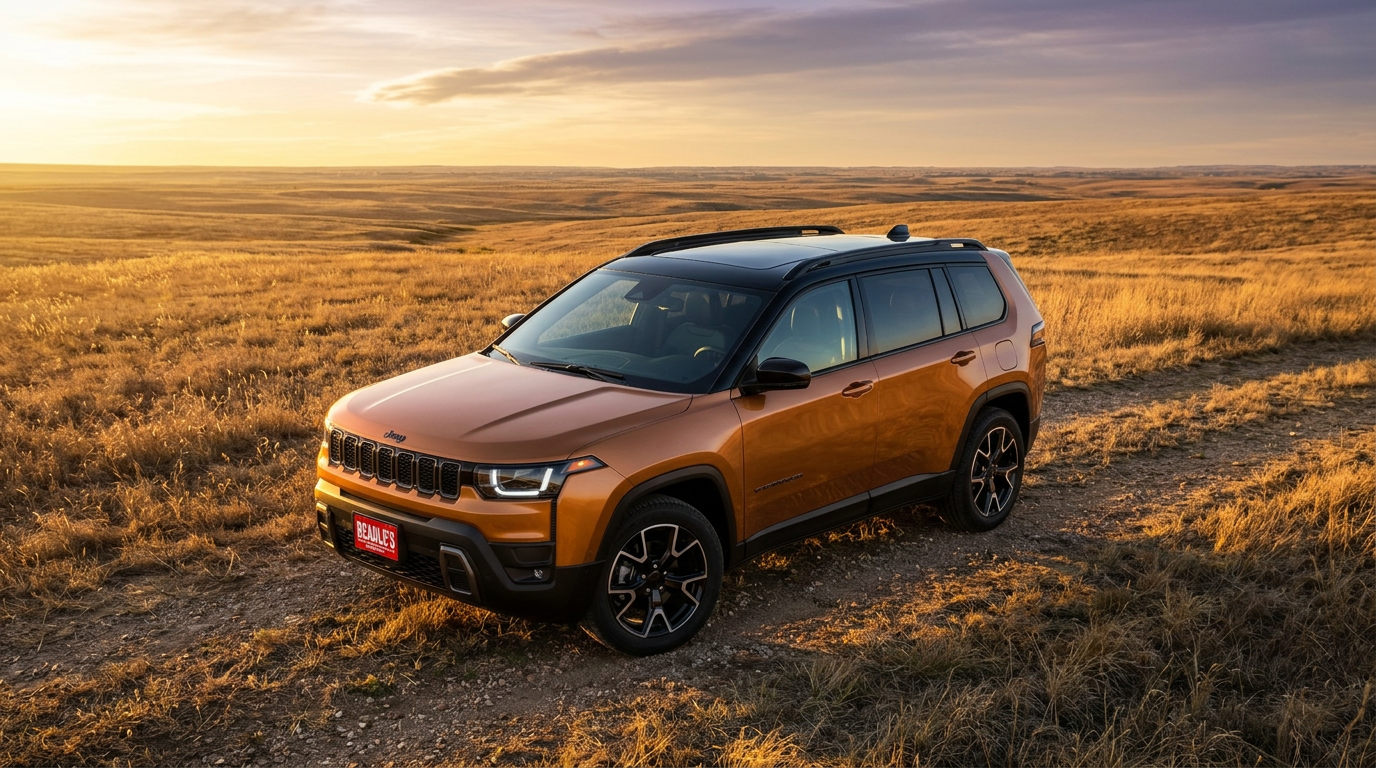
Five trim levels. A $8,000+ spread from entry to top. Which one actually makes sense for a South Dakota buyer who needs a capable, fuel-efficient 4×4 for year-round driving? That question comes up constantly, and the answer isn’t always what buyers expect when they first walk into Beadle’s.
This guide walks through each 2026 Jeep Cherokee trim level — what’s included, what you give up by going lower, what you gain by going higher, and which configuration tends to be the right fit for buyers across central South Dakota.
On This Page
- What are the five 2026 Cherokee trim levels?
- What does the Cherokee 4×4 include?
- What does the Laredo add over the Cherokee 4×4?
- What does the Limited add over the Laredo?
- What is the 2026 Cherokee 85th Anniversary?
- What comes standard on the Overland?
- How to choose the right Cherokee trim for your needs
What are the five 2026 Cherokee trim levels?
The 2026 Jeep Cherokee comes in five trims: Cherokee 4×4, Laredo, Limited, 85th Anniversary, and Overland. Every trim includes the same 1.6L turbocharged hybrid powertrain, standard 4×4 with Selec-Terrain, and 8 inches of ground clearance — the trims differentiate primarily on interior comfort, technology, and convenience features.
Starting MSRP runs from $35,000 for the Cherokee 4×4 to $43,000-plus for the Overland — a spread that reflects meaningful differences in standard content, not just badge upgrades. The 85th Anniversary sits between the Limited and Overland at $40,905 and is the only trim built specifically around Jeep’s heritage branding. Confirm current pricing at Beadle’s, as MSRP is subject to change.
Common Mistake
Buyers often assume all Cherokee trims are loaded with the same features since they share the same powertrain and 4×4 system. They’re not. Heated seats start at the Laredo; the heated steering wheel doesn’t come until the Limited. Wireless charging and GPS navigation are Overland-only. The panoramic sunroof is also Overland-only. Confirm the window sticker on any specific unit before committing.
What does the Cherokee 4×4 include?
The Cherokee 4×4 is the entry trim — starting at $35,000 — and it comes with more standard content than you’d expect at the base level. Standard 4×4 with Selec-Terrain, the 1.6L hybrid powertrain, ParkSense rear park assist, a rearview camera, and the Cherokee’s full active safety suite are included across all trims including the base.
What the Cherokee 4×4 doesn’t include: heated front seats, a heated steering wheel, leather seating, remote start, or Apple CarPlay without the optional Tech Group package. The Trailer Tow Group — needed for full towing capability — is also not available on the base Cherokee 4×4. For a buyer whose priority is the Cherokee’s 4×4 capability and hybrid efficiency at the lowest entry price, it covers the basics. For anyone who has driven with heated seats through a South Dakota winter, the Laredo is worth the look.
Cherokee 4×4 Best For
Buyers who want the Cherokee’s 4×4 and hybrid capability at the lowest entry price and don’t need heated features, towing capability, or CarPlay out of the box. If towing is on your list, step up to the Laredo — the Trailer Tow Group is not available on the base trim.
What does the Laredo add over the Cherokee 4×4?
The Laredo is the first significant comfort step in the Cherokee lineup — it adds heated front seats, remote start, a power liftgate, heated exterior mirrors, and Apple CarPlay standard (no package required). The Trailer Tow Group ($995) also becomes available at this trim level, which is required for the full 3,500-lb tow rating.
For buyers who commute or travel long distances — or who simply deal with South Dakota winters — the heated seat upgrade alone tends to make the Laredo the more practical daily-driver choice over the base Cherokee. Seating is upgraded Soul Cloth with Labyrinth Emboss (not leather — that starts at the Limited). Starting MSRP is approximately $38,000 — verify on the window sticker of any specific unit.
What does the Limited add over the Laredo?
The Limited moves the Cherokee into genuine premium territory — Perforated Capri Leatherette seating, a heated steering wheel, heated exterior mirrors, and a more refined interior trim package are the key standard additions over the Laredo. The Trailer Tow Group ($995) remains available at this trim level.
Note: wireless charging and built-in GPS navigation are Overland-only features — they do not come standard on the Limited. At approximately $40,000 starting MSRP, the Limited is positioned for buyers who want Leatherette seating and the heated steering wheel without stepping to the Overland. It also serves as the base for the 85th Anniversary Edition, making it a strong standalone choice even without the heritage package.
Verify on Window Sticker
Feature content can vary by build and any available packages added at the dealer. The window sticker on a specific unit is the definitive reference for what’s included — we review this with every buyer at Beadle’s before a purchase decision.
What is the 2026 Cherokee 85th Anniversary?
The 85th Anniversary Edition is a special-run trim built on the Limited base, priced at $40,905. It adds Jeep heritage-specific content: Cognac interior stitching, Berber floor mats, and a 9-speaker audio system with subwoofer — content that doesn’t appear on the standard Limited or Overland.
The 85th Anniversary Edition exists to mark Jeep’s 85th year and carries exterior badging and interior accents specific to that designation. For buyers who want the Limited’s feature set with upgraded audio and heritage interior styling — and who like owning a model-year-specific special edition — the $40,905 price point makes it a compelling alternative to the standard Limited at approximately $40,000. For buyers focused purely on function over styling, the standard Limited is the cleaner choice.
What comes standard on the Cherokee Overland?
The Overland is the fully-loaded Cherokee — starting at $43,000-plus — and adds the panoramic sunroof, memory driver’s seat, wireless Apple CarPlay and Android Auto, built-in GPS navigation, and available two-tone exterior paint as standard or optional content at this trim level.
The Overland is positioned for buyers who want everything the Cherokee offers in one package without tracking down individual options or packages. The panoramic sunroof in particular is an Overland feature — it’s not available on lower trims. If that’s a priority, the Overland is the only path. For buyers who don’t need the sunroof or memory seat, the Limited delivers most of the Overland’s daily comfort at a lower price point.

Which Cherokee trim makes sense for your situation?
| Feature | Cherokee 4×4 | Laredo | Limited | Overland |
|---|---|---|---|---|
| Starting MSRP (approx.) | ~$35,000 | ~$38,000 | ~$40,000 | ~$43,000+ |
| Standard 4×4 + Selec-Terrain | Yes | Yes | Yes | Yes |
| Heated front seats | No | Yes | Yes | Yes |
| Heated steering wheel | No | No | Yes | Yes |
| Leather seating | No | No | Yes | Yes |
| Wireless charging | No | No | No | Yes |
| Panoramic sunroof | No | No | No | Yes |
| Built-in GPS navigation | No | No | No | Yes |
Approximate pricing and feature content — verify on window sticker of any specific unit. Feature availability may vary by build and available packages.
Worth it if: You’re stepping up to the Limited or Overland and plan to keep the vehicle 5+ years — the comfort and technology gap over the Laredo is meaningful on long daily drives.
Skip it if: The Cherokee 4×4 or Laredo covers your actual daily needs. The Cherokee’s 4×4 and hybrid capability are identical across all five trims — you’re not giving up capability by staying lower in the lineup.
How to choose the right Cherokee trim for your needs
The Cherokee’s trim structure is straightforward once you know what actually changes between levels. Start with the features that matter most to your daily use — not the sticker price — and work up from there.
- Decide on heated seats first: If you want heated front seats and remote start, the Laredo is your minimum. The base Cherokee 4×4 doesn’t include them. This one decision eliminates the entry trim for most South Dakota winter drivers.
- Decide on the heated steering wheel: The heated steering wheel is not available on the Laredo — it starts at the Limited. If that matters to you, the Limited is your floor.
- Decide on leather, wireless charging, and GPS nav: Leatherette seating starts at the Limited. Wireless charging and built-in GPS navigation are Overland-only — they don’t come on the Limited.
- Decide on the panoramic sunroof: If the sunroof matters, the Overland is the only trim that includes it. No other Cherokee trim offers it.
- Consider the 85th Anniversary separately: If you’re between the Limited and Overland and want upgraded audio and heritage styling, the 85th Anniversary at $40,905 may be the answer. It’s built on the Limited base but adds the 9-speaker system, Cognac interior stitching, and Berber floor mats.
- Check the window sticker on available inventory: Specific units may have packages or options that change what’s included. We check this for every buyer at Beadle’s — just ask.
Key Takeaways
- All five trims share the same 1.6L hybrid powertrain, standard 4×4, and Selec-Terrain — you don’t give up capability by choosing a lower trim.
- Heated front seats start at the Laredo ($38,000) — if South Dakota winters are in the picture, the base Cherokee 4×4 is a tough sell. The heated steering wheel doesn’t arrive until the Limited.
- Wireless charging and built-in GPS navigation are Overland-only — they are not available on the Limited or any lower trim.
- The panoramic sunroof is Overland-only — if that’s a must-have, there’s no way to get it on a lower trim.
- The 85th Anniversary at $40,905 is the only Cherokee with the 9-speaker subwoofer audio system and Cognac heritage interior — it’s a Limited with a specific upgrade stack, not a separate trim tier.
Frequently Asked Questions
Does the base Cherokee 4×4 come with standard 4×4?
Yes — 4×4 with Selec-Terrain is standard on every 2026 Cherokee trim, including the base Cherokee 4×4. There is no front-wheel-drive version of the 2026 Cherokee. This is one of the Cherokee’s strongest selling points: you get full 4×4 capability regardless of which trim you choose.
Is the Laredo worth the upgrade over the base Cherokee 4×4?
For most South Dakota buyers, yes. The Laredo adds heated front seats, remote start, a power liftgate, and Apple CarPlay standard — features that make a tangible difference during a high-plains winter and daily use. The price difference is approximately $3,000 ($35,000 vs. $38,000). If you’ve driven a vehicle with heated seats through a South Dakota January, that upgrade tends to sell itself. Note: the heated steering wheel is a Limited feature, not Laredo.
What makes the 85th Anniversary Edition different from the standard Limited?
The 85th Anniversary Edition is built on the Limited and adds Cognac interior stitching, Berber floor mats, and a 9-speaker audio system with subwoofer — none of which are available on the standard Limited. At $40,905, it’s priced approximately $905 above the standard Limited. If audio quality and interior heritage styling matter to you, it’s worth the difference. If not, the standard Limited delivers the same core feature set.
Can I get a panoramic sunroof on the Cherokee Limited?
No — the panoramic sunroof is standard on the Overland and is not available on the Limited, 85th Anniversary, Laredo, or base Cherokee 4×4. If the sunroof is a priority, the Overland is the only trim that includes it. Confirm on the window sticker of any specific unit you’re considering.
My Take on Choosing Between the Cherokee Trims
Most buyers I talk to at Beadle’s come in thinking they want the base Cherokee 4×4 and leave with the Laredo — not because we upsell them, but because once you talk through what changes between trims, the heated seats and remote start become a pretty easy decision for anyone planning to drive through a South Dakota winter. That $3,000 difference looks different when you’re thinking about five years of January mornings.
The Limited and Overland have their buyers too — usually families who spend real time in the vehicle and want the Leatherette seating and heated steering wheel on the Limited, or the wireless charging, GPS navigation, and sunroof that only come on the Overland. The 85th Anniversary surprises a lot of people when they hear what it includes for the price; the 9-speaker audio system alone tends to close that gap for buyers who care about sound quality. The sunroof is the one clear dividing line — if you want it, the Overland is the only answer and there’s no workaround.
For a full breakdown of what each trim includes and how the 2026 Cherokee compares spec-for-spec, our complete 2026 Cherokee guide covers all of it. And if you want to go through any unit we have in inventory, stop by Beadle’s in Bowdle — we’ll pull the window sticker and walk through exactly what’s on the vehicle in front of you.
About the Author
Lexy Tabbert — Beadle’s Chrysler Center, Bowdle, SD
Lexy Tabbert is the Director of Sales and Marketing at Beadle’s Chrysler Center in Bowdle, South Dakota. She covers Ram, Jeep, Dodge, and Chrysler vehicles — helping families, ranchers, and ag operators across the region find the right truck and configuration for their needs. Learn more about Lexy.
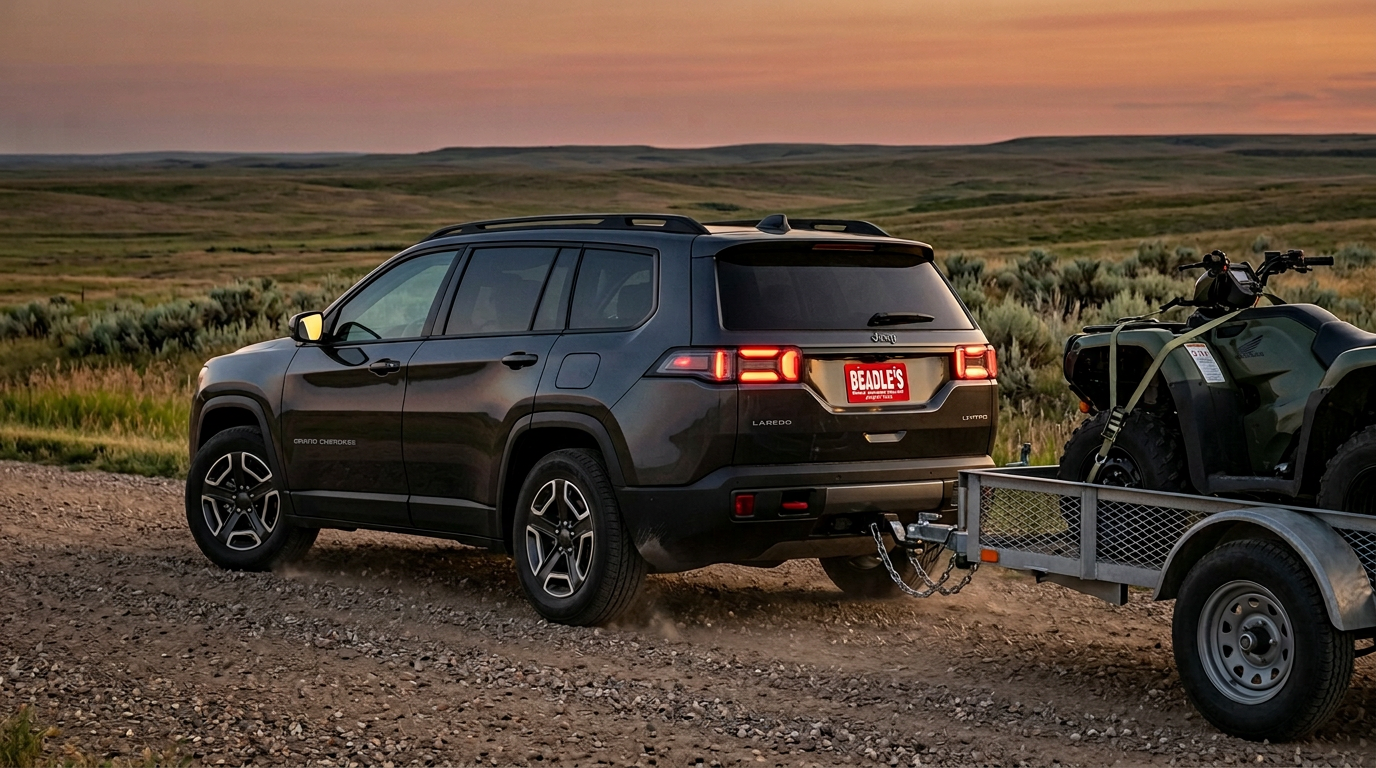
If you’re shopping a Jeep Cherokee for South Dakota roads — and you haul anything at all — the towing question comes up fast. Can it pull a livestock trailer? What about a small boat, or a loaded utility trailer heading to a work site? The answer depends on one specific piece of equipment: the Trailer Tow Group.
This guide breaks down the 2026 Jeep Cherokee’s towing capacity, what that number means for South Dakota buyers in practical terms, what equipment you need to tow at the full rating, and an honest look at what the Cherokee can — and can’t — handle.
On This Page
- How much can the 2026 Cherokee tow?
- Does the Cherokee need special equipment to tow?
- What can 3,500 lbs actually pull on a South Dakota property?
- How does the hybrid system affect towing performance?
- How does the Cherokee compare to other crossovers for towing?
- How to verify your trailer is within the Cherokee’s tow limit
How much can the 2026 Jeep Cherokee tow?
The 2026 Jeep Cherokee is rated to tow up to 3,500 lbs when properly equipped with the Trailer Tow Group. That rating is available on the Laredo, Limited, and Overland — the Trailer Tow Group is not available on the base Cherokee 4×4.
The Cherokee’s towing capability comes from its 1.6L turbocharged hybrid powertrain paired with standard 4×4 on every trim. While 3,500 lbs isn’t in the same league as a Ram 1500 or Ram 2500, it’s a meaningful number for a compact crossover — enough to cover the utility loads, light livestock, and recreational trailers that a lot of South Dakota buyers actually use day to day.
Trailer Tow Group Required for Full Rating
The 3,500-lb towing rating only applies with the Trailer Tow Group equipped. Without it, towing capability is reduced. If towing is a priority, confirm the Trailer Tow Group is included on any Cherokee you’re considering — we verify this on every unit at Beadle’s.
Common Mistake
Most buyers compare their trailer’s GVWR to the Cherokee’s 3,500-lb rating and assume they’re clear. But GVWR is the maximum the trailer can weigh — not what it actually weighs loaded. A 2-horse trailer with a 4,000-lb GVWR might only weigh 2,600 lbs empty. Always weigh your actual loaded setup before deciding whether the Cherokee can handle it.
Does the Cherokee need special equipment to tow?
Yes — the full 3,500-lb tow rating requires the Trailer Tow Group ($995 MSRP), which is available on the Laredo, Limited, and Overland. It is not available on the base Cherokee 4×4. The group includes the Class III receiver hitch, 7-and-4-pin wiring harness, Blind Spot with Trailer Detection, Trailer Hitch Zoom, and compact spare tire.
Beyond the Trailer Tow Group, towing safety follows the same fundamentals as any vehicle: tongue weight needs to stay within limits, trailer brakes may be required by South Dakota law for heavier trailers, and the Cherokee’s stability system helps manage handling on highway pulls. If you’re new to towing with the Cherokee, the owner’s manual towing section covers load distribution and tongue weight specifics for your setup.
South Dakota Trailer Brake Law
South Dakota law requires independent trailer brakes above certain gross weight thresholds — if you’re pulling near the Cherokee’s 3,500-lb limit, verify your specific trailer setup meets current SD brake requirements before your first pull. A brake controller can be added as an aftermarket option if needed.
What can 3,500 lbs actually pull on a South Dakota property?
Three thousand five hundred pounds is a practical number for light to medium utility work. Here’s how common trailer types used across central and western South Dakota stack up against that limit.
| Trailer Type | Typical Loaded Weight | Cherokee Can Handle? |
|---|---|---|
| Utility trailer (6×10, loaded) | 800–1,500 lbs | Yes |
| ATV/UTV trailer (1 unit) | 1,200–2,200 lbs | Yes |
| Small aluminum boat + trailer | 1,500–3,000 lbs | Yes — verify weight |
| 2-horse trailer (empty) | 2,400–3,200 lbs | Marginal — verify weight |
| 2-horse trailer with horses | 3,800–5,500 lbs | No — exceeds limit |
| Small livestock trailer (2–4 calves) | 2,500–3,500 lbs | At or near limit |
| 4-horse trailer or hay wagon | 5,000+ lbs | No — needs a truck |
The Cherokee is a strong match for buyers who need a daily-driver crossover that can also handle light utility pulls, weekend ATV runs, or a small boat to Lake Oahe. It’s not designed to replace a pickup for heavy livestock work — and it doesn’t try to be. If your regular trailer runs push 3,500 lbs or heavier, a Ram 1500 or Ram 2500 is the right tool.
How does the Cherokee’s hybrid system affect towing performance?
The 2026 Cherokee’s self-charging hybrid system doesn’t change how you connect or manage a trailer — you hook up and go. But there are a few things worth knowing about how a hybrid crossover behaves under towing load compared to a conventional engine.
Under towing load, the hybrid system draws more heavily on the combustion engine and less on the electric motor. Fuel economy will drop from the EPA-estimated 37 mpg combined — expect something closer to the mid-to-upper 20s depending on trailer weight, road grade, and speed. This is normal for any hybrid pulling a load; the efficiency advantage is real when driving unloaded and recovers once the trailer is disconnected.
What Changes When You’re Towing
Fuel economy drops under tow load — plan for it on longer hauls. The 4×4 system and Selec-Terrain remain fully operational with a trailer attached. Regenerative braking may feel different with trailer weight behind the vehicle; allow more stopping distance and use engine braking on grades.
How does the Cherokee compare to other crossovers for towing?
The 3,500-lb tow rating puts the Cherokee near the top of the compact crossover class for towing. Many non-truck-based crossovers in this segment are rated in the 1,500–2,700 lb range, making the Cherokee’s standard 4×4 and 3,500-lb capacity a meaningful differentiator when light towing is part of the buying decision.
The Selec-Terrain system adds real-world capability on unimproved boat ramps and muddy field access roads — situations where most other crossovers’ traction systems aren’t tuned to perform. The combination of 4×4, Selec-Terrain, and 8 inches of ground clearance makes the Cherokee more capable than the tow rating alone suggests for buyers regularly operating on South Dakota gravel and seasonal access roads.
Is the Jeep Cherokee the right tow vehicle for your situation?
| Your Situation | Cherokee Works | Consider a Truck Instead |
|---|---|---|
| Trailer type | Utility, ATV, small boat, light livestock loads under 3,500 lbs | Horse trailers, hay wagons, heavy equipment over 3,500 lbs |
| Tow frequency | Occasional weekend or seasonal pulls | Daily or weekly heavy hauling |
| Primary vehicle use | Daily driver that also tows occasionally | Dedicated work vehicle where towing is the primary job |
| Fuel efficiency priority | Important — estimated 37 mpg combined when unloaded | Less of a concern relative to raw towing output |
Worth it if: You need a comfortable, fuel-efficient 4×4 daily driver that can handle occasional light trailer pulls — ATVs, small boats, utility trailers, light livestock loads under 3,500 lbs.
Skip it if: Your trailer regularly runs over 3,500 lbs, or you’re hauling horses, large livestock loads, or heavy farm equipment on a routine basis. A Ram 1500 or Ram 2500 is the right conversation for that work.
How to verify your trailer is within the Cherokee’s tow limit
Before you hook up, confirm your actual loaded trailer weight — not just the trailer’s empty weight or its manufacturer rating. Here’s how to do it right.
- Find your trailer’s GVWR: The Gross Vehicle Weight Rating is stamped on the trailer’s VIN plate. GVWR is the maximum the trailer can weigh fully loaded — use this number, not the empty weight.
- Weigh your actual loaded trailer: Grain elevators, livestock sale barns, and highway scales can weigh a loaded trailer for a few dollars. Know the real number before you pull.
- Confirm the Trailer Tow Group is on your Cherokee: Check the window sticker or ask us at Beadle’s. The full 3,500-lb rating only applies with this package installed.
- Check tongue weight: Tongue weight — the downward force on the hitch ball — should be approximately 10–15% of total trailer weight. Too much or too little causes trailer sway.
- Verify South Dakota brake requirements: Trailers over 3,000 lbs gross weight require independent trailer brakes under SD law. Confirm your setup meets this requirement before your first pull.
Key Takeaways
- The 2026 Cherokee tows up to 3,500 lbs — but only with the Trailer Tow Group equipped. Confirm it’s on the vehicle before you buy.
- That rating covers utility trailers, small boats, ATV rigs, and light livestock loads — it won’t handle horse trailers or heavy farm equipment.
- The hybrid system works normally while towing; fuel economy drops under load but recovers once the trailer is disconnected.
- Standard 4×4 and Selec-Terrain add real capability on unimproved ramps, muddy access roads, and the seasonal terrain common across central SD.
Frequently Asked Questions
Can the 2026 Jeep Cherokee pull a horse trailer?
It depends on the trailer and load. A small 2-horse straight-load trailer empty may fall within the 3,500-lb limit, but loaded with two horses it typically exceeds that rating significantly. The Cherokee is not the right vehicle for routine horse hauling — a Ram 1500 or heavier truck is the appropriate choice. If you’re only moving one small horse occasionally, weigh your specific loaded trailer before deciding.
Does every 2026 Cherokee trim come with towing capability?
The Trailer Tow Group is available across Cherokee trim levels, but it’s an option — not standard equipment on every vehicle. If towing is a priority, confirm the Trailer Tow Group is included on any specific unit you’re looking at. At Beadle’s Chrysler Center, we can check the window sticker on any Cherokee in inventory and confirm exactly what’s equipped.
Will towing hurt the Cherokee’s fuel economy?
Yes — any vehicle’s fuel economy drops under tow load, and the Cherokee is no exception. The EPA-estimated 37 mpg combined applies when driving unloaded. Under tow load, expect a notable drop depending on trailer weight, speed, and road grade. The hybrid efficiency advantage returns once the trailer is disconnected.
Can the Cherokee tow a boat to Lake Oahe?
For a small aluminum fishing boat or jon boat with trailer — typically 1,500–2,500 lbs combined — yes, the Cherokee with the Trailer Tow Group handles that well. The standard 4×4 and ground clearance also help on the unimproved boat ramps common around Lake Oahe. For larger fiberglass boats or heavier rigs pushing above 3,500 lbs, a truck is the right choice.
My Take on the Cherokee’s Towing Capability
When someone comes into Beadle’s asking about the Cherokee for towing, the conversation almost always lands in the same place: what exactly are you pulling? That question matters more than the spec sheet number. A buyer who needs to move ATVs to a hunting access road or pull a small boat to the river is in a very different situation than someone who moves horses or hauls large livestock loads week in and week out.
For the first group — light to moderate utility towing paired with a comfortable, fuel-efficient daily driver — the Cherokee with the Trailer Tow Group is a genuinely capable match. The standard 4×4 and Selec-Terrain add real utility that a lot of other crossovers at this price point can’t match, especially on the unimproved access roads and seasonal gravel common out this way. For buyers who are regularly moving heavier loads, I’ll be straight with you: a Ram 1500 is the right conversation.
If you want to dig into the full Cherokee spec sheet — trims, features, and what each package includes — our complete 2026 Jeep Cherokee guide covers all of it. And if you’re in the area, stop by Beadle’s Chrysler Center in Bowdle — we’ll pull up exactly what’s in inventory and confirm what’s equipped on each unit before you make any decisions.
About the Author
Lexy Tabbert — Beadle’s Chrysler Center, Bowdle, SD
Lexy Tabbert is the Director of Sales and Marketing at Beadle’s Chrysler Center in Bowdle, South Dakota. She covers Ram, Jeep, Dodge, and Chrysler vehicles — helping families, ranchers, and ag operators across the region find the right truck and configuration for their needs. Learn more about Lexy.
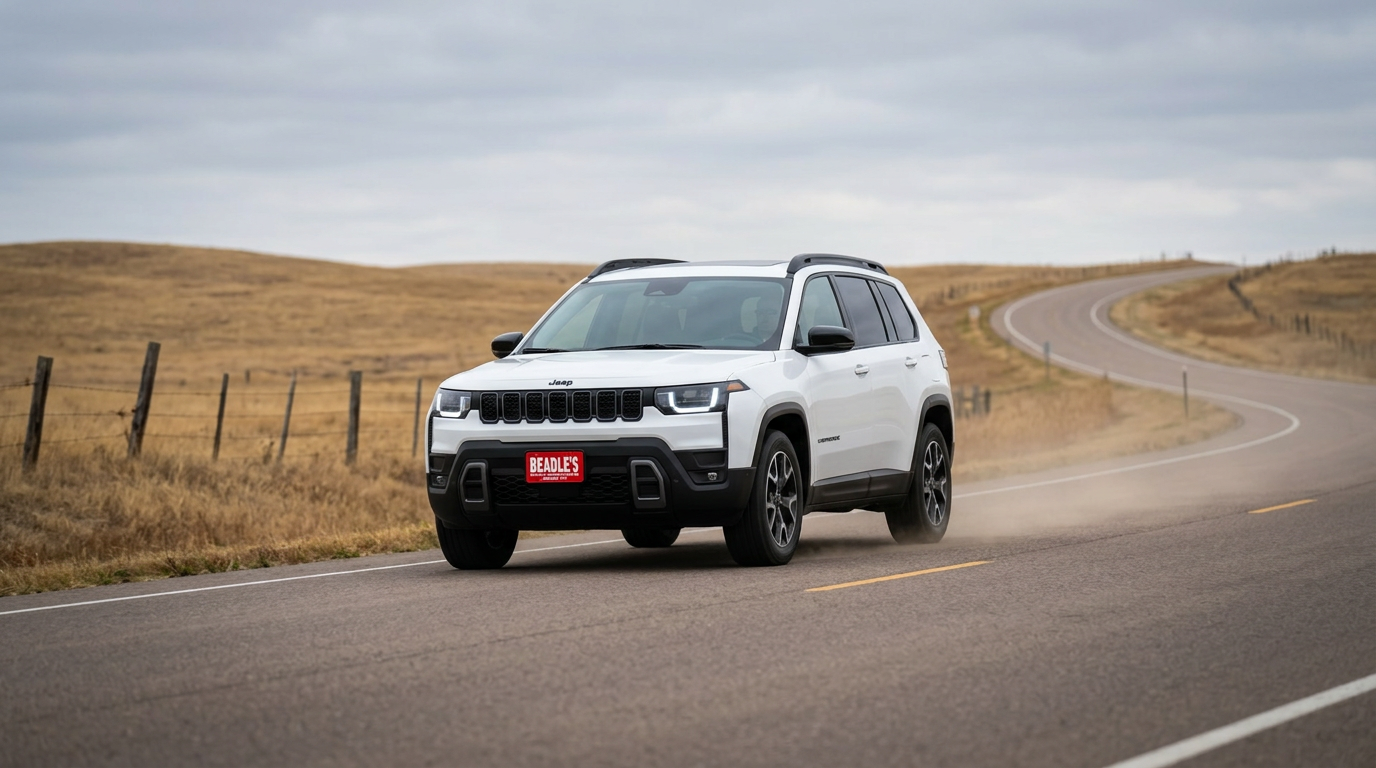
When South Dakota buyers hear the word “hybrid,” the first question is almost always the same: “Does that mean I have to plug it in?” It’s a fair concern. Charging infrastructure across much of rural South Dakota is limited, and the last thing you want is a vehicle that depends on facilities that may not be reliably available between Bowdle, Pierre, Fort Yates, or Bismarck.
The short answer: no — the 2026 Jeep Cherokee’s hybrid system charges itself. This guide explains exactly how that works, what it means for fuel efficiency on long regional drives, how it compares to plug-in hybrids and conventional gas SUVs, and why the Cherokee’s approach makes practical sense for buyers across the plains.
On This Page
- What Does “Self-Charging Hybrid” Actually Mean?
- How Is the Cherokee Different from a Plug-In Hybrid or EV?
- What Does an Estimated 37 MPG Mean for South Dakota Driving?
- Does the Cherokee Hybrid Require Any Special Maintenance?
- How Does the Hybrid Perform in a South Dakota Winter?
- How to Get the Most from the Cherokee’s Hybrid System
- Self-Charging Hybrid vs. Plug-In vs. Conventional Gas
What Does “Self-Charging Hybrid” Actually Mean?
A self-charging hybrid captures energy that would otherwise be lost and stores it in a battery — without any external charging required. The 2026 Cherokee pairs a 1.6L turbocharged four-cylinder engine with two electric drive motors and a hybrid transmission. Every time you brake, slow down, or coast, the system recovers kinetic energy and converts it to electricity through a process called regenerative braking.
That stored electricity helps power the vehicle — reducing how hard the gas engine has to work, particularly at lower speeds and during acceleration. The result is better fuel efficiency without changing anything about how you drive or refuel. Every stop sign, every slow for a curve, every time you lift off the throttle on the highway — the system is quietly recovering energy and putting it back to work.
Under the Hood
The Cherokee uses a 1.6L I4 EP Turbo Hybrid engine paired with two electric drive motors. Combined output is 210 horsepower and 230 lb-ft of torque — enough for confident highway passing and towing capability up to 3,500 lbs — sufficient for farm trailers, stock trailers, and the utility loads most South Dakota buyers are pulling.
Common Mistake
Buyers sometimes assume “hybrid” means electric — or at least partly electric in a way that requires charging. The Cherokee’s system is entirely self-contained. There is no battery to plug in, no charging cable in the box, and no charging station on your route planning. If you can find a gas pump, you can refuel it.
How Is the Cherokee Different from a Plug-In Hybrid or EV?
A plug-in hybrid (PHEV) uses a larger battery that you charge from a wall outlet or charging station — similar to an EV, just with a gas engine as backup. An EV runs entirely on electricity and requires regular charging. The Cherokee is neither. It is a self-charging hybrid, which means the battery charges itself and you never need to find a charging station or plug the vehicle in.
For most South Dakota drivers, that distinction matters enormously. Charging stations in rural South Dakota are sparse, and planning around charging schedules is not realistic when you are making regular runs between Bowdle, Pierre, Fort Yates, or Bismarck. The Cherokee’s system works anywhere you can get gasoline — which, out here, means everywhere.
Important Clarification
The 2026 Jeep Cherokee is not a plug-in hybrid and not an electric vehicle. You will never need to locate a charging station. The hybrid system is entirely self-contained — fill it up at any gas station, exactly as you would any conventional vehicle.
What Does an Estimated 37 MPG Mean for South Dakota Driving?
Jeep estimates the 2026 Cherokee at 37 mpg combined, delivering over 500 miles of range per tank. For a mid-size 4×4 SUV, that is a significant number — most comparable crossovers with standard all-wheel drive land in the mid-to-upper 20s for combined fuel economy.
| Route | Approx. Distance | Fraction of Tank (est.) |
|---|---|---|
| Bowdle to Pierre (one way) | ~175 miles | Less than half a tank |
| Bowdle to Bismarck (one way) | ~130 miles | Roughly one-quarter tank |
| Bowdle to Bismarck (round trip) | ~260 miles | Just over half a tank |
| Bowdle to Fort Yates (one way) | ~100 miles | Less than one-quarter tank |
For anyone putting serious miles on a vehicle across the region, the fuel savings add up quickly. A 20,000-mile year at 37 mpg combined versus 26 mpg combined represents a meaningful difference at the pump — and the Cherokee achieves it without requiring any changes to how you refuel or maintain the vehicle.
Source
Fuel economy estimate based on Jeep manufacturer data for the 2026 Cherokee. Actual mpg varies with driving conditions, speed, temperature, and load. Distance estimates based on general regional routing.
Does the Cherokee Hybrid Require Any Special Maintenance?
No. One of the most common concerns buyers raise about hybrid vehicles is whether a more complex powertrain means more maintenance costs or hard-to-find specialized service. For the Cherokee’s self-charging system, the answer is straightforward: it follows the same maintenance schedule as a conventional gas vehicle.
There are no charging components to service, no charging port to maintain, and no specialized hybrid technician requirement for routine work. Oil changes, tire rotations, brake inspections — same intervals, same service. In fact, regenerative braking reduces wear on the physical brake pads over time, since the system handles much of the deceleration work before the friction brakes engage. That is a long-term cost-of-ownership benefit, not a drawback. For buyers who already bring their vehicle to Beadle’s Chrysler Center for service, nothing about the Cherokee’s maintenance routine changes.
How Does the Hybrid Perform in a South Dakota Winter?
Cold weather is worth addressing honestly, because it does affect some hybrid and EV systems. EVs and plug-in hybrids with large battery packs can lose meaningful range in extreme cold — a well-documented limitation. The Cherokee uses a smaller self-charging battery pack that is less susceptible to severe cold-weather performance loss, and the gasoline engine remains fully operational in all temperatures.
What matters most for January driving in South Dakota is the Cherokee’s standard 4×4 with Selec-Terrain, which includes a dedicated Snow mode on every trim level — adjusting throttle response, braking distribution, and torque delivery for ice and snow-packed roads. Laredo and above add heated front seats and heated exterior mirrors. The Limited, 85th Anniversary Edition, and Overland trims add a heated steering wheel. Remote start is standard on Laredo and above, which means you can warm the cabin from inside before you head out on a cold morning. The hybrid system works through all of it exactly as expected.
How to Get the Most from the Cherokee’s Hybrid System
The Cherokee’s hybrid manages itself — you do not need to think about it during normal driving. A few habits, though, help the system operate at its best and deliver the fuel efficiency it is designed for.
- Brake smoothly and early: Gradual, predictable braking gives the regenerative system more time to recover energy. Sudden hard stops reduce recovery efficiency — the friction brakes take over before the system can capture as much.
- Maintain steady highway speeds: On long two-lane stretches across the region, consistent throttle keeps the hybrid in its most efficient operating range. Frequent acceleration and hard braking costs more fuel than steady cruising.
- Use remote start in extreme cold: On Laredo and above, remote start allows the engine and hybrid system to reach optimal operating temperature before you drive. A warmed-up hybrid is a more efficient hybrid, particularly in January and February.
- Let the system do the work: There is no Eco button to press, no manual mode to engage. The hybrid transmission and electric motors manage the power split automatically. Trust the system — it is designed specifically for this kind of mixed rural and highway driving.
Self-Charging Hybrid vs. Plug-In vs. Conventional Gas: Which Is Right for You?
| Factor | Cherokee Self-Charging Hybrid | Plug-In Hybrid (PHEV) | Conventional Gas SUV |
|---|---|---|---|
| Needs to be plugged in? | No | Yes | No |
| Charging infrastructure required? | None — gas only | Yes, for full benefit | None — gas only |
| Fuel economy (est. combined) | 37 mpg (est.) | Varies widely | Mid-to-upper 20s (typical) |
| Range per tank | 500+ miles (est.) | Varies | 300–400 miles (typical) |
| Brake wear reduction? | Yes (regenerative) | Yes (regenerative) | No |
| Special maintenance? | Standard intervals | Moderate added complexity | Standard intervals |
| 4×4 standard on all trims? | Yes — Active Drive I | Varies by model | Varies by model |
Worth it if: You want meaningfully better fuel economy without changing how you refuel, and charging infrastructure in your area is limited or nonexistent.
Consider a PHEV instead if: You have consistent home charging access and want the option of short electric-only commutes. The Cherokee is not designed for that use case.
Key Takeaways
- The Cherokee’s hybrid is entirely self-charging — no plug, no charging stations, no new habits. Fill it up at any gas station exactly as you always have.
- The system recovers energy automatically every time you brake or slow down — regenerative braking requires nothing from the driver.
- Estimated 37 mpg combined means 500+ miles per tank — that’s a round trip from Bowdle to Bismarck without stopping for gas.
- No special maintenance schedule — the Cherokee follows standard service intervals, and regenerative braking can reduce brake pad wear over time.
Frequently Asked Questions
Do I need to plug in the 2026 Jeep Cherokee?
No. The 2026 Jeep Cherokee uses a self-charging hybrid system, not a plug-in. The battery charges automatically through regenerative braking — every time you slow down or brake, the system recovers energy and stores it. You will never need to find a charging station or plug the vehicle in. It runs on gasoline, refueled at any gas station.
What happens if the hybrid battery in the Cherokee runs low?
The Cherokee is designed so the hybrid battery never fully depletes during normal driving — the regenerative system and engine continuously maintain the battery’s charge level. If the battery reaches a low state for any reason, the gas engine takes over completely and the vehicle continues to operate normally. You will not be stranded or left without power.
Is the Cherokee hybrid harder to start in extreme cold?
No. The Cherokee’s hybrid system does not depend on battery charge alone to start and drive in cold weather — the gasoline engine starts and operates independently under all temperature conditions. Cold weather reduces battery efficiency marginally in any hybrid vehicle, but the Cherokee starts, drives, and performs normally in South Dakota winters. Laredo and above include remote start, which helps bring the engine and cabin to operating temperature before you get in.
Does the Cherokee hybrid cost more to maintain than a regular gas SUV?
Routine maintenance costs are comparable to a conventional SUV. The Cherokee follows standard service intervals — oil, tires, brakes — without requiring specialized hybrid-only service steps for most routine work. Regenerative braking also extends the life of the physical brake pads by handling a portion of the deceleration load before friction brakes engage, which can reduce brake replacement frequency compared to a non-hybrid vehicle.
My Take on the Cherokee’s Hybrid System
When I talk to buyers here at Beadle’s Chrysler Center, the hybrid conversation almost always starts the same way: “I’m not interested in anything electric.” And honestly, I understand that completely. We’re in Bowdle, South Dakota — not Portland or Minneapolis. Charging infrastructure out here is not convenient, and a vehicle that depends on it is not a practical choice for most people driving these roads. But that same hesitation sometimes causes buyers to pass on the Cherokee without fully understanding what it is.
The Cherokee’s hybrid is genuinely different from anything that plugs in. You drive it exactly like any other gas vehicle — fill it up at any station, same service schedule, no charging stops, no new habits. What changes is how often you’re stopping for fuel. For customers who are putting 20,000 or 25,000 miles a year on a vehicle running back and forth across the region, that difference is real money over the life of ownership. The 4×4 and Selec-Terrain work the same as they always have. The hybrid just makes the engine more efficient while doing it.
If you want the full breakdown — trims, specs, pricing, and what each level includes — check out our complete 2026 Jeep Cherokee guide. And if you’re in or around Bowdle and want to see it in person, stop by Beadle’s Chrysler Center. We’re happy to walk you through how the system works on the lot — no pressure, just the information you need to make the right call.
About the Author
Lexy Tabbert — Beadle’s Chrysler Center, Bowdle, SD
Lexy Tabbert is the Director of Sales and Marketing at Beadle’s Chrysler Center in Bowdle, South Dakota. She covers Ram, Jeep, Dodge, and Chrysler vehicles — helping families, ranchers, and ag operators across the region find the right truck and configuration for their needs. Learn more about Lexy.
2026 Ram 3500 vs Ram 2500: Which Heavy-Duty Ram Do You Need?
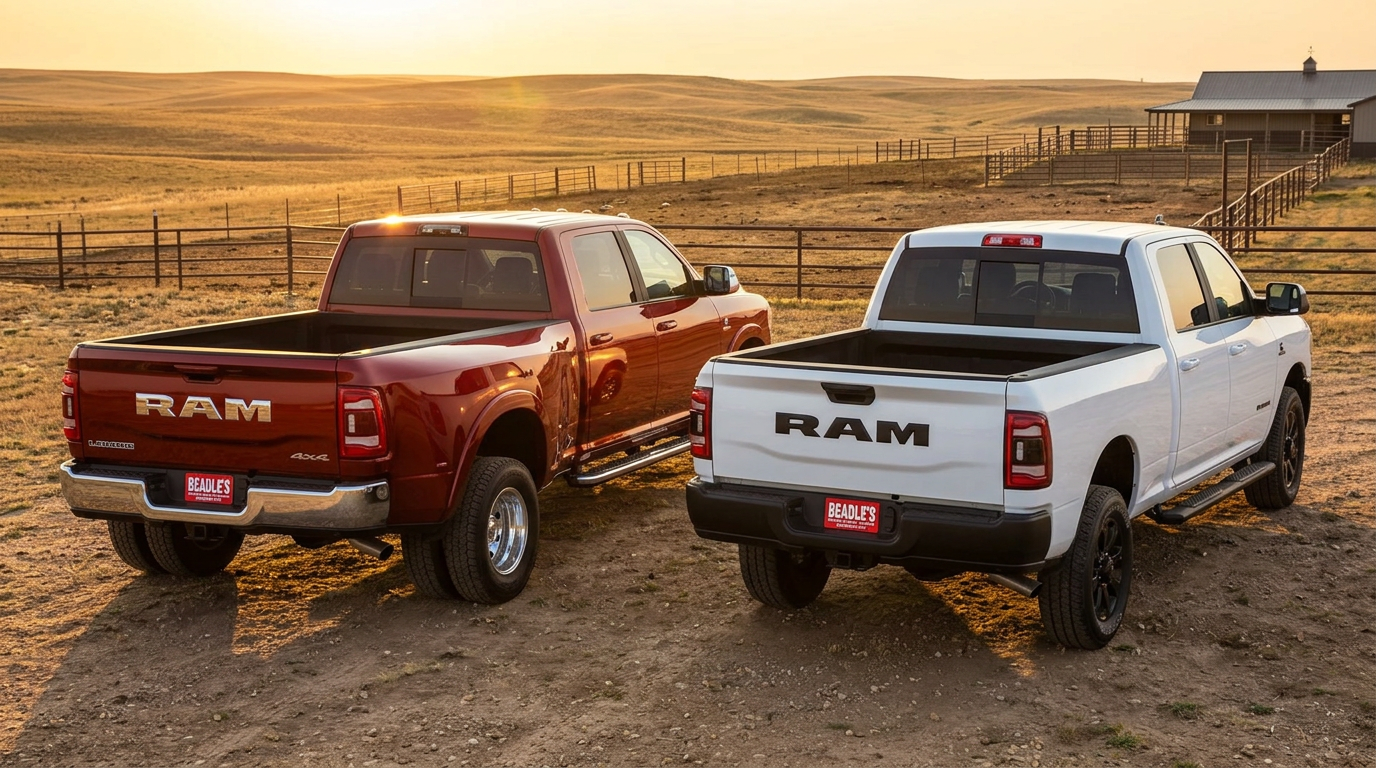
If you’re shopping for a heavy-duty Ram truck in South Dakota, you’ve probably wondered: Do I really need a 3500, or will a 2500 handle my work? Both are incredible trucks, both share the same engine options, and both are built for serious towing and payload. But they’re engineered for different missions—and choosing the right one makes a real difference in performance, capability, and total cost of ownership.
At Beadle’s Chrysler Center, we work with ranchers, contractors, ag operators, and families across Bowdle and the surrounding region. We’ve seen the 2500 tackle everything from hay hauling to livestock transport to everyday ranch work. And we’ve watched the 3500 handle the heavy stuff: gooseneck trailers, large RVs, commercial builds, and multi-ton loads. This guide breaks down the real differences so you can pick the truck that’s right for your needs.
In This Guide
What is the difference between the Ram 2500 and Ram 3500?
On the surface, the 2026 Ram 3500 and Ram 2500 look similar. They share the same cab styles, the same engines, the same infotainment system, and the same 8-speed transmission. Both can be ordered with the legendary 6.7L Cummins diesel or the 6.4L HEMI HD gas engine. So what’s different?
The 3500 is built heavier from the ground up. It has a reinforced frame, heavier-duty axles, a higher GVWR (Gross Vehicle Weight Rating) up to 14,000 lbs, and a GCWR (Gross Combined Weight Rating) that tops out at 45,000 lbs. The 3500 also comes standard with a dually option (dual rear wheels) on Crew Cab models, which spreads the load across more rubber and improves stability under extreme loads. The 2500, by contrast, is single rear wheel (SRW) only.
The 2500, meanwhile, has a class-exclusive coil-link rear suspension that delivers a smoother ride on pavement. It’s more refined, lighter on its feet, and doesn’t require as much bracing for everyday driving. The 2500 also gets exclusive variants like the Power Wagon (with electronic locking front diff and front sway bar disconnect) and the Rebel off-roader—neither available on the 3500.
| Feature | Ram 2500 | Ram 3500 |
|---|---|---|
| Rear Wheels | Single Rear Wheel (SRW) only | Dually (DRW) on Crew Cab; standard leaf spring |
| Frame & Axles | Standard duty | Heavy-duty reinforced frame & axles |
| GVWR | Up to ~12,500 lbs | Up to 14,000 lbs (DRW) |
| GCWR | Up to ~35,000 lbs | Up to 45,000 lbs |
| Rear Suspension | Coil-link (smoother, class-exclusive) | Leaf spring (standard) |
| Exclusive Variants | Power Wagon, Rebel | Mega Cab (Cummins only) |
| Available Auto-Level Air Suspension | Yes | Yes |
In short: The 3500 is the load-hauler. The 2500 is the refined, versatile choice.
Should I buy a Ram 2500 or Ram 3500?
This is the question we hear most often, and the answer depends on what you’re planning to do with the truck.
Buy the Ram 2500 if:
- You haul hay, livestock, grain, or equipment on a standard trailer
- Your max towing is under 20,000 lbs
- You want the smoothest possible ride on pavement and don’t need dually wheels
- You like the idea of Power Wagon or Rebel capabilities
- You value versatility: work truck on weekdays, capable daily driver on weekends
- You want to minimize complexity and keep upkeep straightforward
Buy the Ram 3500 if:
- You regularly tow over 20,000 lbs or work with gooseneck trailers
- You need the dually option for maximum stability and load distribution
- You haul large RVs, construction equipment, or multi-ton implements
- You operate a small fleet or commercial hauling business
- You need the Mega Cab (Cummins) for extra crew space with diesel power
- Your work demands 45,000-lb GCWR and maximum structural reinforcement
Bottom line: For most South Dakota ranchers and farm operators, the 2500 does the job exceptionally well. The 3500 is for the folks who’ve outgrown the 2500 or need commercial-grade durability.
How much more can the Ram 3500 tow than the 2500?
When it comes to towing capacity, the numbers tell a dramatic story. Here are the 2026 specs:
| Engine & Config | Ram 2500 Max Tow | Ram 3500 Max Tow |
|---|---|---|
| 6.4L HEMI HD | ~16,780 lbs | 18,150 lbs (HEMI DRW) |
| 6.7L Cummins HO | 20,000 lbs | 36,610 lbs (Cummins DRW) |
Those numbers are staggering. A 2500 with Cummins maxes out at 20,000 lbs. A 3500 with the same Cummins diesel can handle 36,610 lbs—that’s an extra 16,610 lbs of capacity. Nearly doubled.
Why the jump? The 3500’s reinforced frame, heavy-duty axles, dually wheels, and higher GCWR all work together. The dually wheels alone spread the load across six wheels instead of four, dramatically improving stability and weight distribution on the road.
Even the gas engines show a meaningful difference: the 3500 HEMI DRW edges out the 2500 HEMI by 1,370 lbs, which doesn’t sound like much until you’re at the trailer lot and that extra capacity means the difference between “yes, we can” and “we need a bigger truck.”
For gooseneck or 5th-wheel trailers: Both trucks require you to use these hitch types for loads over their stated tongue-weight limits. The 2500 has a 2,000-lb max tongue weight (Class V), while the 3500 goes up to 2,300 lbs. For anything bigger, you’re in gooseneck or 5th-wheel territory—and that’s where the 3500’s real advantage shows up.
Does the Ram 3500 ride rougher than the 2500?
Perception vs. reality: the 3500 can feel a bit rougher empty, especially compared to the 2500’s class-exclusive coil-link rear suspension. The 3500’s standard leaf-spring rear is engineered for load capacity, not luxury—it’s firmer to support heavy trailers without sagging.
However, Ram offers the Auto-Level Rear Air Suspension option on both trucks. If you go that route, the 3500 ride quality smooths out dramatically on pavement. The air suspension automatically adjusts to maintain a level ride whether you’re empty or loaded, which is why so many owners spec it as a must-have option.
Real talk: when you load a 3500 up (which is the whole point of owning one), the stiffer suspension actually feels better. You’re not bouncing around; the truck is planted and controlled. Empty, a 2500 with its softer suspension will feel more “car-like.” But put 10,000 lbs on each, and they feel very different—the 3500 is in its element.
For daily driving, especially if you’re running light loads most days, the 2500 with its coil-link suspension is the more refined choice. For work, the 3500 (especially with air suspension) is optimized for what it’s designed to do.
Is the Ram 3500 overkill for my needs?
Maybe. And that’s not a marketing pitch—that’s honest advice.
The 3500 is more truck. More frame. More axles. More capability. That also means:
- Tighter turning radius (dually wheels)
- Heavier steering (more frame mass)
- More fuel consumption (additional structural weight)
- Potential overpayment if you don’t use the extra capacity
If your actual towing needs top out at 15,000 lbs, and you’re unlikely to ever go higher, a 2500 with Cummins will handle that beautifully and with better everyday manners. You’ll also have access to Power Wagon and Rebel variants, which the 3500 doesn’t offer.
The honest question to ask yourself: Will I ever tow more than 20,000 lbs? Will I ever use gooseneck? Will my business grow in a way that demands more capacity? If the answers are “no,” the 2500 is probably the smarter buy. If the answers are “yes, maybe, or we’re growing,” the 3500 is the long-term play.
For most South Dakota ranches, the sweet spot is the 2500 Cummins. It’s not overkill. It’s right-sized.
Which Ram heavy-duty truck is better for ranching in South Dakota?
We work with ranchers every single day, and we know the work. Hay hauling, livestock transport, feeding operations, equipment towing, and gravel roads—that’s the South Dakota ranch reality. So here’s what we see:
The Ram 2500 is the ranch standard. Most successful ag operations in our region run 2500s, and they handle the job with room to spare. The coil-link suspension soaks up rough roads better than the 3500’s leaf springs, which matters when you’re driving gravel five days a week. It’s comfortable, versatile, and proven.
The Ram 3500 is for the ranches that have grown big. If you’re running multiple trailers, hauling equipment to auction, or operating a commercial hay-hauling side business, the 3500’s extra capacity and dually configuration make sense. It’s also the choice for ranches that regularly work with large gooseneck trailers or pull livestock trailers in rough terrain—the dually wheels provide stability and traction on muddy roads and steep grades.
Both trucks are available with Cummins diesel in South Dakota, which is huge. The same 6.7L HO diesel with 1,075 lb-ft of torque is available in both. Snow Plow Prep is standard on 2026 models of each, so winter is covered. Both get the large 14.5″ touchscreen with integrated towing displays—really helpful when you’re managing trailers and cameras.
Our recommendation: Start with a 2500 Cummins if you’re unsure. You can always upgrade to a 3500 next cycle if your needs grow. But if you already know you need the gooseneck, the commercial use, or the 3500’s certified 36,000+ lb towing capacity, don’t compromise. We have both on the lot, and we’ll help you right-size the truck to your operation.
Quick Overview: Ram 3500 vs Ram 2500
| Spec | Ram 2500 | Ram 3500 |
|---|---|---|
| Max Tow (Cummins) | 20,000 lbs | 36,610 lbs |
| Max Tow (HEMI) | ~16,780 lbs | 18,150 lbs (DRW) |
| Max Payload (HEMI) | ~4,580 lbs | 7,590 lbs (DRW) |
| Max Payload (Cummins) | Up to ~4,500 lbs | 6,050 lbs (DRW) |
| GVWR | Up to ~12,500 lbs | Up to 14,000 lbs (DRW) |
| GCWR | Up to ~35,000 lbs | Up to 45,000 lbs |
| Rear Config | SRW only | DRW (dually) on Crew Cab |
| Engines | 6.4L HEMI or 6.7L Cummins | 6.4L HEMI or 6.7L Cummins |
| Diesel Torque | 1,075 lb-ft (best-in-class) | 1,075 lb-ft (best-in-class) |
| Transmission | 8-speed | 8-speed |
| Rear Suspension Type | Coil-link (class-exclusive, smooth) | Leaf spring (load-rated) |
| Auto-Level Air Suspension | Available | Available |
| Infotainment | 14.5″ touchscreen option | 14.5″ touchscreen option |
| Cummins Upcharge | $12,995 | $12,995 |
| Exclusive Variants | Power Wagon, Rebel | Mega Cab (Cummins) |
| 5th-Wheel/Gooseneck Min | Required over 20,000 lbs | Required over 23,000 lbs |
| Snow Plow Prep | Standard (2026) | Standard (2026) |
How to Decide: The Right Ram for Your Work
Step 1: Know Your Max Towing Load
Add up the weight of the heaviest trailer or load you anticipate hauling in the next five years. Don’t guess. Weigh it or look it up. If it’s under 15,000 lbs, the 2500 is plenty. If it’s 15,000–20,000 lbs, the 2500 with Cummins is your answer. If it’s over 20,000 lbs or you’re planning gooseneck work, the 3500 becomes the clear choice.
Step 2: Consider Your Hitch Type
Will you use bumper pull, weight-distribution, 5th-wheel, or gooseneck? The 2500 can handle bumper/WD pulls up to 20,000 lbs. Beyond that or with gooseneck, the 3500’s reinforced structure and higher GCWR make it the safer, smarter choice.
Step 3: Evaluate Dually Needs
Do you need dually wheels for extra stability, traction in mud, or to meet industry standards for livestock hauling? The 3500 offers it. The 2500 doesn’t. If you’re operating in rough terrain or pulling heavy loads, dually wheels are a game-changer for control and safety.
Step 4: Think Long-Term
Is your business or operation growing? Buying a truck that you’ll outgrow in three years is expensive. If there’s a reasonable chance you’ll need more capacity, the 3500 is the investment that lasts longer.
Step 5: Test Drive Both
Feel how each truck handles under load (we can simulate with weight in the bed or trailer). The 2500’s smoother ride is noticeable, but so is the 3500’s planted stability when it’s pulling hard. What feels right to you matters.
Step 6: Choose Your Engine
Both trucks offer 6.4L HEMI and 6.7L Cummins. The Cummins is a $12,995 upcharge but delivers 1,075 lb-ft of best-in-class torque. If towing is your primary mission, Cummins is worth every penny. If you’re doing mostly light work, HEMI saves money and still delivers solid performance.
Key Takeaways
- The 2500 is the versatile ranch workhorse: 20,000-lb Cummins towing, class-exclusive coil-link suspension for a smooth ride, access to Power Wagon and Rebel, and proven performance on South Dakota ag operations.
- The 3500 is the heavy commercial hauler: Up to 36,610 lbs of Cummins towing, dually option for load distribution and stability, reinforced frame and axles, 45,000-lb GCWR, and built for gooseneck and 5th-wheel work.
- Both share the same engines, transmissions, and infotainment, so the decision is about frame strength, rear config, and capability ceiling, not basic reliability.
- For most South Dakota ranches, the 2500 is right-sized. For operations that have grown or need commercial-grade towing, the 3500 is worth it.
- Test drive both. Feel the difference in suspension, steering, and overall presence. The right truck is the one that fits your work and feels solid in your hands.
Frequently Asked Questions
If you need the extra capacity and durability, absolutely. You’re not paying for hype—you’re paying for a reinforced frame, heavy-duty axles, dually wheels, and the structural engineering to safely handle 36,000+ lbs of towing. That’s a fundamentally different truck. But if your actual towing tops out at 12,000 lbs, the extra cost is a waste. Be honest about your needs.
It depends on the RV weight. Most modern travel trailers in the 8,000–15,000-lb range are within the 2500’s capability, especially with Cummins. But large fifth-wheels or Class A motorhomes often exceed 20,000 lbs, which is where the 3500 becomes the safer choice. Check your RV’s dry weight and add water, propane, and cargo—that’s your real towing weight.
The 3500’s extra weight and dually configuration will slightly reduce fuel economy compared to a 2500, especially when running empty. Expect 15–17 mpg highway on the 2500 gas, 18–20 mpg on the 2500 diesel. The 3500 typically runs 1–2 mpg lower in real-world use. Under load, the difference shrinks because both trucks are optimized for their intended duty cycle.
If you’re towing regularly over 15,000 lbs or working in muddy/rough terrain, dually wheels provide real benefits: load distribution, traction, and stability. The trade-off is a slightly tighter turning radius and reduced maneuverability in tight spaces. For ranch work, commercial hauling, and heavy towing, dually is worth it. For light work, SRW is fine.
You can’t retrofit a 2500 into a 3500. But you can sell or trade the 2500 in a few years and move up to a 3500 if your needs change. Many operators do exactly this: start with a 2500, find out they’ve outgrown it, and upgrade. It’s a reasonable strategy if you’re uncertain.
My Take on the Ram 3500 vs. Ram 2500
I’ve stood on the lot here at Beadle’s Chrysler Center for years, watching ranchers and contractors pick between these two trucks. The conversation almost always comes down to the same thing: will you actually use the extra capacity?
If the answer is yes, buy the 3500. Don’t compromise. The dually wheels, the reinforced structure, and the ability to legally and safely tow 36,000+ lbs without worry—that’s worth the investment. We have families and operations in the area that would never go back to a 2500 because they’ve seen what the 3500 can do under load.
If the answer is no, buy the 2500. A good 2500 Cummins will out-work most operations in South Dakota. It rides better, turns easier, and costs less. It’s a truck built to last and sized right for real work—not theoretical capacity.
Both trucks are in our Bowdle showroom right now. We can show you the difference in person, put you behind the wheel, and help you make the right call. Because the best truck is the one that matches your needs, not someone else’s. For the full breakdown on the 3500’s specs, trims, and towing configurations, see our complete 2026 Ram 3500 buying guide.
About the Author
Lexy Tabbert — Beadle’s Chrysler Center, Bowdle, SD
Lexy Tabbert is the Director of Sales and Marketing at Beadle’s Chrysler Center in Bowdle, South Dakota. She covers Ram, Jeep, Dodge, and Chrysler vehicles — helping families, ranchers, and ag operators across the region find the right truck and configuration for their needs. Learn more about Lexy.
2026 Ram 3500 Full Specs, Dimensions & Cab Configurations
If you’re shopping for a heavy-duty truck in South Dakota, you need to know exactly what you’re getting. The 2026 Ram 3500 is built for work—whether you’re hauling across the plains, pulling a trailer, or powering a snow plow through a Bowdle winter. But with three cab styles, multiple bed lengths, and two powerful engine options, understanding the specs matters.
This guide breaks down every dimension, engine detail, and configuration so you can find the right Ram 3500 for your operation. We’ll also highlight what’s changed for 2026 and why it matters to South Dakota ranchers and contractors.
What are the dimensions of the 2026 Ram 3500?
Dimensions matter in ranch country. You need to know if your Ram 3500 fits your driveway, barn doors, and hauling setups. The 2026 Ram 3500 comes in multiple wheelbase configurations depending on cab and bed choice.
Why this matters: A Regular Cab with an 8-foot bed gives you the shortest overall length (best for tight maneuvering), while a Crew Cab with an 8-foot bed stretches to 169 inches—perfect if you need passenger comfort and maximum cargo bed space. The Mega Cab (160″ wheelbase) splits the difference, offering the roomiest rear seats with a still-generous 6’4″ bed.
For South Dakota conditions—heavy snow, gravel roads, tight gate openings—these dimensions directly affect how your truck handles. Shorter wheelbases turn tighter; longer wheelbases provide a smoother ride under load.
What cab options does the Ram 3500 offer?
The 2026 Ram 3500 gives you three distinct cab configurations, each designed for different work and lifestyle needs.
Exclusive Mega Cab Features: The Mega Cab offers rear in-floor storage and a power-fold rear seat unique to Ram. This is ideal if you’re hauling crew and gear—you can fold the seats down for flat cargo space without sacrificing seating capacity.
Crew Cab Advantage: The Crew Cab strikes the balance most South Dakota owners need. You get full rear doors, real passenger space, and the exclusive option for the best-in-class fuel tank capacity. For ranchers who haul family and hands, this is the sweet spot.
What is the bed size on the Ram 3500?
Ram 3500 bed options depend on your cab choice, but you get two proven lengths designed for heavy hauling:
For South Dakota ranching: The 8-foot bed is the workhorse choice if you’re hauling hay bales, feed, or irrigation equipment. You get the most length for cargo. If you prioritize maneuverability and need crew space, the 6’4″ bed with Crew or Mega Cab is more practical.
Both beds feature RamBox Cargo Management (exclusive to Ram 3500)—integrated, lockable storage boxes built into the bed rails. Perfect for keeping tools, chains, and supplies secure and organized on rough South Dakota roads.
What is the fuel tank capacity of the Ram 3500?
Fuel capacity is critical when you’re working remote ranch land or long hauls across the state. The 2026 Ram 3500 offers best-in-class options:
Why it matters: The 35-gallon fuel tank is exclusive to Crew Cab models and is the largest in the heavy-duty truck class. For South Dakota ranchers managing multiple pastures or contractors working far from fuel stops, that extra 11 gallons means fewer fill-ups and more productive time in the field.
With the 6.7L Cummins diesel, a 35-gallon tank could theoretically give you 700+ miles per fill-up under highway conditions—critical for remote ranch work.
How much does the 2026 Ram 3500 weigh?
Understanding weight ratings is essential for towing, payload, and legality. The Ram 3500 comes in two drivetrain flavors with corresponding weight specs:
SRW vs. DRW for South Dakota: Single Rear Wheel (SRW) is lighter and handles well on roads but has lower GVWR. Dual Rear Wheel (DRW) adds extra tire contact and weight capacity—essential if you’re regularly pulling heavy trailers or equipment. Most commercial operations in the region choose DRW for stability on gravel and uneven terrain.
Payload vs. Towing: Know the difference. Payload is what you can load INTO the bed. Towing is what you can pull BEHIND the truck. The DRW configuration maximizes both.
What’s new on the 2026 Ram 3500 vs 2025?
Ram didn’t redesign the 3500 for 2026, but they made meaningful updates to power and value. Here’s what changed:
What this means: The 2026 model year brings a power bump to Cummins at no extra cost, plus standard Snow Plow Prep—a huge advantage for South Dakota operators. You’re no longer paying extra for gear you need for winter work. The trim lineup and configuration options remain the same, so if you preferred a 2025 setup, you can get it again in 2026.
Best-in-Class 2026 Claims: The Ram 3500 boasts best-in-class available diesel torque (1,075 lb-ft), best-in-class available fuel tank capacity (Crew Cab), best-in-class available on-board power (2.4kW), and best-in-class available 14.5-inch infotainment touchscreen.
Engine Specifications & Performance
Two powerful engines power the 2026 Ram 3500. Here’s how they compare:
HEMI or Diesel? The HEMI is proven, affordable, and delivers solid power for mixed work. But if you’re towing heavy trailers regularly or racking up highway miles, the Cummins diesel’s 1,075 lb-ft of torque and 430 hp justify the $12,995 upcharge. South Dakota ranchers hauling hay, feed, or equipment year-round almost always choose Cummins.
The tradeoff: The HEMI has higher payload capacity, while the Cummins dominates towing. For ranch work, the choice depends on your primary task: mostly hauling cargo in the bed (HEMI), or frequently towing heavy trailers (Cummins).
2026 Ram 3500 Quick Overview
How to Choose the Right Configuration for Your Needs
For solo operators and maximum payload: Go Regular Cab with 8-foot bed and HEMI. Shortest wheelbase, lightest curb weight, most payload capacity. Perfect for contractors working alone.
For family ranchers and mixed work: Crew Cab with 6’4″ bed and Cummins diesel. Full seating, best-in-class fuel capacity, superior towing, plenty of cargo space. This is the most versatile configuration for South Dakota family operations.
For maximum passenger comfort: Mega Cab with 6’4″ bed. Largest rear legroom in class, power fold-flat seat, exclusive in-floor storage. Ideal if crew comfort matters as much as hauling capacity.
For serious hauling: Crew Cab, 8-foot bed, DRW, Cummins diesel. Longest wheelbase for smooth handling under load, maximum bed length, best towing capacity. Not the shortest truck, but built for sustained heavy work.
Regional advantage: All 2026 Ram 3500s come with Snow Plow Prep standard. If you’re running a snow removal operation or winter maintenance route in Bowdle or the region, you’re already equipped. No extra cost, no special order needed.
Key Takeaways
- Wheelbase matters: Ranges from 140″ (Regular Cab) to 169″ (Crew Cab 8′). Match it to your driveway and turning radius needs.
- Cab choice is lifestyle: Regular for solo work, Crew for family/crew hauling, Mega for maximum rear comfort. All three are built for hard work.
- Bed length is mission-critical: 6’4″ for maneuverability, 8′ for volume. Pick based on your typical cargo—not the exception.
- Fuel capacity changes the game: The 35-gallon Crew Cab tank is best-in-class and worth the price if you’re remote or doing long routes. Standard 24-gallon is still proven.
- Weight ratings determine legality: DRW is heavier duty; SRW is more nimble. Understand GVWR and GCWR before loading or towing.
- Engine choice is long-term investment: HEMI is proven and affordable; Cummins diesel pays dividends over 10+ years if you’re hauling heavy. The 2026 bump to 430 hp at no extra cost makes it even stronger.
- 2026 updates favor South Dakota: Snow Plow Prep is now standard, Cummins gets 10 more hp, fuel tank option is best-in-class. Prices are up slightly, but you’re getting real value.
- Exclusive features matter: RamBox, power mirrors, fold-flat seats, and air suspension are Ram-exclusive advantages that save time and money in the field.
Frequently Asked Questions
My Take on the 2026 Ram 3500 Specs
I’ve spent a lot of time researching and writing about every Ram 3500 configuration we carry here in South Dakota, and every spring I get the same question: “What’s the right specs for my operation?” There’s no single answer—it depends on your work, your terrain, your crew size, and your budget.
But here’s what I know for sure: the 2026 Ram 3500 is more competitive than ever. The Cummins got stronger (430 hp, still 1,075 lb-ft torque), Snow Plow Prep is now standard across all trims, and the Crew Cab with the 35-gallon fuel tank is genuinely best-in-class for extended range on remote ranch land.
Whether you’re a rancher hauling hay across Spink County, a contractor managing multiple job sites, or running snow removal through Bowdle winters, this specs guide gives you the facts. Use it to narrow your choices, then come see us. We’ll put you in the right configuration—and make sure it’s set up for South Dakota work from day one.
Need help deciding between a Crew Cab 6’4″ and an 8-foot bed? Or comparing HEMI vs. Cummins for your operation? Let’s talk. That’s what we’re here for. For the full picture on trims, towing, and cab options, see our complete 2026 Ram 3500 buying guide.
About the Author
Lexy Tabbert — Beadle’s Chrysler Center, Bowdle, SD
Lexy Tabbert is the Director of Sales and Marketing at Beadle’s Chrysler Center in Bowdle, South Dakota. She covers Ram, Jeep, Dodge, and Chrysler vehicles — helping families, ranchers, and ag operators across the region find the right truck and configuration for their needs. Learn more about Lexy.
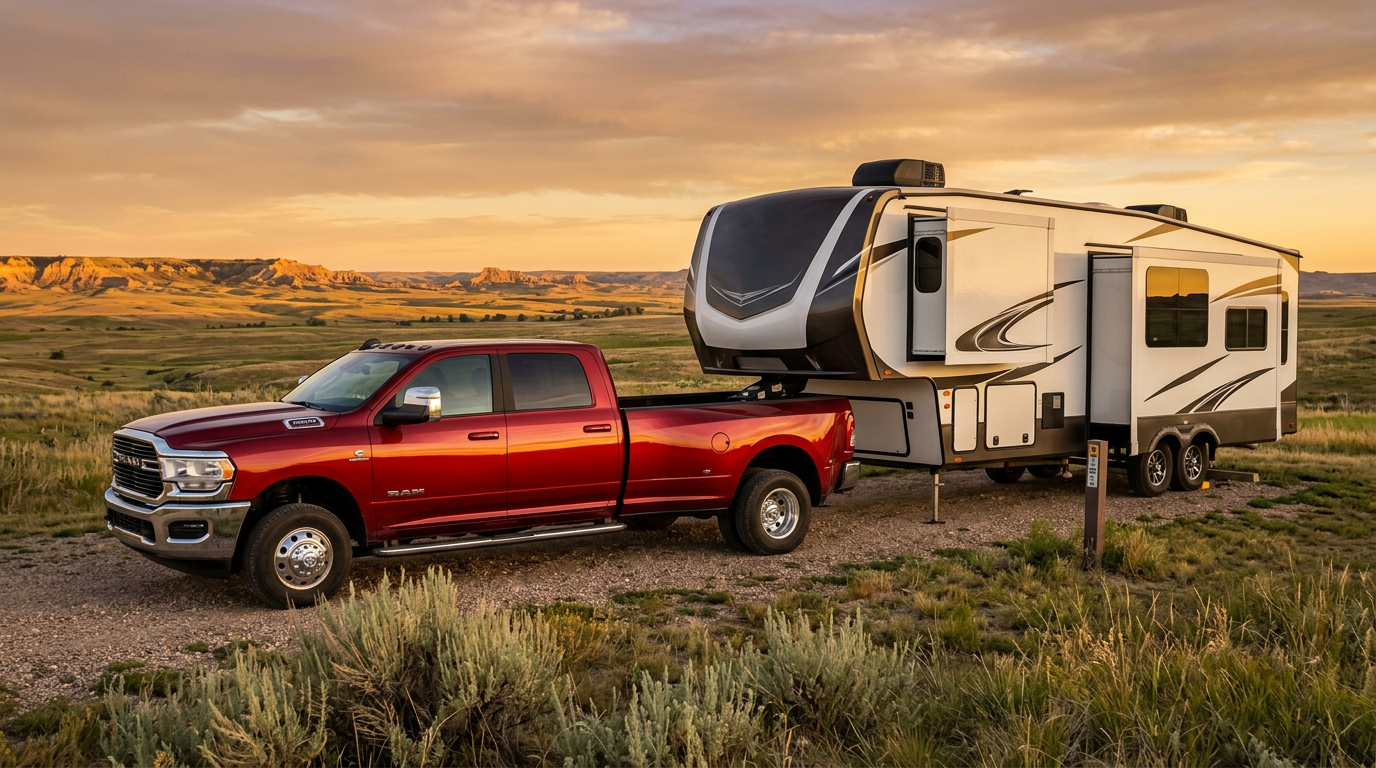
If you’re eyeing a large fifth-wheel camper, a gooseneck horse trailer, or a livestock hauler, the difference between a standard Class V receiver hitch and a fifth-wheel or gooseneck hitch isn’t just about the hardware — it’s about the engineering underneath. The Ram 3500 is built to handle both, but only if you configure it correctly.
This guide walks you through the Ram 3500’s fifth-wheel and gooseneck capabilities, the $745 prep group that sets you up for success, tongue weight rules that matter, and which truck configuration will actually handle the big trailer you want to pull. Whether you’re a Black Hills camper or a South Dakota rancher, get the details that dealers often skip.
On This Page
- Does the Ram 3500 come ready to tow a 5th wheel?
- What is the 5th Wheel/Gooseneck Towing Prep Group on the Ram 3500?
- What is the maximum tongue weight on the Ram 3500?
- When do I need a 5th-wheel or gooseneck hitch instead of a conventional hitch?
- What is the best Ram 3500 configuration for pulling a large 5th wheel camper?
- Can I tow a gooseneck livestock trailer with a Ram 3500 SRW?
Does the Ram 3500 come ready to tow a 5th wheel?
Not out of the box. The base Ram 3500 ships with a standard bed and provisions for a Class V receiver hitch — which works great for conventional trailers. But if you want to mount a fifth-wheel or gooseneck hitch, you need to order the factory 5th Wheel/Gooseneck Towing Prep Group ($745) from the start.
This prep group includes factory 7-pin bed wiring, a 12-pin connector in the bed, and structural provisions for an aftermarket fifth-wheel or gooseneck hitch platform. Without it, you’re adding complexity and cost after purchase — and potentially limiting your options for large trailers.
Bottom line: If you even suspect you’ll want to pull a fifth-wheel or large gooseneck trailer, order the prep group when you buy. It’s $745 now, or it’s $2,000+ and a service visit later.
What is the 5th Wheel/Gooseneck Towing Prep Group on the Ram 3500?
The 5th Wheel/Gooseneck Towing Prep Group ($745) is a factory option that builds the structural and electrical foundation for a fifth-wheel or gooseneck hitch. It includes three critical components:
Factory 7-pin bed wiring connects trailer lights and functions directly from the truck’s electrical system. 12-pin connector in the bed handles power distribution for the hitch and any trailer-mounted accessories (brake controller, battery charger, etc.). Structural provisions reinforce the truck frame and bed floor to safely anchor the fifth-wheel or gooseneck hitch platform.
When you buy a Ram 3500 with this prep group, installing an aftermarket fifth-wheel or gooseneck hitch becomes straightforward: the hitch installer bolts to factory mounting points and taps into the existing 12-pin connector. Without the prep group, you’re installing a hitch to a truck bed that wasn’t engineered for the concentrated load and towing dynamics of a fifth-wheel or gooseneck trailer.
What is the maximum tongue weight on the Ram 3500?
Tongue weight matters because it sits directly over the truck’s rear axle — and too much will overload it. The Ram 3500 has different limits depending on your hitch type and truck configuration.
Class V receiver hitch (conventional trailers): Maximum tongue weight is 2,300 lbs on the 3500, compared to 2,000 lbs on the Ram 2500. Fifth-wheel or gooseneck hitch: The maximum tongue weight guideline is 15% of the gross trailer weight (GTW) — which is more than the 10% rule for conventional hitches. This is because fifth-wheel and gooseneck hitches distribute the tongue weight more directly over the truck’s rear wheels, where the dual rear wheels (on a DRW model) can handle it.
Example: If you’re pulling a 24,000 lb gross trailer weight with a fifth-wheel hitch, the maximum safe tongue weight is 3,600 lbs (15% of 24,000). If you tried that with a conventional Class V receiver hitch, you’d max out at 2,300 lbs and create an unsafe, unbalanced load.
When do I need a 5th-wheel or gooseneck hitch instead of a conventional hitch?
You need a fifth-wheel or gooseneck hitch when your trailer gross weight rating (GTWR) exceeds 23,000 lbs — or when tongue weight would exceed the receiver hitch limits. Here’s the practical breakdown:
Under 23,000 lbs GTWR: A Class V receiver hitch works fine. Many horse trailers, utility trailers, and small fifth-wheels fall into this range, and they’ll tow safely on a conventional hitch.
23,000–36,000+ lbs GTWR: A fifth-wheel or gooseneck hitch becomes mandatory. Large livestock trailers, anhydrous ammonia tanks, big grain trailers, and most modern fifth-wheel campers live in this range. The fifth-wheel or gooseneck hitch is engineered to handle both the raw weight and the tongue weight load without compromising safety or handling.
Key advantage of fifth-wheel/gooseneck hitches: They reduce tongue weight per the 15% rule (vs. 10% for receiver hitches), which lowers the load on the truck’s rear axle and suspension. This means you can tow heavier trailers with better control, shorter stopping distances, and less wear on the truck. For ranchers and ag operators regularly pulling livestock trailers or grain trailers, the fifth-wheel hitch is worth the $745 prep group investment.
What is the best Ram 3500 configuration for pulling a large 5th wheel camper?
If you’re planning a Black Hills or Montana camping trip with a large fifth-wheel camper (24,000–38,000 lbs), you need the right Ram 3500 configuration from the ground up. Here’s what wins:
Cummins diesel engine: The 6.7L Cummins delivers 1,075 lb-ft of torque and can tow up to 36,610 lbs on a dually (DRW) configuration — with 4×4 drive and a 3.42 rear axle. A HEMI on a dually maxes out at 18,150 lbs, so if you want a large fifth-wheel, diesel is essential.
Dual rear wheels (DRW): Single rear wheel (SRW) 3500s max out at 26,080 lbs with the Cummins diesel. That works for mid-size fifth-wheels, but if you want flexibility and reserve capacity, the DRW configuration gives you the extra traction and load-carrying ability for heavier campers and rough terrain.
Auto-Level Rear Air Suspension: The Ram 3500’s class-exclusive auto-level rear air suspension automatically adjusts ride height under load, keeping your truck level when you’re hooked to a heavy fifth-wheel. This improves stability, reduces sway, and makes towing feel controlled even on rough roads. Pair this with the Max Tow Package to get the best platform.
The ideal fifth-wheel-pulling Ram 3500: Cummins diesel, crew cab 8-foot bed, DRW, 4×4, 3.42 rear axle, with 5th Wheel/Gooseneck Towing Prep Group and the Max Tow Package. This configuration gives you 36,610 lbs of towing capacity, auto-leveling suspension, integrated brake controller, and all the infrastructure to safely and comfortably pull a large fifth-wheel camper across the Northern Plains.
Can I tow a gooseneck livestock trailer with a Ram 3500 SRW?
Yes, but with limits. A Ram 3500 single rear wheel (SRW) with a Cummins diesel can tow up to 26,080 lbs with a gooseneck hitch. That’s enough for many livestock trailers, small to mid-size gooseneck grain trailers, and horse trailers. But it’s not the maximum that the truck is capable of.
SRW vs. DRW for gooseneck towing: The SRW 3500 has a single rear wheel on each side, while the DRW has dual wheels. That single rear wheel on the SRW can only carry a percentage of the load that dual wheels can. For a light gooseneck livestock trailer (8,000–12,000 lbs), the SRW is fine. For anhydrous ammonia tanks or heavily loaded grain trailers (20,000–36,000 lbs), you’ll want the dual rear wheels to distribute the load safely and maintain control.
Real-world scenario: A South Dakota rancher pulling a loaded livestock trailer to the stockyards — typically 15,000–20,000 lbs — can use an SRW 3500 with Cummins. But if that same operator is pulling anhydrous ammonia in the spring or heavily loaded grain in the fall, the DRW becomes the safer choice because it distributes tongue weight across four rear wheels instead of two.
Don’t discount the SRW 3500 for gooseneck work — it’s a smart choice for many North Dakota and South Dakota operations. Just be honest about your heaviest load and make sure the truck you choose has the GCWR and towing capacity to handle it safely. For details on SRW vs. DRW overall, check our SRW vs. DRW dually guide.
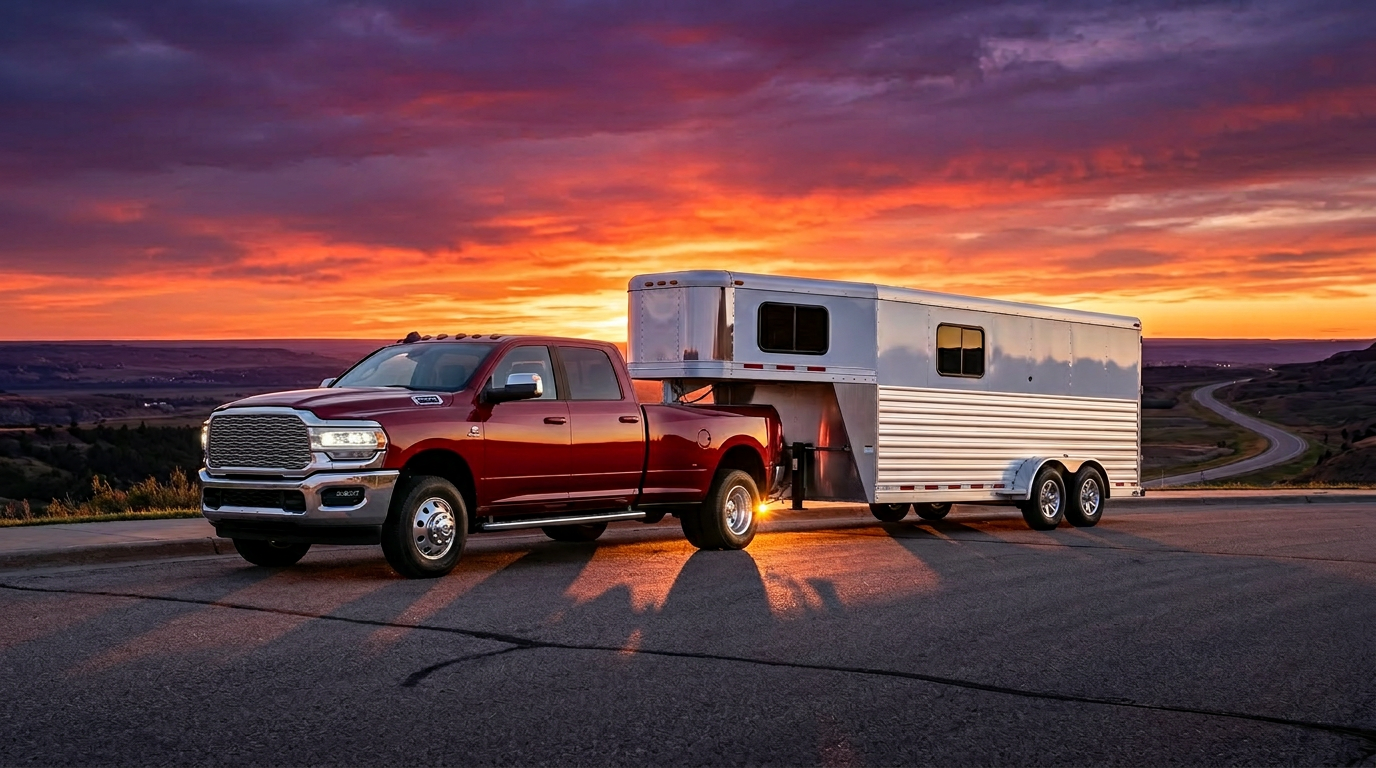
5th Wheel vs. Gooseneck Hitch Comparison
| Feature | 5th Wheel Hitch | Gooseneck Hitch |
|---|---|---|
| Mounting Location | Over rear axle in truck bed | Over rear axle in truck bed (lower profile) |
| Common Trailers | Fifth-wheel campers, RVs | Livestock trailers, grain trailers, equipment haulers |
| Tongue Weight Limit | 15% of GTW (3,600 lbs on 24,000 lb trailer) | 15% of GTW (same as 5th wheel) |
| Turning Radius | Tighter (over axle pivot) | Tight (ball mount style) |
| Stability Under Load | Excellent (mass centered over truck) | Excellent (same advantage) |
How to Choose the Right 5th Wheel or Gooseneck Configuration
- Identify your heaviest trailer. Know the gross trailer weight (GTW) of the largest trailer you’ll pull. If it’s over 23,000 lbs, you need a fifth-wheel or gooseneck hitch — not a conventional receiver hitch.
- Calculate required tongue weight. For a fifth-wheel or gooseneck, use 15% of the GTW. A 30,000 lb trailer requires 4,500 lbs of tongue weight. Make sure your truck’s suspension and frame can handle it.
- Choose your engine: Cummins or HEMI? If you’re pulling over 23,000 lbs regularly, Cummins is mandatory. The HEMI DRW maxes at 18,150 lbs — not enough for large fifth-wheels or gooseneck trailers. See our towing capacity guide for detailed engine comparisons.
- Decide: SRW or DRW? Single rear wheels max out at 26,080 lbs (Cummins). Dual rear wheels max out at 36,610 lbs (Cummins). For large fifth-wheels or heavy livestock/grain trailers, DRW gives you safety margin and load distribution.
- Order the 5th Wheel/Gooseneck Towing Prep Group ($745). Do this when you buy the truck. Factory wiring, 12-pin connector, and bed floor reinforcement cost $745 now — or $2,000+ and dealer complications later.
- Add the Max Tow Package for air suspension. This includes the class-exclusive auto-level rear air suspension that keeps your truck level under load. Essential if you’re regularly towing a heavy fifth-wheel.
- Work with a hitch installer after delivery. Once your Ram 3500 arrives, a professional installer will bolt the fifth-wheel or gooseneck hitch to the factory mounting points and connect it to the 12-pin connector. This is a straightforward 4–6 hour job.
Key Takeaways
- Order the 5th Wheel/Gooseneck Towing Prep Group ($745): Factory 7-pin wiring, 12-pin connector, and bed floor provisions make aftermarket hitch installation straightforward and engineered for safety.
- Tongue weight limit is 15% of GTW: A 24,000 lb fifth-wheel camper allows 3,600 lbs of tongue weight — much higher than the 10% rule for receiver hitches, which is why fifth-wheels and goosenecks are designed for heavy trailers.
- Fifth-wheel or gooseneck required over 23,000 lbs: Ram mandates this for safety. Receiver hitches max out at 2,300 lbs tongue weight and are not suitable for large campers or trailers.
- Cummins DRW is the sweet spot for large fifth-wheels: 36,610 lbs max capacity with auto-level air suspension and dual rear wheels. HEMI DRW tops out at 18,150 lbs — not enough for most modern fifth-wheel campers.
- SRW 3500 (Cummins) works for lighter gooseneck work: 26,080 lbs max capacity is adequate for small to mid-size livestock and grain trailers, but DRW is safer for heavier loads and rough terrain.
5th Wheel & Gooseneck Towing FAQ
What’s the difference between a fifth-wheel and a gooseneck hitch?
Both fifth-wheel and gooseneck hitches mount in the truck bed and distribute tongue weight over the rear axle. The main difference: fifth-wheels use a sliding kingpin connection that automatically adjusts turning radius, while goosenecks use a ball mount (similar to a standard hitch but larger and mounted over the axle). For campers, fifth-wheels are standard. For livestock and grain trailers, either works — goosenecks are slightly cheaper to install and maintain. Both support the same 15% tongue weight rule and towing capacity limits on the Ram 3500.
Can I add a fifth-wheel hitch to my Ram 3500 without the prep group?
Technically yes, but it’s not recommended. Without the factory prep group, the hitch installer has to drill into the frame and bed floor, run new wiring (no factory 12-pin connector), and potentially reinforce areas Ram didn’t engineer for fifth-wheel loads. You’ll spend $2,000–$3,000 instead of $745, and you’ll lose the safety assurance of factory engineering. Always order the prep group at purchase.
What is GCWR, and why does it matter for fifth-wheel towing?
GCWR (Gross Combined Weight Rating) is the maximum weight of the truck plus the trailer together. The Ram 3500 has a GCWR up to 45,000 lbs, depending on configuration. If your Cummins DRW weighs 7,000 lbs and your fifth-wheel camper weighs 38,000 lbs, the combined weight is 45,000 lbs — at the limit. You can’t exceed GCWR even if your towing capacity (36,610 lbs) allows a heavier trailer. Always check both towing capacity AND GCWR when planning a large fifth-wheel purchase.
Does the auto-level rear air suspension really make a difference when towing a fifth-wheel?
Yes, absolutely. The Ram 3500’s class-exclusive auto-level rear air suspension automatically adjusts ride height when you hook up a heavy fifth-wheel, keeping the truck level and your camper level. This improves safety, reduces sway on highways, shortens braking distances, and makes the overall towing experience much more controlled. It also reduces wear on your suspension and tires. If you’re pulling a large fifth-wheel regularly, the auto-level suspension (included in the Max Tow Package) is worth the investment.
What’s the maximum tongue weight for a 24,000 lb fifth-wheel camper on a Ram 3500?
For a fifth-wheel hitch, use 15% of gross trailer weight. On a 24,000 lb camper, that’s 3,600 lbs maximum tongue weight. Make sure your Ram 3500’s rear suspension and frame can handle 3,600 lbs concentrated over the rear axle — most Cummins DRWs can handle this easily, but verify your specific configuration with Ram specs or a dealer before finalizing camper specs.
My Take on Fifth-Wheel and Gooseneck Towing with the Ram 3500
I’ve talked to a lot of families who want to pull a large fifth-wheel camper across the Northern Plains, and I’ve worked with ranchers and ag operators who move livestock and grain trailers day in and day out. The Ram 3500 is built for both jobs — but only if you set it up correctly from the start.
The biggest mistake I see is buyers skipping the $745 fifth-wheel/gooseneck prep group because they think it’s optional. It’s not. Once you decide you want to pull a large fifth-wheel or gooseneck trailer — even if that decision comes a year later — you’re looking at aftermarket installation costs and complications. Spend the $745 when you order. It’s the cheapest insurance you can buy.
The second thing I always tell folks: if your trailer is over 23,000 lbs, you’re not negotiating with a receiver hitch. You need a fifth-wheel or gooseneck, and you need a truck engineered for it. On the 3500, that means Cummins diesel, ideally with dual rear wheels and the Max Tow Package. Yes, it’s more money upfront. But when you’re pulling 36,000 lbs across South Dakota with an auto-leveling suspension keeping your camper stable, and your brake controller managing the load without your truck fighting it — that’s peace of mind worth the investment.
For Black Hills trips or Montana vacations, it’s the difference between a truck that’s working hard and a truck that’s doing what it was designed for. Come talk to us at Beadle’s Chrysler Center, and let’s make sure your Ram 3500 is configured to handle the trailer you actually want to pull — not the one that fits a standard receiver hitch. For full specs, cab options, and trim comparisons, see our complete 2026 Ram 3500 buying guide.
About the Author
Lexy Tabbert — Beadle’s Chrysler Center, Bowdle, SD
Lexy Tabbert is the Director of Sales and Marketing at Beadle’s Chrysler Center in Bowdle, South Dakota. She covers Ram, Jeep, Dodge, and Chrysler vehicles — helping families, ranchers, and ag operators across the region find the right truck and configuration for their needs. Learn more about Lexy.
If you’re a rancher, contractor, or ag operator in South Dakota, payload capacity matters. It’s the difference between making one trip and three, between filling a truck bed with round bales and cutting your load in half. The 2026 Ram 3500 is built to haul serious weight — but the exact payload you can carry depends on your configuration, your engine choice, and how your truck is set up.
At Beadle’s Chrysler Center in Bowdle, we work with ranchers and families across South Dakota who depend on their trucks. This guide covers payload specs straight from Ram, practical hauling examples, and the honest conversation you need to have before you choose your setup. Let’s dig in.
On This Page
- What is the maximum payload capacity of the 2026 Ram 3500?
- How does payload change between SRW and DRW?
- Does the HEMI or Cummins have a higher payload on the 3500?
- How much payload does the Ram 3500 lose with the Mega Cab?
- What can I haul in a Ram 3500 bed on a South Dakota ranch?
- What is the GVWR of the 2026 Ram 3500?
What is the maximum payload capacity of the 2026 Ram 3500?
The maximum payload capacity of the 2026 Ram 3500 is 7,590 pounds with the 6.4L V8 HEMI HD engine in a Crew Cab 8-foot bed, dual rear wheel (DRW) configuration with 4×2 drive. That’s enough to load a truck bed with five round bales (~1,500 lbs each), a skid of mineral tubs, and still have room.
If you’re looking at the 6.7L Cummins turbo diesel, the payload game is different. The Cummins actually sacrifices payload capacity for towing strength. The max Cummins payload is 6,050 pounds (Reg Cab 8′, DRW, 4×4), which is 1,540 pounds less than the HEMI’s peak.
Here’s the complete HEMI payload breakdown by configuration:
| Configuration | 4×2 Payload | 4×4 Payload |
|---|---|---|
| Crew Cab 6’4″ SRW | 4,970 lbs | 4,580 lbs |
| Crew Cab 8′ SRW | 4,580 lbs | 4,250 lbs |
| Mega Cab 6’4″ SRW | — | 4,440 lbs |
| Crew Cab 8′ DRW | 7,590 lbs | 7,200 lbs |
| Mega Cab 6’4″ DRW | — | 6,640 lbs |
The sweet spot for most South Dakota operations is the Crew Cab configuration. You get a full cab for passengers, good bed length, and strong payload whether you choose SRW or DRW.
How does payload change between SRW and DRW?
Dual Rear Wheels (DRW) — also called a dually — don’t just give you more visual presence on the road. That extra set of rear wheels adds weight to the truck itself, but the payoff is significantly higher payload ratings. The difference is dramatic on the 3500.
Here’s a direct comparison using a HEMI Crew Cab 8′ in both configurations:
| Configuration | 4×2 Payload | 4×4 Payload | DRW Gain |
|---|---|---|---|
| Crew Cab 8′ SRW | 4,580 lbs | 4,250 lbs | — |
| Crew Cab 8′ DRW | 7,590 lbs | 7,200 lbs | +3,010 lbs (4×2) |
DRW gives you 3,010 more pounds of payload capacity in 4×2 and 2,950 more in 4×4. That’s substantial. But remember: a dually is heavier to steer, wider on the road, and requires more fuel to move. For South Dakota ranch work, ask yourself: do I regularly need to carry payloads above 5,000 pounds? If yes, DRW makes sense. If you’re usually in the 3,000–4,500 pound range, SRW is lighter, more agile, and easier to park.
SRW trucks also cost less upfront and offer better maneuverability on backcountry ranch roads. For a deeper dive on single vs. dual rear wheels, check out our Ram 3500 SRW vs DRW guide.
Does the HEMI or Cummins have a higher payload on the 3500?
The HEMI wins on payload. The 6.4L V8 HEMI HD’s max payload is 7,590 pounds (Crew Cab 8′ DRW 4×2), while the 6.7L Cummins turbo diesel maxes out at 6,050 pounds (Reg Cab 8′ DRW 4×4). That’s a 1,540-pound advantage for the gas engine.
The trade-off is towing. The Cummins produces 430 hp and 1,075 lb-ft of torque, giving it a max towing capacity of 36,610 lbs on a DRW. The HEMI produces 405 hp and 429 lb-ft and tops out at 18,150 lbs towing. If you’re running a livestock trailer, grain hauler, or equipment trailer regularly, diesel wins. If you’re loading your bed with rocks, grain, minerals, or construction materials, HEMI wins.
| Engine | Max Payload (DRW) | Max Towing (DRW) | Best For |
|---|---|---|---|
| HEMI 6.4L V8 | 7,590 lbs | 18,150 lbs | Bed loading, ranch supplies, construction |
| Cummins 6.7L Diesel | 6,050 lbs | 36,610 lbs | Trailer towing, equipment hauling |
The HEMI is also more affordable upfront and doesn’t require diesel particulate filter maintenance. For pure bed payload capacity, the HEMI is the answer. For a full engine comparison, see our Cummins vs HEMI guide.
How much payload does the Ram 3500 lose with the Mega Cab?
The Mega Cab gives you extra interior space for rear passengers — but it costs you payload because of the longer wheelbase and added weight. The loss varies depending on whether you’re comparing SRW or DRW configurations.
| Configuration (4×4) | Payload | Loss vs Crew Cab |
|---|---|---|
| Crew Cab 6’4″ SRW | 4,580 lbs | — |
| Mega Cab 6’4″ SRW | 4,440 lbs | -140 lbs |
| Crew Cab 8′ DRW | 7,200 lbs | — |
| Mega Cab 6’4″ DRW | 6,640 lbs | -560 lbs |
The loss is real but not catastrophic. A Mega Cab DRW costs you 560 pounds compared to a Crew Cab 8′ DRW. If you’re regularly maxing out a 7,200-pound payload, the Mega Cab isn’t for you. But for most ranchers who haul in the 4,000–6,000-pound range and need extra passenger room for family or crew, the Mega Cab’s loss is an acceptable trade.
One important note: the Mega Cab is Cummins-only (no HEMI option), so these Mega Cab payload numbers are already reflecting the heavier diesel drivetrain. The 6’4″ bed on a Mega Cab still holds three round bales, two bags of mineral, and tools.
What can I haul in a Ram 3500 bed on a South Dakota ranch?
Real-world ranch work is where payload matters most. Here are common hauling scenarios and what each 3500 configuration can handle:
Practical Hauling Scenarios
- Round Bales (1,500 lbs each): A Crew Cab SRW with 4,500+ lbs payload hauls 3 bales comfortably. A DRW with 7,000+ lbs handles 4–5 bales with margin. Stack them right and you’re good.
- Mineral Tubs & Supplements: A 400-lb mineral tub, 2,000 lbs of mineral blocks, and 1,500 lbs of cattle feed fits in most SRW configurations. DRW gives you room for two full pallets of tubs (often 3,000+ lbs combined).
- Fence Posts & Lumber: A load of treated posts (4x4s, 6x6s) for ranch repairs easily stays under 5,000 lbs, so any Crew Cab works. A full pallet of lumber for a building project? You’re pushing 6,000+ lbs, so verify your payload before loading.
- Grain & Feed Sacks: A pallet of feed sacks (50 bags ~2,500 lbs total) plus loose grain weighs 4,000–4,500 lbs. SRW manages one pallet plus loose grain. DRW handles two pallets comfortably.
- Gravel, Rock, Sand: A full bed of crushed gravel weighs 6,000–7,000 lbs. Crew Cab SRW maxes out here. Crew Cab DRW takes it without hesitation.
- Livestock Panels & Corral Equipment: Panels, gates, T-posts, and corral brackets often weigh 3,000–4,500 lbs per load. Any SRW handles it; DRW gives you headroom for multiple repair trips in one haul.
The takeaway: if you’re hauling livestock feed, minerals, and ranch supplies on rotation, a Crew Cab SRW with 4,500 lbs payload covers 80% of your work. If you’re moving heavy construction materials, gravel, or running multiple repair jobs in one trip, go DRW. Both work in South Dakota — choose based on your actual hauling pattern, not what sounds impressive.
What is the GVWR of the 2026 Ram 3500?
GVWR (Gross Vehicle Weight Rating) is the maximum safe weight of the truck plus everything in it — passengers, cargo, fuel, and options. It’s a legal limit enforced at truck scales, and you can get fined for exceeding it. GVWR is different from payload: it’s the total weight, not just what you’re carrying.
| Configuration | GVWR |
|---|---|
| SRW Models | 11,040–12,300 lbs |
| DRW Models | 14,000 lbs |
Here’s a real example: A Crew Cab SRW might have a GVWR of 11,500 lbs. The truck itself weighs about 6,500 lbs. That leaves roughly 5,000 lbs for cargo — which lines up with the 4,500+ lbs payload spec (the difference accounts for fuel, fluids, and passengers). A DRW with a 14,000-lb GVWR has the truck around 7,000 lbs, leaving 7,000 lbs for cargo.
South Dakota scales are enforced, especially near grain elevators and livestock markets. Always check your specific truck’s door sticker for its exact GVWR and payload rating — they vary by options and bed length. Respect your GVWR. It’s there to keep you safe and road-legal.
Quick Reference: 2026 Ram 3500 Payload Overview
| Spec | Value |
|---|---|
| HEMI Max Payload | 7,590 lbs (Crew Cab 8′ DRW 4×2) |
| Cummins Max Payload | 6,050 lbs (Reg Cab 8′ DRW 4×4) |
| HEMI Payload Advantage | +1,540 lbs vs Cummins |
| Cummins Towing Advantage | +18,460 lbs vs HEMI (36,610 vs 18,150) |
| SRW Typical Range (HEMI) | 4,250–4,970 lbs |
| DRW Typical Range (HEMI) | 6,640–7,590 lbs |
| Mega Cab Payload Loss | -140 to -560 lbs vs Crew Cab |
| SRW GVWR | 11,040–12,300 lbs |
| DRW GVWR | 14,000 lbs |
Key Takeaways
- HEMI wins payload: Max 7,590 lbs vs Cummins 6,050 lbs. If you’re loading your bed, HEMI is the stronger choice.
- Cummins wins towing: 36,610 lbs vs HEMI 18,150 lbs. If you’re pulling trailers, diesel is essential.
- DRW gives you 3,000+ more payload than SRW but adds weight, cost, and complexity. Choose DRW only if you regularly haul heavy loads.
- Mega Cab costs 140–560 lbs of payload but gains interior space. The trade-off is acceptable for most ranchers who don’t max out.
- Crew Cab is the sweet spot for South Dakota ranch work: good interior space, strong payload, and good handling.
- Respect GVWR: It’s not just a spec — it’s a legal limit. SRW trucks max at 12,300 lbs; DRW at 14,000 lbs.
- Most ranch hauling is in the 3,000–5,000 lb range. A Crew Cab SRW handles it. Add DRW if you regularly exceed 5,000 lbs.
Payload FAQ
Can I tow a trailer and haul a full payload at the same time?
No. When you’re towing, payload capacity is reduced by the tongue weight of the trailer. If your trailer’s tongue weight is 500 lbs, you lose 500 lbs of available payload. Plan for one or the other. If you need both regularly, choose based on your primary use — towing favors the Cummins, bed loading favors the HEMI. For most South Dakota ranchers, towing and bed loading are separate tasks — you haul feed one day, pull a livestock trailer the next.
Does 4×4 really reduce payload compared to 4×2?
Yes. Four-wheel drive adds weight (front and rear differentials, transfer case), which reduces available payload by 300–400 lbs typically. A Crew Cab 8′ SRW HEMI drops from 4,580 lbs (4×2) to 4,250 lbs (4×4). In South Dakota, 4×4 is worth it for winter roads and muddy ranch roads — accept the payload reduction as a trade for traction.
How does a 6’4″ bed compare to an 8′ bed for payload?
The 8′ bed actually allows slightly lower payload than a 6’4″ bed, because the longer overhang shifts weight distribution. A Crew Cab 6’4″ SRW (4×2) carries 4,970 lbs; a Crew Cab 8′ SRW (4×2) carries 4,580 lbs — a 390-lb difference. However, the 8′ bed holds more volume, so you can stack more rounds (3 bales in 6’4″, up to 4 in 8′). Choose bed length based on volume needs, not payload.
What’s the difference between payload and towing capacity?
Payload is weight you put IN your truck bed (cargo). Towing is weight you pull BEHIND your truck (trailer). They’re independent ratings. The HEMI 3500 has strong payload (7,590 lbs max) but moderate towing (18,150 lbs). The Cummins has lower payload (6,050 lbs max) but tremendous towing (36,610 lbs). Choose based on your primary use, then accept the other as a secondary benefit.
Should I add a tonneau cover or bed liner to my Ram 3500? Will it reduce payload?
A tonneau cover (usually 50–100 lbs) and a bed liner (usually 100–200 lbs) do reduce available payload slightly. However, a quality bed liner protects your investment and lasts years. The payload reduction is negligible — you’re losing 150 lbs out of 4,500+, which is a 3% impact. For ranch work, the protection is worth it. Just verify your GVWR math before loading.
My Take on the Ram 3500 Payload Question
I’ve spent a lot of time researching and writing about every Ram 3500 configuration we carry at Beadle’s Chrysler Center, and there’s one thing I keep coming back to: payload isn’t just a spec sheet number — it’s how you get work done.
I’ve seen customers choose a truck based on looks or engine power, then realize mid-season they’re one load short of a full bed, or they’re bumping up against their GVWR at the grain elevator. That’s frustrating and avoidable.
The 2026 Ram 3500 is strong in payload, especially with the HEMI and DRW. But honest choice requires asking yourself: How much do I really haul? How often? A Crew Cab HEMI SRW (4,500–4,970 lbs payload) handles the vast majority of ranch work across the Northern Plains. If you’re regularly moving gravel, running multi-load operations, or hauling heavy construction materials, DRW is the upgrade. If you’re mostly moving feed, minerals, and lighter materials, SRW is lighter, more fuel-efficient, and easier to handle on ranch roads.
The Cummins is exceptional if you tow regularly. The HEMI is exceptional if you load your bed. Neither is “wrong” — they solve different problems. At Beadle’s, we help you match the truck to your real hauling needs. If you want to talk through your actual work and find the right payload configuration, reach out or stop by in Bowdle. For the complete picture on towing capacity, configurations, and what’s new for 2026, see our full 2026 Ram 3500 buying guide.
About the Author
Lexy Tabbert — Beadle’s Chrysler Center, Bowdle, SD
Lexy Tabbert is the Director of Sales and Marketing at Beadle’s Chrysler Center in Bowdle, South Dakota. She covers Ram, Jeep, Dodge, and Chrysler vehicles — helping families, ranchers, and ag operators across the region find the right truck and configuration for their needs. Learn more about Lexy.
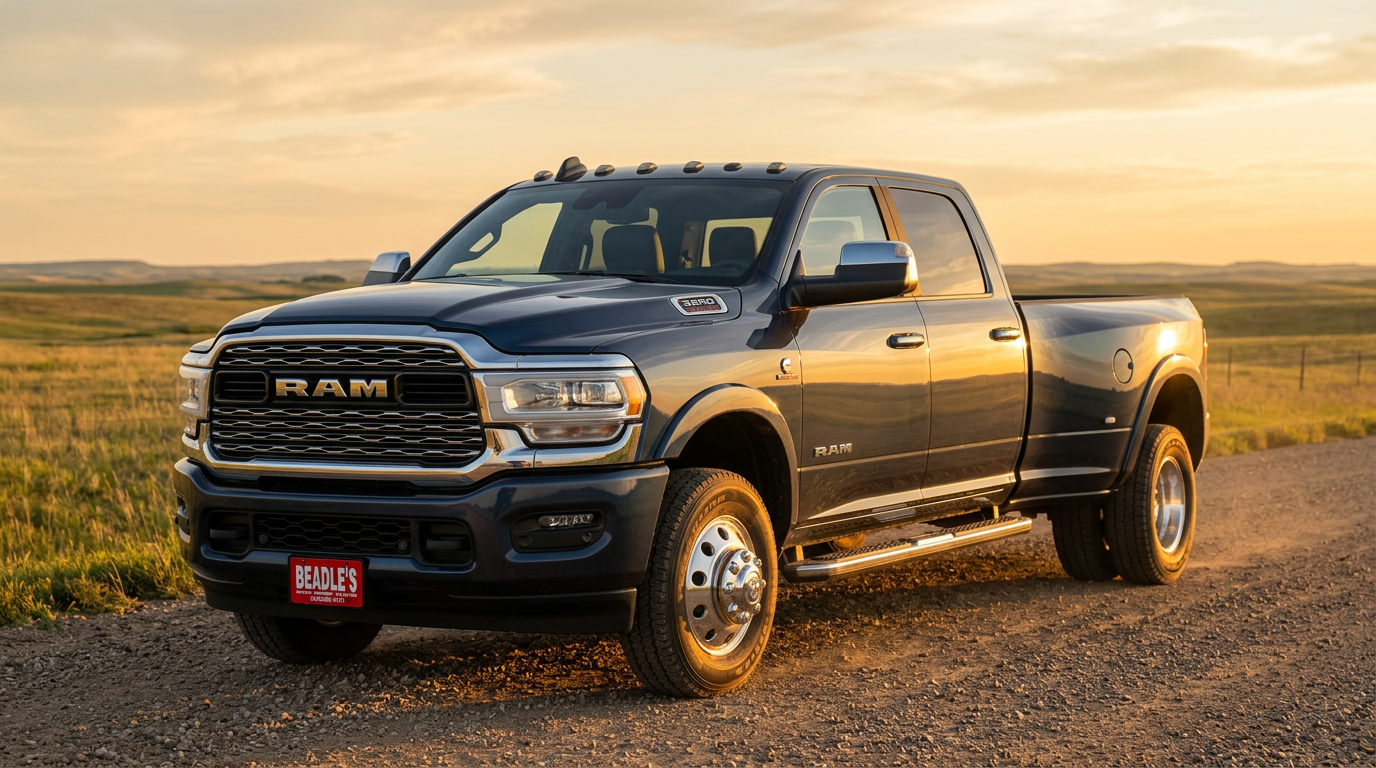
The 2026 Ram 3500 lineup is built for ranchers, contractors, and ag operators who need a truck that can handle South Dakota winters, dually towing, and a full day of work. But with four trims, three cab styles, and dozens of equipment packages, choosing the right 3500 can feel overwhelming.
This guide walks you through every trim level — Tradesman, Big Horn, Laramie, and Limited — shows you the real differences between them, and helps you understand which equipment packages are worth the investment for your operation.
On This Page
- What trims does the 2026 Ram 3500 come in?
- What is the difference between Big Horn and Laramie on the 3500?
- Why does the Ram 3500 Mega Cab only come with the Cummins?
- What equipment groups are available on the Tradesman?
- Is the Limited worth the upgrade from Laramie on a 3500?
- Which Ram 3500 trim is the best value for a work truck?
What trims does the 2026 Ram 3500 come in?
The 2026 Ram 3500 comes in four main trims: Tradesman, Big Horn, Laramie, and Limited. However, trim availability depends on your cab choice — not all trims are available in all cab styles.
Crew Cab (Most Popular)
All four trims are available in Crew Cab with 6’4″ or 8′ bed options. You can choose either 4×2 (rear-wheel drive) or 4×4. Engine options include the standard 6.4L V8 HEMI HD or the 6.7L I6 Cummins HO Turbo Diesel (adds $12,995 to any trim). This is your best choice if you need passenger space and capability.
Regular Cab (Work-Focused)
Regular Cab is available in Tradesman and Big Horn only, with an 8′ bed and 140″ wheelbase. No other trims offered. Regular Cab is built for contractors and ranchers who prioritize bed space over seating and don’t need a back seat. It’s the most economical option.
Mega Cab (Premium & Specialized)
Mega Cab is Laramie and Limited only — and here’s the key restriction: Mega Cab only comes with the Cummins diesel, 4×4, and a 6’4″ bed. The 160″ wheelbase gives you the most interior room on the lineup. This is for buyers who want maximum cabin comfort and the advantages of Cummins power for extreme towing and hauling.
2026 Ram 3500 Trim Availability Summary:
Crew Cab: Tradesman, Big Horn, Laramie, Limited (4×2/4×4, 6’4″/8′ bed)
Regular Cab: Tradesman, Big Horn only (8′ bed, 140″ WB)
Mega Cab: Laramie, Limited only (4×4 + Cummins only, 6’4″ bed, 160″ WB)
What is the difference between Big Horn and Laramie on the 3500?
Big Horn and Laramie represent the middle tier of the 3500 lineup. The jump from Big Horn to Laramie is about $8,085 on a Crew Cab 4×4 HEMI, and it comes down to interior comfort and tech features.
Big Horn: Built for Work
Big Horn gives you a professional work truck with cloth seats, basic technology (8″ touchscreen with Uconnect), and practical features. You get power windows and locks, air conditioning, and a solid foundation. Big Horn is common on ranches and job sites across South Dakota because it delivers capability without premium pricing.
Laramie: Comfort & Convenience
Laramie steps up with leather or leather-trimmed seating, a larger 12″ touchscreen with Uconnect 5 Navigation, wireless phone charging, heated front seats, and dual-zone climate control. The interior feels more refined — important if you’re spending long hours in the truck during heavy towing or ranch work.
The Real Trade-Off
If you’re using the 3500 primarily for work and don’t mind a more utilitarian interior, Big Horn saves you nearly $8,000. If you’re in the truck frequently and value tech conveniences and comfort, Laramie justifies the upgrade. For most ranchers we work with, Laramie hits the sweet spot between capability and comfort.
Why does the Ram 3500 Mega Cab only come with the Cummins?
This is a strategic decision by Ram, and it makes engineering sense. The Mega Cab is designed for maximum capability and extreme towing scenarios — and the Cummins 6.7L turbodiesel is the engine built for that mission.
Why Cummins for Mega Cab?
The Cummins offers 1,075 lb-ft of torque, significantly more than the HEMI’s 429 lb-ft. For Mega Cab buyers typically towing fifth wheels, gooseneck trailers, or hauling heavy loads across South Dakota and beyond, that diesel torque is essential. The Mega Cab’s extra size and weight also pair better with the diesel’s power delivery.
Additionally, Mega Cab buyers typically don’t need to choose — if you’re investing $81,000+ in a truck (base Mega Cab Laramie), the Cummins is the natural choice for long-term reliability and resale value.
Mega Cab Pricing (Cummins Standard)
- Laramie: $81,050
- Limited: $93,350
These prices include the Cummins at no additional cost. You’re not paying an engine adder because diesel power comes standard on Mega Cab.
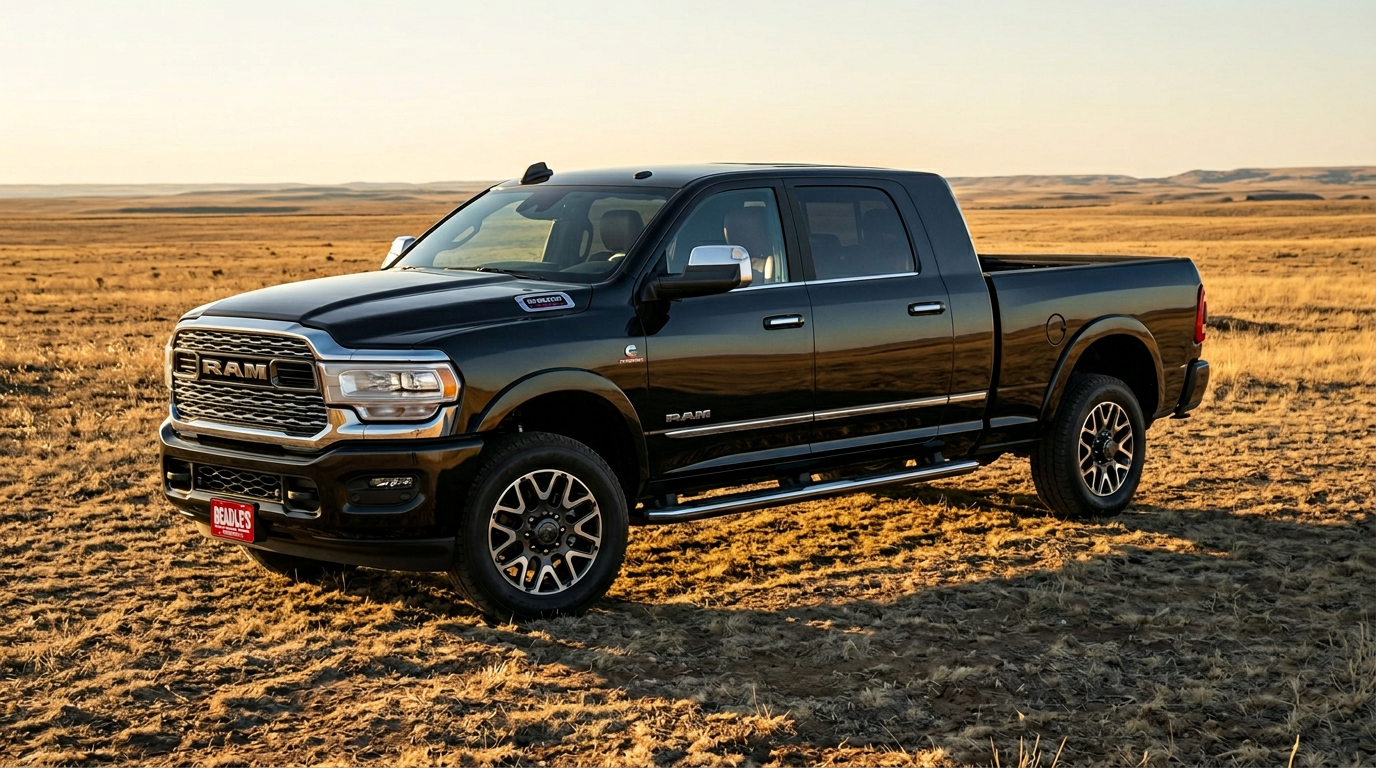
What equipment groups are available on the Tradesman?
Tradesman is the entry-level trim, and Ram offers two equipment groups to enhance capability without jumping to the next trim. These groups let you add specific features that matter for your work.
Tradesman Base ($54,705 Crew Cab 4×4 HEMI)
At base, you get power windows/locks, air conditioning, 8″ touchscreen with standard Uconnect, cloth seats, and the essentials. It’s a solid foundation for a work truck.
Level 1 Equipment Group (+$2,395)
This group adds genuine comfort and tech upgrades: a 12″ touchscreen, Uconnect 5 with navigation, ParkSense front/rear parking sensors, SiriusXM satellite radio (1-year), and carpet flooring instead of rubber. If you’re keeping the truck for years, this group pays for itself through convenience and resale value.
Level 2A Equipment Group (+$3,295)
This includes everything in Level 1 plus chrome exterior trim and commercial features like a power rear window, higher payload, and integrated trailer brake controller. Best for contractors who want a professional appearance and trailer management tools without stepping up to Big Horn.
Strategic Approach
A Tradesman with Level 1 Equipment ($54,705 + $2,395 = $57,100) is often better value than a base Big Horn ($58,455) because you get navigation and modern tech while keeping price competitive. Many of our customers choose this configuration for ranch work and light towing.
Is the Limited worth the upgrade from Laramie on a 3500?
Limited is the premium trim, sitting at $78,840 for Crew Cab 4×4 HEMI — that’s a $12,300 jump from Laramie. Whether it’s worth it depends entirely on how you use the truck and what you value.
What You Get with Limited
Limited adds: premium leather seating, a power moonroof, power-adjustable pedals, premium audio system, panoramic sunroof option, heated rear seats on Crew Cab, ventilated front seats, upgraded exterior styling with polished chrome, and a power rear window. The interior feels genuinely premium — more like a luxury truck than a work truck.
For Ranch Work and Heavy Use
For ranch work, towing, and heavy use, Limited’s premium materials don’t add functional capability. If your truck regularly sees dust, mud, and trailers, the simpler Laramie interior is easier to clean and maintain. Laramie already offers the tech and comfort you need.
Limited Makes Sense If:
- You’re buying a personal/lifestyle truck rather than a pure work tool
- You spend significant time in the truck for long drives (towing cross-country)
- You want the highest resale value and luxury appeal
- Heated and ventilated seats matter to you in South Dakota winters and summer heat
The Verdict
For most working ranchers and contractors in our region, Limited is over-spec’d. Laramie delivers everything you need. But if you’re buying a Mega Cab (which forces you to choose Limited anyway), the premium content aligns well with the higher price point.
Which Ram 3500 trim is the best value for a work truck?
Best value depends on your specific needs, but here’s our honest take from working with ranchers, contractors, and ag operators across Bowdle and the surrounding region.
For Maximum Budget Efficiency: Tradesman with Level 1 Equipment
A Tradesman Crew Cab 4×4 with Level 1 Equipment Group runs about $57,100 (including destination). You get navigation, modern tech, reliable HEMI power, and all-weather capability for significantly less than a Big Horn. This configuration delivers surprising value.
For the Sweet Spot: Big Horn or Laramie
Big Horn ($58,455) is built for serious work. It’s no-nonsense and gets the job done. Laramie ($66,540) steps up interior quality and tech to a level where you’re genuinely comfortable spending 8+ hours a day in the truck. Most professional ranchers and contractors choose Laramie because the added comfort justifies the $8,085 premium over Big Horn, especially if the truck will see heavy use.
For Maximum Capacity: Regular Cab
If you don’t need a back seat, Regular Cab Tradesman or Big Horn gives you the longest bed (8′) and lowest price point. You sacrifice passenger space, but you gain bed space for equipment, materials, and implements. This is the workhorse choice for contractors focused on hauling.
For Extreme Towing: Mega Cab with Cummins
Yes, Mega Cab Laramie starts at $81,050, but that price includes the Cummins diesel, 4×4, and the largest cab on the market. If you’re regularly towing fifth wheels or gooseneck trailers across state lines or in tough conditions, the Cummins torque and interior comfort justify the investment. This is not an economy choice — it’s a capability choice.
Pro Tip: Don’t Overlook Packages
A $54,705 Tradesman with strategic packages (Cold Weather Group for $245, 5th Wheel Prep for $745, and Safety Group for $2,995) totals about $58,685 and delivers capability that rivals a base Big Horn — but with added safety and winter equipment built in. Think about your specific use case and add packages strategically rather than jumping to a higher trim.
| Trim | Crew Cab 4×4 HEMI | Key Features | Best For |
|---|---|---|---|
| Tradesman | $54,705 | Power windows, 8″ screen, cloth, AC | Budget-conscious work trucks |
| Big Horn | $58,455 | Cloth seats, 8″ screen, practical features | Professional work & light towing |
| Laramie | $66,540 | Leather, 12″ nav screen, heated seats | Heavy towing, comfort-focused |
| Limited | $78,840 | Premium leather, sunroof, ventilated seats | Lifestyle trucks, personal use |
| Add $12,995 for Cummins diesel (any Crew/Regular Cab trim) | Mega Cab: Laramie $81,050 | Limited $93,350 (Cummins included) | |||
Equipment Packages & Towing Groups
Beyond trims, Ram offers specialized packages to enhance capability for specific use cases. Here are the most popular choices for South Dakota ranching and towing:
Cold Weather Group ($245)
If you’re buying a 3500 in the Dakotas, this is essential. Includes engine block heater and Mopar winter front grille cover for cold starts and frosty mornings.
5th Wheel & Gooseneck Towing Prep Group ($745)
Adds integrated 5th wheel prep, wiring, and hitch prep. If you’re towing trailers, this package simplifies installation and ensures proper integration.
Towing Technology Group ($2,395)
Bundled tech for serious towers: surround view camera, trailer reverse guidance, power telescoping mirrors, blind spot monitoring with trailer detection, and LED tail lights. Makes managing heavy loads much safer and easier.
Safety Group ($2,995)
Includes active lane management, adaptive steering, blind spot monitoring, drowsy driver detection, automatic high beam, and rain-sensing wipers. Worth every dollar if safety is your priority.
Max Tow Package
This premium option includes air suspension with auto-leveling plus 5th wheel prep — designed for maximum towing confidence and comfort on rough South Dakota roads.
Snow Plow Prep (Standard on All Trims)
Good news: Snow plow prep comes standard on ALL 2026 Ram 3500 trims at no additional cost. If you’re clearing driveways or roads, you’re ready to go.
Key Takeaways
- Crew Cab is available in all four trims with flexible bed and drivetrain options. Best for ranchers who need passenger space.
- Regular Cab (Tradesman, Big Horn only) maximizes bed space and minimizes price — ideal for contractors focused on hauling.
- Mega Cab is Laramie and Limited only, Cummins only, with the largest interior. Starting at $81,050. Choose this only for extreme towing capacity and premium cabin space.
- Tradesman to Big Horn ($3,750 jump) gains interior refinement. Tradesman with equipment groups can rival Big Horn value.
- Big Horn to Laramie ($8,085 jump) adds leather, navigation, and heated seats. Most professional buyers choose Laramie for heavy daily use.
- Laramie to Limited ($12,300 jump) is primarily luxury features. Skip unless buying a lifestyle truck or Mega Cab.
- Cummins diesel costs $12,995 extra on Crew/Regular Cab. Standard (no charge) on Mega Cab. Choose for extreme towing and long-term capability.
- Strategic packages often deliver better value than trim upgrades. Cold Weather ($245), 5th Wheel Prep ($745), Safety Group ($2,995).
- Snow Plow Prep is standard on all 2026 3500s — no cost.
- Best value for most users: Laramie Crew Cab 4×4 with Cold Weather and 5th Wheel packages. Great balance of capability, comfort, and price for South Dakota ranch and towing work.
Frequently Asked Questions
Can I get a Mega Cab with the HEMI engine?
No. Mega Cab is exclusively Cummins diesel on the 2026 lineup. Ram designed Mega Cab for maximum towing and hauling, and the Cummins is the standard engine for that mission. The diesel’s 1,075 lb-ft of torque is built for extreme fifth-wheel and gooseneck towing scenarios.
Is the Cummins diesel worth $12,995 extra on a 3500?
That depends on your use. If you’re towing heavy trailers regularly, hauling commercial loads, or keeping the truck for 10+ years, the diesel’s torque (1,075 lb-ft vs. 429 lb-ft HEMI) and resale value typically justify the cost. If you’re using the truck for lighter work or occasional towing, the HEMI is reliable and more affordable. Talk to us about your specific plans — we can help you decide.
What’s the difference between Regular Cab and Crew Cab pricing?
Regular Cab is significantly cheaper than Crew Cab — you lose the back seat and seating for four passengers, but you gain an 8-foot bed (instead of 6’4″) and lower overall cost. It’s an excellent choice for contractors and ranchers who don’t need rear seating and prioritize bed capacity. Not all trims come in Regular Cab; only Tradesman and Big Horn are offered.
Should I add the Towing Technology Group for ranch towing?
Yes, if you’re regularly towing trailers across South Dakota. The integrated trailer brake controller, hitch guidance, and blind-spot monitoring make a meaningful difference in safety and ease of handling heavy loads. At $2,395, it’s worth the investment if towing is a regular part of your operation. Pair it with the 5th Wheel Prep Group ($745) if you use fifth wheels.
Is snow plow prep worth it if I might plow roads?
Great news — snow plow prep comes standard on all 2026 Ram 3500 trims at no charge. You don’t need to choose or pay for it. If you’re planning to clear driveways or roads during South Dakota winters, you’re fully equipped right from the dealer.
My Take on Choosing the Right 3500 Trim
The 2026 Ram 3500 lineup gives you real choices. You can build a work truck starting around $55,000, or step up to a fully equipped Mega Cab with Cummins for $93,000-plus. The key is matching the right trim, cab style, and packages to your specific operation.
In my experience working with ranchers and contractors across South Dakota, most of you land on Laramie Crew Cab 4×4 with a Cummins diesel — or sometimes a Big Horn with strategic packages. You want capability, reliability, comfort for long days in the truck, and fair pricing. Those configurations deliver exactly that.
The 3500 isn’t a luxury truck (that’s what Limited is for). It’s built for people who expect their truck to work hard. Whether you choose Tradesman simplicity or Limited premium features, you’re getting a durable, capable machine that’ll handle South Dakota weather, heavy loads, and years of serious work.
Ready to find the right configuration for your needs? Visit our lot in Bowdle or reach out to our team. And for the full picture on towing capacity, payload, and specs, check out our complete 2026 Ram 3500 guide.
About the Author
Lexy Tabbert — Beadle’s Chrysler Center, Bowdle, SD
Lexy Tabbert is the Director of Sales and Marketing at Beadle’s Chrysler Center in Bowdle, South Dakota. She covers Ram, Jeep, Dodge, and Chrysler vehicles — helping families, ranchers, and ag operators across the region find the right truck and configuration for their needs. Learn more about Lexy.
2026 Ram 3500 SRW vs DRW: Do You Need a Dually?
If you’re shopping for a heavy-duty truck in South Dakota, you’ve probably stood in front of a Ram 3500 and wondered: should I go with single rear wheels or dual rear wheels? It’s one of the biggest decisions you’ll make, and the answer depends entirely on what you’re actually towing and hauling.
I’ve spent a lot of time researching the Ram 3500 lineup, and I’ve talked to dozens of local owners—ranchers pulling gooseneck trailers, RV enthusiasts towing fifth-wheels, contractors who need maximum payload. The differences between SRW and DRW go way beyond looking at a spec sheet. There are real trade-offs: towing capacity, daily drivability, maintenance costs, and how the truck handles gravel roads and winter weather here in South Dakota.
What’s Inside
- What is the difference between SRW and DRW on the Ram 3500?
- Do I need a dually to tow a 5th wheel camper?
- How much more can a Ram 3500 dually tow than an SRW?
- Is a dually harder to drive and park than a single rear wheel?
- Does a dually cost more in tires and maintenance?
- Can I daily-drive a Ram 3500 dually in South Dakota?
What is the difference between SRW and DRW on the Ram 3500?
The main difference is simple: SRW means single rear wheel (one wheel on each side), and DRW—also called a “dually”—means dual rear wheels (two wheels on each side). But that simple change ripples through the entire truck’s capabilities and behavior.
A dually sits higher and wider in the rear because of the extra wheels. Ram engineers reinforce the rear axle, suspension, and frame to handle the extra weight and stress. The GVWR (Gross Vehicle Weight Rating) jumps from 11,040–12,300 lbs on an SRW to 14,000 lbs on a DRW. That higher GVWR means you can legally carry more total weight—truck plus cargo plus passengers.
Here’s the critical part: Ram only offers DRW on Crew Cab configurations. If you want a Reg Cab or Mega Cab Ram 3500, you’re limited to SRW. That matters if you need the compact footprint of a shorter cab or the interior space of a Mega Cab with maximum towing.
The dual wheels also change how the truck behaves on the road. There’s more contact patch with the ground, better stability when loaded, and less swaying when you’re on gravel or dealing with South Dakota wind. But you’re also dealing with a wider rear end—something worth considering on narrow ranch roads or when backing up to a barn.
Do I need a dually to tow a 5th wheel camper?
Not always—but it depends on the weight of the trailer you’re pulling.
Here’s what Ram specifies: Any fifth-wheel or gooseneck trailer over 23,000 lbs requires a fifth-wheel or gooseneck hitch — not necessarily a dually. A Cummins SRW can still legally tow up to 26,080 lbs with a gooseneck hitch. You only need DRW if your trailer exceeds that SRW limit.
Most mid-size fifth-wheel campers (30–35 feet) weigh between 8,000 and 15,000 lbs, so an SRW with a Cummins engine could tow them comfortably. A Cummins-powered SRW can tow up to 26,080 lbs, which covers a lot of RV owners’ needs. But if you’re pulling a big two-bedroom luxury fifth-wheel or a 40-foot gooseneck with livestock equipment, you need a dually—and probably a Cummins.
The second consideration is stability and comfort. We hear from buyers who’ve towed with an SRW and felt nervous on I-90 in windy conditions or dealing with the weight transfer when backing up. A dually’s dual wheels give you that extra confidence and control, especially if you’re towing in winter or on gravel.
How much more can a Ram 3500 dually tow than an SRW?
The towing advantage depends heavily on which engine you choose. Let me break down the real-world numbers:
Cummins 6.7L Turbo Diesel: A DRW can tow up to 36,610 lbs, while an SRW maxes out at 26,080 lbs. That’s a 10,530 lb difference—enough for a large gooseneck trailer with equipment, livestock, or a massive RV setup. This is where a dually really shines for serious agricultural and commercial work.
HEMI 5.7L Gasoline: The difference is much smaller. An SRW HEMI can tow 17,730 lbs, and a DRW HEMI tops out at 18,150 lbs. That’s only a 420 lb advantage—barely noticeable. If you’re considering a HEMI, the SRW towing capacity might be all you need, and you’d save money on fuel and maintenance.
For most recreational towing in South Dakota (fifth-wheels, enclosed car trailers, small gooseneck equipment), an SRW Cummins covers nearly every use case. You only step up to a DRW if you’re regularly pulling livestock trailers, large shop equipment, or commercial loads.
Is a dually harder to drive and park than a single rear wheel?
Yes, but not dramatically—and most owners adapt quickly.
A dually is wider across the rear axle (about 8.5 feet bumper-to-bumper vs. 6.5 feet on an SRW). You notice it when backing into a tight spot or navigating a narrow mountain road. Parking at a Sioux Falls Walmart requires more awareness. Farm roads with shallow ditches on both sides become trickier.
That said, the extra width also gives you a steadier platform. Duallys don’t bounce or sway as much, which some drivers prefer over time. If you’re experienced with full-size trucks, the adjustment takes a few weeks. If you’re new to heavy-duty trucks, an SRW might be more forgiving.
Winter driving in South Dakota is worth mentioning. The dual rear wheels improve traction in snow and ice, which is a genuine safety advantage. The trade-off is that you need to be more deliberate with your backing maneuvers on frozen surfaces.
For daily use—running into town, picking up supplies, light hauling—an SRW wins on maneuverability. For serious work pulling loaded trailers, a dually’s extra stability often outweighs the tighter turning radius.
Does a dually cost more in tires and maintenance?
Yes, and it’s worth factoring into your total cost of ownership.
A dually requires four rear tires instead of two, so tire replacement is roughly twice the cost. You’re also replacing tires twice as often if you keep the same mileage. Over the life of the truck, that’s a significant expense—potentially $3,000–$5,000 more than an SRW.
Brake maintenance is similar. Two extra rear wheels mean more brake pads and rotors to service. The suspension components are heavier-duty on a DRW, so replacement parts cost more. Nothing catastrophic, but the routine maintenance adds up.
The Cummins diesel engine itself doesn’t vary between SRW and DRW, so fuel economy and major mechanical repairs are equivalent. The real cost difference is consumables: tires, brakes, and suspension wear. For a rancher or contractor running the truck hard year-round, budget an extra $500–$800 annually for maintenance on a dually.
Insurance might be slightly higher on a DRW, too, depending on your coverage and the insurer’s rating.
Can I daily-drive a Ram 3500 dually in South Dakota?
Absolutely—thousands of South Dakotans do. But “daily-drive” means different things to different people.
If you mean running into Bowdle for groceries, meeting with feed suppliers, and making the occasional 2-hour drive to Huron, a dually works fine. You’ll sit higher, get a commanding view of the road, and feel the extra presence. Fuel economy is reasonable for a dually—most owners see 12–15 mpg on the highway with a Cummins, slightly better with a HEMI.
The catch: you need to respect the truck’s size. Narrow parking spaces are tighter. Backing up takes longer. You’ll never forget you’re driving a wide-load vehicle. For some people, that’s a dealbreaker for daily use. For others—especially rural South Dakota where roads are wider and towns are smaller—it’s no issue at all.
Winter is where a dually shines for daily driving. The extra traction and stability in snow and ice make it genuinely safer than an SRW in rough conditions. Many South Dakota owners choose a dually specifically because they drive in winter weather year-round.
Our advice: if you’re primarily daily-driving with occasional towing, an SRW is more practical and cheaper. If your daily driving involves any loaded towing (even once a month), a dually is the safer, more stable choice—and you’ll grow to love the extra security on rough roads.
SRW vs DRW Quick Comparison
| Feature | SRW | DRW (Dually) |
|---|---|---|
| Cummins Max Towing | 26,080 lbs | 36,610 lbs |
| HEMI Max Towing | 17,730 lbs | 18,150 lbs |
| Cummins Max Payload | 4,400 lbs | 6,050 lbs |
| HEMI Max Payload | 4,970 lbs | 7,590 lbs |
| GVWR | 11,040–12,300 lbs | 14,000 lbs |
| Width (rear) | ~6.5 ft | ~8.5 ft |
| Tire Cost (per set) | Lower | ~2x Higher |
| Winter Traction | Good | Excellent |
| Parking Ease | Easier | Tighter |
| Available Cabs | All (Reg, Crew, Mega) | Crew Cab Only |
| Worth it if… | Light-to-moderate towing, daily driving, budget-conscious | Heavy towing, livestock, winter driving, stability priority |
| Skip it if… | Pulling trailers over 23,000 lbs, extreme winter conditions | Primarily daily-driving, tight parking lots, fuel costs matter |
How to Decide: SRW or DRW?
- Weigh your typical load. If you’re regularly pulling trailers heavier than 23,000 lbs, a dually is required. If you’re under 15,000 lbs and not daily towing, an SRW is sufficient.
- Check your cab preference. Need a Reg Cab or Mega Cab? You’re locked into SRW. If a Crew Cab works for you, DRW is an option.
- Consider seasonal driving. If you drive loaded in snow and ice regularly (like most South Dakota ranchers), a dually’s winter traction is worth the extra cost and width.
- Calculate maintenance budget. Add $500–$800 annually for dually maintenance (tires, brakes) versus an SRW. Over 10 years, that’s significant.
- Test-drive both. Spend an afternoon with an SRW and a DRW. Back up. Turn tight. Feel the difference in stability under load. Your comfort level matters more than specs.
- Talk to local owners. We have plenty of SRW and DRW Ram 3500 owners in the Bowdle area. Their real-world experience is invaluable for South Dakota driving.
Key Takeaways
- SRW vs DRW is a capability and lifestyle choice, not just a spec decision. An SRW handles most recreational towing and daily driving. A DRW is built for heavy work and winter confidence.
- Cummins owners get a massive towing advantage with a DRW (36,610 vs 26,080 lbs). HEMI buyers see minimal difference. Choose your engine first, then decide on wheels.
- A dually costs more to own (tires, maintenance) but gives you higher GVWR, better winter traction, and maximum legal towing. It’s an investment in capability and safety, not just appearance.
- Daily driving a dually is practical in rural South Dakota, but requires respect for its width and maneuverability. Test-drive one before committing.
Frequently Asked Questions
Can I put a DRW bed on an SRW Ram 3500?
Not practically or legally. The frame, axle, suspension, and GVWR are engineered differently for each configuration. Retrofitting a DRW bed onto an SRW frame compromises structural integrity and violates your truck’s GVWR. It’s also not something any reputable shop would tackle. If you need a dually, buy a dually.
What’s the fuel economy difference between SRW and DRW?
Real-world difference is minimal—usually 1–2 mpg worse on a DRW, mostly because of extra weight and rolling resistance from the additional tires. A Cummins SRW might see 14–16 mpg highway; a DRW might see 12–15 mpg. For HEMI models, the difference is even smaller. Don’t choose based on mpg; both are thirsty trucks.
Do I need special insurance for a DRW?
Not special, but your premium might be slightly higher because of the truck’s higher GVWR and towing capacity. Talk to your agent. Some insurers rate based on GVWR; others base it on use (work truck vs. personal). For commercial or heavy towing, expect higher premiums either way, SRW or DRW.
Can a DRW fit in my garage?
It depends on your garage width. A DRW is roughly 8.5 feet wide (bumper to bumper), versus 6.5 feet for an SRW. If your garage is tight, measure it. Many rural garages and pole barns aren’t designed for a dually. Outdoor parking is common for dually owners in South Dakota.
My Take on SRW vs DRW
Here’s the honest truth: I’ve spent time with both configurations, and there’s no universally “right” answer. I’ve talked to ranchers who bought an SRW and regretted not going with a dually because they felt nervous towing a loaded gooseneck. I’ve also talked to contractors who said their DRW is overkill and the parking headaches drove them crazy.
The real decision comes down to three questions:
First: What are you actually towing? If it’s recreational (fifth-wheel camper, boat, enclosed trailer), an SRW Cummins covers 95% of use cases. If it’s agricultural (livestock, equipment, gooseneck commercial work), a DRW is the safer, legally preferred choice for loads over 23,000 lbs.
Second: How often are you towing? If it’s seasonal—maybe a weekend trip to the Black Hills with a camper—an SRW is efficient and practical. If you’re towing something almost every week, a DRW’s stability and confidence become invaluable, especially in winter.
Third: What matters more—capability or practicality? A dually is built for work. It’s wider, costs more to maintain, and demands respect on the road. But it’s also steadier, safer in bad weather, and legal for the heaviest legal trailers. An SRW is nimble, cheaper, and perfectly adequate for most owners. Neither is wrong; they’re just different tools.
We hear from buyers who’ve owned both, and most say the choice depends on their current life stage. Young families towing a camper? SRW wins. Established ranchers pulling livestock? Dually wins. The best choice is the one that matches your actual needs—not what you think you might need someday.
Want all the Ram 3500 specs, towing numbers, and configuration details in one place? Read our complete 2026 Ram 3500 buying guide before you decide.
About the Author
Lexy Tabbert — Beadle’s Chrysler Center, Bowdle, SD
Lexy Tabbert is the Director of Sales and Marketing at Beadle’s Chrysler Center in Bowdle, South Dakota. She covers Ram, Jeep, Dodge, and Chrysler vehicles — helping families, ranchers, and ag operators across the region find the right truck and configuration for their needs. Learn more about Lexy.
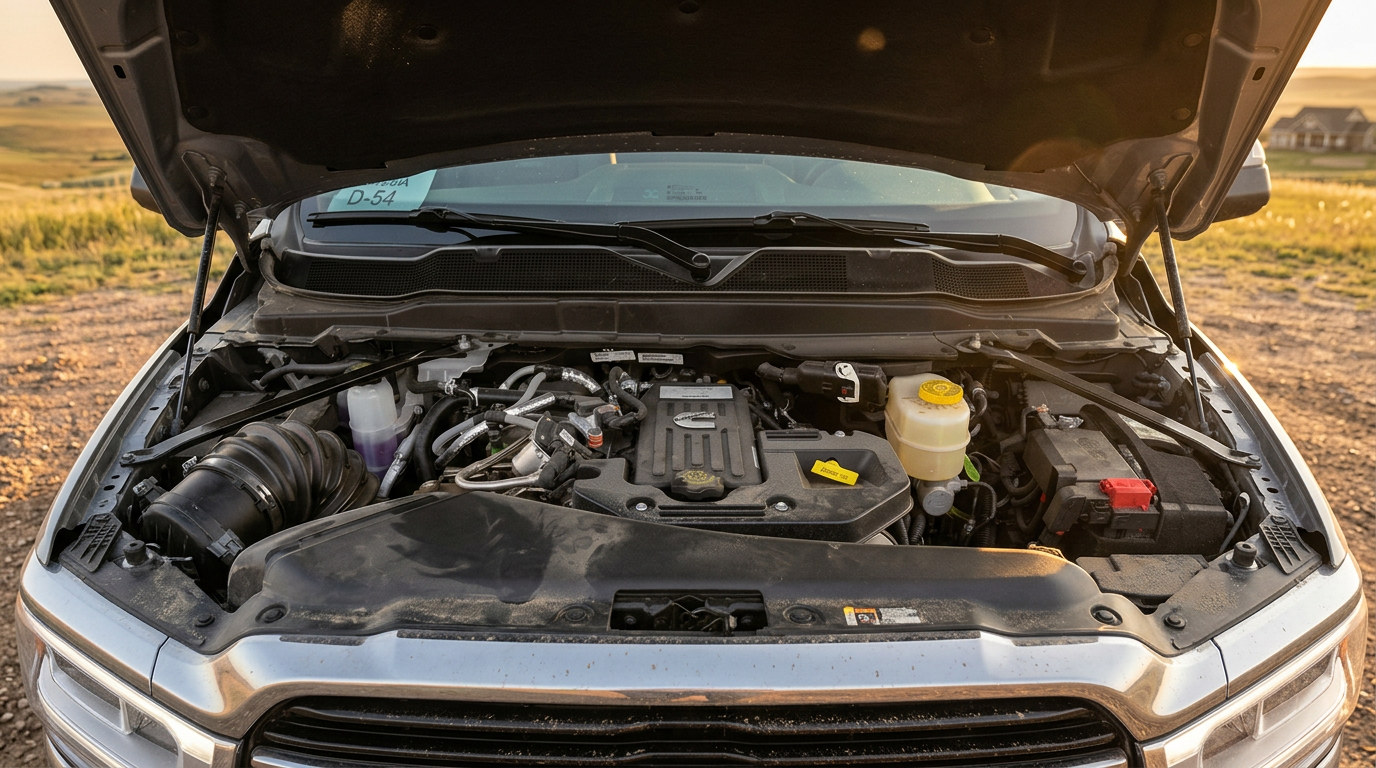
The 2026 Ram 3500 diesel-versus-gas choice is bigger than it is in any other Ram truck. Yes, both the 6.4L V8 HEMI HD and the 6.7L Cummins turbo diesel can haul and tow, but their strengths split in completely different directions — and one of them isn’t even available in your configuration.
In this guide, we’ll break down the real specs, the $12,995 question every 3500 buyer faces, and which engine makes sense for ranchers, ag operators, and contractors across the Northern Plains. If you’re shopping a 3500, this decision matters.
On This Page
Should I get the Cummins diesel or the HEMI in my Ram 3500?
The Cummins is built for towing raw power and long-term durability; the HEMI is built for payload and daily efficiency. Which one you choose depends entirely on what work you’re actually doing.
Here’s the practical breakdown: If you’re hauling horse trailers, equipment trailers, or heavy implements across the ranch, the Cummins’ 1,075 lb-ft of torque and 36,610 lb max towing capacity (on dual rear wheel models) make it the clear choice. If you’re hauling fence posts and grain in the truck bed without a heavy trailer, the HEMI’s 7,590 lb max payload capacity is worth more to you than the extra towing strength.
One more critical factor: Not all configurations offer both engines. If you’re set on a Mega Cab, Cummins only. If you want a Regular Cab 4×2, HEMI only. We’ll cover those limits in the sections below.
Why is the HEMI not available on the Mega Cab?
The HEMI’s size, weight, and support structure don’t align with the Mega Cab’s configuration. Ram reserved the Mega Cab exclusively for the Cummins diesel, making it a truck built specifically for buyers who need that towing and hauling power above all else.
This is actually a smart move from a product standpoint: Mega Cab buyers are typically experienced truck owners and operators who already know they want diesel capability. By making the Cummins standard on Mega Cab (at no upcharge), Ram simplified the model and signaled that this cab size is engineered for serious work.
If you love the Mega Cab’s spacious rear seat but want to keep your engine options open, the Regular Cab 4×4 or Crew Cab with Cummins gives you that flexibility without losing the features you want.
Is the Cummins worth $12,995 on a 3500?
Yes — but only if you’re using the truck for heavy towing or high-mileage hauling. If you’re light on trailer work, the HEMI’s fuel economy and lower purchase price win.
The $12,995 premium buys you the 6.7L I6 Cummins turbo diesel with 430 hp and 1,075 lb-ft of torque, paired with the 8-speed TorqueFlite HD automatic transmission. For context, that’s an extra $12,995 over the base 6.4L V8 HEMI HD (405 hp, 429 lb-ft) with the 8-speed 8HP75-LCV transmission.
If your monthly towing load exceeds 15,000–20,000 lbs, the diesel’s torque and transmission durability will justify the cost in the first 3–5 years of ownership. If you’re under that threshold, the HEMI’s better fuel economy and lower maintenance costs often win back that $12,995 over the same period.
For ag operators and ranchers across South Dakota, the math often favors the Cummins because the work is consistent and heavy. But if you do seasonal or light pulling, the HEMI makes more sense on your budget.
Which engine tows more on a Ram 3500 dually?
The Cummins diesel dominates in towing: 36,610 lbs max capacity on a dually (DRW) versus the HEMI’s 18,150 lbs. That’s a 20,460 lb advantage — more than double the pulling power.
Those Cummins numbers come on a Regular or Crew Cab 8-foot bed, 4×4 with a 3.42 rear axle ratio. The HEMI dually max is on a Crew Cab 8-footer, 4×2 with a 4.10 axle. Even accounting for the different axle ratios, the diesel’s torque advantage is decisive.
For Northern Plains operators pulling anhydrous ammonia tanks, gooseneck grain trailers, or livestock trailers regularly, the Cummins dually is the only realistic choice. The HEMI dually can handle lighter trailers and loads, but it’s being asked to work much harder for less output. If you’re shopping a dually 3500, towing capacity is almost certainly your primary concern — and that means Cummins.
Want to understand how dually trucks compare to single rear wheel versions? Check out our Ram 3500 SRW vs DRW guide for the full breakdown.
Which 3500 engine has the highest payload capacity?
The HEMI wins the payload battle: 7,590 lbs max on a Crew Cab dually 8-foot bed, 4×2, versus the Cummins’ 6,050 lbs on the same configuration. That’s a 1,540 lb advantage for the gas engine.
This is the flip side of the diesel’s towing dominance. The Cummins engine and transmission are heavier, which reduces payload capacity. For ranchers who work primarily with the truck bed — loading and hauling hay, grain, mineral feeders, or livestock — the HEMI’s payload advantage can be significant over the truck’s life.
Don’t assume the Cummins “hauls more” overall. It tows more, but it carries less. If your work is 60% truck bed and 40% trailer, that HEMI payload capacity might be the deciding factor. For full details on payload vs. towing, see our Ram 3500 payload and hauling guide.
Can I get a Cummins on a Regular Cab 4×2 Ram 3500?
No. The Cummins is not available on a Regular Cab 4×2 3500. If you want a diesel on a Regular Cab, you must step up to 4×4. The HEMI is available on the Reg Cab 4×2, but only in that lighter configuration.
This limitation reflects Ram’s engineering: the Cummins diesel requires the additional frame and drivetrain support of 4×4 to perform safely and reliably in the Regular Cab. For buyers who specifically want a light-duty Regular Cab 4×2 — often for short-bed work trucks in town — the HEMI is your only option.
If you need diesel power in a Regular Cab, 4×4 opens both engines to you (HEMI is standard, Cummins is +$12,995). If you’re locked on 4×2, you’re getting the HEMI, and that truck will be lighter on fuel and easier to live with daily.
Quick Engine Decision Table
| Scenario | Worth the Cummins ($12,995) | Stick with HEMI |
|---|---|---|
| Monthly Towing Load | 15,000+ lbs regularly | Under 10,000 lbs |
| Truck Bed Work | Seasonal or light | Frequent (hay, grain, etc.) |
| Fuel Budget | Flexible; value long-term durability | Want best fuel economy |
| Ownership Length | 5+ years; heavy use | 3–5 years; light-to-moderate |
| Cab Configuration | Mega Cab (diesel only) | Reg Cab 4×2 (gas only) |
How to Pick Between Cummins and HEMI for Your 3500
- Check your cab and drivetrain configuration. Log into the Ram build tool (or call us) and confirm whether both engines are available for your cab size and 4×2/4×4 choice. If only one is available, your decision is already made.
- List your typical monthly work. Write down your heaviest towing day and your average truck bed loads. If towing consistently exceeds 15,000 lbs, the Cummins ROI is stronger.
- Compare towing and payload specs for your exact configuration. Visit our towing capacity guide to see real max numbers for your cab, bed, and axle choice.
- Factor in fuel and maintenance costs over 5 years. The Cummins burns diesel (often cheaper per gallon than gas) but costs more upfront and requires specialized service. The HEMI costs less to buy and maintains with standard repairs, but drinks more fuel.
- Test drive both. Come see us at Beadle’s Chrysler Center in Bowdle and take a HEMI and Cummins out back-to-back. Feel the torque delivery, listen to the transmission, and trust your gut on what feels right for your work.
- Get a pre-qualification to see your true buying power. Once you’ve picked an engine, pre-qualify to understand your budget and whether the $12,995 premium fits your plan.
Key Takeaways
- Cummins dominates towing: 36,610 lbs max on a dually vs. HEMI’s 18,150 lbs. Diesel is the choice for regular, heavy trailer work.
- HEMI wins payload: 7,590 lbs max vs. Cummins’ 6,050 lbs. Gas engine is better for truck-bed work and lighter operators.
- Not all configs offer both engines: Mega Cab = Cummins only. Reg Cab 4×2 = HEMI only. Check your cab choice first.
- The $12,995 premium pays off if towing exceeds 15,000 lbs monthly. For light work, the HEMI’s fuel economy and lower price win.
Engine FAQ
What’s the horsepower difference between the HEMI and Cummins?
The Cummins produces 430 hp versus the HEMI’s 405 hp — a 25 hp edge for diesel. But the real power gap is in torque: Cummins delivers 1,075 lb-ft versus HEMI’s 429 lb-ft. That torque difference is what makes the diesel so much better at hauling trailers and loaded trucks uphill.
How much does Cummins diesel maintenance cost compared to the HEMI?
Diesel maintenance is more expensive upfront (oil changes, filters, injectors) but typically runs further between services. The HEMI is easier and cheaper to maintain on a per-visit basis, but you’ll service it more often. The timing and per-visit dollar amounts differ significantly — ask us for a breakdown based on your expected mileage and ownership timeline.
Can I tow 30,000 lbs with a HEMI 3500 dually?
No. The HEMI dually maxes out at 18,150 lbs. Towing beyond that rating is unsafe and voids your Ram warranty. If you regularly need to tow over 25,000 lbs, the Cummins diesel (36,610 lbs max) is not optional — it’s required.
Does the Cummins get better fuel economy than the HEMI on the 3500?
Yes, but the savings depend on your driving. Based on real-world owner reports (Ram does not publish EPA fuel economy ratings for the 3500), the Cummins typically sees 18–22 mpg highway while the HEMI runs 15–17 mpg — but diesel fuel costs more per gallon in South Dakota. On light duty, the HEMI is often more economical overall. On heavy towing, the Cummins saves money because it works more efficiently under load.
Is the 8HP75 HEMI transmission strong enough for heavy towing?
The 8HP75-LCV transmission (paired with HEMI) is robust for towing, but it’s engineered for the HEMI’s torque curve. The Cummins pairs with the heavier-duty 8-speed TorqueFlite HD transmission, which is specifically designed for diesel torque. For consistent heavy towing, the TorqueFlite HD offers more margin. For light-to-moderate trailers, the 8HP75 is reliable and proven.
My Take on the Cummins vs HEMI Question
I’ve spent a lot of time digging into every 3500 configuration we carry at Beadle’s Chrysler Center, and I can tell you: the engine choice is one of the most honest decisions you’ll make as a truck buyer. There’s no “best” answer. There’s only the right answer for your work.
The Cummins isn’t more truck. The HEMI isn’t less capable. They’re just built for different jobs. We talk to buyers who run Cummins 3500 dualies and never tow anything over 25,000 lbs — they spent extra money for capability they don’t use. We also hear from folks with HEMI dualies who are constantly maxed out because they passed on the diesel upcharge — and they’re fighting the truck instead of letting it work.
If you’re serious about towing — especially if you’re pulling ag equipment or livestock trailers 200+ days a year across the Northern Plains — the Cummins pays for itself in reliability and peace of mind. If you’re using the truck bed as much as the trailer hitch, or you’re pulling under 10,000 lbs, save the $12,995 and enjoy the HEMI’s simpler ownership and better fuel economy.
The best part? You can explore all the 3500 configurations in our full buyer’s guide, then come test drive both engines back-to-back. Sometimes the right choice isn’t what the specs say — it’s what feels right in your gut when you’re behind the wheel.
About the Author
Lexy Tabbert — Beadle’s Chrysler Center, Bowdle, SD
Lexy Tabbert is the Director of Sales and Marketing at Beadle’s Chrysler Center in Bowdle, South Dakota. She covers Ram, Jeep, Dodge, and Chrysler vehicles — helping families, ranchers, and ag operators across the region find the right truck and configuration for their needs. Learn more about Lexy.
Connect with us


