




Blog / Bowdle Chrysler Dealer

Blog

All Bowdle Chrysler Dealer Ram Dealer in South Dakota
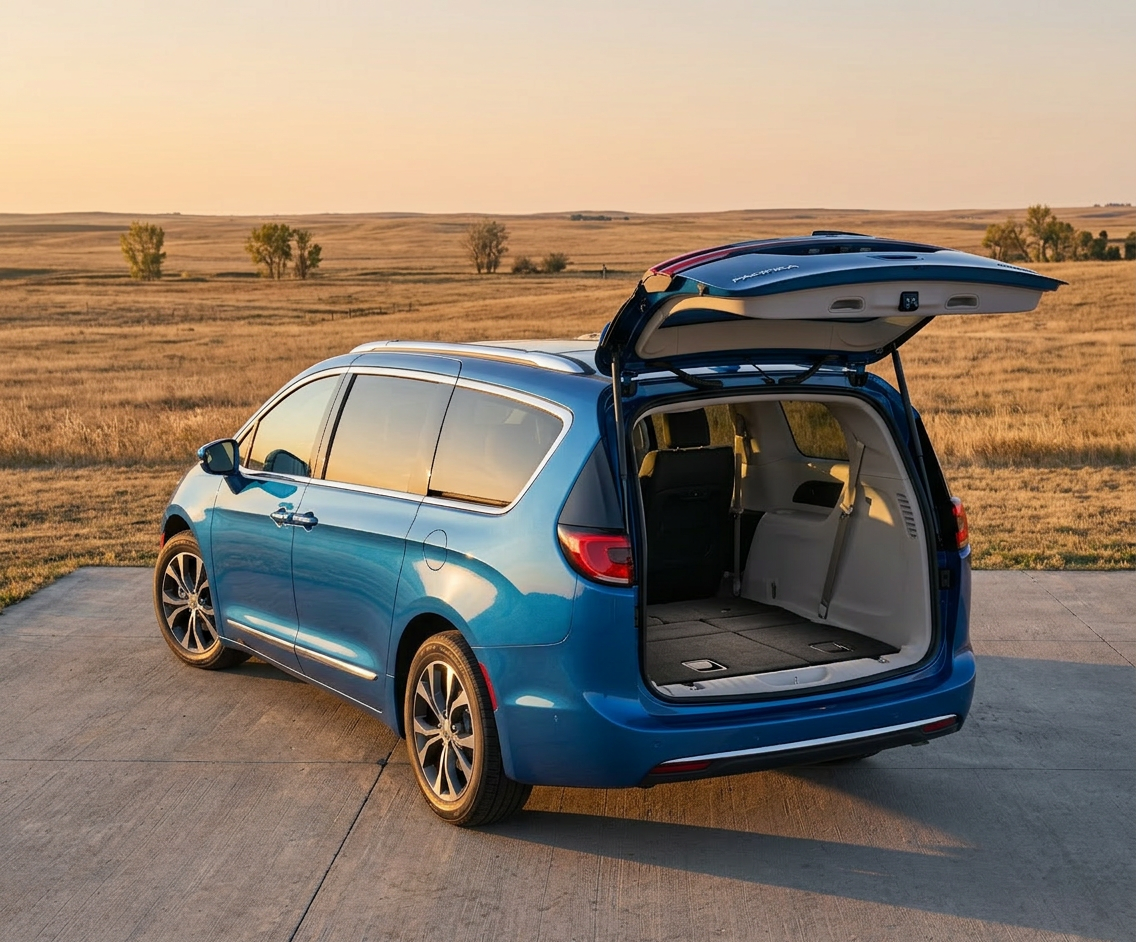
2026 Chrysler Pacifica in Diamond Black Crystal at Beadle's in Bowdle SD

You Were Going to Buy an SUV. Read This First.

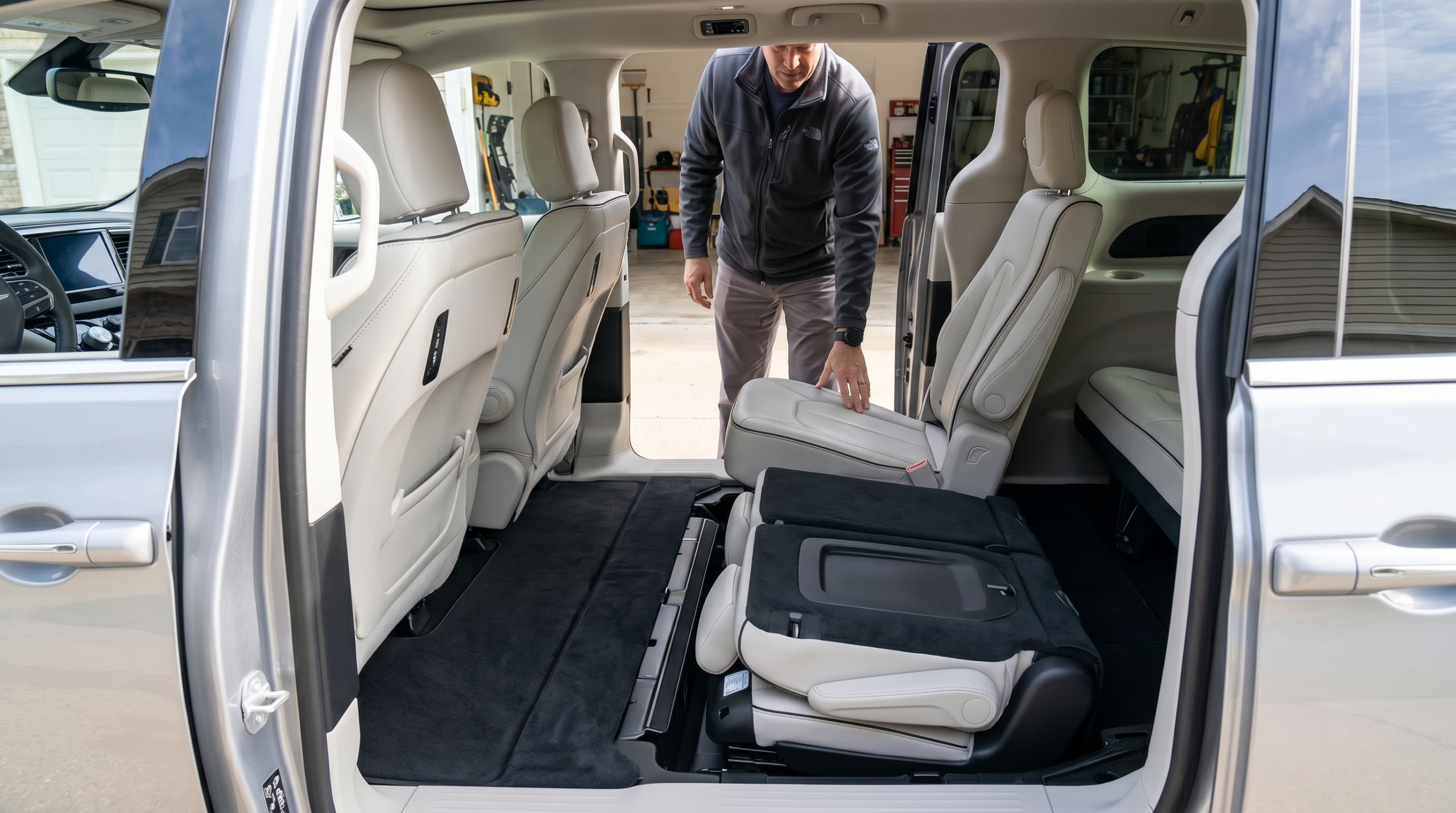
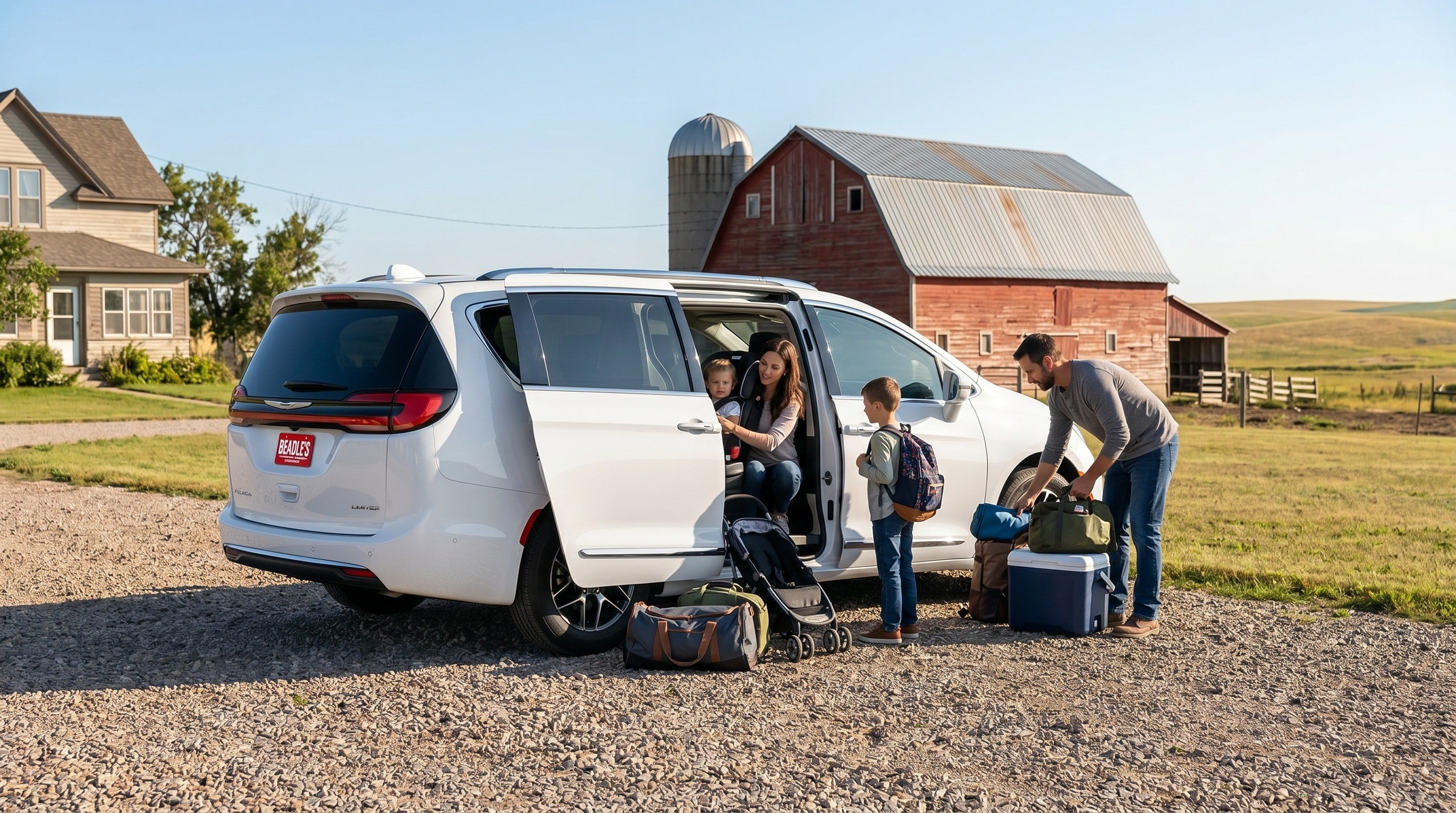
Search Pacifica Inventory Get Pre-Qualified On This Page Why Families Default to SUVs Sliding Doors vs. Swing Doors Stow 'N Go vs. SUV Cargo Passenger Comfort Row by Row Price and Value Comparison Where the Pacifica Falls Short Who Should Buy Each Key Takeaways Common Questions If you walked into this page already planning to buy a three-row SUV, that's fair. Most families in central South Dakota come into the van conversation sideways — a friend mentioned it, they drove one at a rental counter, or a spouse suggested it after test-driving a three-row SUV for the third time and not quite being satisfied. This isn't a sales pitch. It's an honest comparison. The Chrysler Pacifica is not the right vehicle for every family. But for many families who think they want a three-row SUV, the Pacifica does several important things better — and it's worth knowing what those things are before you decide. The full specs for the Pacifica are in the 2026 Pacifica overview. Why do families default to three-row SUVs over minivans? The short answer is perception. Three-row SUVs have a truck-based or car-based ruggedness image that minivans have spent decades fighting against. Buyers who grew up riding in their parents' Dodge Caravan have complicated feelings about the category. The longer answer is that three-row SUVs are genuinely good vehicles with real advantages — ground clearance, optional off-road capability, and a visual presence that reads as "SUV" in a way that matters to some buyers. This guide doesn't dismiss those preferences. It asks whether they outweigh the practical advantages the Pacifica delivers. For most families whose primary vehicle job is hauling children, cargo, and gear across South Dakota — the functional comparison doesn't favor the SUV as cleanly as the perception does. Are sliding doors actually better than swing doors? In everyday family use — yes, significantly. This comes up in almost every conversation I have with families comparing the Pacifica to a three-row SUV. Sliding doors don't swing into adjacent parking spaces — a real concern in any parking lot where spaces run tight. They don't catch South Dakota crosswinds and bang into the vehicle next to you. They don't require children to manage a door they could push too hard or not catch in time. In winter specifically: a swing door opened in subzero temperatures with a sleeping toddler in your arms, in a parking lot where blowing snow has frozen the gap, in wind — that's a different experience from sliding a door back along its track with one hand. South Dakota families who switch to a minivan almost universally cite winter door operation as something they didn't expect to care about and then cared about immediately. Power sliding doors on the Limited and Pinnacle add hands-free operation via a kick sensor under the rear bumper. On the Pinnacle and via the Theater Family Group on the Limited, hands-free sliding doors are included — useful when you're carrying groceries or gear and can't reach the handle. How does Stow 'N Go compare to SUV cargo solutions? Stow 'N Go is the single most practical cargo feature in the passenger vehicle segment. The third-row seats — and on gas trims, the second-row seats — fold completely flat into recesses in the floor. No seat removal. No storage problem. No trip to figure out where to put the seat you just took out. On gas Pacifica trims, folding both middle and rear rows gives you a flat, uninterrupted cargo floor roughly 8 feet long. That's truck-bed-level cargo utility inside a heated, enclosed cabin. Whether it's hockey equipment, lumber from the hardware store, camping gear for six people, or fishing equipment for a Missouri River weekend — the floor loads flat and the van becomes a cargo van without removing a single seat from the vehicle. Three-row SUVs handle cargo differently. The third row typically folds flat, but the second row doesn't go into the floor — it either folds forward against the front seats or tumbles in place, creating an uneven floor. You get cargo space behind the second row, or cargo space with a compromised second row — not a flat floor across the full cabin. This matters most for families who need full seating on some days and full cargo on others. In an SUV, that transition involves physically moving seats or wrestling with configurations. In the Pacifica, it involves lifting seat cushions and watching the seat disappear into the floor. How does passenger comfort compare between the Pacifica and a three-row SUV? Row by row, the Pacifica is the more comfortable vehicle for most passengers most of the time. Row 1: Comparable — both offer heated seats, tech features, and comfortable front row environments. The Pacifica's three-zone automatic climate control starts in the first row. Row 2: The Pacifica has more usable floor space, easier entry via sliding door, and better interior width than most three-row SUVs. The second row is the "prime seating" for children who need car seats — the sliding door opening is wider, car seat installation is easier, and there's no step-in height that requires lifting. Row 3: This is where the Pacifica wins most clearly. The third row in a three-row SUV is typically cramped — designed for small children or short adults for short durations. The Pacifica's third row is genuinely adult-usable for highway trips. There's meaningful legroom, the floor is flat rather than elevated over the wheel wells, and access through the sliding door is easier than climbing over a folded second-row seat. For families who regularly seat six or seven adults — cousins at Christmas, carpool duty, athletic team hauling — the Pacifica's third row is the difference between a comfortable ride and a ride nobody wants to volunteer for. How does the Pacifica compare on price to a similarly-equipped three-row SUV? We're not going to name specific competitors and quote their prices here — those change, and specific configurations vary too much to make direct comparison useful. But the honest general observation is this: a three-row SUV with comparable feature content — AWD, second-row captain's chairs, leather, rear entertainment, safety tech — tends to carry a higher price than an equivalently equipped Pacifica. The Pacifica gets you more usable passenger space, a better third row, and superior cargo flexibility for the same or less money than most comparable three-row SUVs at the same feature tier. For families who are value-focused and not committed to the SUV form factor for reasons of preference, the Pacifica is typically the better financial choice. Where does the Pacifica fall short compared to a three-row SUV? Being honest about this matters. The Pacifica is not the answer for every family. Ground clearance: The Pacifica is a lower-riding vehicle than most three-row SUVs. If you regularly drive unpaved roads with meaningful rutting, high-centering risk, or significant ground clearance requirements, an SUV platform handles it better. Off-road capability: The Pacifica offers no lifted suspension, no off-road tires, and no low-range transfer case. It's not designed for trails or serious unimproved surfaces. Towing maximum: 3,600 lbs is best-in-class for minivans but lower than many three-row SUVs. If you regularly tow above that threshold — gooseneck trailers, large campers, heavy equipment — an SUV or truck platform is the right call. Perception: Some buyers just don't want a minivan, and that's a legitimate preference. There's nothing wrong with choosing a vehicle partly based on how it makes you feel. If those factors matter to your household, the SUV is probably the right choice. If they don't — if your gravel roads are passable, your towing needs are under 3,600 lbs, and you're open to being practical about what moves a family most efficiently — the comparison looks different. Who should choose the Pacifica, and who should stick with the SUV? Choose the Pacifica if: You regularly load and unload children in parking lots. Cargo flexibility between full-seating and flat-floor matters. You seat adults in the third row. Your daily driving is on paved or typical gravel South Dakota roads. You want AWD for winter without truck-level fuel costs. You're open to a vehicle that does its job extremely well regardless of what segment it's in. Stick with the SUV if: You regularly navigate rough terrain with meaningful ground clearance needs. Your towing requirements exceed 3,600 lbs consistently. The form factor is genuinely important to you and not something you'll get past. You have specific off-road use cases that require an SUV platform. Key Takeaways Sliding doors win in parking lots, South Dakota winters, and child-loading situations — every day, not just occasionally Stow 'N Go gives you a flat cargo floor without removing seats — no SUV in this class matches that flexibility The Pacifica's third row is genuinely adult-usable for highway trips; most three-row SUV third rows are not The Pacifica is typically less expensive than comparably equipped three-row SUVs at the same feature tier The SUV wins on ground clearance, serious towing above 3,600 lbs, and off-road capability — be honest with yourself about whether you actually use those things AWD is available on Pacifica Select, Limited, and Pinnacle for winter-weather confidence Common Questions Is the Pacifica easier to park than a three-row SUV? + The Pacifica is a large vehicle, similar in overall length to most three-row SUVs. The parking experience is comparable. Where the Pacifica has a clear advantage is once you're parked — the sliding doors mean you don't need swing-door clearance on either side, which makes tight spaces significantly more manageable. Can the Pacifica handle South Dakota gravel roads? + The Pacifica handles typical rural South Dakota gravel roads and county roads without issue. It sits lower than a body-on-frame SUV, so roads with significant rutting or large obstacles are less appropriate. For the gravel county roads, farm approaches, and rural highway driving that most central SD families actually do, the Pacifica handles fine — particularly in the AWD configuration. My spouse doesn't want a minivan. What's the best way to approach that conversation? + Drive one. The most effective thing we see is getting both decision-makers in the vehicle at the same time — loading the kids, using the sliding doors in a parking lot, experiencing the third row on a real errand. The Pacifica's advantages are experiential. They don't convert as arguments; they convert as experiences. We're happy to set up a test drive at Beadle's in Bowdle if you want to try before the conversation gets further along. The honest take I've watched families drive away in three-row SUVs who I think would have been happier in a Pacifica. I've also watched families make the right call choosing an SUV because their specific needs — regular off-road access, heavy towing, meaningful terrain — genuinely fit the SUV platform better. If your primary vehicle job is moving your family around South Dakota efficiently and comfortably, the Pacifica does it better in most situations than any three-row SUV in its price range. If you want to see how it compares on paper, the 2026 Pacifica overview has the full spec picture. If you want to drive one, call us in Bowdle. Search Pacifica Inventory See the Full 2026 Pacifica Overview Contact Beadle's About the Author Lexy Tabbert Director of Sales & Marketing — Beadle's Chrysler Center | Bowdle, SD Lexy Tabbert is the Director of Sales and Marketing at Beadle's Chrysler Center in Bowdle, South Dakota. She writes and oversees all vehicle content on this site with one goal: give South Dakota buyers accurate, useful information before they come in. Every spec and figure published here is verified against OEM sources before it goes live. When she's not writing, she's working with the team in Bowdle helping families find the right vehicle for the way they actually live and drive.

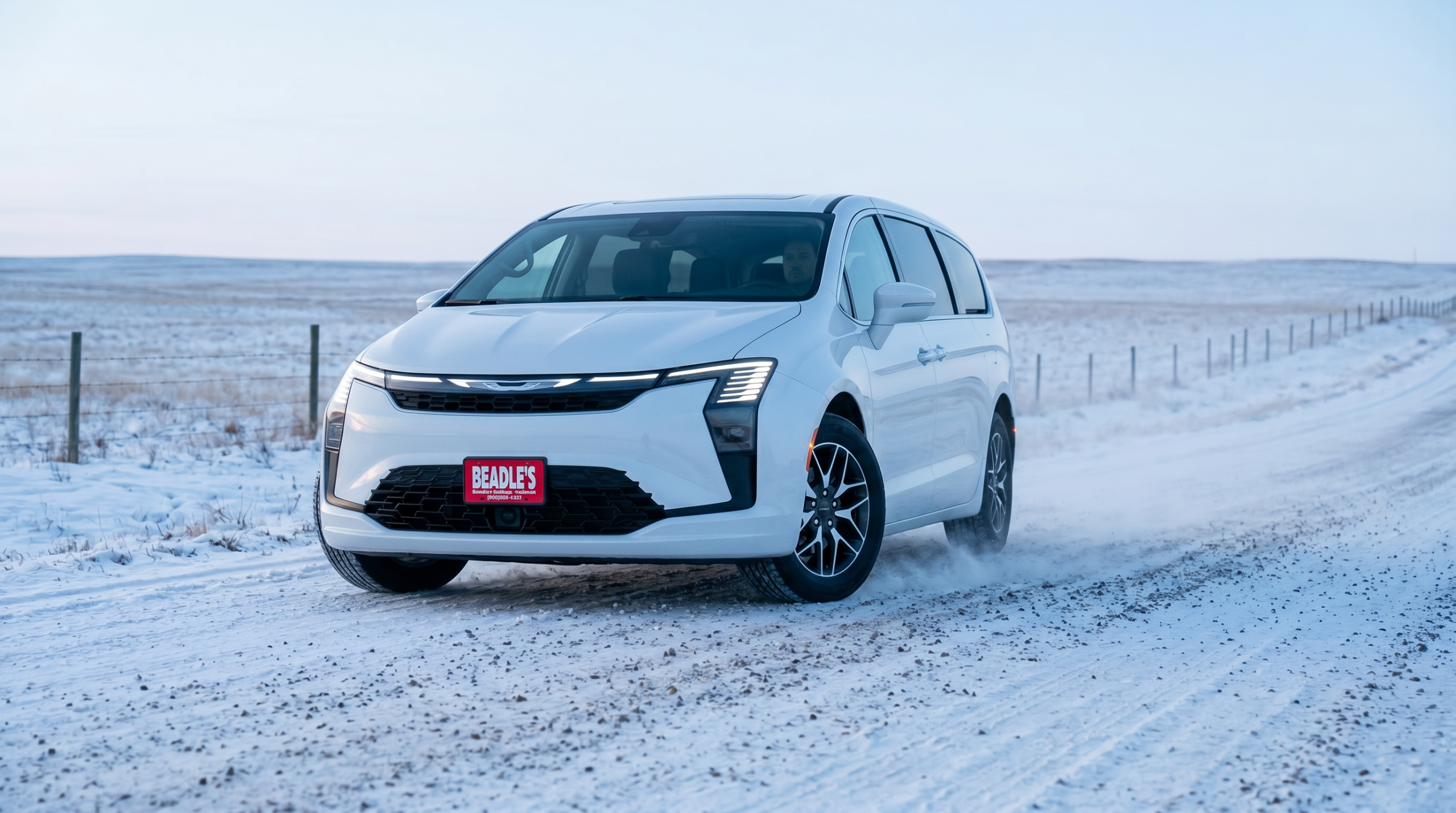
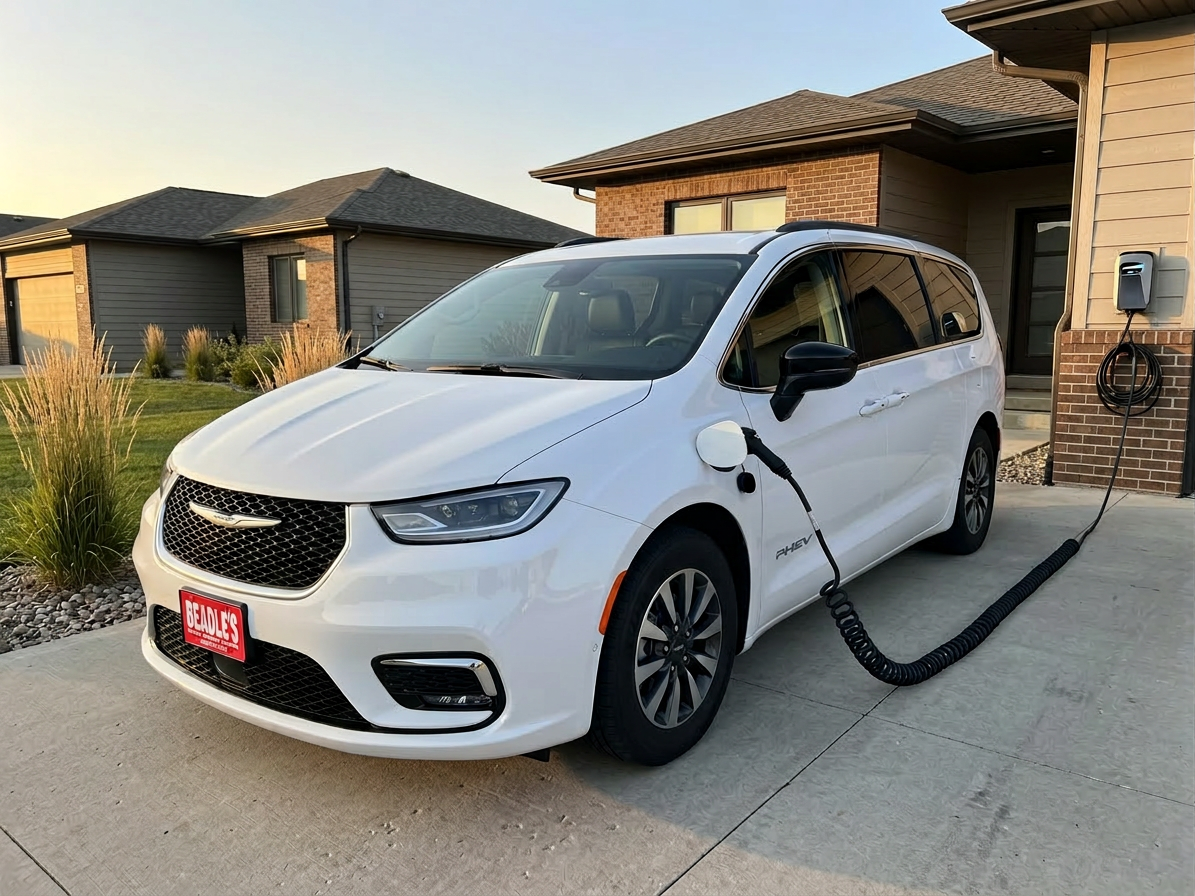
2026 Chrysler Pacifica Plug-In Hybrid in Bright White at Beadle's in Bowdle SD

Plug It In, Load 'Em Up: The Pacifica Hybrid Explained

Search Pacifica Inventory Get Pre-Qualified On This Page What Is the Pacifica PHEV? How Far Does It Go on Electricity? Charging the Pacifica PHEV Does It Make Sense in South Dakota? What Does the PHEV Give Up? PHEV Select vs. PHEV Pinnacle Key Takeaways Common Questions The Chrysler Pacifica Plug-In Hybrid is the only minivan on the market with a PHEV powertrain option. That distinction matters for a specific type of buyer: someone who wants the full family-hauling capability of a minivan and wants to reduce fuel costs on daily driving without committing to a fully electric vehicle. This guide covers how the Pacifica PHEV works, what 32 miles of electric range actually means in practice, how charging works in a South Dakota context, and where the PHEV gives up ground compared to the gas lineup. The full powertrain specs are in the 2026 Pacifica overview. The PHEV is available to order through Beadle's Chrysler Center — contact the team to confirm current availability. What is the Chrysler Pacifica Plug-In Hybrid? The Pacifica PHEV combines a 3.6L V6 with dual electric motors through an EFLITE SI-EVT transmission — an electrically variable system that allows the vehicle to operate in electric-only mode, hybrid mode, or a blend of both depending on battery charge level and power demand. Combined system output is 260 horsepower, sourced from a 16 kWh lithium-ion battery pack. The EPA estimates 32 miles of electric-only driving range on a full charge, and 82 MPGe combined when running on battery. When the battery depletes, the system transitions to hybrid operation using the V6 at 30 mpg combined. Fill the tank and charge the battery, and total range extends to up to 520 miles. This is not an add-on hybrid mode bolted onto a gas vehicle — the PHEV has a distinct powertrain architecture (EFLITE SI-EVT vs. the 9-speed 948TE in gas trims) and a battery system that physically replaces the second-row in-floor storage space. It's a purpose-built configuration. How far does the Pacifica PHEV go on electricity alone? The EPA estimates 32 miles of electric-only range on a full charge. That figure covers most daily commutes without consuming a drop of gasoline. If your daily drive is under 30 miles and you charge at home overnight, you can run the Pacifica PHEV as a de facto electric vehicle day to day and use the V6 as a backup for longer trips. To put the numbers in local context: Bowdle to Mobridge is about 35 miles. Bowdle to Gettysburg is about 25 miles. Routine in-town and close-range errands — school runs, grocery trips, local business driving — fall well inside the 32-mile EV window if you're charging at home. For longer drives — Pierre, Aberdeen, Watertown — the V6 hybrid system carries the load at 30 mpg combined. The vehicle manages the transition automatically; there's nothing the driver needs to do. What does charging the Pacifica PHEV look like? Both PHEV trims include a 6.6kW onboard charger with charge cord as standard equipment. Charging options: Level 2 (240V home charger): Approximately 2 hours for a full charge — the standard home PHEV setup Level 1 (120V standard household outlet): Approximately 14 hours for a full charge — usable overnight, but marginal if your daily drive is using the full 32-mile battery each day DC fast charging: Not available — the Pacifica PHEV does not support DC fast charging The practical setup for most buyers: a Level 2 home charger installed in the garage. A licensed electrician can install a 240V outlet or a dedicated EVSE (Electric Vehicle Service Equipment) unit for $500–$1,500 depending on your panel and garage configuration. That one-time cost is the infrastructure investment that makes the PHEV math work. Public charging in rural central South Dakota is limited. The PHEV's value proposition assumes home charging — it's not designed around public fast-charging infrastructure the way a battery-electric vehicle is. If you can plug in at home every night, the system works as designed. If you can't, the PHEV behaves as a 30-mpg conventional hybrid, which is still good — but you're not capturing the electric savings that justify the price premium. Does the Pacifica PHEV make sense in South Dakota? Honestly — it depends on your situation. Here's the framework: The PHEV makes sense if: You have a home garage or covered outlet where you can install Level 2 charging. Your daily drive is predictably under 30 miles most days. You occasionally take longer highway trips where the hybrid mode's 30 mpg kicks in. You're not concerned about towing capability. The fuel savings on daily electric driving return meaningful money over a 5-7 year ownership window. The PHEV is harder to justify if: You don't have home charging and rely on public infrastructure. Your daily driving regularly exceeds 32 miles without a charging opportunity during the day. Towing capability matters to you (the PHEV doesn't support the Tow Group). You want AWD for winter traction (PHEV is FWD only). Cold weather caveat: Lithium-ion batteries lose range in cold temperatures — this is true of all PHEVs and EVs. A South Dakota January will reduce effective EV range from 32 miles to something lower depending on temperature and heating load. The vehicle handles this automatically by engaging the V6 more frequently. It won't leave you stranded, but it does reduce the daily electric savings that make the PHEV case. For buyers in Bowdle and the surrounding region with a daily driving pattern that fits the profile, the PHEV is a legitimate choice. For buyers who drive long rural distances regularly, need AWD, or need to tow — the gas Pacifica Limited or Pinnacle AWD is the stronger choice. What does the Pacifica PHEV give up compared to the gas version? These are the concrete trade-offs of choosing PHEV over gas: No AWD: PHEV is FWD only — no AWD configuration exists No Trailer Tow Group: PHEV cannot tow — the hitch is not available on either PHEV trim No second-row in-floor storage bins: The battery pack sits in the floor space the Stow 'N Go bins occupy on gas trims. The third-row Stow 'N Go bench is retained. Cold-weather range reduction: Battery efficiency drops in South Dakota winters — plan for less than 32 miles EV range in January and February No DC fast charging: You're limited to Level 1 or Level 2 home charging Higher price of entry: PHEV Select starts at $51,765 — premium over comparable gas trims None of these are disqualifying for the right buyer. But they're real trade-offs that deserve honest consideration before committing to the PHEV trim. PHEV Select vs. PHEV Pinnacle — which one? Both PHEV trims share the same powertrain, battery, and range. The difference is interior and technology content. The PHEV Select ($51,765 MSRP) includes the 6.6kW charger, 360 Surround View Camera, Safety Sphere (front/rear ParkSense), wireless charging pad, heated front seats, Nappa leather, and the Uconnect Theater Family Group II available as an add-on (adds seatback screens, Alpine audio, FamCam, navigation). It's the entry point for the hybrid system with a capable feature set. The PHEV Pinnacle ($60,465 MSRP) includes all PHEV Select content plus premium leather trimmed seating, FamCam standard, hands-free sliding doors, Harman Kardon audio, and ventilated front seats. It's the fully-loaded PHEV configuration. If you're spending at the PHEV Pinnacle level, the gas Pinnacle AWD with the Tow Group is worth a side-by-side conversation — the comparison hinges on whether electric capability or AWD/towing matters more to your household. Key Takeaways The Pacifica PHEV delivers 32 miles EPA estimated EV range and 82 MPGe — the only minivan PHEV on the market Full battery + full tank = up to 520 miles total range; hybrid mode runs at 30 mpg combined Charging requires Level 2 home setup for practical daily use (~2 hrs); Level 1 is possible (~14 hrs) but marginal The PHEV is FWD only — no AWD, no Trailer Tow Group, no second-row in-floor storage bins Cold South Dakota winters reduce EV range — plan accordingly; the V6 takes over automatically Available to order in PHEV Select ($51,765) and PHEV Pinnacle ($60,465) configurations Common Questions Do I need a special charger installed at home? + You don't need a charger to drive the PHEV — it runs on gas when the battery is depleted. But to take advantage of the EV range daily, a Level 2 (240V) home charger is the practical solution. The Pacifica comes with a charge cord for standard 120V outlets, but 14-hour Level 1 charging isn't practical for daily EV use. A licensed electrician can install a 240V outlet or EVSE for $500–$1,500 depending on your home setup. Will the PHEV still work if I never plug it in? + Yes — the Pacifica PHEV operates as a conventional hybrid if you never plug it in. The V6 engine and hybrid system work together to manage fuel economy at around 30 mpg combined. You won't access the EV-only range without charging, but the vehicle functions completely normally. It's just a very expensive way to buy a 30-mpg hybrid. Does the PHEV have Stow 'N Go? + Partially. The Stow 'N Go third-row bench is standard on both PHEV trims — the rear seats fold into the floor as normal. The second-row in-floor storage bins are not available on the PHEV because the battery pack occupies that floor space. So the rear seats fold flat, but you can't fold the middle row into the floor on the PHEV as you can on gas trims. Is the PHEV available in stock or must it be ordered? + The Pacifica PHEV is available to order through Beadle's Chrysler Center. Contact our team directly to confirm current inventory and ordering status — we can walk through the available configurations and discuss lead times. Is the Pacifica PHEV the right choice for you? I want to be straightforward about this: the Pacifica PHEV is a genuinely compelling vehicle for a specific buyer profile. If you have home Level 2 charging, a daily commute that fits inside 32 miles, and no need for AWD or towing, the electric savings over a 5-7 year ownership window are real. For a lot of families in the Bowdle area who stay close to home during the week, this is actually a reasonable match. Where I'd steer you toward the gas Pacifica is if you need AWD for winter, regularly pull a trailer, or your daily driving pattern regularly exceeds 30 miles without a charge opportunity. The gas Limited AWD covers those needs and does it well. The full comparison of all trim options — gas and PHEV — is in the 2026 Pacifica overview. Reach out to our team if you want to work through the specific numbers for your situation. Search Pacifica Inventory See the Full 2026 Pacifica Overview Contact Beadle's About the Author Lexy Tabbert Director of Sales & Marketing — Beadle's Chrysler Center | Bowdle, SD Lexy Tabbert is the Director of Sales and Marketing at Beadle's Chrysler Center in Bowdle, South Dakota. She writes and oversees all vehicle content on this site with one goal: give South Dakota buyers accurate, useful information before they come in. Every spec and figure published here is verified against OEM sources before it goes live. When she's not writing, she's working with the team in Bowdle helping families find the right vehicle for the way they actually live and drive.

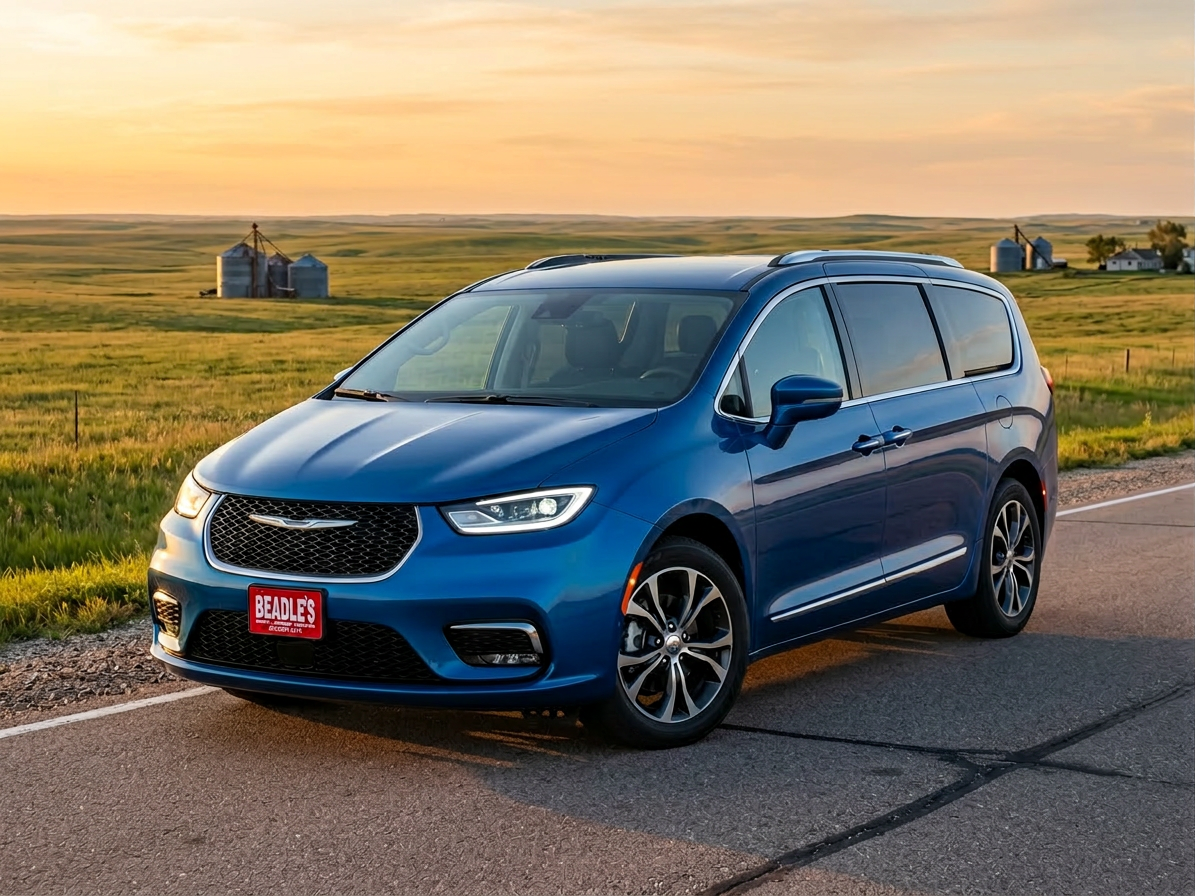
2026 Chrysler Pacifica in Hydro Blue Pearl Coat at Beadle's in Bowdle SD

Trim the Right Way: 2026 Chrysler Pacifica Trims Explained

Search Pacifica Inventory Get Pre-Qualified On This Page The 2026 Pacifica Trim Ladder Voyager LX Pacifica Select Pacifica Limited Pacifica Pinnacle FWD vs. AWD S Appearance Package PHEV Trims in the Lineup Key Takeaways Common Questions The 2026 Chrysler Pacifica spans six configurations across two powertrain types. Every trim is built on the same platform, shares the same sliding doors and Stow 'N Go architecture, and carries the same 3.6L V6 (or hybrid system) — but the differences between the bottom and top of the lineup are significant. Seat materials, AWD availability, towing, entertainment, and comfort features all vary by trim in ways that directly affect long-term satisfaction. This guide walks each gas trim from Voyager LX through Pinnacle, explains the PHEV trims in lineup context, and covers the key decisions — AWD vs. FWD and whether the S Appearance Package is worth adding. The full specs and powertrain breakdown lives in the 2026 Pacifica overview. What is the 2026 Pacifica trim ladder? The gas lineup runs: Voyager LX → Pacifica Select → Pacifica Limited → Pacifica Pinnacle. Each step adds meaningfully to comfort and capability — this isn't a lineup where mid-trims are filler. The PHEV trims (PHEV Select, PHEV Pinnacle) are a separate powertrain branch and are covered at the end of this guide. All gas trims share: the 3.6L Pentastar V6, 9-speed 948TE automatic transmission, Stow 'N Go third-row seating, three-zone automatic climate control, and heated front seats. Those are the baseline. Everything else changes as you move up. Is the Voyager LX worth considering? The Voyager LX is the entry point for the platform — FWD only, 7-passenger, 16.5-gallon fuel tank (vs. 19 gallons on full Pacifica trims), and a stripped-down feature set. No AWD option, no Trailer Tow Group, no leather, no panoramic sunroof. What it does have: the full Pacifica body and platform, the proven 3.6L V6, Stow 'N Go third row, sliding doors, and three-zone climate. For a family that needs maximum seating capacity and daily utility without any interest in towing, performance packages, or premium interior materials, the Voyager delivers the core van at a lower price of entry. For buyers in central SD who occasionally drive long highway stretches, the smaller 16.5-gallon tank does mean more frequent fuel stops. It's a real consideration for a vehicle you're putting highway miles on between Bowdle, Mobridge, Pierre, and Aberdeen. What does the Pacifica Select add — and is it the right move? The Pacifica Select is where the lineup gets interesting. It's the first trim to offer AWD, which for South Dakota buyers is often the deciding factor. It also adds Caprice leatherette seating (a step up from cloth), the 19-gallon fuel tank, and crucially — the option for 8-passenger seating via a fold-flat second-row bench ($695 MSRP). If you regularly carry more than seven people, this is the only trim where that configuration is available. The Select can also be equipped with the Uconnect Theater Family Group II — which adds 13-speaker Alpine audio, seatback screens for the rear rows, navigation, and a power-adjustable front passenger seat. If rear-seat entertainment matters to your family, you can get it here without moving all the way to the Limited. What the Select doesn't have: the Trailer Tow Group (no towing on this trim), a standard panoramic sunroof (optional on Select), Nappa leather, wireless charging, or heated second-row seats. For buyers who need AWD and a comfortable family van but aren't focused on the premium interior tier, Select is a strong value. What makes the Pacifica Limited the sweet spot of the lineup? The Limited is the inflection point where the Pacifica stops feeling like a well-equipped van and starts feeling like a genuinely premium vehicle. It adds Nappa leather seating, a standard panoramic sunroof, wireless charging, heated second-row seats, and a hands-free power liftgate — all as standard equipment, not optional add-ons. It's also the first trim where the Trailer Tow Group is available — which makes the Limited the entry point for buyers who need both AWD and towing in the same vehicle. Limited AWD with the Tow Group is the build most families land on when they want everything: winter traction, towing capability, and a comfortable interior. The Uconnect Theater Family Group available on Limited (code AEZ) is a meaningful upgrade: Harman Kardon 19-speaker audio with subwoofer, Blu-ray/DVD seatback screens, FamCam interior camera, Stow 'N Vac integrated vacuum, and hands-free sliding doors. That's a significant package — and it makes the Limited difficult to beat on value relative to the Pinnacle. What does the Pacifica Pinnacle include? The Pinnacle is the fully-loaded gas configuration. Everything in the Theater Group (AEZ) that was an add-on for the Limited is standard here: Stow 'N Vac, FamCam, Harman Kardon audio, hands-free sliding doors, and Blu-ray/DVD seatback screens. It also adds the 360 Surround View Camera with Safety Sphere (front and rear ParkSense sensors), ventilated front seats, and premium leather trimmed seating. The Trailer Tow Group remains available on the Pinnacle, in both FWD and AWD configurations. So if you want every comfort feature the van offers while keeping towing on the table, the Pinnacle is the configuration that does all of it. The honest question with the Pinnacle is whether what it adds over a Limited + Theater Group is worth the price difference. In most cases, the gap comes down to ventilated seats, the standard 360 camera, and the premium leather grade. For buyers who spend a lot of time in the van in South Dakota summers, ventilated front seats are not a small thing. Should you get FWD or AWD on the Pacifica? AWD is available on the Select, Limited, and Pinnacle — not on the Voyager LX or PHEV trims. For buyers in central South Dakota who deal with hard-pack snow, frozen gravel, and intermittent ice from October through April, AWD is a meaningful upgrade. The FWD Pacifica handles normal winter conditions reasonably well on good snow tires — FWD with winter tires outperforms AWD on all-seasons in most snow scenarios. But AWD adds confidence on slick conditions, at intersections, and on rural approaches that don't get plowed quickly. The fuel economy trade-off: AWD configurations are estimated at up to 20 mpg combined vs. 22 combined for FWD. That's a 2-mpg difference — meaningful over 20,000 annual miles but not a deal-breaker for most buyers. If you're in an area with consistent winter weather and you're keeping the van for 8-10 years, AWD tends to pay for itself in confidence and safety margin. Is the S Appearance Package worth adding? The S Appearance Package (option code ADS) is a styling-focused option available on Select, Limited, and Pinnacle trims in both FWD and AWD configurations. It adds blacked-out exterior trim elements, 20-inch S-model wheels on most trims, and an S badge. There are no performance or capability changes — it's purely aesthetic. Whether it's worth adding comes down to whether the blacked-out look appeals to you. If you want the van to carry a more aggressive exterior presence without moving to a different trim, the S Package delivers that. If you're indifferent to exterior styling, pass — the money is better spent elsewhere in your configuration. Where do the PHEV trims fit in the lineup? The PHEV Select and PHEV Pinnacle are a separate branch — same body, same Stow 'N Go third row, same sliding doors, but a fundamentally different powertrain: the 3.6L V6 paired with dual electric motors and a 16 kWh battery for 32 miles of EV range. FWD only. No Trailer Tow Group. No second-row in-floor storage bins (the battery occupies that floor space). The PHEV Select is available to order at $51,765 MSRP; the PHEV Pinnacle at $60,465. Both are available to order through Beadle's Chrysler Center — call to confirm current inventory status. The full case for and against the PHEV in a South Dakota context — charging setup, cold weather range impact, daily drive math — is covered in the Pacifica PHEV guide. The short version: if you have home Level 2 charging and a predictable daily commute under 30 miles, the math works well. If you don't have home charging, the case weakens significantly. Key Takeaways The gas trim ladder runs Voyager LX → Select → Limited → Pinnacle; the PHEV (Select, Pinnacle) is a separate powertrain branch AWD is available on Select, Limited, and Pinnacle — not on Voyager or either PHEV trim The Trailer Tow Group (3,600 lbs) is only available on Limited and Pinnacle The Limited with the Theater Family Group matches most Pinnacle content at a lower price — this is where most buyers land 8-passenger seating is only available on the Select as an option ($695); all other trims are 7-passenger PHEV trims are FWD only, have no second-row in-floor bins, and do not support towing — but deliver 32 miles EV range Common Questions Which trim do most buyers choose? + Most families we work with land on the Pacifica Limited AWD, particularly when they add the Theater Family Group. It covers towing, AWD for winter, premium interior comfort, and rear-seat entertainment in one build. The Pinnacle is the step above, but the Limited with the Theater Group closes most of that gap. Can I get the sunroof on the Select trim? + Yes — the panoramic sunroof is an available option on the Pacifica Select FWD and Select AWD. On the Limited and Pinnacle (gas and PHEV), it is standard equipment. What seat material does each trim use? + The Select uses Caprice Leatherette seating. The Limited moves to Nappa Leather. The Pinnacle upgrades to Premium Leather Trimmed seating. The PHEV Select uses Nappa Leather; the PHEV Pinnacle uses Premium Leather Trimmed. The Voyager LX uses cloth seating. Does the Safety Sphere (360 camera) come standard on all trims? + No. The Safety Sphere — which combines a 360 Surround View Camera with front and rear ParkSense parking sensors — is standard on the Pinnacle trims and both PHEV trims. On lower gas trims it is available as an optional add-on. Confirm availability for specific configurations with Beadle's at time of purchase. Which Pacifica trim is right for your family? After working through the lineup with a lot of families in central South Dakota, the pattern that emerges is pretty clear: most buyers who want the full Pacifica experience end up in the Limited AWD with the Theater Group. It covers towing, AWD, a premium interior, and rear entertainment in one build at a price point that doesn't require Pinnacle justification. Buyers who need 8-passenger seating start at the Select. Buyers who want every feature without thinking about packages land on the Pinnacle. And buyers who want van utility without the premium spend start at the Voyager. The trim decision becomes clearer when you know which of those things matters most to you. If you want to talk it through before coming in, reach out to the team in Bowdle. The full 2026 specs breakdown is in the 2026 Pacifica overview. Search Pacifica Inventory See the Full 2026 Pacifica Overview Contact Beadle's About the Author Lexy Tabbert Director of Sales & Marketing — Beadle's Chrysler Center | Bowdle, SD Lexy Tabbert is the Director of Sales and Marketing at Beadle's Chrysler Center in Bowdle, South Dakota. She writes and oversees all vehicle content on this site with one goal: give South Dakota buyers accurate, useful information before they come in. Every spec and figure published here is verified against OEM sources before it goes live. When she's not writing, she's working with the team in Bowdle helping families find the right vehicle for the way they actually live and drive.

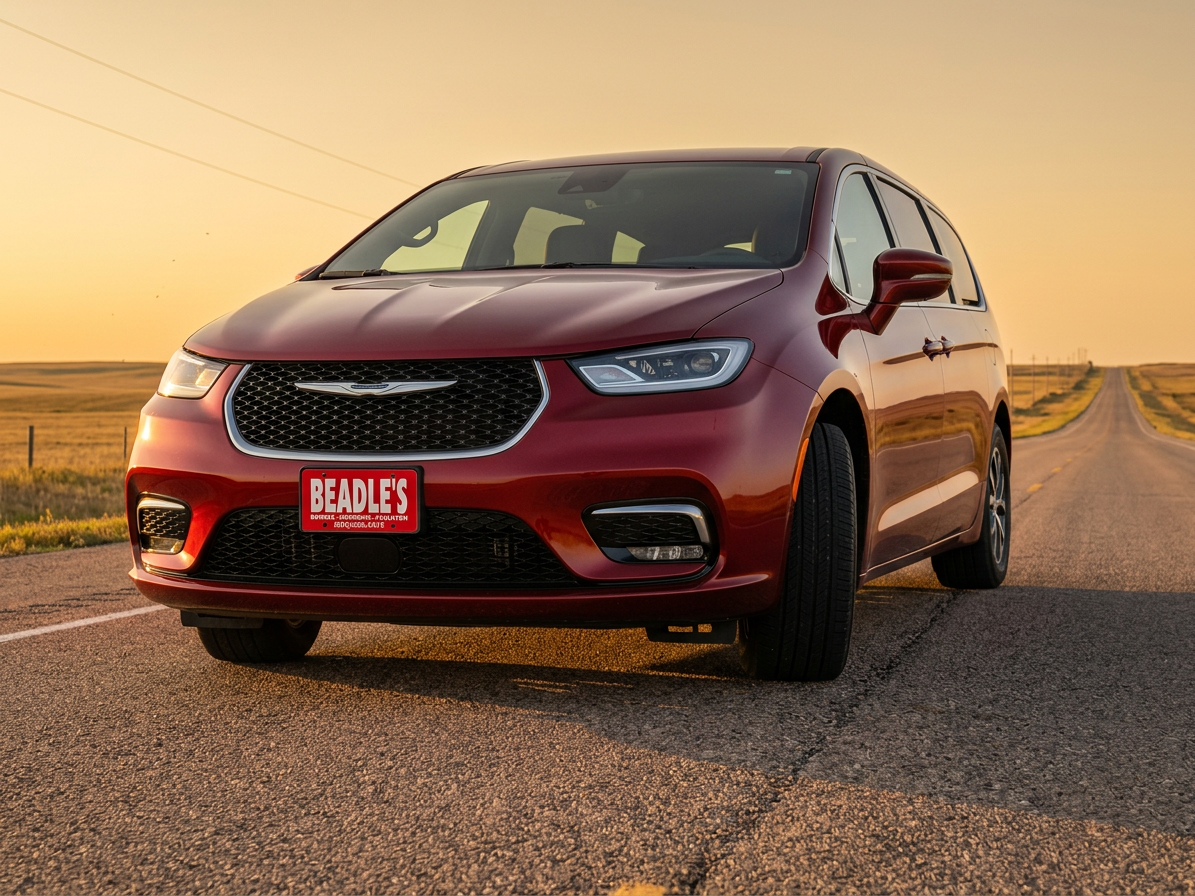
2026 Chrysler Pacifica in Red Hot Pearl Coat at Beadle's in Bowdle SD

Hook It Up: The 2026 Chrysler Pacifica Towing Guide

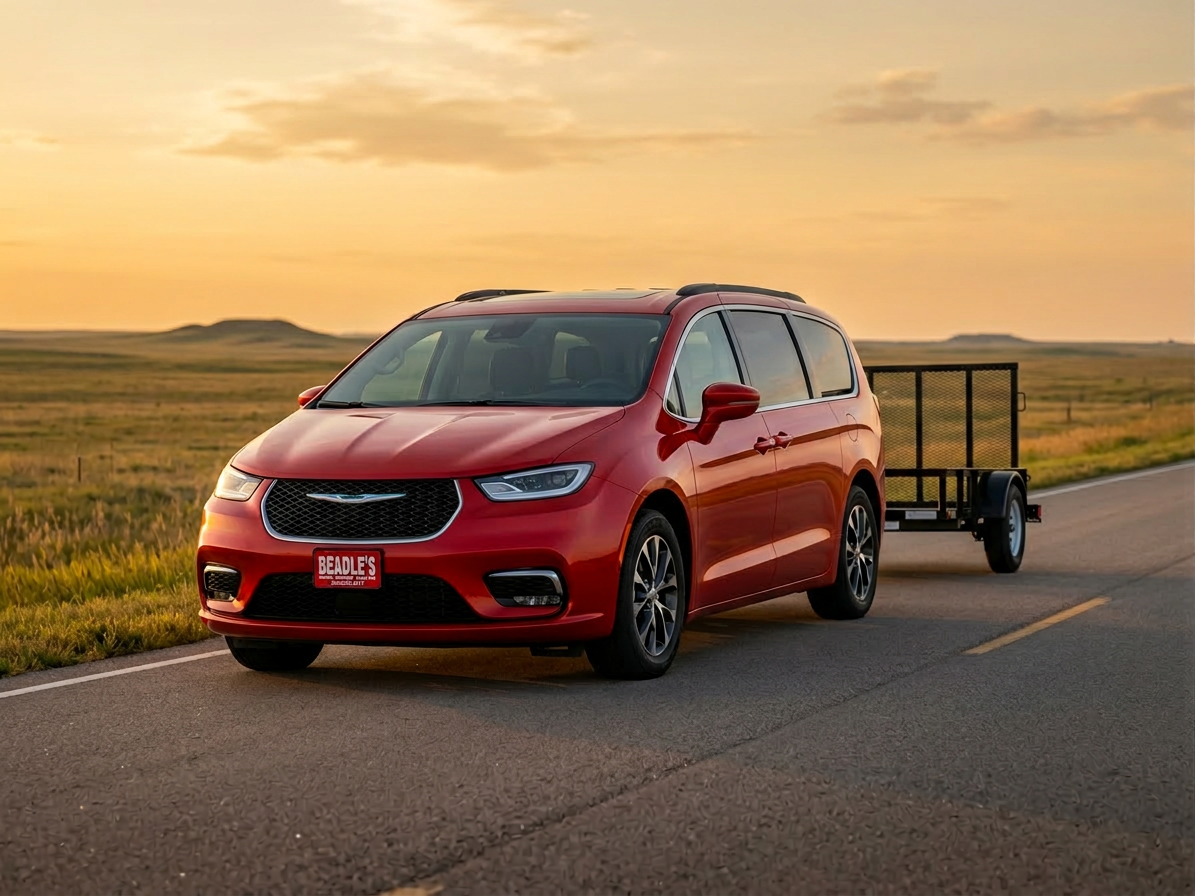
Search Pacifica Inventory Get Pre-Qualified On This Page How Much Can the Pacifica Tow? What Is the Trailer Tow Group? Which Trims Can Tow? What Can You Actually Tow? Does Towing Affect Fuel Economy? South Dakota Towing Context Key Takeaways Common Questions The most common question we hear from families considering the Chrysler Pacifica is some version of "can a minivan actually tow anything useful?" The answer, when the Pacifica is properly equipped, is yes — and it's the best towing minivan on the market. With the available Trailer Tow Group, the 2026 Pacifica is rated to tow up to 3,600 lbs, best-in-class in the minivan segment. That said, towing in the Pacifica is trim-specific, and not every configuration can do it. This guide covers exactly what the Pacifica can tow, which trims support the trailer hitch, and what "properly equipped" means in practice for South Dakota families. How much can the 2026 Chrysler Pacifica tow? With the available Trailer Tow Group installed, the 2026 Chrysler Pacifica is rated to tow up to 3,600 lbs. That figure is best-in-class for the minivan segment, and Chrysler markets it that way for good reason — no other minivan on the market matches it. To put 3,600 lbs in perspective: a small aluminum fishing boat with trailer typically weighs 1,200–1,800 lbs. A utility cargo trailer fully loaded runs 1,500–2,500 lbs. A lightweight popup camper or tent trailer lands in the 1,500–2,800 lb range. The Pacifica handles all of those comfortably with margin to spare. What it won't do is pull a heavy gooseneck livestock trailer — that's a truck conversation. But for everything a South Dakota family actually hitches up on a weekend, 3,600 lbs is more than the job requires. What does the Trailer Tow Group include? The Trailer Tow Group (option code AHT) is a factory-installed package — not an aftermarket hitch bolted on at the lot. It includes: 2-inch receiver hitch 7-pin and 4-pin wiring harness Trailer sway damping (electronic) Heavy-duty radiator (on Limited and Pinnacle trims) Trailer sway damping is worth noting. It's an active system — when the van detects trailer sway, it applies selective braking to stabilize the combination before the driver has to react. On a flat South Dakota highway with crosswinds, this is a meaningful safety feature, not marketing language. The heavy-duty radiator keeps the 3.6L V6 cool during extended towing on hot summer days — relevant if you're hauling a loaded trailer across the plains in August. It comes standard as part of the Tow Group on the Limited and Pinnacle trims. Which 2026 Pacifica trims can tow? This is the part that matters most if towing is on your checklist. The Trailer Tow Group is not available on every trim. Here's exactly where it lands: Trim Drivetrain Tow Group Available Max Tow Voyager LX FWD No — Pacifica Select FWD / AWD FWD / AWD No — Pacifica Limited FWD FWD Yes 3,600 lbs Pacifica Limited AWD AWD Yes 3,600 lbs Pacifica Pinnacle FWD FWD Yes 3,600 lbs Pacifica Pinnacle AWD AWD Yes 3,600 lbs PHEV Select FWD No — PHEV Pinnacle FWD No — If towing is a priority, you're shopping the Limited or Pinnacle — in either FWD or AWD. The Voyager, Select, and both PHEV trims don't support the Tow Group at all. Full trim comparisons, including what else you get at each level, are covered in the 2026 Pacifica overview. What can South Dakota families actually tow with the Pacifica? 3,600 lbs covers a wide range of practical towing situations. Some realistic examples with approximate weights: Aluminum fishing boat + trailer: 1,200–2,000 lbs — comfortably within range for a Missouri River weekend Utility cargo trailer (loaded): 1,500–2,800 lbs — hardware runs, landscaping, moving equipment between properties Lightweight popup camper: 1,800–2,800 lbs — opens up tent trailer camping for the whole family Enclosed cargo trailer (small): 2,000–3,200 lbs — tool and equipment hauling for contractors and hobby farmers Personal watercraft on trailer: 1,000–1,800 lbs — two jet skis with trailer fits well under the rating Where the Pacifica reaches its limit is heavier livestock trailers, larger horse trailers, and fully loaded fifth-wheels. Those conversations belong with a half-ton or three-quarter-ton truck. But the Pacifica does what a family tow vehicle actually needs to do — and it does it while seating seven and getting 22 mpg combined when not towing. Does towing affect the Pacifica's fuel economy? Yes — towing reduces fuel economy in any vehicle, and the Pacifica is no exception. The EPA-rated 22 mpg combined for the FWD gas Pacifica is a non-towing figure. When towing, expect fuel economy to drop by roughly 20–30% depending on trailer weight, road grade, speed, and headwind. On a flat South Dakota highway at 65 mph pulling a 2,000 lb utility trailer, you're likely looking at 15–18 mpg. That's still reasonable for a seven-passenger vehicle towing a loaded trailer. The 3.6L Pentastar V6's 9-speed automatic is well-matched to trailer duty — it doesn't lug or hunt for gears the way some smaller engines do under load. What should South Dakota buyers specifically know about towing with the Pacifica? A few things are worth flagging for our specific region: Crosswind management: The Pacifica's trailer sway damping is genuinely useful on US-12 and I-90 corridors where open plains crosswinds can push a trailer. This system works automatically — you don't activate it, and most of the time you won't notice it working. AWD + towing: Towing with AWD adds traction at the hitch point, which matters on gravel approaches, boat ramps, and wet or soft ground. If you're regularly pulling a trailer off-pavement, the Limited AWD or Pinnacle AWD with the Tow Group is the right configuration. Wiring harness: The 7-pin harness in the Tow Group supports trailer brake controllers, which are legally required in South Dakota when towing trailers over 3,000 lbs gross weight. The factory 4-pin is adequate for basic lighting; 7-pin handles brakes and auxiliary power. Key Takeaways The 2026 Pacifica tows up to 3,600 lbs with the Trailer Tow Group — best-in-class for minivans The Tow Group is only available on Limited and Pinnacle gas trims — not on Voyager, Select, or PHEV AWD is available on both tow-capable trims and adds traction on ramps, soft ground, and gravel approaches The Tow Group includes a factory 2-inch hitch, 7- and 4-pin wiring, trailer sway damping, and a heavy-duty radiator 3,600 lbs covers boats, utility trailers, popup campers, and small cargo trailers — the full range of practical family towing Common Questions Can the Pacifica PHEV tow? + No. The Trailer Tow Group is not available on either PHEV trim — PHEV Select or PHEV Pinnacle. If towing is a requirement, you'll need a gas Pacifica in the Limited or Pinnacle configuration. Is a 2-inch hitch standard, or do I need to add one? + The 2-inch receiver hitch is part of the Trailer Tow Group — it's factory installed on vehicles ordered with the package. There's no need to source or add an aftermarket hitch if the Tow Group is included on your vehicle. Does towing with AWD provide a meaningful advantage? + On paved highways, the difference between FWD and AWD while towing is minimal. Where AWD matters is on boat ramps, soft or wet ground, gravel approaches, and low-traction situations where the drive wheels need to push the vehicle and trailer forward under load. For buyers who regularly back a boat trailer into the water or pull a utility trailer on unpaved property, AWD is a worthwhile upgrade. Is the Pacifica's towing capacity the same in FWD and AWD? + Yes — both the FWD and AWD configurations of the Limited and Pinnacle support a 3,600 lb tow rating when the Trailer Tow Group is installed. The rated capacity is the same across both drivetrains. The Bottom Line on Pacifica Towing I've had a lot of conversations with families in central South Dakota who assumed a minivan couldn't tow anything useful. The Pacifica changes that assumption — 3,600 lbs with the factory tow package is legitimate capability for everything from a Missouri River fishing boat to a loaded utility trailer. The key is making sure you're in the right trim. The Tow Group only comes on the Limited and Pinnacle, so if towing is on your list, that's where your shopping needs to start. The full trim picture — including everything else the Limited and Pinnacle add over the base trims — is covered in the 2026 Chrysler Pacifica overview. If you're ready to see what we have in stock or want to talk through a factory order, reach out to the team in Bowdle. Search Pacifica Inventory See the Full 2026 Pacifica Overview Contact Beadle's About the Author Lexy Tabbert Director of Sales & Marketing — Beadle's Chrysler Center | Bowdle, SD Lexy Tabbert is the Director of Sales and Marketing at Beadle's Chrysler Center in Bowdle, South Dakota. She writes and oversees all vehicle content on this site with one goal: give South Dakota buyers accurate, useful information before they come in. Every spec and figure published here is verified against OEM sources before it goes live. When she's not writing, she's working with the team in Bowdle helping families find the right vehicle for the way they actually live and drive.

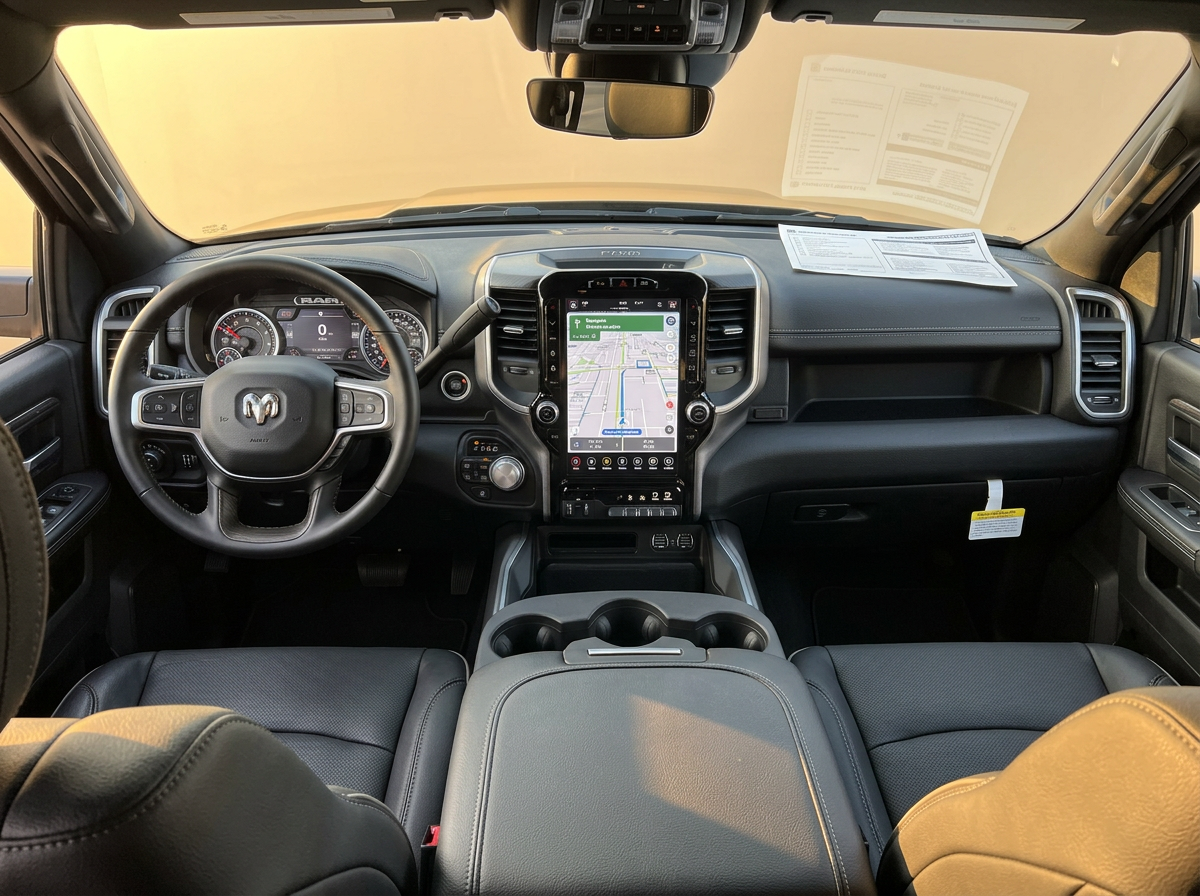
2026 Ram 1500 interior with 14.5-inch Uconnect touchscreen

2026 Ram 1500 Technology Guide

The 2026 Ram 1500 offers the largest touchscreen in the full-size truck segment at 14.5 inches, hands-on active driving assist, and the most advanced towing technology package available on a half-ton. Here is what each system does and which trims it comes on. This guide covers the 2026 Ram 1500’s technology features by category — infotainment, driver assistance, towing tech, and connectivity — so buyers can make informed decisions about which trim and package combinations deliver the features that matter for their use. Search Available Inventory Contact Beadle’s In This Guide Uconnect: Screen Sizes and Features by Trim Driver Assistance: What Does Ram Offer? Does the Ram 1500 Have Hands-Free Driving? Towing Technology Features Connectivity and Audio Technology by Trim Level Key Takeaways Common Questions What Is Uconnect and What Screen Size Does the Ram 1500 Have? Uconnect is Ram’s infotainment platform. The 2026 Ram 1500 offers two touchscreen sizes depending on trim level: 8.4-inch Uconnect: Standard on Tradesman, Express, Big Horn, and Rebel. Responsive, capable, and easy to use. Supports wireless Apple CarPlay and Android Auto. 14.5-inch Uconnect: Available on Laramie; standard on Longhorn, Limited, and Tungsten. This is the largest touchscreen available in any full-size truck. The screen is portrait-oriented and supports split-screen functionality, built-in navigation, Ram’s towing management interface, and the full Uconnect feature set. The 14.5-inch screen is a genuine differentiator. The closest competitor (GMC Sierra Denali Ultimate) has a 13.4-inch screen. The Ford F-150 Platinum offers a 12-inch screen. The size and resolution difference is immediately noticeable when you sit in a Laramie next to a Big Horn. Additionally, the Laramie and above offer an available 12-inch Digital Instrument Cluster behind the steering wheel, replacing traditional gauges with a fully configurable digital display. This becomes standard on the Rebel, Longhorn, and Limited. What Driver Assistance Features Does the 2026 Ram 1500 Offer? The 2026 Ram 1500 offers an extensive driver assistance suite. Core available features include: Adaptive Cruise Control: Maintains following distance from the vehicle ahead automatically. Available across multiple trim levels. Lane Keep Assist: Provides steering input to help keep the truck in its lane. Blind Spot Monitoring: Alerts the driver to vehicles in blind spots. Particularly useful when towing wide trailers. Rear Cross-Traffic Alert: Alerts to traffic crossing behind the truck when reversing. Automatic Emergency Braking: Applies brakes when a forward collision is detected. Park Assist: Available on higher trims for automated parallel and perpendicular parking. 360-Degree Surround View Camera: Available on higher trims; provides a bird’s-eye view of the truck’s surroundings — especially useful when backing to a trailer. Feature availability varies by trim and package. Confirm which features are included on a specific unit with Beadle’s Chrysler Center. Does the Ram 1500 Have Hands-Free Driving? This is one of the most common technology questions on the Ram 1500 right now, and the answer requires a clear distinction. The 2026 Ram 1500 offers Ram Active Driving Assist, which is a hands-on system. It combines adaptive cruise control with lane centering to reduce driver workload on highways, but it requires the driver to maintain contact with the steering wheel. It monitors steering wheel input and will alert the driver if hands are removed for an extended period. The 2026 Ram 1500 also offers Available Hands-Free Active Drive Assist on select trims — this provides eyes-on-the-road, hands-free capability on specific mapped roadways. This is Ram’s answer to GM’s Super Cruise system. For buyers comparing to the Ford F-150: Ford’s Blue Cruise system allows hands-free driving on pre-mapped highways. GM’s Super Cruise is widely considered the most refined hands-free system in the segment. Ram’s Hands-Free Active Drive Assist brings Ram into this category for 2026. Confirm availability on specific trims at time of purchase. Towing Technology: What Does the Ram 1500 Offer? The 2026 Ram 1500 offers the most available towing technology features of any half-ton truck. For South Dakota buyers who regularly tow livestock trailers, campers, or equipment, these features are worth understanding before purchase: Integrated Trailer Brake Controller: Adjusts trailer brake gain from inside the cab. Essential for trailers with electric brakes — which includes most livestock and cargo trailers. Included with Trailer-Tow Group on equipped trims. Trailer Hitch Assist: Uses the 360-degree camera system to assist with hitch-to-ball alignment. Reduces the number of trips in and out of the cab when hooking up alone. Trailer Reverse Guidance with Dynamic Gridlines: Overlays predictive lines on the backup camera display showing where the trailer will go as you steer. Makes backing a trailer significantly easier, especially in tight quarters. Digital Rearview Mirror with Tow Mode: Switches the interior mirror to a camera feed that sees past the trailer. Available on higher trims. Integrated Trailer Health Monitor: Monitors trailer light functions and tire pressure (on equipped trailers) from the cab display. Power Telescoping Trailer Tow Mirrors: Available on higher trims; extend to see past wide trailers without manual adjustment. Trailer Sway Damping: Detects and corrects trailer sway automatically using selective braking. Not all features are available on all trims. The Trailer-Tow Group package is required to unlock several of these features. Confirm package content with Beadle’s at time of purchase. Connectivity, Audio, and Additional Tech Wireless Apple CarPlay and Android Auto: Available across the lineup. No cable required — phone connects automatically when in range. Wireless Charging: Available on select trims. Ram offers Class-Exclusive available dual wireless charging pads on higher trim levels. Audio Systems: Standard: Base audio system across lower trims Available: Alpine 9-speaker system with subwoofer Available: Harman Kardon 19-speaker premium system with 900-watt amplifier Tungsten exclusive: Klipsch Reference Premiere 23-speaker system with 1,228-watt amplifier — the most powerful available audio system in the segment Front Passenger Display: Ram offers a Class-Exclusive available 10.25-inch front passenger touchscreen on higher trims. It supports personal device mirroring, HDMI connectivity, and is only viewable from the passenger seat. RamBox Connectivity: Available on select trims, the RamBox cargo management system includes power outlets in the integrated bed storage bins, allowing tools and accessories to be powered from the bed. Technology by Trim Level Feature Big Horn Rebel Laramie Limited Touchscreen Size 8.4” 8.4” 14.5” 14.5” Digital Instrument Cluster Available Standard Available Standard Wireless CarPlay/Android Auto Yes Yes Yes Yes Trailer Brake Controller w/ Trailer-Tow Group w/ Trailer-Tow Group w/ Trailer-Tow Group w/ Trailer-Tow Group Digital Rearview Mirror No Available Available Standard Hands-Free Drive Assist No No Available Available Feature availability is subject to package selection and configuration. Confirm specific features on units in inventory with Beadle’s Chrysler Center. Key Takeaways The 14.5-inch Uconnect touchscreen is the largest in the full-size truck segment — available on Laramie, standard on Longhorn and Limited Wireless Apple CarPlay and Android Auto are available across the lineup The Ram 1500 offers hands-on Active Drive Assist standard, and available Hands-Free Active Drive Assist on higher trims Hands-Free Active Drive Assist is eyes-on, hands-free on specific roadways — confirm availability on specific trim at purchase The integrated trailer brake controller requires the Trailer-Tow Group package — essential for trailers with electric brakes Trailer Reverse Guidance, Digital Rearview Mirror with Tow Mode, and Trailer Hitch Assist are the most practically useful towing tech features for SD buyers Ram offers Class-Exclusive dual wireless charging pads and a Class-Exclusive 10.25-inch front passenger display on higher trims Frequently Asked Questions What is Uconnect on the Ram 1500? Uconnect is Ram’s infotainment platform, available in 8.4-inch and 14.5-inch touchscreen sizes on the 2026 Ram 1500. It supports wireless Apple CarPlay, Android Auto, built-in navigation, Ram’s towing management interface, and the full suite of available connected features. The 14.5-inch version is the largest touchscreen available in any full-size truck and is available starting at the Laramie trim. Does the Ram 1500 have hands-free driving? The 2026 Ram 1500 offers Available Hands-Free Active Drive Assist on select higher trims. This system provides eyes-on-the-road, hands-free capability on specific mapped roadways. The standard Ram Active Driving Assist system is hands-on and requires the driver to maintain steering wheel contact. Confirm Hands-Free availability on specific trims and packages with Beadle’s Chrysler Center at time of purchase. Which trim has the big screen in the Ram 1500? The 14.5-inch Uconnect touchscreen is available starting at the Laramie trim and is standard on the Longhorn and Limited. Trims below Laramie — Tradesman, Express, Big Horn, and Rebel — include the 8.4-inch screen. The 14.5-inch screen is the largest available touchscreen in the full-size truck segment, larger than the closest competitor by over an inch. Does the Ram 1500 have a trailer brake controller? Yes. An integrated trailer brake controller is available on the 2026 Ram 1500 with the Trailer-Tow Group package. It allows the driver to adjust trailer brake gain from inside the cab. For trailers equipped with electric brakes — including most livestock trailers, cargo trailers, and larger recreational trailers — an integrated brake controller is an important feature to confirm on your specific build. How does Ram’s driver assist compare to Ford’s Blue Cruise? Ford’s Blue Cruise allows hands-free driving on pre-mapped highways and is a well-established system in the F-150. GM’s Super Cruise is widely considered the most refined hands-free system in the segment. Ram’s Available Hands-Free Active Drive Assist brings Ram into this category for 2026. All three systems require eyes-on-the-road attention and are designed for specific roadway types. For buyers who specifically want hands-free highway driving, confirm Hands-Free Active Drive Assist availability on your preferred Ram 1500 trim before purchase. What towing technology does the Ram 1500 have? The 2026 Ram 1500 offers the most available towing technology features of any half-ton truck. Key features include: integrated trailer brake controller (w/ Trailer-Tow Group), Trailer Reverse Guidance with dynamic gridlines, Trailer Hitch Assist (camera-guided hitch alignment), Digital Rearview Mirror with Tow Mode, Integrated Trailer Health Monitor, Power Telescoping Trailer Tow Mirrors, and Trailer Sway Damping. Feature availability varies by trim and package. Confirm content with Beadle’s at time of purchase. My Take on the Ram 1500’s Technology for South Dakota Buyers The technology story on the 2026 Ram 1500 is genuinely strong. The towing tech package is the one that gets my attention most for buyers in this area. The Trailer Reverse Guidance with dynamic gridlines is the feature I hear about most from buyers who have used it — backing a trailer alone is a fundamentally different experience when the camera shows you exactly where the trailer is going before you commit to the turn. The screen size difference between the 8.4-inch on the Big Horn and the 14.5-inch on the Laramie is one of those things that sounds trivial until you sit in both trucks back to back. For buyers who spend a lot of time in the cab, it makes a real daily difference. It is one of the reasons I often encourage buyers who are on the fence between Big Horn and Laramie to drive both before deciding. The hands-free driving capability is worth watching closely. Confirm with Beadle’s which specific trim and package combinations include it — availability details can shift through the model year. Technology details are best understood in the context of the full 2026 Ram 1500 overview, which covers all trim and feature options together. Current inventory is on the Ram 1500 lineup page at Beadle’s. About the Author Lexy Tabbert provides research-driven truck configuration guidance for buyers across north-central South Dakota. Beadle’s Chrysler Center has served the Bowdle, Mobridge, Ipswich, and Gettysburg area for decades, specializing in Ram trucks for farm, ranch, and rural use. Feature availability varies by trim, package, and configuration. Technology features and availability subject to change. Confirm all features on specific units with Beadle’s Chrysler Center at time of purchase. © Beadle’s Chrysler Center, Bowdle, SD.

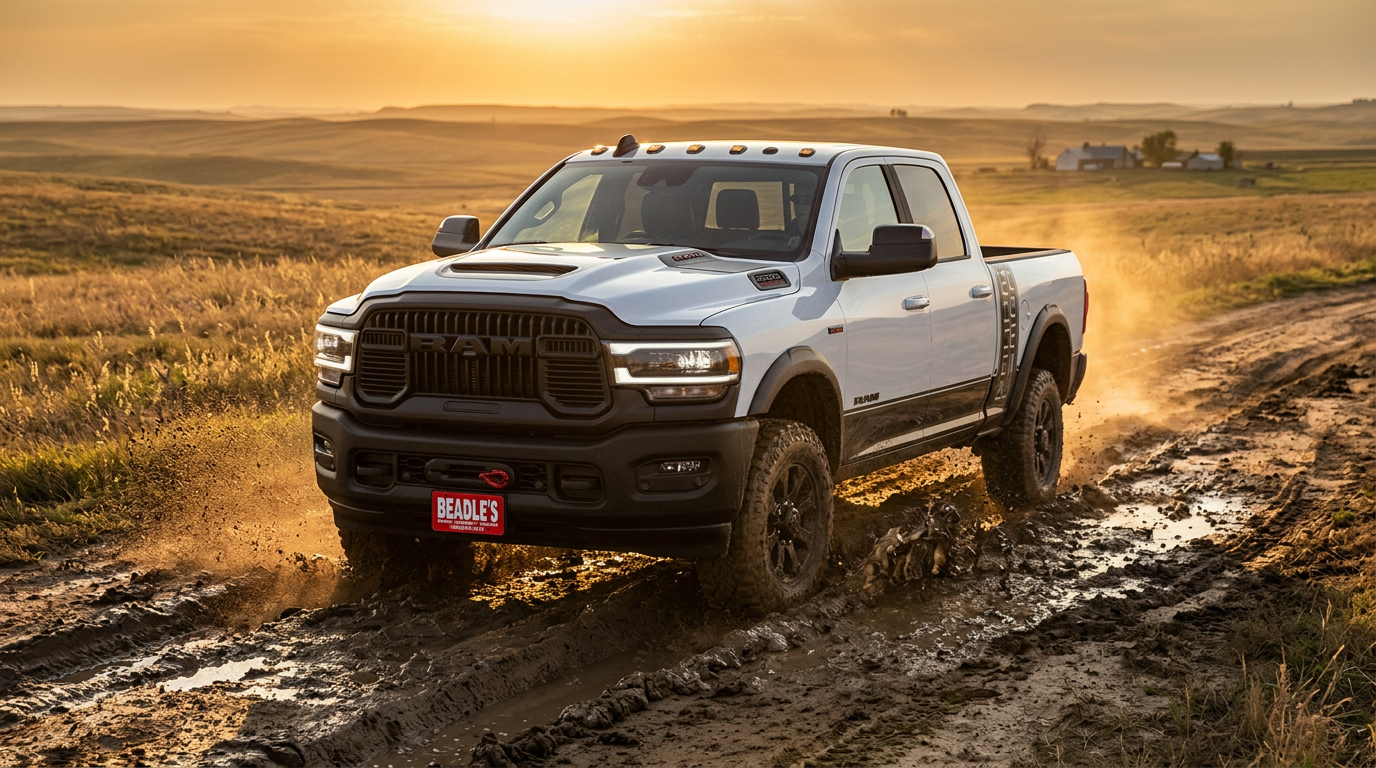
2026 Ram 1500 Rebel on a dirt trail in South Dakota

2026 Ram 1500 Off-Road & Rebel

The Ram 1500 Rebel comes with a factory 2-inch lift, Bilstein shocks, skid plates, and all-terrain tires. For buyers in rural South Dakota, the question is whether those upgrades are worth the price premium — or whether they deliver real value for how you actually use the truck. This guide covers what the Rebel’s factory off-road equipment actually does on the roads and terrain around Bowdle, Mobridge, Ipswich, and the rest of north-central South Dakota. Not what it looks like in a commercial — what it does in daily use. Search Available Inventory Contact Beadle’s In This Guide What Does the Ram 1500 Rebel Actually Include? How Does the Rebel Handle South Dakota Gravel Roads? What Do the Factory Lift and Bilstein Shocks Actually Do? Skid Plates: When Do They Matter? All-Terrain Tires: Worth It for SD Buyers? Rebel vs. Big Horn: Is the Premium Worth It? Does the Rebel Tow as Well as Other Ram 1500 Trims? Is the Rebel Good in South Dakota Winters? Key Takeaways Common Questions What Does the Ram 1500 Rebel Actually Include? The Rebel is Ram’s factory off-road trim for the 1500. It is not a cosmetic package — the hardware changes are real. Standard Rebel equipment includes: Factory 2-inch suspension lift over the standard Ram 1500 ride height Bilstein performance off-road shocks, front and rear Factory skid plates protecting the transfer case and fuel tank 33-inch all-terrain tires (confirm specific tire on window sticker) Rebel-specific front and rear fascias with more clearance than standard trims Blacked-out exterior trim, Rebel badging, and off-road appearance package Available Rebel HO (RHO) with the 540 hp Hurricane HO engine The Rebel is available with the Hurricane SO I6, Hurricane HO (RHO package), or HEMI V8 depending on configuration. It is available in Crew Cab with 5’7” or 6’4” bed. How Does the Rebel Handle South Dakota Gravel Roads? This is the question most relevant to buyers around Bowdle, Ipswich, Gettysburg, and the surrounding area. Gravel roads in north-central South Dakota range from well-maintained county roads to washboard township roads to two-track field access. The Rebel is built for exactly this environment. The factory lift provides additional clearance that matters on rocky section-line roads and approaches to grain bins and machine sheds. The Bilstein shocks absorb the jarring, rhythmic impacts of washboard gravel more effectively than the standard Ram 1500 suspension — the truck floats more and pounds less. Buyers who spend 20–40 minutes daily on gravel notice this immediately. The all-terrain tires provide more confident traction on loose gravel, especially in wet conditions. South Dakota gravel roads after a rain event can be slick in ways that catch highway-tire trucks off guard. The AT tires are a meaningful upgrade in those conditions. What Do the Factory Lift and Bilstein Shocks Actually Do? The 2-inch suspension lift raises the truck’s body relative to the axles, increasing ground clearance under the frame, skid plates, and running boards. This matters for field access roads with deep center crowns, approaches with sharp lip angles, and situations where the standard Ram 1500 would drag its undercarriage. Bilstein is a performance shock brand used on purpose-built off-road vehicles. The Bilstein monotube shocks on the Rebel are stiffer and more responsive than the standard Ram 1500 dampers, controlling body roll better during directional changes at speed on uneven surfaces. On pavement, the ride is slightly firmer than the Big Horn or Laramie — noticeable but not uncomfortable. Off pavement, the Bilstein shocks make the truck feel significantly more composed. Buyers who are considering adding a suspension lift aftermarket should know that a quality lift kit with comparable shocks typically costs $2,500–$5,000 installed. The Rebel includes this from the factory at a price premium that is often comparable to or less than the aftermarket equivalent. Skid Plates: When Do They Matter? The Rebel’s factory skid plates cover the transfer case and fuel tank — the two most vulnerable components when a truck goes over rocks, stumps, or sharp terrain edges. On maintained gravel roads, skid plates are rarely needed. On approaches to pivots, fence lines, or waterways where rough ground is the norm, they provide real protection. Most buyers in this region have at some point driven over something they did not see coming. Skid plates are the component you do not notice until the moment you need them. For buyers who regularly access rough ground as part of their operation, the Rebel’s factory skid plate coverage is worth having. All-Terrain Tires: Worth It for South Dakota Buyers? All-terrain tires are a trade-off. They provide better traction in loose gravel, mud, wet grass, and light snow compared to standard highway tires. They are louder at highway speeds, and they typically show slightly lower fuel economy than the equivalent highway tire. For buyers who drive primarily on the interstate at 80 mph, the noise and economy trade-off may not be worth it. For buyers who spend significant time on gravel and field access roads, the AT tires are a genuine capability upgrade. An important note for SD winter buyers: all-terrain tires are not winter tires. For serious SD winter driving, dedicated winter tires are the correct tool. The Rebel’s AT tires perform better than standard all-season tires in light snow and packed surfaces, but they are not optimized for the ice conditions that develop on north-central SD roads in January and February. Is the Rebel Worth It Compared to the Big Horn? The Rebel runs approximately $10,000–$15,000 more than a comparable Big Horn with similar drivetrain and options. Here is how to think about whether that premium is justified: The Rebel is worth the premium if: You drive gravel roads daily as part of your operation You regularly access rough field approaches or unimproved roads You would otherwise spend $3,000–$5,000 on an aftermarket lift and shocks The AT tire traction benefit matters for your specific use The Rebel is not worth the premium if: You drive primarily on paved roads and highway The off-road capability will rarely be used You prefer a softer highway ride over off-road composure Budget is a priority and the Big Horn covers your daily needs For buyers who are between the Rebel and Laramie, the decision comes down to use: if rough terrain is regular, Rebel. If long-distance comfort and interior quality are the priority, Laramie. The trim comparison is covered in full in the 2026 Ram 1500 trim guide. Does the Rebel Tow as Well as Other Ram 1500 Trims? Yes, with the right engine and package. The Rebel with the Hurricane SO I6, Trailer-Tow Group, and 3.92 axle ratio tows competitively within the Ram 1500 lineup. The suspension lift does not meaningfully reduce towing capacity when the truck is properly configured. The all-terrain tires do not affect the tow rating. The Rebel HO (RHO package with the 540 hp Hurricane HO) has a lower tow rating — up to 8,360 lbs in that configuration per the OEM towing guide. Buyers who want maximum towing should spec the Rebel with the SO Hurricane, not the RHO. For a full towing breakdown by configuration, see the 2026 Ram 1500 towing guide. Is the Ram 1500 Rebel Good in South Dakota Winters? The Rebel’s 4x4 system, increased ground clearance, and all-terrain tires make it a capable winter truck within its design intent. The additional clearance helps in deeper snow where standard trucks scrape bottom. The AT tires provide better traction than standard all-seasons on packed snow and light ice. For serious SD winter conditions — hard ice, heavy drifting, prolonged below-zero temperatures — the limiting factor is always the tire, regardless of the truck. The Rebel’s factory AT tires are a step up from highway tires in winter, but dedicated winter tires mounted on a set of steel wheels remain the most effective winter preparation for any truck in this region. Key Takeaways The Rebel includes a factory 2-inch lift, Bilstein shocks, skid plates, and all-terrain tires — these are functional, not cosmetic upgrades For buyers who drive gravel roads daily, the Rebel’s suspension is noticeably better than standard Ram 1500 trims on rough surfaces The Bilstein shock upgrade alone often costs $2,000–$3,000 aftermarket; the Rebel includes it from the factory The Rebel with Hurricane SO tows competitively; the Rebel HO (RHO) carries a lower tow rating of approximately 8,360 lbs AT tires are not winter tires — for serious SD ice conditions, dedicated winter tires are the correct tool The Rebel is the right choice for gravel-road and rough-terrain buyers; the Laramie is the right choice for pavement and highway comfort The Rebel is not a rock crawler — it is an excellent rural South Dakota daily driver with real off-road capability Frequently Asked Questions Is the Ram 1500 Rebel good for gravel roads in South Dakota? Yes. The Rebel’s factory 2-inch lift, Bilstein shocks, and all-terrain tires are well-matched to the gravel roads, rough field approaches, and mixed-surface driving common in north-central South Dakota. The Bilstein shocks absorb washboard gravel better than the standard Ram 1500 dampers, and the AT tires provide more confident traction on loose and wet gravel. For buyers who spend significant time on gravel as part of their daily routine, the Rebel delivers real functional value. What is the difference between the Rebel and the Big Horn? The Big Horn is the comfort-value trim with cloth seating, an 8.4-inch screen, and standard Ram 1500 suspension. The Rebel adds a 2-inch factory lift, Bilstein performance shocks, skid plates, all-terrain tires, and Rebel-specific exterior trim. The Rebel runs approximately $10,000–$15,000 more than a comparable Big Horn. The premium is justified for buyers who regularly use the off-road capability; it is not for buyers who drive primarily on pavement. Can the Ram 1500 Rebel tow a livestock trailer? Yes. The Rebel with the Hurricane SO I6, Trailer-Tow Group, and 3.92 axle ratio tows competitively within the Ram 1500 lineup. The suspension lift and AT tires do not meaningfully reduce towing capacity in standard Rebel configurations. The Rebel HO (RHO) carries a lower tow rating of approximately 8,360 lbs. Confirm your specific build’s tow rating on the driver’s door jamb sticker. Is the Ram 1500 Rebel good in snow? The Rebel’s 4x4 system, additional ground clearance, and all-terrain tires make it a capable truck in light-to-moderate SD winter conditions. For hard ice and heavy winter driving, dedicated winter tires mounted on a separate set of wheels remain the most effective upgrade for any truck in this region. The Rebel’s AT tires are a step up from standard all-seasons in winter but are not optimized for ice. What is the Rebel HO (RHO)? The Rebel HO is an optional package that adds the 540 hp High Output Hurricane I6 to the Rebel trim. It carries a lower tow rating than the standard Rebel with the SO Hurricane — approximately 8,360 lbs in its configuration. It is the performance-focused Rebel option for buyers who want maximum horsepower. For buyers who need maximum towing, the SO Hurricane is the stronger configuration. My Take on the Rebel for South Dakota Buyers I recommend the Rebel to buyers who are honest with themselves about how they use their truck. If you drive a section-line gravel road every day, access pivot corners and field approaches regularly, and have ever bottomed out a standard truck on rough ground, the Rebel’s factory package addresses all of those situations. The Bilstein shocks alone are worth a significant portion of the premium — the daily driving difference on rough gravel is real and immediate. Where I steer buyers away from the Rebel is when the off-road equipment is aspirational rather than practical. If your route is pavement to pavement and the gravel sections are incidental, the Laramie gives you a better interior experience for similar money. The Rebel’s AT tires also add road noise that the Laramie’s highway tires do not — something that matters on two-hour highway drives to Bismarck or Sioux Falls. The Rebel sits in a unique position in this market. Most buyers who need what it offers are in rural areas where the capability gets genuinely used. If that describes your operation, it is worth a serious look. The full trim and model context is in the 2026 Ram 1500 overview, and current Rebel inventory at Beadle’s is on the Ram 1500 lineup page. About the Author Lexy Tabbert provides research-driven truck configuration guidance for buyers across north-central South Dakota. Beadle’s Chrysler Center has served the Bowdle, Mobridge, Ipswich, and Gettysburg area for decades, specializing in Ram trucks for farm, ranch, and rural use. Feature availability and pricing estimates are subject to change. Towing figures sourced from the official 2026 Ram 1500 Payload & Towing Guide. Always confirm specific build ratings on the driver’s door jamb sticker. © Beadle’s Chrysler Center, Bowdle, SD.

2026 Ram 1500 5.7L HEMI V8 engine bay

2026 Ram 1500 Engine Guide

The 2026 Ram 1500 offers four engine options including the returning HEMI V8. The right choice depends on how you use the truck — and more horsepower does not always mean more towing capacity. This guide compares all four 2026 Ram 1500 engines side by side — output, towing impact, fuel economy, and the real-world difference for South Dakota buyers who use their trucks for work, towing, and daily driving. Search Available Inventory Contact Beadle’s In This Guide Engine Lineup Overview 3.6L Pentastar V6 with eTorque 3.0L Hurricane Standard Output I6 3.0L Hurricane High Output I6 5.7L HEMI V8 with eTorque How Engine Choice Affects Towing Which Engine Is Right for You? Key Takeaways Common Questions 2026 Ram 1500 Engine Lineup at a Glance Engine HP Torque Max Tow Max Payload Hwy MPG (4x2) 3.6L V6 eTorque 305 269 lb-ft 8,130 lbs 2,360 lbs 25 mpg 3.0L Hurricane SO 420 469 lb-ft 11,610 lbs 1,930 lbs 25 mpg 3.0L Hurricane HO 540 521 lb-ft 10,000 lbs 1,490 lbs 21 mpg 5.7L HEMI V8 eTorque 395 410 lb-ft 11,320 lbs 1,650 lbs Confirm at purchase 3.6L Pentastar V6 with eTorque: Is It Enough? The 3.6L Pentastar V6 is the entry engine on the Tradesman and produces 305 hp with up to 90 lb-ft of additional torque from the eTorque belt starter-generator. It achieves the best fuel economy in the lineup at up to 20 mpg city / 25 mpg highway in 4x2, and the highest payload capacity at 2,360 lbs. It also has the lowest tow rating at 8,130 lbs maximum. For buyers who rarely tow, prioritize fuel economy, or are purchasing for fleet use, the V6 is adequate. For buyers who regularly pull trailers above 6,000–7,000 lbs, the V6 will feel strained on hills and at highway speeds. The Hurricane SO is a meaningfully stronger choice for anyone who regularly tows. Best for: Fleet buyers, light-duty use, buyers who rarely tow anything heavy. 3.0L Hurricane Standard Output I6: The One Most Buyers Should Choose The standard-output Hurricane twin-turbo inline-six is the engine that makes the most sense for the majority of Ram 1500 buyers in north-central South Dakota. Here is why: it produces 420 hp and 469 lb-ft of torque, achieves 25 mpg highway in 4x2 — identical to the V6 — and delivers the highest tow rating in the lineup at up to 11,610 lbs. It is smoother and quieter than the HEMI at highway speeds, and the twin-turbo setup delivers strong torque low in the rev range where towing and hauling actually happen. The Hurricane SO is not a familiar engine name to buyers who have been buying V8 trucks for decades. The most common concern is reliability. Ram’s twin-turbo I6 platform is new to this segment, and some buyers are understandably cautious. The 10-year/100,000-mile powertrain warranty on select models addresses that concern directly — Ram is standing behind this engine more aggressively than any competitor. Best for: Buyers who prioritize maximum towing, daily driving efficiency, and refinement. The right engine for most SD buyers. 3.0L Hurricane High Output I6: More Power, Less Towing The high-output Hurricane produces 540 hp and 521 lb-ft — the most powerful engine available in any half-ton truck. It is the engine in the Ram 1500 Tungsten and available in the Limited and Rebel HO (RHO). It is genuinely fast for a full-size truck. The critical thing to understand: the HO Hurricane tows less than the standard-output version. The HO is rated up to 10,000 lbs maximum towing, compared to 11,610 lbs for the SO. This is counterintuitive but consistent across the spec sheet. The HO’s configuration requirements limit its tow rating. It also delivers lower payload at 1,490 lbs vs. 1,930 lbs for the SO. The HO also returns lower fuel economy at 15/21 mpg city/highway in 4x4. Best for: Performance-focused buyers in Limited and Tungsten trims who prioritize power and acceleration over maximum towing capacity. Skip it if: Maximum towing is the priority. The SO Hurricane is the better towing engine. 5.7L HEMI V8 with eTorque: Back for 2026 The 5.7L HEMI V8 with eTorque returns for 2026 after being dropped from the 2025 lineup. Ram heard the pushback from V8 loyalists clearly. The HEMI produces 395 hp and 410 lb-ft of torque, with eTorque mild-hybrid assist providing smoother stop-start operation and up to 90 lb-ft of initial torque boost. The HEMI tows up to 11,320 lbs in its highest-rated configuration — close to the SO Hurricane’s 11,610 lb maximum. For buyers who want a V8 and still need serious towing capability, the HEMI is a legitimate option. The HEMI delivers the V8 exhaust note, the familiar power delivery, and the character that turbocharged engines do not replicate. The HEMI’s fuel economy is lower than the Hurricane engines. Exact figures were not published in the official towing guide at time of writing — confirm with Beadle’s Chrysler Center at time of purchase. Fuel Saver technology (cylinder deactivation) helps at highway speeds. Best for: Buyers who prefer V8 character and sound, are comfortable with V8 fuel economy, and still want competitive towing capacity. How Does Engine Choice Affect Towing in Real-World South Dakota Use? For buyers hauling livestock trailers, bumper-pull campers, or equipment in the 5,000–10,000 lb range, the Hurricane SO and HEMI both handle the load comfortably. The difference becomes noticeable on grades — the Hurricane SO’s 469 lb-ft of torque at lower RPMs means less downshifting and more controlled descents with a loaded trailer on Highway 12 or the long grades heading toward the Missouri River breaks. The V6 will handle lighter towing under 6,000 lbs without drama. Above that, especially on grades or into a headwind (which is a real factor on the open plains around Bowdle and Mobridge), the V6 begins to feel labored. The Hurricane SO is the more appropriate engine for anyone who regularly moves 7,000–11,000 lb trailers. For a full towing configuration breakdown including axle ratios and the “properly equipped” explanation, see the 2026 Ram 1500 towing guide. Which Engine Should You Choose? Choose the Hurricane SO if: You regularly tow trailers above 7,000 lbs, want maximum towing capacity, care about highway fuel economy, or want the smoothest daily driving experience. This is the right engine for most SD buyers. Choose the HEMI V8 if: You want V8 character, sound, and power delivery. You still need competitive towing capability but are comfortable with V8 fuel economy. You are buying a Tradesman, Big Horn, Laramie, or Rebel. Choose the Hurricane HO if: You are buying a Limited or Tungsten trim, performance is the priority, and maximum towing is not your primary use case. Do not choose the HO if your main goal is towing — the SO tows more. Choose the V6 if: You are a fleet buyer, rarely tow above 6,000 lbs, or want to minimize operating costs. Best payload capacity in the lineup at 2,360 lbs. Key Takeaways Four engines for 2026: 3.6L V6, Hurricane SO (420 hp), Hurricane HO (540 hp), and returning 5.7L HEMI V8 (395 hp) The Hurricane SO achieves the highest tow rating at 11,610 lbs and matches the V6 on highway fuel economy at 25 mpg (4x2) The Hurricane HO produces the most power (540 hp) but tows less than the SO — rated up to 10,000 lbs The HEMI V8 returns for 2026 with eTorque and tows up to 11,320 lbs — close to the SO’s maximum The V6 has the highest payload (2,360 lbs) and best fuel economy but the lowest tow rating (8,130 lbs) For most South Dakota buyers who tow regularly, the Hurricane SO is the right engine choice Does Ram still have a V8? Yes — the HEMI is back for 2026 after being absent from the 2025 lineup Frequently Asked Questions Does the 2026 Ram 1500 still have a V8? Yes. The 5.7L HEMI V8 with eTorque returned for 2026 after being dropped for the 2025 model year. Ram introduced the Hurricane twin-turbo inline-six for 2025, removed the HEMI, and faced significant pushback from V8 buyers. The HEMI is back for 2026 with 395 hp, 410 lb-ft of torque, and eTorque mild-hybrid assist. It is available across most trim levels. Is the Hurricane engine reliable? The 3.0L Hurricane I6 is a relatively new engine in Ram’s lineup, debuting with the 2025 Ram 1500. It is a twin-turbo inline-six designed specifically for this application. Ram’s 10-year/100,000-mile limited powertrain warranty on select 2026 models is the strongest signal of manufacturer confidence in the platform. For buyers concerned about reliability on a newer engine, that warranty provides meaningful coverage. The HEMI V8 has a longer track record if that is a priority. Which Ram 1500 engine is best for towing in South Dakota? The Standard Output Hurricane I6 achieves the highest tow rating at up to 11,610 lbs and delivers 469 lb-ft of torque low in the rev range — where towing actually happens. It also matches the V6 on highway fuel economy. For buyers hauling livestock trailers, campers, or equipment on the highways and gravel roads around Bowdle, Mobridge, and Ipswich, the SO Hurricane is the strongest all-around choice. Why does the high-output Hurricane tow less than the standard output? The HO Hurricane’s configuration requirements — the trims it is paired with and its specific tuning — result in a lower maximum GCWR than the SO Hurricane. The HO is optimized for performance (540 hp) rather than maximum towing. The SO is optimized for towing efficiency. It is counterintuitive but confirmed by the official Ram towing spec sheet. If maximum tow rating is the goal, choose the SO. What is the difference between Hurricane SO and Hurricane HO? Both are 3.0L twin-turbo inline-six engines. The Standard Output (SO) produces 420 hp and 469 lb-ft of torque, tows up to 11,610 lbs, and achieves 25 mpg highway. The High Output (HO) produces 540 hp and 521 lb-ft of torque, tows up to 10,000 lbs, and achieves 21 mpg highway. The SO is the better choice for towing. The HO is the better choice for performance-focused buyers in Limited and Tungsten trims. My Take on the 2026 Ram 1500 Engine Lineup The engine story for 2026 is genuinely interesting. Ram built the Hurricane SO to be the best towing engine in the half-ton segment and then built the HO to be the most powerful. The fact that those are two different engines — and that the most powerful one tows less — is something buyers need to understand before they spec their truck. For the buyers I talk to most often around Bowdle, Mobridge, and Ipswich, the Hurricane SO is the right call. It tows what they need, it gets excellent highway mileage on the long drives across central South Dakota, and it is covered by the best powertrain warranty in the segment. Buyers who have been driving HEMIs for 15 years sometimes push back on the inline-six — and that’s where the returning HEMI becomes a legitimate conversation. If V8 character matters to you, Ram has it back in stock for 2026. Engine availability and configuration impact on towing is explored further in the 2026 Ram 1500 towing guide. For the full model year overview, see the 2026 Ram 1500 overview. Current inventory at Beadle’s is on the Ram 1500 lineup page. About the Author Lexy Tabbert provides research-driven truck configuration guidance for buyers across north-central South Dakota. Beadle’s Chrysler Center has served the Bowdle, Mobridge, Ipswich, and Gettysburg area for decades, specializing in Ram trucks for farm, ranch, and rural use. Engine output and towing figures sourced from the official 2026 Ram 1500 Payload & Towing Guide published by Ram Trucks. Figures are SAE J2807 compliant where applicable. HEMI fuel economy figures not published in official guide at time of writing — confirm with dealer. Specifications subject to change. © Beadle’s Chrysler Center, Bowdle, SD.

2026 Ram 1500 Tradesman at a rural job site in South Dakota

2026 Ram 1500 Trims & Packages

The 2026 Ram 1500 spans seven trim levels from the work-focused Tradesman to the premium Limited. Here is what each trim actually includes, what it costs to step up, and which buyers each one is built for. Most Ram 1500 buyers in north-central South Dakota land on the Big Horn or Laramie. But the right answer depends on how you use the truck — and which packages are worth adding at each level. This guide breaks it down trim by trim without manufacturer fluff. Search Available Inventory Contact Beadle’s In This Guide Tradesman Express (New for 2026) Big Horn / Lone Star Rebel Laramie Limited & Longhorn Full Trim Comparison Table Which Packages Are Worth Adding? Key Takeaways Common Questions Tradesman: The Work Truck The Tradesman is the entry-level Ram 1500 and the right choice for buyers who need a truck to work, not impress. It is available with the 3.6L V6 or the Hurricane SO I6, in Quad Cab or Crew Cab, with 4x2 or 4x4. Styling is deliberately simple — vinyl flooring, rubber floor mats, minimal chrome, no unnecessary extras. Worth it if: You are buying for a fleet, a farm operation, or any situation where the truck is a tool and appearance is not a factor. Skip it if: You spend any significant time in the cab on long drives. The Tradesman interior gets spartan fast on two-hour hauls across central SD. Estimated MSRP: Starting around $38,000–$48,000 depending on engine and drivetrain. Express: New for 2026 The Express is a brand new trim for 2026, sitting between the Tradesman and Big Horn in price but with a distinctly blacked-out attitude. It features 20-inch black aluminum wheels, a sport hood, body-color bumpers, and a Black Express appearance option. It is the value-entry trim for buyers who want presence without paying Laramie money. Worth it if: You want a sharp-looking truck at a work-truck price point. The blacked-out styling is factory, not aftermarket. Skip it if: Interior quality matters. The Express carries a similar interior to the Tradesman — the upgrade is on the outside. Big Horn / Lone Star: The Volume Seller The Big Horn (marketed as Lone Star in Texas) is the most popular Ram 1500 trim in the country and for good reason. It adds meaningful comfort upgrades over the Tradesman — cloth seating with more bolstering, an 8.4-inch Uconnect touchscreen, keyless entry, power-adjustable driver’s seat, and chrome exterior accents — while staying under $60,000 in most configurations. Worth it if: You want a daily driver that is comfortable for passengers on longer trips. The Big Horn is the sweet spot for buyers who want capability and comfort without luxury pricing. Skip it if: You regularly haul passengers on longer drives and want a truly elevated interior. The Laramie’s leather and 14.5-inch screen make a real difference for daily comfort. Estimated MSRP: Around $50,000–$58,000 depending on packages and drivetrain. Rebel: Built for Rural South Dakota The Rebel is the factory off-road trim of the Ram 1500 lineup. It comes with a factory 2-inch suspension lift, Bilstein performance shocks, skid plates, all-terrain tires, and Rebel-specific badging. For buyers who regularly drive on gravel roads, unimproved field access, or ranch approaches around Bowdle and the surrounding area, the Rebel delivers real capability — not just cosmetic attitude. Worth it if: Gravel roads and rough terrain are part of your daily routine. The Bilstein shocks and lifted suspension make a genuine difference on the surfaces SD buyers encounter regularly. Skip it if: You drive primarily on paved roads and highway. The all-terrain tires and lifted suspension add capability you may not use, and the ride is slightly firmer than the Big Horn or Laramie on pavement. Estimated MSRP: Around $62,000–$68,000 depending on options. For a full breakdown of what the Rebel does and does not do for South Dakota buyers, see the Ram 1500 Rebel off-road guide. Laramie: The Upgrade Most Buyers Don’t Regret The Laramie is where the Ram 1500’s interior genuinely separates itself from the competition. It adds leather-trimmed seating, the 14.5-inch Uconnect touchscreen (largest in the segment), a 12-inch digital instrument cluster, ventilated front seats, and a premium audio option. For buyers who spend significant time in the cab — long daily commutes, extended ranch work, regular highway trips to Aberdeen or Bismarck — the Laramie interior is noticeably better. Worth it if: You are in the truck for more than an hour a day. The seat quality and screen size are meaningful upgrades for frequent drivers. Skip it if: Budget is tight and the Big Horn covers your daily needs. The Laramie runs $8,000–$12,000 more than a comparable Big Horn. Estimated MSRP: Around $63,000–$72,000 depending on options. Limited & Longhorn: Luxury Truck Territory The Limited and Longhorn trims sit at the top of the Ram 1500 lineup and enter genuine luxury truck territory. Both add the 4-Corner Active Level Air Suspension System, a digital rearview mirror, available Harman Kardon or Klipsch audio, 22-inch wheels, reclining rear seats (Crew Cab), and in-floor rear storage (Crew Cab). The Limited leans toward modern luxury; the Longhorn adds western-themed interior accents and unique badging. Worth it if: You want the full Ram 1500 experience and are comparing against a loaded F-150 King Ranch or GMC Sierra Denali. Skip it if: You are looking for capability value. The Limited’s HO Hurricane engine actually has a lower tow rating than the SO Hurricane in the Laramie. More luxury does not mean more towing. Estimated MSRP: $75,000–$85,000+. Full Trim Comparison Table Feature Tradesman Big Horn Rebel Laramie Limited Touchscreen 8.4” 8.4” 8.4” 14.5” 14.5” Leather Seating No No No Yes Yes Factory Lift / Skid Plates No No Yes No No Air Suspension No No No Available Standard HO Hurricane Available No No Yes (RHO) No Yes 10yr Powertrain Warranty Confirm at purchase Confirm at purchase Confirm at purchase Confirm at purchase Confirm at purchase Which Packages Are Worth Adding? Trailer-Tow Group: Worth adding on any trim if you tow. Required to unlock the 3.92 axle ratio and maximum tow ratings. This is not optional for buyers who regularly haul trailers. Level 1 / Level 2 Equipment Groups: These bundled packages add features at a lower cost than ordering them individually. Confirm what is included at each level for your specific trim — content varies by trim and model year. RamBox Cargo Management: Available on select trims, adds lockable, drainable, illuminated storage bins integrated into the bed rails. Worth it for buyers who regularly store tools or gear in the bed. Night Edition / Black Appearance Package: Cosmetic only — adds blacked-out exterior trim. Worth it if you prefer the look; skip it if you are indifferent to appearance. For questions about specific package availability on trucks in inventory, the team at Beadle’s Chrysler Center can confirm what is on each unit. Key Takeaways Seven trim levels for 2026: Tradesman, Express (new), Big Horn, Rebel, Laramie, Longhorn, Limited The Express is new for 2026 — blacked-out styling at value pricing between Tradesman and Big Horn The Big Horn is the volume seller and the best value for most buyers who want comfort without luxury pricing The Rebel is the right choice for buyers who regularly drive on gravel roads and rough terrain The Laramie’s 14.5-inch screen and leather interior are the upgrades most buyers don’t regret The Limited’s HO Hurricane has a lower tow rating than the SO Hurricane — more luxury does not mean more towing Add the Trailer-Tow Group on any trim where towing matters — it unlocks the maximum tow rating Frequently Asked Questions What is the difference between Big Horn and Laramie? The Big Horn uses cloth seating, an 8.4-inch Uconnect screen, and basic interior trim. The Laramie adds leather seating, the 14.5-inch Uconnect screen, a 12-inch digital instrument cluster, ventilated front seats, and a more refined interior overall. The Laramie runs roughly $8,000–$12,000 more than a comparable Big Horn. For buyers who spend significant time in the cab, the Laramie upgrade is one most don’t regret. Is the Ram 1500 Rebel worth it? For buyers in rural South Dakota who regularly drive gravel roads, field access routes, or rough terrain, yes. The factory 2-inch lift, Bilstein shocks, skid plates, and all-terrain tires are functional upgrades — not cosmetic. For buyers who drive primarily on pavement, the Rebel’s added capability goes unused and the all-terrain tires add road noise. Full details in the Ram 1500 Rebel guide. What is the Express trim on the 2026 Ram 1500? The Express is a new trim for 2026 that adds blacked-out exterior styling — 20-inch black aluminum wheels, sport hood, body-color bumpers — at a price point between the Tradesman and Big Horn. It is the value-entry option for buyers who want a visually distinct truck without paying for interior upgrades. Which trim has the big screen in the Ram 1500? The 14.5-inch Uconnect touchscreen — the largest available in the full-size truck segment — is available starting at the Laramie trim and is standard on the Limited and Longhorn. Trims below Laramie include the 8.4-inch screen. Full technology details by trim are covered in the 2026 Ram 1500 technology guide. Does the Ram 1500 still have a V8 in 2026? Yes. The 5.7L HEMI V8 with eTorque returned for 2026 after being absent from the 2025 lineup. It is available across most trim levels. It produces 395 hp and 410 lb-ft of torque with eTorque mild-hybrid assist and tows up to 11,320 lbs in its highest-rated configuration. My Take on Ram 1500 Trim Selection for South Dakota Buyers The question I get most often is Big Horn vs. Laramie. My honest answer: if you spend more than an hour a day in the truck, step up to the Laramie. The leather and the 14.5-inch screen are not superficial upgrades — they change the daily experience in ways you notice on every drive. If the truck is purely a work tool and you are rarely in it for extended periods, the Big Horn does everything you need for less money. For buyers who run gravel regularly — and most buyers around Bowdle do — the Rebel deserves serious consideration. The Bilstein shocks and factory lift are components people often spend $3,000–$5,000 adding aftermarket, and Ram includes them from the factory at a reasonable premium over the Big Horn. The trim comparison becomes clearer in the context of the full 2026 Ram 1500 overview. And if you want to see what specific trims and packages are available in current inventory at Beadle’s, the Ram 1500 lineup page has what is on the lot right now. About the Author Lexy Tabbert provides research-driven truck configuration guidance for buyers across north-central South Dakota. Beadle’s Chrysler Center has served the Bowdle, Mobridge, Ipswich, and Gettysburg area for decades, specializing in Ram trucks for farm, ranch, and rural use. Pricing estimates are approximate MSRP and subject to change. Feature availability varies by trim, package, and configuration. Confirm all features and pricing with Beadle’s Chrysler Center at time of purchase. © Beadle’s Chrysler Center, Bowdle, SD.

2026 Ram 1500 Tradesman at a rural job site in South Dakota

2026 Ram 1500 Specs

If you are configuring a 2026 Ram 1500 and need the actual numbers — dimensions, engine output, payload, towing, cab and bed sizes — this is the page. No filler, no fluff. This guide compiles the complete specifications for the 2026 Ram 1500 in one place, organized for buyers who need to make real decisions about configuration, capability, and fit. All figures are sourced from the official 2026 Ram 1500 Payload & Towing Guide published by Ram Trucks. Search Available Inventory Contact Beadle’s In This Guide Engine Specifications Towing & Payload Capacities Dimensions & Cab/Bed Configurations Drivetrain Options Fuel Economy Warranty Key Takeaways Common Questions What Engines Are Available on the 2026 Ram 1500? The 2026 Ram 1500 offers four engine options. The most significant news for 2026 is the return of the 5.7L HEMI V8 after being absent from the 2025 lineup, alongside the Hurricane twin-turbo inline-six platform that debuted last year. Engine Horsepower Torque Transmission 3.6L Pentastar V6 w/ eTorque 305 hp 269 lb-ft 8-speed automatic (850RE) 3.0L Hurricane SO I6 420 hp 469 lb-ft 8-speed automatic (8HP75) 3.0L Hurricane HO I6 540 hp 521 lb-ft 8-speed automatic (8HP75) 5.7L HEMI V8 w/ eTorque 395 hp 410 lb-ft 8-speed automatic (8HP75) The Hurricane SO I6 is the engine that achieves the highest tow rating in the lineup. The HO version produces more horsepower but a lower maximum tow rating due to configuration constraints. The HEMI returns for 2026 with eTorque mild-hybrid assist. For a full engine comparison including which is right for South Dakota towing, see the 2026 Ram 1500 engine guide. What Are the Towing and Payload Capacities of the 2026 Ram 1500? Towing and payload figures vary significantly by engine, cab, bed, drivetrain, axle ratio, and package. The figures below reflect maximum ratings when properly equipped. Always confirm your specific truck’s rating on the driver’s door jamb sticker. Engine Max Tow (properly equipped) Max Payload 3.6L V6 w/ eTorque Up to 8,130 lbs Up to 2,360 lbs 3.0L Hurricane SO I6 Up to 11,610 lbs Up to 1,930 lbs 3.0L Hurricane HO I6 Up to 10,000 lbs Up to 1,490 lbs 5.7L HEMI V8 w/ eTorque Up to 11,320 lbs Up to 1,650 lbs Note that maximum tow and maximum payload are mutually exclusive — you cannot achieve both simultaneously in the same configuration. The configuration that achieves the highest tow rating (Hurricane SO, Quad Cab, 6’4” bed, 4x2, 3.92 axle, Trailer-Tow Group) is not the same as the one that achieves maximum payload. For a full breakdown of what “properly equipped” means for towing, see the 2026 Ram 1500 towing guide. Important All figures are SAE J2807 compliant and include a 300 lb passenger weight allowance. Tongue weight for a Class IV hitch receiver is limited to 1,100 lbs maximum. Weights may change due to product audit or product change. Source: official 2026 Ram 1500 Payload & Towing Guide. What Are the Dimensions of the 2026 Ram 1500? The Ram 1500 is available in three cab and bed configurations. All measurements are in inches. Configuration Total Length Total Width Bed Length Bed Width (wall-to-wall) Quad Cab / 6’4” Bed 228.4” 81.2” 76.3” 66.4” Crew Cab / 5’7” Bed 232.4” 81.2” 67.4” 66.4” Crew Cab / 6’4” Bed 241.3” 81.2” 76.3” 66.4” Bed depth is 21.5 inches on the 6’4” bed and 21.4 inches on the 5’7” bed. The Crew Cab offers the most passenger space and is the most common choice for family buyers in north-central South Dakota. The Quad Cab with 6’4” bed achieves the highest tow rating and is the better choice for buyers who prioritize towing over rear passenger space. What Drivetrain Options Are Available? The 2026 Ram 1500 is available in both 4x2 (rear-wheel drive) and 4x4 (four-wheel drive) configurations across most trim levels. For buyers in Bowdle, Mobridge, Ipswich, and the rest of north-central South Dakota — where gravel roads and SD winters are part of daily life — 4x4 is the practical choice for most buyers. The 4x4 system adds weight relative to 4x2, which modestly reduces maximum tow ratings. The real-world difference in tow capacity between 4x2 and 4x4 on a Crew Cab with the Hurricane SO and 3.92 axle is approximately 200–400 lbs — not a meaningful difference for the vast majority of towing situations in this region. Available axle ratios: 3.21, 3.55, and 3.92. The 3.92 axle ratio is required to achieve maximum tow ratings and is included with the Trailer-Tow Group on applicable configurations. What Is the Fuel Economy of the 2026 Ram 1500? Engine City Highway Combined Drivetrain 3.6L V6 w/ eTorque 20 mpg 25 mpg 22 mpg 4x2 3.6L V6 w/ eTorque 19 mpg 24 mpg 21 mpg 4x4 3.0L Hurricane SO I6 18 mpg 25 mpg 21 mpg 4x2 3.0L Hurricane SO I6 17 mpg 24 mpg 19 mpg 4x4 3.0L Hurricane HO I6 15 mpg 21 mpg 17 mpg 4x4 EPA estimates. Mileage varies depending on driving conditions. HEMI V8 fuel economy figures were not published in the official towing guide at time of writing — confirm with Beadle’s Chrysler Center at time of purchase. What Warranty Does the 2026 Ram 1500 Come With? The 2026 Ram 1500 includes an industry-leading 10-year/100,000-mile limited powertrain warranty on select models. This is the longest powertrain warranty in the full-size truck segment. Ford covers 5 years/60,000 miles. Chevrolet covers 5 years/60,000 miles. The Ram warranty is not a close comparison. The warranty covers the engine, transmission, and drivetrain components. It does not cover wear items such as brakes, tires, or routine maintenance. Confirm eligible trim levels and specific terms with Beadle’s Chrysler Center at time of purchase. Key Takeaways Four engine options: 3.6L V6, Hurricane SO (420 hp), Hurricane HO (540 hp), and returning 5.7L HEMI V8 (395 hp) Maximum tow rating is 11,610 lbs — Hurricane SO, Quad Cab, 6’4” bed, 4x2, 3.92 axle, Trailer-Tow Group Maximum payload is 2,360 lbs — V6 configuration; not achievable simultaneously with max tow Three cab/bed configurations: Quad Cab 6’4”, Crew Cab 5’7”, Crew Cab 6’4” Hurricane SO achieves 25 mpg highway in 4x2 — best highway figure in the lineup 10-year/100,000-mile limited powertrain warranty on select models — longest in the segment The HEMI V8 returns for 2026 after being absent from the 2025 lineup Frequently Asked Questions What is the towing capacity of the 2026 Ram 1500? The 2026 Ram 1500 tows up to 11,610 lbs when properly equipped with the Standard Output Hurricane I6, Quad Cab, 6’4” bed, 4x2 drivetrain, 3.92 axle ratio, and Trailer-Tow Group. A Crew Cab 4x4 with the same engine and package tows approximately 11,220 lbs. Always confirm your specific truck’s rating on the driver’s door jamb sticker. Full details in the 2026 Ram 1500 towing guide. Did the HEMI V8 come back for 2026? Yes. The 5.7L HEMI V8 with eTorque returned for 2026 after being absent from the 2025 lineup. It produces 395 hp and 410 lb-ft of torque with eTorque mild-hybrid assist. It is available across most trim levels. The HEMI tows up to 11,320 lbs in its highest-rated configuration. What is the payload capacity of the 2026 Ram 1500? Maximum payload is up to 2,360 lbs on the V6 Quad Cab 4x2 configuration. The Hurricane SO Tradesman Crew Cab reaches up to 1,930 lbs. The Hurricane HO is rated up to 1,490 lbs. Payload includes passengers, bed cargo, and tongue weight from whatever you are towing. Confirm your specific truck’s payload on the driver’s door jamb sticker. What is the 10-year warranty on the 2026 Ram 1500? The 2026 Ram 1500 includes a 10-year/100,000-mile limited powertrain warranty on select models. This covers the engine, transmission, and drivetrain. It is the longest powertrain warranty in the full-size truck segment — Ford and Chevrolet both offer 5 years/60,000 miles. Confirm eligible trim levels at time of purchase. How big is the bed on the 2026 Ram 1500? The Ram 1500 offers two bed lengths. The 6’4” bed measures 76.3 inches in length and 66.4 inches wall-to-wall with a depth of 21.5 inches. The 5’7” short box measures 67.4 inches in length and 66.4 inches wall-to-wall with a depth of 21.4 inches. The 6’4” bed is available on both Quad Cab and Crew Cab. The 5’7” bed is Crew Cab only. Which Ram 1500 engine gets the best fuel economy? The 3.6L V6 with eTorque achieves the best city fuel economy at up to 20 mpg city / 25 mpg highway in 4x2. The Hurricane SO I6 matches the V6 on highway at 25 mpg (4x2) while delivering significantly more power and towing capacity. For buyers who want the best balance of fuel economy and capability, the Hurricane SO is the stronger overall choice. My Take on the 2026 Ram 1500 Specs The spec sheet tells a clear story: the Hurricane SO I6 is the engine that makes the most sense for the majority of Ram 1500 buyers in north-central South Dakota. It matches the V6 on highway fuel economy, delivers 115 more horsepower, and achieves the highest tow rating in the lineup. The HEMI’s return is genuinely good news for buyers who want V8 character — and it tows nearly as much as the SO Hurricane in most real-world configurations. The numbers I find buyers most surprised by are the payload figures. The Hurricane HO’s payload ceiling of 1,490 lbs is noticeably lower than the SO or V6 configurations — something worth factoring in if you are also hauling significant bed cargo. And the tow/payload trade-off is real: the configuration that maximizes towing is not the same one that maximizes payload. If you are working through a specific build and want to confirm how the specs apply to your situation, contact Beadle’s Chrysler Center in Bowdle. Current inventory across all Ram 1500 configurations is on the Ram 1500 lineup page. For the full 2026 model year overview, the 2026 Ram 1500 overview covers engines, trims, and capability in one place. About the Author Lexy Tabbert provides research-driven truck configuration guidance for buyers across north-central South Dakota. Beadle’s Chrysler Center has served the Bowdle, Mobridge, Ipswich, and Gettysburg area for decades, specializing in Ram trucks for farm, ranch, and rural use. All specifications sourced from the official 2026 Ram 1500 Payload & Towing Guide published by Ram Trucks. Figures are SAE J2807 compliant where applicable. Specifications subject to change. Always confirm final specifications with Beadle’s Chrysler Center at time of purchase. © Beadle’s Chrysler Center, Bowdle, SD.

2026 Ram 1500 towing a livestock trailer in South Dakota

2026 Ram 1500 Towing Guide: What You Can Actually Pull in South Dakota

The 2026 Ram 1500 is rated to tow up to 11,610 lbs when properly equipped. But what does “properly equipped” actually mean — and what does that rating translate to for a livestock trailer, a bumper-pull camper, or a grain cart on the roads around Bowdle, Mobridge, and Ipswich? This guide answers those questions without the manufacturer fluff. It covers the specific configurations that affect your tow rating, how the Hurricane and HEMI engines compare for towing, what South Dakota buyers should know about payload, and how to verify your actual capacity before you hook anything up. Search Available Inventory Contact Beadle’s In This Guide What Does “Properly Equipped” Actually Mean? How Engine Choice Affects Your Tow Rating Which Cab, Bed, and Drivetrain Configuration Tows the Most? Payload Capacity: The Number Most Buyers Overlook South Dakota Use Cases: What Can the Ram 1500 Actually Pull? How to Verify Your Ram 1500’s Actual Tow Rating Key Takeaways Common Questions What Does “Properly Equipped” Actually Mean? Every tow rating in Ram’s spec sheets includes the phrase “when properly equipped.” This is not a disclaimer to ignore — it is the most important phrase in the entire spec sheet. The maximum tow rating of 11,610 lbs applies to one specific configuration of the 2026 Ram 1500. Change any variable and the number changes. The maximum tow rating requires all of the following to be true simultaneously: Engine: 3.0L Hurricane Standard Output I6 Cab: Quad Cab (not Crew Cab) Bed: 6’4” bed (not 5’7” short box) Drivetrain: 4x2 (rear-wheel drive) Axle ratio: 3.92 rear axle Package: Trailer-Tow Group included Most South Dakota buyers choose Crew Cab 4x4 — which is a different configuration than the one that achieves 11,610 lbs. A Crew Cab 4x4 with the Standard Output Hurricane and the Trailer-Tow Group comes in around 11,220 lbs. That is still more than enough for the vast majority of half-ton towing needs in this region, but it is not the advertised maximum. The Right Way to Find Your Actual Rating The most accurate tow rating for your specific build is on the label inside the driver’s door jamb. This label reflects your truck’s actual configuration — not a theoretical maximum. Always check this before hooking up a new trailer. How Engine Choice Affects Your Tow Rating The 2026 Ram 1500 offers three engines, and the choice between them has a direct impact on your tow rating. More horsepower does not automatically mean more towing capacity — this is one of the most misunderstood parts of the buying decision. Engine Output Max Tow (properly equipped) Best For 3.0L Hurricane SO I6 420 hp / 469 lb-ft Up to 11,610 lbs Buyers who prioritize maximum tow rating and daily efficiency 3.0L Hurricane HO I6 540 hp / 521 lb-ft Up to 10,000 lbs Performance-focused buyers; higher trim levels 5.7L HEMI V8 w/ eTorque 395 hp / 410 lb-ft 11,320 lbs (3.92 axle, Quad Cab 4x2) Buyers who prefer V8 character 3.6L Pentastar V6 305 hp / 269 lb-ft Up to 8,130 lbs Light-duty buyers; fleet; buyers who rarely tow The most important finding in this table: the high-output Hurricane (540 hp) actually tows less than the standard-output version. The HO engine is configured differently and peaks at approximately 10,000 lbs towing. If maximum towing capacity is your priority, the standard-output Hurricane is the right engine choice. For a full side-by-side of all four engines, this is explored in detail in the 2026 Ram 1500 engine guide. Which Cab, Bed, and Drivetrain Configuration Tows the Most? Beyond the engine, three variables directly affect your tow rating: cab style, bed length, and drivetrain. Cab Style The Quad Cab achieves slightly higher tow ratings than the Crew Cab due to weight distribution and wheelbase differences. For most buyers in north-central South Dakota, Crew Cab is the right choice for family and passenger use — and the Crew Cab tow rating is still more than adequate for most half-ton towing situations. Bed Length The 6’4” standard bed achieves the maximum tow rating. The 5’7” short box carries a slightly lower rating. If you regularly haul long loads in the bed alongside towing, the standard bed is the better choice. 4x4 vs. 4x2 The 4x2 (rear-wheel drive) configuration achieves the maximum published tow rating. 4x4 adds weight, which slightly reduces the maximum tow figure. For buyers in Bowdle, Ipswich, or anywhere in north-central SD that sees real winters, 4x4 is worth the small towing reduction. The difference in real-world numbers is minor — but it is the reason the advertised maximum and your actual label rating may differ. Most Common South Dakota Configuration Crew Cab • 4x4 • Standard Output Hurricane • Trailer-Tow Group • 3.92 axle — this build tows approximately 11,220 lbs. That covers livestock trailers, bumper-pull campers, and most equipment trailers without issue. Payload Capacity: The Number Most Buyers Overlook Towing capacity gets all the attention, but payload capacity is equally important — and it is the number most buyers overlook until it causes a problem. The 2026 Ram 1500 offers a maximum payload of up to 2,360 lbs depending on configuration. Payload is the total weight you can put in the truck: passengers, cargo in the bed, and the tongue weight of whatever you are towing. Tongue weight typically runs 10–15% of the total trailer weight. A 10,000 lb trailer has approximately 1,000–1,500 lbs of tongue weight pressing down on your hitch. That tongue weight counts against your payload limit — not just your tow rating. For a buyer towing an 8,000 lb livestock trailer (roughly 800–1,200 lbs tongue weight) with two passengers and a full fuel tank, payload is rarely the limiting factor in a properly configured Ram 1500. But it is worth confirming on your door jamb sticker before adding significant bed cargo on the same trip as a heavy trailer. South Dakota Use Cases: What Can the Ram 1500 Actually Pull? Here is how the Ram 1500’s capability maps to the most common towing situations for buyers around Bowdle, Mobridge, Gettysburg, and Ipswich. Livestock Trailers A standard two-horse slant-load trailer runs 3,500–5,500 lbs loaded. A larger aluminum stock trailer (20–24 ft) carrying cattle can reach 14,000–18,000 lbs fully loaded. The Ram 1500 handles the lighter end of that range comfortably. Buyers moving heavy gooseneck stock trailers at or above 12,000 lbs loaded should be looking at the Ram 2500 with the 6.7L Cummins diesel — that is the right tool for that job. The 1500 is the right platform for bumper-pull livestock trailers, horse trailers, and lighter stock moves. Bumper-Pull Campers and Recreational Trailers Most bumper-pull travel trailers run 4,000–8,500 lbs. The Ram 1500 handles this range without issue. Fifth-wheel campers typically start at 12,000–15,000 lbs — that is Ram 2500 territory. For a bumper-pull camper in the 6,000–9,000 lb range, the Ram 1500 is well-suited. Equipment and Implement Trailers A flatbed trailer carrying a small tractor, ATV, or skid steer attachment runs 4,000–9,000 lbs depending on load. Most light equipment moves common on small and mid-sized South Dakota operations fall within the Ram 1500’s capability. For regular heavy iron moves — larger tractors, combines, grain carts — a heavy-duty truck is the appropriate platform. Boats and Watercraft The lakes around Mobridge and the Missouri River corridor are well within range. Most pontoon and fishing boat rigs run 3,000–6,000 lbs on a trailer. The Ram 1500 handles this without using anything close to its towing capacity. How to Verify Your Ram 1500’s Actual Tow Rating Check the driver’s door jamb sticker. This label lists your truck’s specific GVWR, GCWR, and payload capacity for the exact configuration as built. This is the authoritative number for your truck. Subtract your truck’s curb weight from the GCWR. The remainder is your actual maximum tow rating for that truck. Confirm the Trailer-Tow Group is installed. If your truck was not ordered with the Trailer-Tow Group, the tow rating will be lower. Check your window sticker or build sheet. Verify the axle ratio. The 3.92 rear axle achieves the highest tow ratings. If you purchased a used Ram 1500, a dealer can confirm the axle ratio from the VIN. Weigh your loaded trailer before the first trip. Public truck scales are available in most towns on SD Highway 12 and I-90. Knowing your actual loaded trailer weight is the right way to confirm your setup is within limits. For specific questions about a truck in inventory or how to configure a Ram 1500 for your towing situation, the team at Beadle’s Chrysler Center in Bowdle can walk through the specifics. Towing configuration becomes clearer when viewed within the full 2026 Ram 1500 overview. Official Source All towing and payload figures in this guide are sourced from the official 2026 Ram 1500 Payload & Towing Guide published by Ram Trucks. Figures are SAE J2807 compliant. Always verify your specific vehicle’s ratings on the door jamb sticker. Key Takeaways Maximum tow rating is 11,610 lbs — but only with the Standard Output Hurricane I6, Quad Cab, 6’4” bed, 4x2 drivetrain, 3.92 axle, and Trailer-Tow Group The most common South Dakota build (Crew Cab 4x4, SO Hurricane, Trailer-Tow Group) tows approximately 11,220 lbs — still well above most half-ton needs The high-output Hurricane (540 hp) tows less than the standard-output version — more horsepower does not equal more towing capacity Payload capacity (up to 2,360 lbs) includes tongue weight from the trailer, passengers, and bed cargo — check your door jamb sticker For heavy gooseneck stock trailers loaded above 12,000 lbs, the Ram 2500 with Cummins diesel is the right platform Always verify your actual tow rating from the driver’s door jamb sticker — not from the advertised maximum The 10-year/100,000-mile powertrain warranty is the longest in the segment Frequently Asked Questions What is the maximum towing capacity of the 2026 Ram 1500? The 2026 Ram 1500 is rated to tow up to 11,610 lbs when properly equipped. This requires the Standard Output 3.0L Hurricane I6, Quad Cab, 6’4” bed, 4x2 drivetrain, 3.92 rear axle ratio, and the Trailer-Tow Group package. Most Crew Cab 4x4 configurations come in around 11,220 lbs. Confirm your specific truck’s rating on the driver’s door jamb sticker. Does 4x4 reduce towing capacity on the Ram 1500? Yes, slightly. The 4x4 drivetrain adds weight compared to 4x2, which reduces the maximum tow rating modestly. The advertised maximum of 11,610 lbs applies to the 4x2 configuration. A Crew Cab 4x4 with the same engine and package will be rated around 11,220 lbs. For South Dakota buyers who need 4x4 for winter driving and gravel roads, the small reduction in tow rating is a reasonable trade-off. Can the Ram 1500 tow a livestock trailer? Yes, within limits. The Ram 1500 handles bumper-pull livestock trailers, horse trailers, and lighter stock moves well within its capacity. A standard aluminum stock trailer loaded with cattle can reach 14,000–18,000 lbs — that is above the Ram 1500’s capability and requires a Ram 2500 or 3500 with the Cummins diesel. The 1500 is the right platform for trailers that stay under roughly 10,000–11,000 lbs loaded. Which Ram 1500 engine is best for towing? The Standard Output 3.0L Hurricane I6 achieves the highest tow rating at up to 11,610 lbs. The High Output version (540 hp) tops out at approximately 10,000 lbs towing. If maximum tow capacity is the priority, the standard-output Hurricane is the engine to spec. Engine choice and towing impact is covered in full in the 2026 Ram 1500 engine guide. What is tongue weight and why does it matter? Tongue weight is the downward force the trailer exerts on your hitch ball. It typically runs 10–15% of the total loaded trailer weight. A 10,000 lb trailer generates roughly 1,000–1,500 lbs of tongue weight. That tongue weight counts against your truck’s payload capacity — not just its tow rating. Always account for tongue weight when calculating whether a trailer is within spec. Does the Ram 1500 have a trailer brake controller? An integrated trailer brake controller is available on the 2026 Ram 1500 with the Trailer-Tow Group package on equipped trims. For trailers with electric brakes — which includes most livestock and enclosed cargo trailers — this is an important feature to confirm on your specific build. Trailer technology features by trim are covered in the 2026 Ram 1500 technology guide. My Take on the 2026 Ram 1500 for South Dakota Towing I’ve talked through a lot of Ram 1500 towing questions with buyers from Bowdle to Aberdeen, and the single most common mistake I see is relying on the advertised maximum rather than checking the door jamb sticker on the specific truck. The 11,610 lb headline is real — but it belongs to one specific configuration. Your Crew Cab 4x4 is rated for something slightly different, and that number is what matters. For the majority of buyers in this part of South Dakota — bumper-pull livestock trailers, horse trailers, campers, boat rigs, equipment moves under 10,000 lbs — a properly configured Ram 1500 with the Standard Output Hurricane and the Trailer-Tow Group does the job cleanly. The coil-spring rear suspension and available towing tech package make it the most refined towing experience in the half-ton segment. Where I’d steer someone to the Ram 2500 is when the regular load is a heavy gooseneck stock trailer moving fully loaded cattle. That’s a different tool for a different job, and the 1500 isn’t pretending to be something it isn’t. Within its range, it’s a capable, comfortable, and well-built truck that holds its own against anything in the segment. If you have a specific trailer setup and want to confirm whether the Ram 1500 covers it, the team at Beadle’s Chrysler Center in Bowdle can walk through the configuration options. And if you’re ready to see what’s in stock, the Ram 1500 lineup at Beadle’s has current inventory — new and used. About the Author Lexy Tabbert provides research-driven truck configuration guidance for buyers across north-central South Dakota. Beadle’s Chrysler Center has served the Bowdle, Mobridge, Ipswich, and Gettysburg area for decades, specializing in Ram trucks for farm, ranch, and rural use. Towing and payload capacities vary by configuration and optional equipment. Always verify your specific vehicle’s ratings using the label in the driver’s door jamb. Confirm package availability and final specifications with Beadle’s Chrysler Center at time of purchase. © Beadle’s Chrysler Center, Bowdle, SD.

Contact Us

Fill out this form below and we'll contact you shortly
*Required Fields